

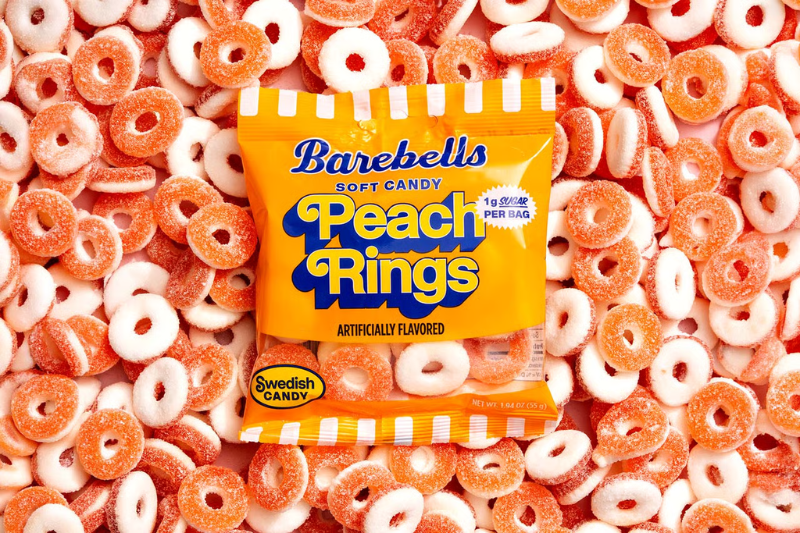
Swedish nutrition brand Barebells has expanded beyond its established protein bar and snack portfolio with the launch of Barebells Soft Candy.
 The new Soft Candy range includes low-sugar confectionery that the company says contains 95% less sugar than conventional soft candy alternatives.
Available in three flavours (Sour Cola, Watermelon and Peach Rings), each 55 g bag delivers 1 g of total sugar and 100 calories, compared to an average 21 g of sugar per serving among leading soft candy brands.
The formulation relies on a blend of polydextrose, isomalto-oligosaccharides (IMOs) and erythritol as bulk sweetening and texturising agents, with the addition of acesulfame potassium and sucralose providing residual sweetness.
The launch reflects a wider reformulation trend taking hold across the confectionery and functional snacking categories, as brands respond to shifting consumer priorities around sugar reduction.
Analysts and ingredient suppliers have increasingly pointed to the influence of GLP-1 adoption on eating behaviours as a structural driver accelerating demand for better-for-you indulgence formats that do not compromise on sensory experience.
Barebells, which is owned by Orkla and has built a robust consumer base through its protein bar and protein soda lines, has positioned Soft Candy as inspired by classic Swedish confectionery tradition, while engineered for health-conscious reformulation.
 Barebells’ move into sugar-reduced candy reflects a broader trend within the functional and sports nutrition sectors, where brands are expanding beyond traditional formats (such as protein bars) to develop confectionery-style products with improved nutritional profiles.
Other brands such as Hormbles Chormbles and RAW Nutrition have also released “candy-inspired” products during the past year.
In turn, this is driving demand for ingredient technologies that can help manufacturers reduce sugar while maintaining the texture, chew and sensory experience consumers expect from conventional sweets and confectionery.