




The complexity of the Italian market stems in part from the country’s unique demographic and cultural landscape. Although Italy covers an area 1.8 times smaller than France, it has only around 10 million fewer inhabitants (59 million versus 69 million). As a result, the country has a much higher population density and a more closely interconnected urban network. “It is also a relatively young national culture, in the sense that each region has long maintained its own distinct identity,” explains Bruna Olari, Director of Fine Fragrance Italy at Givaudan.
A marked divide between northern and southern Italy, shaped by centuries of history and regional traditions, continues to influence consumer behaviour today. These deep-rooted cultural differences are clearly reflected in Italians’ olfactory preferences. “That’s why brands often conduct consumer testing in both the north and the south,” notes Francesca Sideri, Head of Fine Fragrance Sales for Italy at Givaudan.
In the North: a preference for sophisticated signatures
“Traditionally associated with the world of finance, Lombardy is rooted in a culture of efficiency and discretion, reflected in the architectural austerity of Milan. This image is mirrored in Northern consumers’ preference for refined fragrances,” observes Francesca Sideri. This pursuit of elegance is expressed through citrusy freshness, musky notes, and light woods — fragrance families that are used with restraint rather than intensity.
Catherine Dolisi, Marketing Director for Fine Fragrance at dsm-firmenich, also highlights a preference for classic accords, exemplified by the popularity of Narciso Rodriguez For Her in Northern Italy. “A precursor, in a way, of musky fragrances, with their distinctive trail and chypre structures, which embody this sense of Italian elegance,” she explains.
Opulent scents in the South
“In this sun-drenched region, with its lush landscapes and Baroque architecture, a warmer culture prevails, expressed through enveloping fragrances,” explains Francesca Sideri. Here, scent signatures tend to be more expressive and assertive, designed to make a strong personal statement. Women are particularly drawn to solar notes, amber accords, modern vanillas, and juicy, fleshy fruits — compositions defined by generous, comforting sillage.
“This reflects a broader quest for well-being, expressed through fragrances that are often nostalgic or gourmand — the only category to have recorded growth among the top 30 best-sellers,” continues Francesca Sideri. “A trend further amplified by Gen Z’s appetite for exuberant scents,” adds Catherine Dolisi. For men, the preference leans toward powerful, long-lasting scent trails, helping explain the success of extrait de parfum concentrations and more intense variations.
The impact of new influences
Despite these strong regional identities, the Italian market is increasingly open to global influences, particularly from the Middle East, a shift notably driven by Gen Z’s evolving olfactory preferences.
“In fact, there is a clear attraction to oud-based woody accords, as well as leathery, resinous, spicy, and opulent facets. Long confined to niche circles but now gaining traction in the prestige segment, this trend is part of a broader movement,” explains Catherine Dolisi.
The success of statement fragrances that assert a strong identity, alongside the rise of layering practices, further illustrates the growing influence of these new olfactory codes in Italy.
A clear olfactory style
Italian fragrance creation is often marked by a sense of simplicity, presenting ingredients in a straightforward manner —much like the local cuisine. “This approach is particularly evident in the gourmand category, through immediately identifiable sensory accords and highly legible, textured signatures that feel almost more real than life,” observes Catherine Dolisi.
To meet this expectation, dsm-firmenich reinterprets classic olfactory signatures through the lens of Italian culture, combining locally rooted ingredients with emotion, heritage, and passion. The fragrance house showcased this expertise during Paris Perfume Week at its Scent of Italy event, unveiling innovative accords such as panna cotta–rosemary, granola panna cotta, and pesto cologne. “These are distinctly Italian and contemporary signatures, expressed through vibrant freshness or a healthy, airy, and never sticky gourmand touch,” she continues.
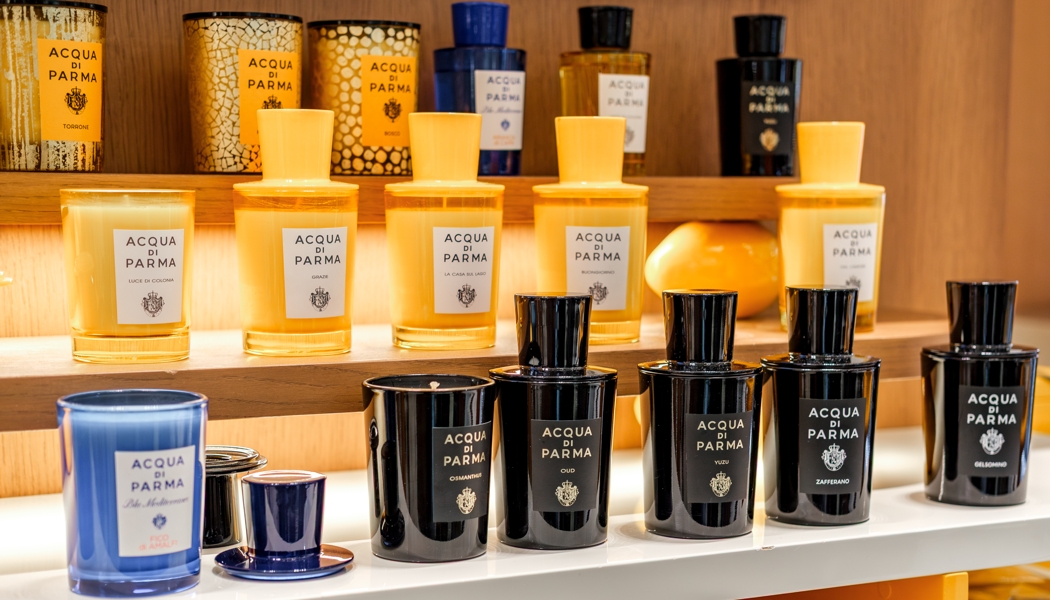
Alongside iconic houses such as Acqua di Parma and Santa Maria Novella, as well as Prada and Armani in the selective market, Italian niche brands like Laboratorio Olfattivo, Xerjoff, and many others continue to attract a loyal customer base, while newer players such as Maison Crivelli are experiencing rapid growth in popularity. This diversity highlights the Italian market’s ability to balance heritage and innovation, while staying closely aligned with global trends.