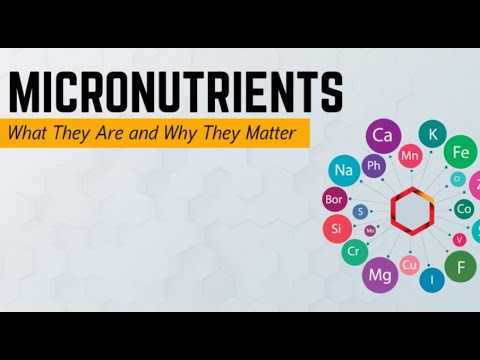
-Micronutrients are essentially vitamins and minerals that your body needs in smaller amounts, and that’s why they’re labeled “micro.”
-The body can not make micronutrients so we need to get them from our foods.
-Vitamins are organic compounds made by plants and animals which can be broken down by heat, acid or air.
-Minerals are inorganic, exist in soil or water and cannot be broken down.
-When you eat, you consume the vitamins that plants and animals created or the minerals they absorbed.
-The micronutrient content of each food is different, so it’s best to eat a variety of foods to get enough vitamins and minerals.
-An adequate intake of all micronutrients is necessary for optimal health, as each vitamin and mineral has a specific role to play in your body.
-Vitamins and minerals are vital for growth, immune function, brain development and many other important functions.
-Certain micronutrients also play a role in preventing and fighting disease.
Types & Functions of Micronutrients
-Vitamins and minerals are divided into four categories: (1) Water-soluble vitamins, (2) fat-soluble vitamins, (3) macrominerals and (4) trace minerals.
-Vitamins and minerals are absorbed in the body in similar ways regardless of the type, and interact in many processes.
-Water-Soluble Vitamins
-Most vitamins dissolve in water and are known as water-soluble.
-Since they dissolve easily, they’re not readily stored in your body and get flushed out with urine.
-Water-soluble vitamins have unique roles and their functions are interconnected to each other.
-Most B vitamins act as coenzymes that help trigger important chemical reactions. A lot of these reactions are necessary for energy production.
-Water-soluble vitamins play an important role in producing energy but also have several other functions.
-It is important to incorporate these vitamins into your daily diet.
-Fat-Soluble Vitamins
-Fat-soluble vitamins do not dissolve in water. They’re best absorbed when they are consumed with another source of fat. After consumption, fat-soluble vitamins are stored in your liver and fatty tissues for future use.
-Macrominerals are needed in larger amounts than trace minerals in order to perform their specific roles in your body.
-Macrominerals are needed by the body for optimal health in building bones, maintaining body fluids, maintaining proper pH levels in body tissues, transmitting nerve impulse, maintaining cell membrane structures, and facilitating enzyme action.
-Trace minerals are needed in smaller amounts than macrominerals but still enable important functions in your body.
-The trace minerals help provide oxygen to muscles and assists in the creation of certain hormones.
-Assists in carbohydrates, amino acid and cholesterol metabolism. -Required for connective tissues formation, as well as normal brain and nervous system function.
-Necessary for normal growth, immune function and wound healing. -Assists in thyroid regulation.
-Necessary for the development of bones and teeth. Also important for thyroid health, reproduction and defense against oxidative damage.
-Micronutrient deficiencies can lead to hunger and is mainly due to diets inadequate in fruits, vegetables and whole grains. These deficiencies are associated with increased risk of diabetes, obesity, hypertension, cardiovascular disease and cancer. Also, 50% of women with anaemia is due to a lack of iron, and the other 50% is due a deficiency in micronutrients like zinc, calcium, folate and vitamin B12.
Photos:
Pixabey.com
Videos:
Videoblocks.com
Audio:
YouTubeAudioLibrary.com