The University of Kansas Health System reports a big spike in the number of COVID-19 patients being treated today. 36 patients are hospitalized, up from 30 yesterday. 11 patients are in the ICU, up from 9 yesterday. Four patients are on ventilators, down from 6 yesterday. 33 other patients are still hospitalized because of COVID-19 but are out of the acute infection phase. That’s up from 30 yesterday. Things are slightly better today at HaysMed which reports 15 total COVID-19 inpatients, down from 16 yesterday, with 4 of those patients in the recovery phase.
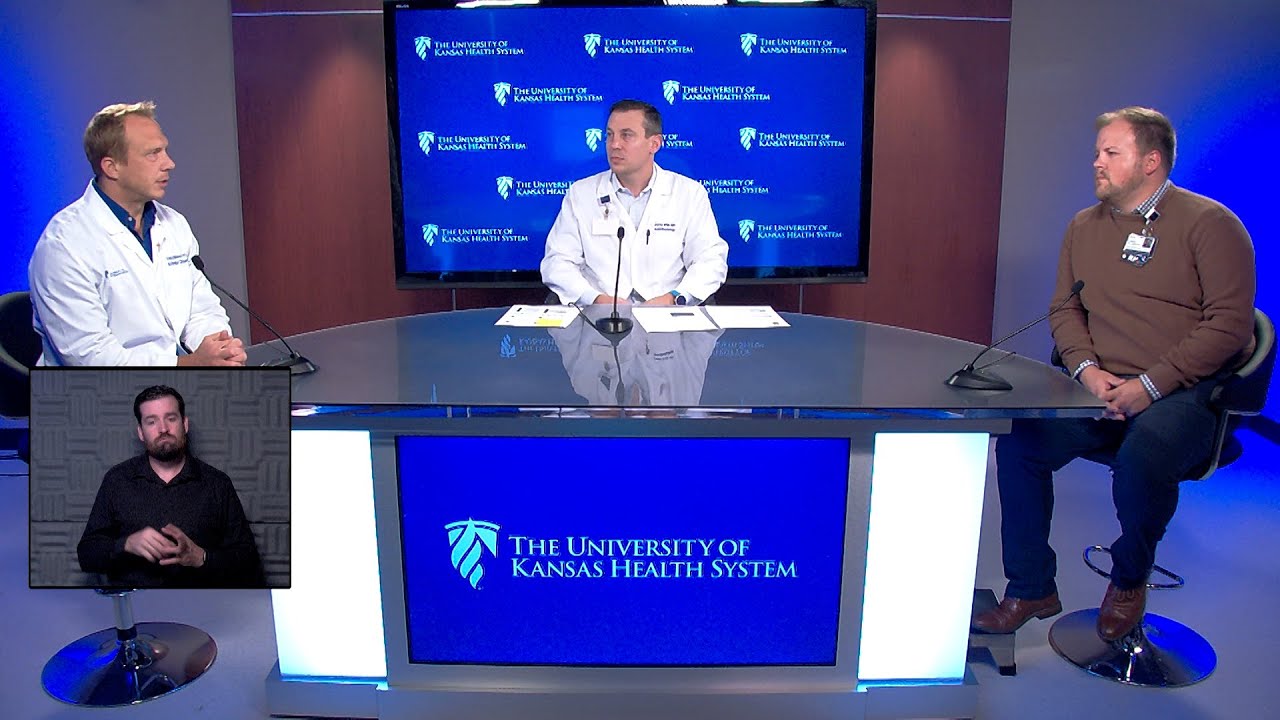
On today’s Morning Media Update, David Wild, MD, VP of Performance Improvement at the health system, filled in for Dr. Stites and provided a deeper look at the numbers. Lance Williamson from Infection Prevention and Control joined the panel, along with Dana Hawkinson, MD, medical director of Infection Prevention and Control, to answer community questions as we head into the weekend.
Before answering the questions, Dr. Wild shared the latest COVID-19 numbers and trends. He showed that around the country, as well as in the Metro area, hospital admissions for COVID-19 are on the rise. Even though hospitals are not currently flooded or overwhelmed, the three agreed that could change, especially if the usual number of flu patients are admitted. Dr. Wild said right now, the Midwest has the highest number of COVID-19 cases in the country, with Kansas and Missouri right behind North Dakota. He discussed the average age of patients and the difference in death rates from March and April to September and October. They all agreed that masking and distancing are critical right now in keeping things from getting worse.
Here are the media and community questions in the order the panel addressed them, followed by the short answer. See the video for their full answers and comments.
Why are COVID-19 numbers different between the ones we give and some media outlets? We use publicly reported numbers with a specific date range. That can differ between outlets.
If I got a flu shot then a slight fever a couple of days later, should I be tested for COVID-19? Unless you had reason to believe you were exposed it is probably a normal reaction to the flu shot.
Is the end of the pandemic just around the corner? Will it just disappear? National numbers appear to show no end in sight. It won’t end abruptly.
If one is contagious for 10 days past symptoms, what is the timeline for asymptomatic people who test positive? The same 10 days.
If I am symptomatic and test positive, when and for how long am I contagious? One to two days before symptoms and one to two days after symptoms are the most contagious.
My dentist’s office is not ventilated. They say they clean everything with a UV lamp. Am I safe? As long as there is no stagnant air, no crowded waiting rooms, staff wears masks and social distances it’s safe. UV has some use, but a good cleaning routine is best.
Some voting places have two-hour waits. Is that safe? Could a breath cloud hang in the voting booth? As long as the pillars of infection prevention are followed it should be safe. If masks are worn, there should be no breath cloud.
A CDC study shows direction, ventilation and intensity of airflow play a part in spreading the virus. Please explain and what does that mean for my family in a nursing home or for myself at work? The key is some kind of air movement.
Twelve of my family members want to come over for Thanksgiving dinner. If we eat in our three-car garage in our bubbles spaced six feet apart, is that safe? It’s reasonable if you feel you must. It’s a challenge for those who are not living together. Need to assess your own risk tolerance.
Do older seniors in nursing homes ever get COVID-19, but are asymptomatic? It’s much less likely than in other populations.
If the cytokine storm is caused by an overactive immune response, how can we be sure the vaccine won’t have the same effect? So far, we have not seen it in early vaccination trials.
Should students and teachers wear eye protection like healthcare workers do? It’s a reasonable precaution.
If my senior family gets a vaccine before the rest of the family is eligible, will it be safe to visit them? Hard to say because so far, no candidates have reached that stage. Just getting the vaccine won’t change the pillars of infection prevention.
Monday, October 26 at 8:00 a.m. is the next morning media update. Dr. Matthias Salathe, chair of Internal Medicine and Dr. Akinlolu Ojo, Executive Dean of the school of Medicine at KU MED join us to answer questions about a COVID-19 vaccine and vaccines in general.