




#Kvitamin #healthcare
The K Vitamin and Its Benefits
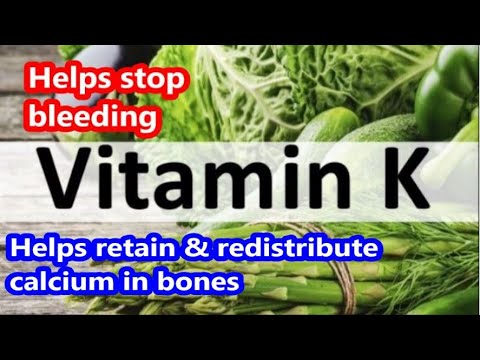
The K vitamin is essential for the blood to clot to repair injuries.
Whenever a person has a bleeding wound, it is the K vitamin that is present in the blood that stops the bleeding and enables most minor cuts to heal quickly.
There are three different forms of the K vitamin.
The first variant of the K vitamin is vitamin K1, also known as phylloquinone. This is the form of the K vitamin that is found in plant foods.
The second form of the K vitamin is the vitamin K2, or menaquinone. This type of the K vitamin is formed by friendly bacteria in the lower intestinal tracts.
Thirdly, there is vitamin K3 which is also known as menadione and is actually an artificial form of the K vitamin.
All three of these types of K vitamin end up in the liver where it is used to create the blood clotting substances.
The best natural sources of the K vitamin are green leafy vegetables, such as spinach, kale and mustard green.
However, because the friendly bacteria in the intestine makes one of the forms of the K vitamin, it is extremely rare for a person to have a deficiency of the K vitamin and so K vitamin supplements are not needed by the majority of people.
Apart from the main function of helping blood to clot, the K vitamin, specifically Vitamin K1, has an important part to play in the bone building process.
This K vitamin is required to retain the calcium in the bones and redistribute it to where it is needed.
Although K vitamin deficiency is relatively rare, there are certain groups of people who may suffer from it.
Newborn babies may not have enough of the K vitamin as they have insufficient bacteria in their intestinal tract to produce it.
The majority of newborn babies in developed countries are therefore given a K vitamin shots to tide them over until the natural process takes over. That is the only time that a K vitamin supplement will be taken by most people throughout their lives.
However, an extended course of antibiotics intake may lead to a K vitamin deficiency due to the fact that the antibiotics kill the intestinal bacteria.
Again, K vitamin supplement may be given if the course of antibiotics has to continue for a long period of time.
Important:
This presentation contains images that were used under a Creative Commons License. Click here to see the full list of images and attributions: