Beetroot : Nutrition Facts and Health Benefits.
Please subscribe: Donate for me:
———————————————–
Beetroot : Nutrition Facts and Health Benefits.
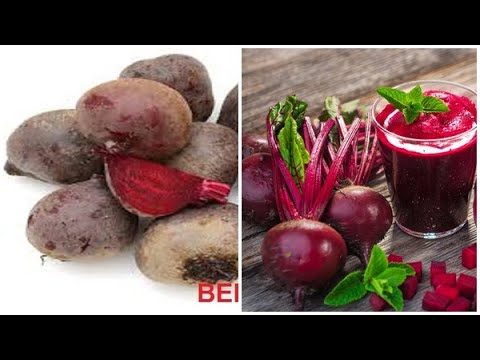
Beetroot (Beta vulgaris) is a root vegetable also known as red beet, table beet, garden beet, or just beet.
Packed with essential nutrients, beetroots are a great source of fiber, folate (vitamin B9), manganese, potassium, iron, and vitamin C.
Beetroots and beetroot juice have been associated with numerous health benefits, including improved blood flow, lower blood pressure, and increased exercise performance.
Many of these benefits are due to their high content of inorganic nitrates.
Beetroots are delicious raw but more frequently cooked or pickled. Their leaves — known as beet greens — can also be eaten.
There are numerous types of beetroot, many of which are distinguished by their color — yellow, white, pink, or dark purple.
Nutrition Facts.
Beets mainly consist of water (87%), carbs (8%), and fiber (2–3%).
One cup (136 grams) of boiled beetroot contains fewer than 60 calories, while 3/4 cup (100 grams) of raw beets boasts the following nutrients (1Trusted Source):
Calories: 43
Water: 88%
Protein: 1.6 grams
Carbs: 9.6 grams
Sugar: 6.8 grams
Fiber: 2.8 grams
Fat: 0.2 grams
Carbs.
Raw or cooked beetroot offers about 8–10% carbs.
Simple sugars — such as glucose and fructose — make up 70% and 80% of the carbs in raw and cooked beetroots, respectively.
Beetroots are also a source of fructans — short-chain carbs classified as FODMAPs. Some people cannot digest FODMAPs, causing unpleasant digestive symptoms.
Beetroots have a glycemic index (GI) score of 61, which is considered medium. The GI is a measure of how fast blood sugar levels rise after a meal .
On the other hand, the glycemic load of beetroots is only 5, which is very low.
This means that beetroots should not have a major effect on blood sugar levels because the total carb amount in each serving is low.
Fiber.
Beetroots are high in fiber, providing about 2–3 grams in each 3/4-cup (100-gram) raw serving.
Dietary fiber is important as part of a healthy diet and linked to a reduced risk of various diseases.
Vitamins and Minerals.
Beetroots are a great source of many essential vitamins and minerals.
Folate (vitamin B9). One of the B vitamins, folate is important for normal tissue growth and cell function. It’s particularly necessary for pregnant women.
Manganese. An essential trace element, manganese is found in high amounts in whole grains, legumes, fruits, and vegetables.
Potassium. A diet high in potassium can lead to reduced blood pressure levels and positive effects on heart health.
Iron. An essential mineral, iron has many important functions in your body. It’s necessary for the transport of oxygen in red blood cells.
Vitamin C. This well-known vitamin is an antioxidant that is important for immune function and skin health.
Inorganic Nitrates.
Inorganic nitrates include nitrates, nitrites, and nitric oxide.
Beetroots and beetroot juice are exceptionally high in nitrates.
However, debate has swirled around these substances for a long time.
Some people believe that they’re harmful and cause cancer, while others believe the risk is mostly associated with nitrites in processed meat.
Most dietary nitrate (80–95%) comes from fruits and vegetables. On the other hand, dietary nitrite comes from food additives, baked goods, cereals, and processed or cured meats.
Research shows that diets rich in nitrites and nitrates can have positive health effects, including lower blood pressure levels and decreased risk of many diseases.
Your body can convert dietary nitrates — such as those from beetroots — into nitric oxide.
This substance travels through your artery walls, sending signals to the tiny muscle cells around your arteries and telling them to relax.
When these muscle cells relax, your blood vessels dilate and blood pressure goes down.