




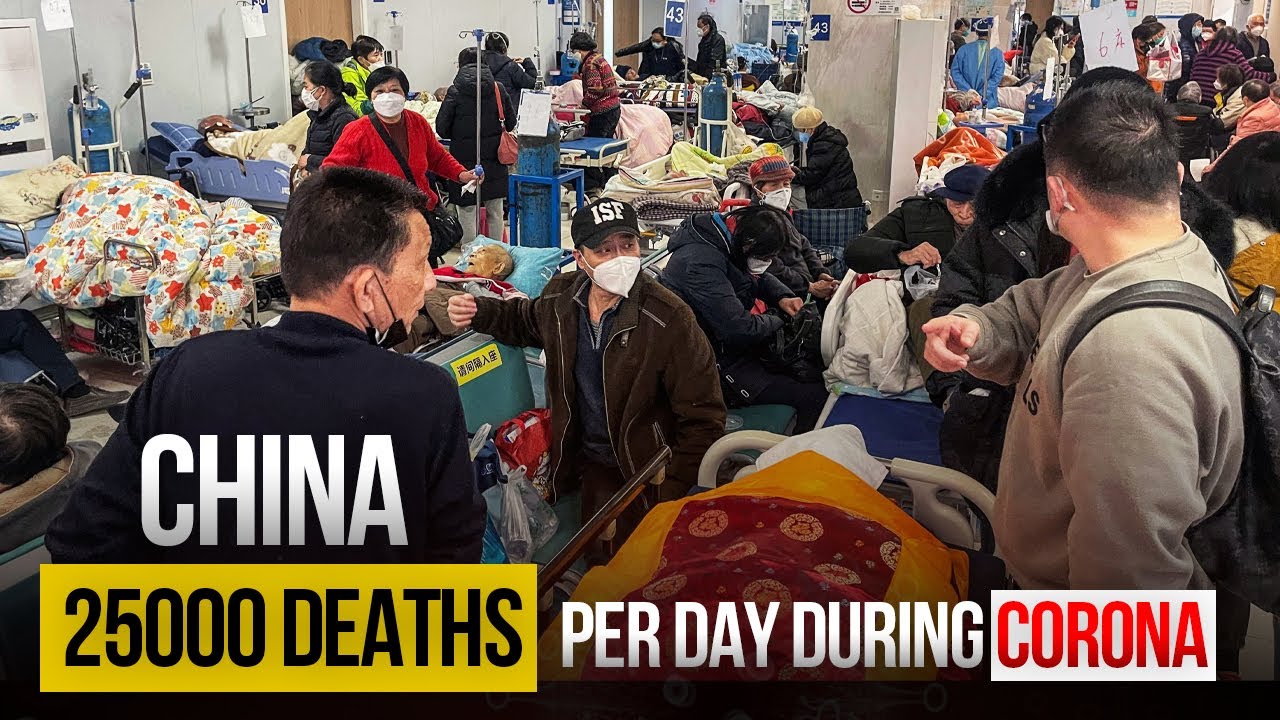
As China opened up, eliminating Coronavirus limitations, a flood in diseases has been seen in the nation albeit no unmistakable information has emerged from China. UK-based wellbeing specialists assessed that the nation is probably enrolling 9,000 passings daily twofold what it had assessed the week before.
Cumulative Covid-related deaths in China since December 1 likely reached 100,000, while infections totaled 18.6 million, UK-based health data firm Airfinity said in a statement.
The health firm further estimated that China’s Covid infections will reach their first peak on January 13 when 3.7 million cases will be registered in a day adding that the daily death toll will peak on January 23 with about 25,000 a day. The cumulative deaths could reach 584,000, the firm warned.
This comes as Beijing has recorded only several thousand cases a day, while it has reported only 10 deaths since December 7. Meanwhile, World Health Organization chief, Tedros Adhanom Ghebreyesus, asked China to be more transparent with detailed data on the pandemic.
“In the absence of comprehensive information from China, it is understandable that countries around the world are acting in ways that they believe may protect their populations,” Tedros Adhanom Ghebreyesus said.
Although, China insisted that the data it is publishing has always been transparent as Beijing’s release of all virus information was done “in the spirit of openness”.
“China has always been publishing information on Covid-19 deaths and severe cases in the spirit of openness and transparency,” said Jiao Yahui from the National Health Commission (NHC) said adding that people who died of respiratory failure induced by Covid are the only deaths counted.
“China has always been committed to the scientific criteria for judging Covid-19 deaths, from beginning to end, which is in line with the international criteria,” the top health expert said.
Infectious disease experts believe strategy is more effective in slowing virus spread than new travel restrictions, as a health data firm says thousands are likely dying daily in China
The United States is considering sampling wastewater taken from international aircraft to track any emerging new Covid-19 variants as infections surge in China, as UK-based health experts estimate about
Cumulative deaths in China since 1 December likely reached 100,000, with infections totaling 18.6m, Airfinity said in a statement on Thursday. It used modeling based on data from Chinese provinces before the recent changes to reporting cases were implemented, it said.
Airfinity expects China’s Covid infections to reach their first peak on 13 January with 3.7m cases a day.
Their figures were in contrast to the several thousands of cases reported by Chinese health authorities a day after a nationwide network of PCR test sites was largely dismantled and authorities pivoted from preventing infections to treating them.
The European Union’s health agency said on Thursday it believed the EU-wide introduction of mandatory Covid screenings for travelers from China was currently “unjustified”, pointing to the “higher population immunity in the EU/EEA, as well as the prior emergence and subsequent replacement of variants currently circulating in China”.
But in a series of tweets, the World Health Organization chief, Tedros Adhanom Ghebreyesus, renewed his appeal to China to be more forthcoming with detailed data on the pandemic situation in the country.
“In the absence of comprehensive information from China, it is understandable that countries around the world are acting in ways that they believe may protect their populations,” Tedros wrote.
Airfinity expects deaths to peak on 23 January with about 25,000 a day, with cumulative deaths reaching 584,000 since December. Since 7 December, when China made its abrupt policy U-turn, authorities have officially reported just 10 Covid deaths.
Internationally, travel restrictions such as mandatory testing have so far failed to significantly curb the spread of Covid and function largely as optics, said Dr. Michael Osterholm, an infectious disease expert at the University of Minnesota.