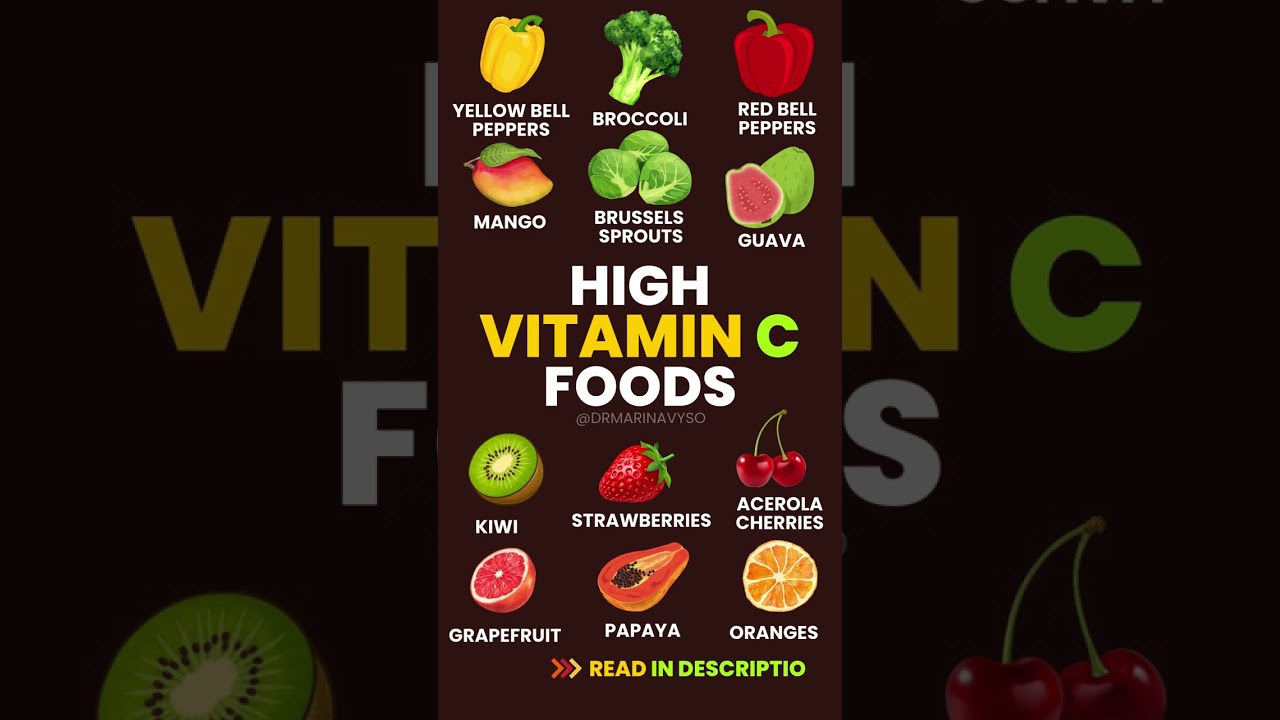
Vitamin C is a water-soluble vitamin known for its powerful antioxidant properties. It supports the immune system, helps the body produce collagen for healthy skin and joints, enhances iron absorption, and protects cells from oxidative stress. Since your body doesn’t store it, regular intake through food is essential.
Here are the richest natural food sources of vitamin C, from highest to more moderate:
🥇 Fruits (especially citrus and berries):
– Acerola cherries – up to 1,500 mg per 100 g (extremely high!)
– Guava – ~230 mg per 100 g
– Kiwi – ~90 mg per 100 g
– Strawberries – ~60 mg per 100 g
– Oranges – ~53 mg per 100 g
– Grapefruit – ~40 mg per 100 g
– Papaya – ~60 mg per 100 g
– Mango – ~36 mg per 100 g
– Pineapple – ~48 mg per 100 g
– Lemons – ~40 mg per 100 g
🥦 Vegetables (surprisingly rich!):
– Red bell peppers – ~190 mg per 100 g
– Yellow bell peppers – ~180 mg per 100 g
– Broccoli (raw) – ~90 mg per 100 g
– Brussels sprouts – ~85 mg per 100 g
– Kale – ~80 mg per 100 g
– Spinach (raw) – ~28 mg per 100 g
– Cabbage (raw) – ~36 mg per 100 g
– Tomatoes – ~14 mg per 100 g
📌 Recommended daily intake for adults:
→ 75 mg for women, 90 mg for men
(Needs increase for smokers and during illness or stress.)
💡 Bonus tip:
Vitamin C is heat-sensitive — for best results, enjoy these foods raw or lightly steamed to preserve their benefits.