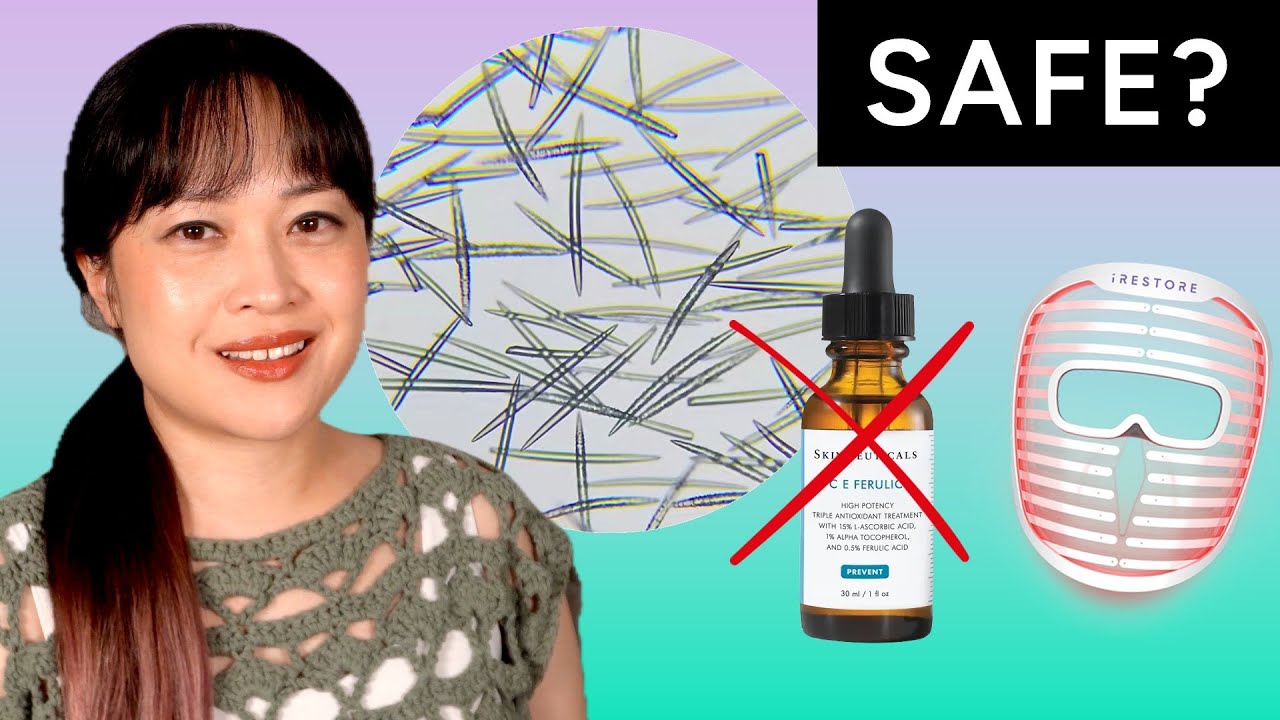
Let’s talk red light masks, spicules (VT Reedle Shot) and new vitamin C innovations!
iRESTORE duo https://labmuffin.com/irestore – use code LABMUFFIN for $405 off
This video is partly sponsored by iRESTORE – more about my sponsorships here https://labmuffin.com/spon
MY BOOK 📖 The Science of Beauty: https://labmuffin.com/sob
Shop more of my favourite products here: https://shopmy.us/labmuffin
Subscribe for videos every fortnight: http://bit.ly/labmuffinyt
0:00 What to look for in red light masks, iRestore review
5:55 Red light safe for hyperpigmentation, melasma?
6:22 Spicules, VT Reedle Shot
10:05 Vitamin C formula innovations
Hyperpigmentation/melasma and light treatments https://labmuffin.com/is-red-light-safe-for-hyperpigmentation-and-melasma/
@Moskinlab spicule safety https://www.youtube.com/watch?v=gYTH5lHGiag
@EuniUnni VT interview https://www.youtube.com/watch?v=Uz5ENIJQnNY
🙋🏻 I’m Michelle, a chemistry PhD, cosmetic chemist and science educator, here to explain how beauty products work, debunk myths, and help you make smarter decisions about your skincare, hair and makeup!
Website https://labmuffin.com
Instagram https://instagram.com/labmuffinbeautyscience
TikTok https://www.tiktok.com/@labmuffinbeautyscience
Shop my favorite products: https://shopmy.us/labmuffin
✨ Want smooth, glowing skin? Grab a copy of my FREE Essential Guide to Exfoliation! https://labmuffin.com/exfol
🧴 PRODUCTS (affiliate links)
iRESTORE Illumina LED Duo (use code LABMUFFIN for $405 off) https://labmuffin.com/irestore
VT Reedle Shot 100 https://go.shopmy.us/p-17066928
Poems from the Lab Future Focus (use code LABMUFFIN for 10% off) https://go.shopmy.us/p-4022300
L’Oreal Paris Revitalift 12% Pure Vitamin C Serum https://go.shopmy.us/p-2761277
La Roche-Posay Pure Vitamin C Serum https://go.shopmy.us/p-17066880
Powered By Chemicals Mugs: https://labmuffin.com/shop/
📺 RELATED POSTS AND VIDEOS
Free exfoliation guide https://labmuffin.com/exfol
The science of red light masks https://youtu.be/eu14g7JFd4o
TikTok’s worst skincare “scientists” https://youtu.be/ua10yD5DB88
Spray sunscreens are worse than we thought https://youtu.be/vL9ybUpAdu0
Wedding skincare + 2024 Routine Update https://youtu.be/9KQEf89geSk
Is Retinol a Scam? The Science https://youtu.be/e6Z5Vr7uSiA
Ultimate Vitamin C Skincare Guide https://youtu.be/U68MTXuOG9k
Blue light update https://youtu.be/Rr4p6hC2ewc
Debunking the worst sunscreen misinformation on TikTok https://youtu.be/wCPp8EJSG-Y
🧴 SKINCARE GUIDE 🧴 Find out more: https://labmuffin.com/skin
👕 Fan stitch top https://www.ravelry.com/projects/labmuffin/fan-stitch-top
starting with the red light mask this section
is sponsored by iRestore but these are my honest opinions check out this link for more
about my sponsorships and how they operate I’ve talked about light treatments before
what they do and the science behind how they work but in short the main benefits
of red and infrared light for skin are smoothing out fine lines and wrinkles
reducing skin sensitivity and redness I’ve only been using them for about 4 months
and I try a lot of skincare products so I can’t say this is all definitely the red light
but I found that my perioral dermatitis is a lot calmer my skin tone is more even
and it kind of just gives me a nice glow last time I talked about getting a product with
the right specs but home devices do need to be used consistently to see benefits and what makes
a product more usable for one person isn’t going to be the same as for someone else so you want
to read lots of opinions from different people I get sent lots of masks so I am
planning to talk more about the differences between products that
are a bit harder to see and maybe someday I’ll have a page that is
as useful as goals to get glowing a lot of people have asked me about red light
and hyperpigmentation and this is a bit of a complicated topic mine has gotten lighter in the
time I’ve been using red light masks and there are studies where it evened out skin tone including in
darker skin but some people have said that their pigment got darker and I think that is a potential
risk but there are also ways to reduce that risk it’s a bit too complicated for this video but I
have an article on it link is in the description on to spicules I have been
asked so many times about what I think of the VT reedle shot so here it is spicules are a new trend mostly coming out of
Korea they are essentially micro needles that are inside the product the ones you mostly see
in products come from marine sponges it’s sort of like their skeletons they are made of
silica this is part of the overall trend of delivery systems these are like ways of
getting ingredients into your skin better so you’ll see spicules mixed with lots of
other ingredients that they should help get deeper into skin but at the same time
they seem to have benefits of their own so when you have these spikes and you rub
them into your skin they either exfoliate your skin and they get rid of some of the dead
skin layers or they might stick into your skin and create micro channels these both mean that
ingredients can potentially get deeper more easily spicules are relatively new so
there are essentially two big questions do they work and are they actually safe in my opinion it looks like they are effective
for smoothing out skin texture and making pores look smaller those are the main things that
people have been raving about but it’s a bit harder to say how well they work for delivering
the ingredients deeper since they are physical spikes that’s going to depend on how you
use it so how hard you rub and for how long also the specifics of the formula so like the
shapes of the spicules how many there are and what the other active ingredients are there aren’t
a lot of human studies and they are all very small sample sizes but overall I think it’s really
promising there is a research group in China led by Professor Ming Chen they’ve looked at
lots of really cool applications like delivering insulin and treating melanoma these need to
work much deeper than skincare and generally the spicules are paired with other delivery systems
like liposomes but overall lots of potential the other big question is safety so Dr Dray in
early 2024 said that she was worried about foreign body granulomas basically the concern is sponge
spicules are made of silica which is the same as glass or sand in theory if a spicule gets too
deep you could end up with a chunk in your skin that your body can’t break down your immune system
might then react and you essentially end up with a really angry bump that can be difficult to treat
and this sort of thing can take years to show up Mo Skin Lab is a toxicologist
and cosmetic safety assessor he did a great video going deeper into
spicules so watch that for more details basically there’s not that much solid data yet
and in theory there is the possibility of foreign body granulomas but there was a rat study that
found that the spicules were shed by day three obviously rat skin isn’t the same as
human skin and we won’t really know with that much certainty until there are
longer term studies which should hopefully be happening especially if those Chinese
researchers move towards drug approvals but the risk does depend on pressure so
the harder you rub the higher the risk Euniunni did an interview with someone
from VT’s product development team they make the reedle shot which is the most famous line they said their spicules don’t reach
the dermis no matter how hard you rub another interesting point I found in a recent
paper the Chinese researchers mentioned that their silica spicules are mesoporous that means they are
full of tiny holes they have a different structure so they should break down under lots of conditions
unlike more solid chunks of glass or sand now we don’t know if this is the case for spicules used in skincare or not we don’t know
if their structure is different enough but it isn’t like all silica spicules
are completely unable to be decomposed it would be nice to see studies
on specific products but overall it does seem like a pretty small risk
especially if you don’t press very hard also one of the studies was done using spicules
made from hyaluronic acid which is a lot easier for your body to break down but I haven’t come
across products with those ones yet let me know if you’ve seen them also the spicules seem to be too
big to be inhaled if you are concerned about that onto vitamin C I talked about L-ascorbic
acid vitamin C formulas a while back but there’s been a few developments since then the biggest one is that skinceuticals CE
ferulic patent that has now expired this is a big deal because Sheldon Pinnell who founded skinceuticals he invented the most popular
parameters for formulating L-ascorbic acid essentially if you have a low pH and you
combine it with particular antioxidants it’ll stay stable for longer and get into
skin and work L’Oreal acquired skinceuticals in 2005 so they own the patent but now other
companies can use this very proven combination there’s been copycats around for quite a while
but there was usually some kind of workaround to avoid patent infringement because I mean
Drunk Elephant got sued for their formula there were little differences like some people
who are more sensitive to vitamin C found that the skinceuticals formula was much less irritating
but now copycat formulas will probably be more similar and also more common which is nice
because skinceuticals was great but pricey but I also don’t know if the patent expiring
is that big of a deal anymore because in the last few years there’s been a lot of
different vitamin C products coming onto the market that I think are actually big
improvements on the skinceuticals formula and I mean this is the whole reason
patents expire it’s just meant to protect your invention for 20 years so
that you can make money from it while also sharing it with the world and having
that information publicly available so that everyone can benefit from that information and
make more innovative formulas in the meantime so newer formulas first off higher pH ascorbic
acid formulas I’ve talked about this a bit before but a lot of skincare companies
have been working on this for a while quite a lot of people find vitamin C serums
irritating and a large part of this seems to be that low pH it is one of the lowest
pH categories of skincare product and in the last few years L’Oreal in particular have
launched a few higher pH L-ascorbic acid formulas there was a bit of controversy on social
media and on YouTube because some people were taking this one sentence from the
Pinnell vitamin C paper very very literally so they thought this was proof that anything
higher than pH 3.5 could not possibly work but peer-reviewed papers are written for an
academic audience who know the background science of how ingredients get into skin
so in that context it is pretty obvious that this claim only refers to very simple
formulas pH is only one of the many factors that influences what gets into skin and there’s
been a bunch of papers and patents from brands not just L’Oreal showing that you can stabilize
vitamin C and get it into skin at a higher pH disclaimer I have done sponsored posts
about this specific product but I was approached to do that well after
I first posted about this pH issue last time I talked about it I was just guessing
how it worked because I am terrible at finding patents but L’Oreal did recently publish
a paper this has more details about the chemistry behind their approach and I
know I have a PhD in chemistry and this is my specialty area but it is still nice to
know that I’m right because imposter syndrome it is indeed a polymer that binds to the ascorbate ion and keeps it stable sort of
like a chemical protecting group during accelerated testing it did go a bit yellow
but only about 6% of the ascorbic acid broke down and these conditions are meant to reflect what
might happen over a year at room temperature they say they still need to work out if the
polymer is holding the ascorbic acid on the surface of the skin and they’re
slowly releasing it but L’Oreal have published clinical data on these
formulas showing that they’re working I also wanted to give an update on
poems from the lab future focus this is the vitamin C formula from
my friend kind of Stephen he is a cosmetic chemist and his opinions
on skincare science I really respect so cosmetic chemists they have very
varied backgrounds and so sometimes the scientific reasoning is not the strongest he has put a lot of work into this and I
think it is a really nice demonstration that you do not need to be a giant
multinational brand to make cool products he stabilized this with a different antioxidant
system from the skinceuticals patent and those antioxidants do have benefits of their own he’s
also using a different penetration enhancer and this tube is super super clever
it is really protective against air there’s this really persistent myth that
airless pumps are protective against air but they are really not there are lots of
little gaps between hard components so gas molecules if you think back to early
high school they are tiny and they are not bound to each other so if you can see a
gap they can definitely get through it gas molecules are so tiny that they can actually
get through some types of like solid plastic I think I first talked about this in my wedding
skincare video but my first tube of this has now been open for over 18 months which is more than a
year and a half I’ve kept it at room temperature not in a fridge or anything and there is brown
stuff on the thread and also inside the cap but it is still a really pale color it is much less
oxidized than newer formulas that I’ve tried this is one of my top recommendations
for a vitamin C serum it is just really really nice and it lasts so long I know I keep saying I’m going to do proper
videos going through retinol and vitamin C derivatives and I swear I am trying and I’m
working on it I have about 30,000 words of notes on them but the thing that’s making
it more difficult is how spotty the data is a lot of the information on them
comes from ingredient companies and whether or not you can trust them
is very much just based on vibes it is much worse than peer-reviewed studies and I’ve already talked about how hard it
is to interpret peer-reviewed studies I keep holding on to the hope that better data
will come out and I can give a more confident certain answer if there’s any brand who wants
to share more info with me please hit me up but for now I think it is pretty certain
that vitamin C derivatives don’t work as well as L-ascorbic acid but they might
be less irritating and more stable my favorite vitamin C derivatives are 3-o-ethyl
ascorbic acid ascorbyl glucoside also THDA but that is kind of like a wild card pick
where the certainty is like there’s just a lot of uncertainty it could work really
well or it could just not work at all but if it does work that would be
really cool because it is oil soluble if you want more about vitamin C I have a video
on that you can also check out my video on why retinol is not a scam for more of the mess behind
cosmetic science let me know what other innovative skincare products you’re wondering about and
also check out my skincare science playlist