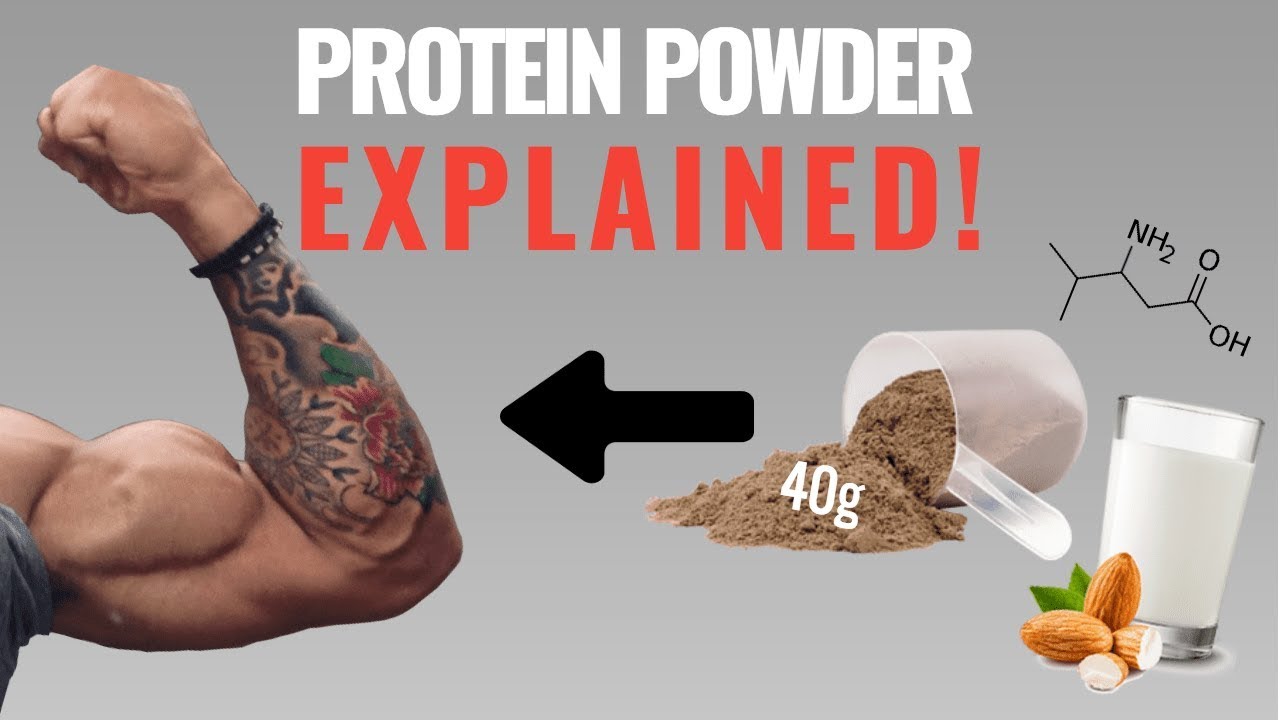
Despite protein powder (or “protein shakes”) being by far the most widely consumed supplement within the fitness industry, most people are lost when it comes to how to choose the best type of protein and even moreso when it comes to how to best use protein powder to build muscle. In this video, I’ll cover everything you need to know about protein.
First off, let’s discuss the best type of protein. Although there’s several types of protein out there (whey protein, casein protein, plant-based protein, egg protein, hemp protein, vegan protein, pea protein, etc.) research shows that whey protein and casein protein are the two best options in terms of essential amino acid content and elevating protein synthesis. Whey is a fast-digesting protein whereas Casein is a slow-digesting protein. Research shows that Whey protein powder is superior to Casein protein powder and also has a slightly higher leucine content, so I’d stick with Whey – and more specifically, I’d stick with Whey isolate protein since it’s the purest form of Whey protein and contains the least lactose (if that’s an issue for you). However, as you’ll see, Casein does have a special application as well which you might want to consider. As for plant-based protein powders, although they spike protein synthesis to a smaller degree as animal-based protein powders do, this can be mitigated by ingesting a greater amount of plant protein powder and/or ensuring you get enough essential amino acids through your diet.
Next, when it comes to when to take it, most people think you have to take your protein shake immediately post-workout. But, research shows that it depends on whether or not you’re in a fed or fasted state. If you’ve had protein prior to your workout, a post-workout protein shake isn’t necessary and you can take it at anytime. Whereas if you worked out fasted, having it immediately post-workout is ideal. And if you haven’t eaten before the gym yet, then research suggests taking your Whey protein shake before your workout is the better option when compared to after.
As for how much to take, sticking to around 20-25g is enough to maximize protein synthesis – with 40g eliciting a slightly higher response. And as for how often to take it, you can take it daily (workout or not) to help you reach you goal daily protein intake.
Lastly, when it comes to what to take it with, although co-ingestion of protein powder with carbs and/or fats does slow down digestion, it does not affect protein synthesis rates. Thus meaning you can take it with whatever you’d prefer. With that being said, taking your protein powder with dairy milk when bulking and taking it with almond milk or water when cutting is a good option to help you easily increase/decrease your calorie intake.
Hope this helps!
VIEW MY PROGRAMS HERE:
https://builtwithscience.com/bws-free-fitness-quiz/gender?utm_source=Youtube&utm_medium=Video&utm_content=Description%20box&utm_campaign=Protein%20powder%20for%20muscle%20growth%20Sept%2016%2F2018
SHOP MY RESISTANCE BANDS HERE:
Resistance Bands
FOLLOW ME ON INSTAGRAM & FACEBOOK:
https://www.instagram.com/jeremyethier/
https://www.facebook.com/Jeremyethierfit/
MUSIC:
STUDIES:
Whey and casein best:
https://www.ncbi.nlm.nih.gov/pubmed/25644344
https://www.ncbi.nlm.nih.gov/pubmed/26224750
Whey beats casein:
https://www.ncbi.nlm.nih.gov/pubmed/25757896
Plant protein:
https://www.ncbi.nlm.nih.gov/pubmed/26224750
https://www.ncbi.nlm.nih.gov/pubmed/27440260
When to take it:
https://jissn.biomedcentral.com/track/pdf/10.1186/1550-2783-10-5?site=jissn.biomedcentral.com
https://www.ncbi.nlm.nih.gov/pubmed/26764320
https://www.ncbi.nlm.nih.gov/pubmed/11440894
Casein before bed:
https://www.ncbi.nlm.nih.gov/pubmed/27916799 https://www.ncbi.nlm.nih.gov/pubmed/22330017 https://www.ncbi.nlm.nih.gov/pubmed/25926415
20-25g protein:
https://www.ncbi.nlm.nih.gov/pubmed/26388782?dopt=Citation https://www.ncbi.nlm.nih.gov/pubmed/24257722
40 vs 20g protein:
https://www.ncbi.nlm.nih.gov/pubmed/27511985
What to take it with:
https://www.ncbi.nlm.nih.gov/pubmed/24628553
https://www.ncbi.nlm.nih.gov/pubmed/17609259
protein powder is by far the most widely consumed supplement with in the fitness industry and for good reason it’s convenient contains high quality protein and it’s a lot more cost efficient when compared to other protein sources and not only that but it’s also one of the few supplements that’s heavily backed by research in terms of its safety muscle building properties and several other benefits however despite the popularity of protein powder most people are often left clueless when it comes to how to choose the best type of protein and even more so when it comes to how to best use it to build muscle and unfortunately asking the sales guy at your local supplement store will likely just leave you even more confused or misinformed than you were to begin with but luckily in this video I’ll clear everything up for you and show you exactly how to maximize the effectiveness of protein powder by looking at the following points when it comes to picking a protein powder the sheer amount of options can definitely be overwhelming but to keep it simple research indicates that when compared to other forms of protein powder whey and casein have the highest essential amino acid content and are the best at stimulating muscle protein synthesis meaning that they’re going to be your best options now as for the difference between whey and casein and which one is better it mainly has to do with their digestive properties whey is a faster digesting protein that rapidly spikes protein synthesis for a short period of time whereas casein is a slower digesting protein that gradually increases protein synthesis over a longer period of time but generally I’d advise sticking with way over casing since it has a slightly higher leucine content and because research such as this 2015 literature review on the topic tends to favor way over casein when it comes to elevating protein synthesis and promoting gains in muscle mass and more specifically and recommends sticking to whey isolate since it’s a purist form of whey protein and contains the least lactose if that’s an issue for you however with that being said I so see you later on in this video if you’re seeking to maximize your results then casein does have a unique potential application and maybe something you still want to consider in addition to way and for vegans who can’t intake whey or casein although research shows that plant protein powders don’t stimulate muscle protein synthesis as well as whey or casein does research also shows that this can be potentially compensated by ingesting a greater amount of plant protein or simply ensuring you in take adequate amino acids through various food sources which is just something for you to keep in mind although most people are firm believers that protein shakes are meant to be taken right after your workout research actually doesn’t fully support this idea for example as shown in this 2013 literature review on the topic ingesting protein immediately post-workout doesn’t seem to be very important if you’ve already had a pre-workout meal with sufficient protein multiple other studies support this idea by emphasizing that this one-hour post-workout anabolic window may only apply to fasted training where there’s no pre ingestion of protein whereas if you’ve ingested protein some time before your workout it essentially renders the timing of your post-workout shake as useless which just means that a post-workout shake isn’t as important as we thought it was if you’re in a fed state and in fact if you haven’t had any protein before your workout research even suggests that ingesting your shake before your workout is more beneficial than after for example this study from the American Journal of physiology showed that when subjects in a fasted State ingested protein before their workout they experience significantly higher muscle protein synthesis when compared to subjects who ingested their protein immediately after their workout therefore when it comes to the timing of your protein shake I’d suggest a following if you’ve ingested protein at some point before your workout a post-workout shake doesn’t seem to be absolutely necessary meaning you can have your shake at any time during the day to simply boost your daily protein intake however since a post-workout shake is convenient for most people it’s fast digesting and it helps you spread out your protein intake throughout the day it may still very well be the ideal for you to take it just know that it’s not urgent on the other hand if you haven’t eaten any protein prior to your workout then just in your shake shortly before your workout is likely the best option to maximize protein synthesis and lastly if you’re planning on working out in a fasted state then adjusting your shake within an hour so after your workout seems to be ideal in addition to this as mentioned earlier to maximize your results you might also want to consider ingesting casein protein powders shortly before bed this is because multiple recent studies have found that in taking at least 40 grams of a slow digesting protein before bed helps improve overnight muscle protein synthesis which theoretically leads to better muscle recovery and growth over time and since casein is a slow digesting protein that makes in taking this 40 grams of protein shortly before bed more convenient it might be something you want to incorporate in addition to your whey protein as for how much protein to take at a time multiple studies have arrived at the general consensus that 20 to 25 grams of a high-quality protein like whey is sufficient for maximizing muscle protein synthesis and is therefore a good minimum you’d want to aim for when taking it it’s also worth noting though that having more than this might provide a small additional benefit with one recent 2016 paper concluding that in taking 40 grams of whey protein stimulated muscle protein synthesis to a greater extent than a 20 gram dose regardless of the subjects body weight and lean body mass but generally it seems as sticking to a dose of anywhere between 20 grams to 40 grams is likely your best bet now as for how often to take protein this just ultimately depends on your own total daily protein requirements you want to prioritize and taking your protein from food sources since they provide a variety of other amino acids and nutrients and then use protein powders to supplement this if needed for example we know that sticking to a protein intake of roughly 0.732 1 grams per pound of body weight is ideal so if a 170 pound individual requires 1 seventy grams of protein a day and can comfortably intake 130 grams of protein from real food sources then they could take 140 grams scoop of protein daily regardless of if they worked out and off to help them reach their daily goal and if you needed to take more than this to reach your goal that’s perfectly fine whatever helps you hit your daily protein target conveniently and consistently is what will be ideal to keep it simple multiple studies have shown that although Co ingesting protein powder with additional carbs and/or fat does slow down digestion it does not increase nor decrease muscle protein synthesis simply meaning that you can feel free to take your protein with whatever you prefer whether that be milk water or something else however in my opinion if you’re focusing on gaining weight then it can be helpful to take your protein with dairy milk for the additional 100 to 200 calories and the extra protein it provides whereas if you’re focusing on losing fat it might be best to take with something like almond milk or water which just helps you conveniently save an extra couple hundred calories or so so to sum the video up here are the key takeaways one thing I want you to keep in mind though is that as with all supplements protein powder is not anything magical and is by no means necessary to see results however if you struggle to hit your daily protein intake through food alone then this is where it becomes useful and something for you to consider thanks so much for watching everyone I hope you enjoyed this one as far as supplements I’ve