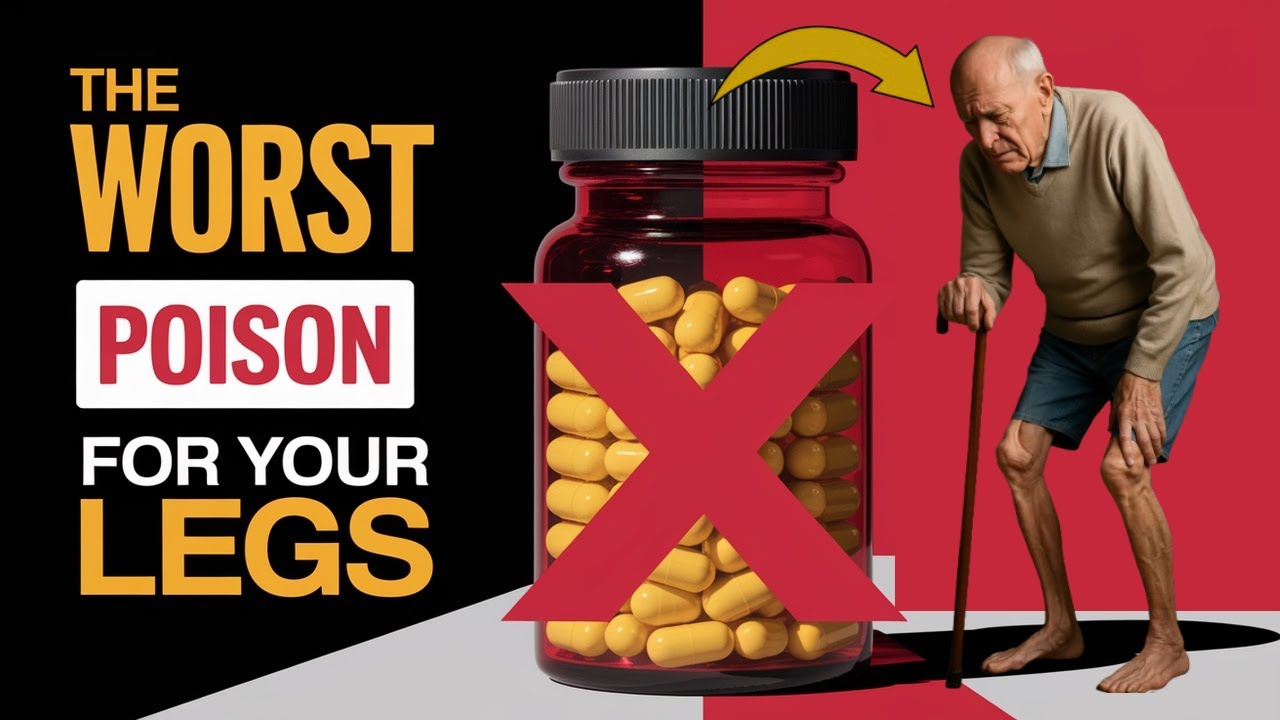
Over 60? 3 Worst Vitamins Destroying Your Leg Strength
⚠️ Attention Seniors (60+): Some everyday vitamins might be silently destroying your leg strength and undermining your independence. In this eye-opening video, we reveal the 3 vitamins you should stop taking right now to protect your muscles and mobility. You’ll learn how these common supplements may be causing leg weakness, muscle fatigue, nerve damage, and even dangerous falls. In this video, we cover:
Hidden dangers of certain vitamin supplements on senior muscle health.
Why vitamins like A, B6, and E might be doing more harm than good after 60.
Warning signs of leg weakness and balance issues linked to these vitamins.
Safer alternatives to keep your legs strong, improve mobility, and prevent falls.
👉 Stay tuned till the end for crucial tips on what to do if you’ve been taking these vitamins. If you find this video helpful, please give it a thumbs up 👍 and subscribe for more senior health and healthy aging tips every week. Share this with fellow seniors to help everyone stay strong and healthy!
🔽 Timestamps:
00:00 – Welcome to Senior Wellness
00:30 – Why Leg Strength Matters After 60
02:00 – How Supplements Can Be Harmful
03:50 – Vitamin A: The Hidden Risk
06:00 – Vitamin B6 and Nerve Damage
08:30 – Vitamin E: What Seniors Should Know
11:00 – What You Should Take Instead
13:00 – Safe, Natural Alternatives
15:00 – Final Thoughts for Seniors
17:30 – Like, Share & Subscribe
▬▬▬▬▬▬▬▬▬▬▬▬▬▬▬▬▬▬▬▬▬▬▬▬▬▬▬
► *Senior Wellness* is your trusted space to learn how to stay strong, mobile, and healthy in your golden years. We share research-backed health tips, lifestyle advice, and wellness wisdom for seniors and caregivers alike.
▬▬▬▬▬▬▬▬▬▬▬▬▬▬▬▬▬▬▬▬▬▬▬▬▬▬▬
👍 If you found this helpful, don’t forget to like ❤️, leave a comment 💬, and subscribe 🔔 for weekly senior health insights!
► All scripts, research, and visuals are created with great care for educational use.
© This content is original and protected. Unauthorized reuse is not allowed.
#SeniorHealth #HealthyAging #LegStrength #MuscleLoss #SeniorFitness
#Nutrition #HealthTips #Over60 #FallPrevention #AgingGracefully #SeniorWellness
Welcome to Senior Wellness, where we bring you sciencebacked health tips to help you stay strong, sharp, and independent after 60. Today, we’re exposing three vitamins you might be taking daily, but they could be quietly weakening your legs. Let’s get into it. The thought of losing mobility and being confined to a wheelchair is a common fear among seniors. In the golden years of life, many older Americans cherish their independence. The freedom to walk, dance, and move without help. But imagine doing everything right for your health only to discover a simple daily habit is quietly stealing your strength. This isn’t a horror story or sci-fi. It’s real and it’s happening in homes across the country. Today, we’re going to reveal the surprising truth about certain vitamins that may be weakening your legs, draining your energy, and even putting your mobility at risk. Stick around because knowing this could literally keep you on your feet. I want to start with a real story, one that’s all too relatable. Mary, a 72-year-old grandmother from Ohio, prided herself on staying healthy. Every morning, she took her vitamins with her coffee, convinced she was fortifying her body. But over time, Mary noticed her legs felt weaker. At first, she blamed old age. Then it got worse. She struggled to climb stairs and even needed a cane for short walks. I couldn’t walk more than 100 yards without my legs giving out,” she confided, voice shaking. “The culprit behind Mary’s decline, not arthritis, not lack of exercise. It turned out to be a vitamin toxicity.” Mary’s story has a hopeful ending. She caught it in time, but it serves as a wake-up call. If you or a loved one takes vitamins daily, you’ll want to hear this. We’re about to uncover three common vitamins that when overused or taken incorrectly can silently sabotage your leg strength and balance. Please don’t panic or throw away all your supplements. Instead, listen to the facts, then talk to your doctor. By the end of this video, you’ll know exactly which vitamins to watch out for, how they can harm you, and what to do to stay strong and independent. Let’s dive in with our first hidden villain of this story. Tip one, beware of vitamin B6 overload, the nerve wrecker. Hidden in many supplements, an excess of vitamin B6 can quietly wreak havoc on your nerves. Vitamin B6 pyrooxin is something many seniors take for energy or metabolism support. But taking high doses of B6 for a long time can cause nerve damage that manifests as tingling, numbness, and yes, muscle weakness in your legs. Remember Mary’s story? Her daily magnesium supplement was fortified with B6. Over years, this built up to toxic levels in her body, leading to peripheral neuropathy, a fancy term for nerve damage in the extremities. She recalls, “I noticed a slight loss of strength in my thighs and then a continuous deterioration. Then I couldn’t walk. Even 100 m was a struggle,” she told a reporter. Imagine the shock of learning a vitamin was to blame for this nightmare. Here’s the science. Vitamin B6 is water soluble, but in huge quantities, your body can’t flush it out fast enough. Nerves in your legs and feet are particularly vulnerable. The Mayo Clinic warns that too much B6 from supplements can cause loss of muscle control, painful nerve sensations, and balance problems. In plain terms, excess B6 can quietly strip away your ability to walk steadily. Most people 60 only need about 1.5 to 1.7 mg of B6 per day. Some over-the-counter supervitamin pills, energy drinks, or shakes contain 50 mg or more. That’s over 30 times what a senior needs daily. It’s easy to see how one can overshoot. If you’re experiencing unexplained burning or numbness in your feet or your legs feel like they just won’t do what they used to, consider checking your B6 intake. What should you do? Don’t swear off B6 entirely. It’s essential in the right amounts, but read your labels. Add up B6 from any multivitamins, fortified drinks, or protein shakes you use. If the total is way above the recommended amount, talk to your doctor about dialing it back. Also, get B6 naturally from foods like bananas, poultry, fish, and potatoes, which provide balanced amounts. The key is moderation. Mary stopped her highdose supplement, and with time, her nerves are slowly healing. She’s walking longer distances again, step by careful step. Her message to friends now is more is not always better. Tip two, watch out for vitamin A. Too much can weaken bones. Vitamin A, the eyesight vitamin, the immune booster. What could go wrong, right? It turns out excess vitamin A is a hidden threat to senior mobility. Unlike B vitamins, vitamin A is fat soluble, meaning your body stores it and it can build up to dangerous levels over months and years. One major effect of too much vitamin A is bone thinning. You heard that right. Chronic overdose of vitamin A can make your bones more fragile, leading to easier breaks and fractures. And there’s nothing that steals away mobility and independence faster than a hip fracture. Let’s put this in perspective. A large Harvard study of over 72,000 women found that those who took in over 10,000 IU of vitamin A daily from food and supplements had a 1.5 times higher risk of hip fractures compared to those getting modest amounts. 1.5 times higher risk of a devastating injury just from overdoing a vitamin that we normally think of as healthy for us. In Scandinavia, where people traditionally ate a lot of cod liver oil very high in vitamin A, researchers noticed sky-high rates of hip fractures. Men consuming the most vitamin A were twice as likely to break a hip. The link is so strong that experts caution older adults not to exceed about 3,000 mcg 10,000 IU of retinol a day. How might this play out in real life? Consider Jim, a 65year-old retiree who worried about fading vision started taking highdose vitamin A capsules on top of a daily multivitamin. He also loved liver, another very rich source of vitamin A. Over the years, his excessive intake quietly eroded his bone density. One minor slip in the bathroom led to a serious hip fracture. What Jim thought was protecting his health ended up undermining it. The lesson here is balance. Vitamin A is crucial, but in appropriate amounts. You likely get enough from a normal diet. eggs, dairy, and colorful fruits. Veggies provide betaarotene, which your body converts to vitamin A. If you take a multivitamin, check the label. Many 50 plus formulas already contain 100% of your daily vitamin. A. Avoid doubling up with a separate highdose pill unless your doctor specifically advises it. Your bones will thank you. It’s a painful irony. The very nutrient that keeps eyes and skin healthy can you if overdone. So be mindful. The goal is strong bones and strong legs to carry you for years to come. Tip three. Easy does it with vitamin E, the double-edged sword. Vitamin E is often hailed as a heart-healthy antioxidant. Many seniors remember taking vitamin E capsules to keep the heart young or to help the skin. But recent research has revealed a darker side to excessive vitamin E. Highdose vitamin E supplements have been linked to increased risks of serious health issues, including a higher risk of certain cancers and even death in some studies. While vitamin E’s direct impact on leg strength isn’t as obvious as B6 or A, its potential to cause harm can still indirectly affect your mobility and overall health. One large trial select found that men taking highdose vitamin E had a significantly increased risk of prostate cancer. Other studies have hinted that too much vitamin E might worsen the risk of stroke, specifically hemorrhagic stroke. caused by bleeding in the brain because vitamin E in excess can interfere with blood clotting. Now, how does this tie back to our theme of leg strength and independence? Think about it. A stroke or serious illness caused by a supplement is obviously catastrophic to your independence. Even more subtly, vitamin E toxicity can cause symptoms like muscle weakness, fatigue, nausea, and blurred vision, which certainly won’t help you stay active. In extreme cases, too much vitamin E can impair your blood’s ability to clot, leading to prolonged bleeding and bruising. Not good news if you fall. We often assume you can’t have too much of a good thing. But vitamin E is a case where more is not better. Most adults need only about 15 mg, 22 IU, of vitamin E per day, which you can easily get from a handful of almonds or spinach at dinner. Yet, there are supplements on shelves boasting 400 IU or 1,000 IU, dozens of times higher than the recommended amount. Many older adults took these mega doses for years, not realizing the potential risks. If you’re one of them, don’t be hard on yourself. The marketing was convincing. But now that we know the facts, it’s time to rethink. Unless your doctor has diagnosed a vitamin E deficiency, which is quite rare, you should avoid highdose E supplements. You can get plenty from a balanced diet. Nature packages nutrients in safe proportions, and it’s rare to overdose on vitamin E from food alone. So, save your money on those giant E capsules and snack on a few sunflower seeds or use a bit of olive oil. You’ll get what you need, minus the danger. Tip four, stay strong. Smart ways to safeguard your health. After hearing about these danger vitamins, you might be feeling a bit anxious. So, let’s turn this around and focus on solutions and safe habits. The goal isn’t to throw away all your supplements in fear. It’s to use them wisely so they help rather than hurt. Here are a few parting pieces of advice to keep you strong, steady, and thriving. Consult before you swallow. Make it a rule to talk to your doctor or pharmacist about all supplements you take, especially if you’re combining multiple vitamins. Bring a list of everything that daily multivitamin, the gummy vitamin D your daughter bought you, the special brain health mix from the TV ad, all of it. A professional can check if you’re getting too much of anything. Sometimes we don’t realize one pill’s contents overlap with anothers. A quick review could save you from unintended overload. Remember, even over-the-counter vitamins can have real powerful effects. Avoid magaz potency or ultra doses of vitamins. The National Institute on Aging specifically advises older adults to avoid supplements with mega doses. In other words, doses far above the recommended daily amount. As we’ve seen, too much of a vitamin can be just as harmful as too little. More does not equal better. Stick to trusted brands and recommended doses unless instructed otherwise by your health care provider. Get nutrients from food first. Our bodies generally absorb and handle nutrients from whole foods best. A balanced senior friendly diet rich in colorful vegetables, fruits, lean proteins, whole grains, and dairy will cover most of your vitamin needs. For example, instead of a highdose vitamin A pill, enjoy some sweet potatoes and steamed spinach for betaarotene. Instead of loading up on B6 supplements, have a hearty meal with chicken, beans, or fish. Food gives you a bouquet of nutrients in safe amounts along with fiber and other goodies. Think of supplements as a backup plan, not the main source. Many seniors do fine with just a standard multivitamin or specific supplements in modest doses for known deficiencies like B12 or vitamin D. If prescribed, stay active and hydrated. This isn’t directly about vitamins, but it’s crucial. Regular exercise strengthens your muscles and bones, helping combat any leg weakness from aging itself. Simple activities like walking, gentle yoga, or leg strengthening exercises will improve your balance and mobility. Hydration also keeps your muscles working well. So, drink water through the day and keep moving as you’re able. These habits will ensure your legs stay strong to carry you. Plus, exercise can improve circulation and might help your body regulate nutrients better. Listen to your body’s signals. Finally, pay attention to how you feel. If you’ve started a new supplement and notice unusual symptoms like tingling in your feet, joint pains, muscle cramps, or your balance is off, don’t just chalk it up to age. Speak up and get it checked. It could be something as simple as adjusting a dose. For instance, if you ever feel pins and needles or numbness in your hands or feet, that’s a red flag for possible nerve issues, maybe too much. B6. If you experience more frequent falls or muscle weakness, it could be a sign to review what you’re taking. Being proactive can prevent small issues from becoming big ones. You’ve made it this far, and now you’re armed with knowledge that can literally keep you on your feet. The golden years are meant to be enjoyed in good health with strong legs and a confident stride, not spent worrying about what pills might be doing to us. The takeaway from today is empowerment. Small changes like checking your supplement labels, adjusting doses, or swapping a pill for a piece of fruit can make a huge difference in how you feel and how well you move. Remember, your goal is a balanced approach to wellness. Vitamins and supplements can be beneficial, but only when used correctly. Too much of a good thing can quietly cause harm. But now you know what to look out for and how to prevent it. If you found this information eyeopening or helpful, please give this video a thumbs up. Share it with your friends or family members who might also be overloading on supplements. Without realizing it, you could literally save someone from a fall or a fracture by spreading the word. Comment below if you’ve had any experiences with vitamins or if you have questions. I’d love to hear your stories or concerns. And don’t forget to subscribe to our channel, Senior Wellness Wise, for more trustworthy sciencebacked health tips to help you live your best life after 60. Thank you for watching. Here’s to staying strong, safe, and mobile. Take care of yourself. You’ve earned the right to a healthy, active life. Keep moving forward and I’ll see you in the next