


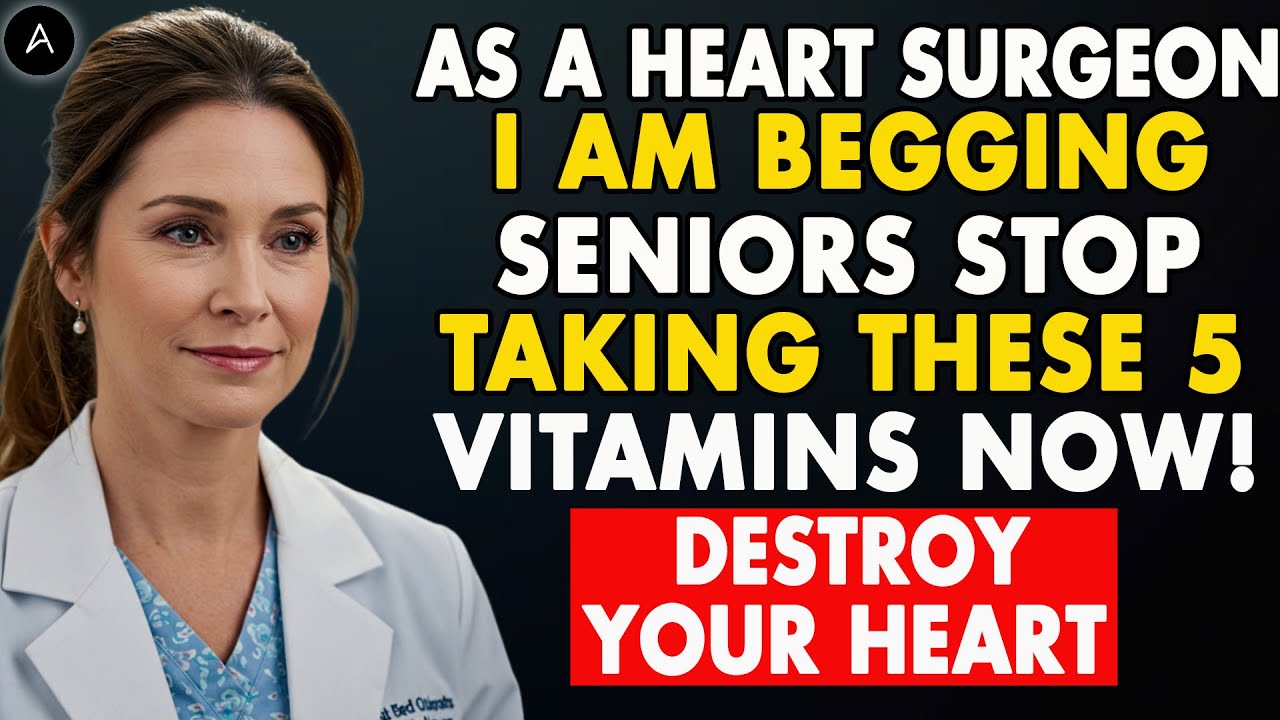
Seniors, I am BEGGING You to STOP Taking These 5 Vitamins That Are Slowly Damaging Your Heart | Senior Health Tips
Not all supplements are safe — and these Senior Health Tips reveal the hidden dangers seniors face when taking common vitamins. From high-dose Vitamin E to calcium without K2, these Senior Health Tips help uncover what could silently harm your heart. Many older adults take pills with good intentions, but as these Senior Health Tips show, even trusted supplements can backfire if not properly managed. Learn which nutrients to avoid, which to consider, and how to support your heart the right way. With these Senior Health Tips, you’ll gain clarity, confidence, and control over your wellness after 60.
🔽 Timestamps:
00:00 – Senior Health Tips
01:42 – Vitamin E
04:10 – Calcium Supplements Without Vitamin K2
06:18 – Iron Supplements
08:43 – Vitamin B6 in Excess
11:08 – Heart Health Multivitamins Loaded with Filler Ingredients
13:34 – What Vitamin Should I Use Instead?
15:48 – Your Heart Still Has Time — If You Choose to Listen
► Playlists: Senior Health Tips
• https://www.youtube.com/playlist?list=PLkXn42yc2EaUZMdxmweWcGCxZF9iVIa8X
► Seniors, 4 Foods You Should Never Reheat – And 4 You MUST Reheat
• https://www.youtube.com/watch?v=uuqjVStSKn0
► Seniors, I am BEGGING You to STOP These 5 Exercises That Are Slowly Damaging Your Heart
• https://www.youtube.com/watch?v=uS-z5uSojhE
▬▬▬▬▬▬▬▬▬▬▬▬▬▬▬▬▬▬▬▬▬▬▬▬▬▬▬
► WISE ADVICE is a place where you can explore the wonderful aspects of life in old age. We aim to share wisdom from seniors, provide valuable knowledge, and inspire as well as motivate our audience with insightful content, wise advice, and more.
▬▬▬▬▬▬▬▬▬▬▬▬▬▬▬▬▬▬▬▬▬▬▬▬▬▬▬
👍 If you enjoyed this video, don’t forget to like ❤️, comment 💬 your thoughts, and subscribe 🔔 to stay updated with more wise advice! ✨
All research and storylines are fully done by us and ours.
► Thank you for watching, I tried very hard to publish this video and I hope it deserves your attention.
© This material is copyrighted (audio and video) and any use without our permission may be punishable under copyright law.
#seniorhealthtips #seniorhealth #seniorwellness
If you’re over 60, every pill you take, every supplement you add to your routine matters more than you think. What you swallow each morning might seem small, but inside your body, it could be silently pushing your heart toward danger. As a heart doctor, I’ve spent years treating older adults who came into my clinic feeling fine, confident in their daily vitamins, and walked out shocked by what we found. elevated blood pressure, irregular heart rhythms, clogged arteries, or worse, a heart on the verge of failure. The truth is, most seniors have no idea that some of the very vitamins marketed as heart-healthy are quietly doing the opposite. It’s not just about diet or exercise. It’s about the pills we trust, the ones we take without a second thought. In this video, I’m begging you to stop taking these five specific supplements. I’ll explain exactly how they affect your aging heart and what you should be using instead. Because yes, your heart can heal, but only if you stop the damage in time. Let’s begin with the most overlooked danger of all. A vitamin most people believe is protecting them, but it’s not. Before we dive in, if you haven’t subscribed yet, I recommend you hit that button and turn on the bell so you never miss another health tip made just for you. If you enjoy this video, type one in the comments. If not, type zero to let me know how I can make better content for you. One, vitamin E in high doses. For decades, vitamin E has been seen as a kind of miracle antioxidant, a daily shield against aging, memory loss, and even heart disease. It’s found in nearly every senior health supplement on the market. And many older adults proudly take 400 to 800 IU a day without hesitation. But here’s the hidden truth that too few know. In high doses, vitamin E doesn’t protect your heart. It puts it in danger. As a heart doctor, I’ve seen it too often. Seniors who are doing everything right, you’re exercising, eating well, taking their vitamins, but still end up in the ER with a weakened heartbeat or unexplained bleeding. One of the culprits, highdose vitamin E. When taken in large amounts, vitamin E thins your blood. That may sound helpful at first until you realize that for seniors whose blood vessels are more fragile and who may already be on aspirin, statins, or blood pressure medications, this effect becomes dangerous. Excess thinning raises the risk of internal bleeding, hemorrhagic stroke, and heart rhythm issues. What’s worse is that the damage is often silent. There are no early symptoms. By the time you feel something is wrong, the harm may already be done. Most seniors don’t need highdose vitamin E at all. In fact, getting it from food like a handful of almonds, a spoonful of sunflower seeds, or leafy greens is safer, more effective, and better absorbed by the body. If you do supplement, do so under medical supervision and never exceed the recommended safe dose, usually under 200 IU per day. So before you pop that next pill thinking it’s helping your heart, ask yourself, is this really what my heart needs or what marketing has made me believe? And if you think that’s the only surprising danger hiding in your medicine cabinet, wait until you hear what calcium might be doing to your arteries. If you’re still watching and finding these insights helpful, please comment number one below to let me know you’re with me. Now, let’s move on to point number two. Two, calcium supplements without vitamin K2. You’ve been told for years that calcium is essential for strong bones and that after 60 your bones become fragile and brittle. So naturally, like millions of older adults, you reach for calcium supplements every day, believing they’re helping to prevent fractures and keep you upright and independent. But here’s what no one told you. Without vitamin K2, that daily calcium might be silently hardening your arteries instead of strengthening your bones. I’ve seen seniors with perfect bone scans but clogged arteries, chest pain, and even heart attacks. Their mistake, they were taking calcium in isolation. You see, calcium doesn’t automatically know where to go in your body. Without guidance, it can settle in the walls of your arteries instead of being absorbed into your bones. This leads to arterial calcification, a stiffening of your blood vessels that makes your heart work harder, raises your blood pressure, and increases your risk of heart failure or stroke. Vitamin K2 is the key to solving this puzzle. It acts like a traffic officer, telling calcium where to go, directing it away from soft tissues and toward your bones where it belongs. But most over-the-counter calcium supplements don’t include it. That’s not just a small oversight. It’s a dangerous gap that too many seniors don’t know about until it’s too late. If you truly want to protect your bones and your heart, get your calcium from whole foods like leafy greens, yogurt, or sardines. And if you must take supplements, choose one that combines calcium with K2 and magnesium. Always ask your doctor what’s right for your body. Because health isn’t about piling on pills. It’s about balance. And if you think calcium was surprising, wait until you hear what excess iron could be doing inside your heart, even if you’ve never been diagnosed with anemia. Three, iron supplements when you don’t need them. Iron is one of those nutrients that sounds essential, and it is in the right amount. But for many seniors, taking iron when it’s not needed is like pouring fuel into an already full tank. Sooner or later, it spills over and causes damage. And in this case, the damage is to your heart. I’ve met many well-meaning older adults who start taking iron because they feel a little tired or because they found it listed in a complete senior multivitamin. They think it’s harmless, just a little boost to fight fatigue. But here’s the truth. Your body has no natural way to get rid of excess iron. When you take more than you need, it builds up, not just in your liver, but also in your heart, your joints, and your brain. This condition, sometimes called iron overload, may go unnoticed for years, but inside it’s doing serious harm. Too much iron creates oxidative stress, a kind of internal rust that weakens the heart muscle, disrupts its rhythm, and increases the risk of heart failure. It can mimic fatigue, memory problems, and joint aches. Symptoms many seniors chalk up to aging. But the root cause might be hiding in your supplement bottle. Before you ever take an iron pill, ask yourself, “Has my doctor actually tested my ferotin or iron levels?” If the answer is no, then pause. Never supplement iron based on guesswork. Many seniors don’t need it at all. And in fact, it may be the one supplement slowly wearing down the very organ trying to keep you alive. So, while iron deficiency is real for some, unnecessary iron is far more dangerous than most people realize, especially after age 60. And speaking of overlooked dangers, there’s one vitamin that appears in almost every brain booster energy pill. But in high doses, it can quietly damage your nerves and disrupt your heart’s natural rhythm. Let’s talk about B6. If you’re still watching and finding these insights valuable, please comment number one below to let me know you’re here. Now, let’s keep going with point number four. Four, vitamin B6 in excess. Over 100 mil. Vitamin B6 is often promoted as a feel-good nutrient. You’ll find it in sleep aids, energy boosters, memory formulas, and even in many brain health supplements designed specifically for seniors. It’s marketed as safe, natural, and essential. But what no one tells you is that too much B6 can quietly damage your nerves, disturb your heart’s rhythm, and leave you feeling worse, not better. Over the years, I’ve spoken with seniors who report these strange tingling in their hands or feet, unsteady balance, or heart palpitations that come and go without explanation. They’ve been told it’s just part of getting older. But often the true cause is something hiding in plain sight. Highdosese B6 in their daily supplements. You see, unlike many vitamins that flush easily from the body, vitamin B6 can build up in your system over time. And once it reaches toxic levels, it begins to damage the protective sheath around your nerves, leading to numbness, burning sensations, and muscle weakness. What’s even more concerning is that too much B6 can also interfere with the electrical signals that keep your heart beating smoothly, leading to irregular heart rhythms that increase your risk of stroke or sudden cardiac arrest. The worst part, most people have no idea they’re overdosing. Many common supplements contain 200 500% of the daily recommended intake. And when combined with energy drinks, sleep aids, or fortified foods, the total amount quickly adds up. The safe approach is simple. Stick with food sources like bananas, chickpeas, and fortified grains, and only take B6 supplements under medical guidance. More is not better, especially when your heart and nervous system are more sensitive with age. Now, if you think vitamins are the only hidden danger in your daily routine, think again. Because the biggest risk might actually be hiding in the multivitamin labeled hearthealthy. Let’s take a closer look. Five heart health multivitamins loaded with filler ingredients. Walk into any pharmacy or grocery store and you’ll see shelves filled with brightly colored boxes labeled heart support, 50 plus essentials or senior vitality. They promise protection, energy, clarity, and peace of mind all in a handful of pills. But behind the marketing, there’s a truth most people don’t know. Many of these so-called heart health multivitamins are packed with unnecessary and sometimes dangerous ingredients that can actually do more harm than good. As a heart doctor, I’ve seen it happen far too often. Seniors come in with unexplained symptoms. Irregular heartbeat, high blood pressure, dizziness, liver strain. And when we dig deeper, the common thread is a daily multivitamin packed with mega doses, stimulants, or herbal blends not meant for aging bodies. Some of these pills contain excess niacin, which can cause liver stress and sudden drops in blood pressure. Others are loaded with caffeine-like herbs, such as green tea extract or jinseng, which can spike heart rate and trigger arrhythmias. Even vitamin A in large amounts can become toxic over time. And worst of all, these risks are often hidden under vague labels like proprietary blend. So you never really know what you’re taking. The truth is, the older we get, the more sensitive our bodies become, especially the heart. A supplement that might be harmless in your 30s can become dangerous in your 70s. That’s why simplicity is often safer. Instead of taking a dozen pills you don’t fully understand, focus on just what you need and let your doctor guide the rest. So before you trust that fancy label or daily health pack, ask who is this really helping, me or the company selling it? But there’s one more thing we need to talk about. Perhaps the most powerful truth of all. Your heart doesn’t just depend on pills. It depends on how you live, breathe, and believe in your ability to change. Let’s bring everything together. Six. What vitamin should I use instead? After hearing all the warnings, you might be wondering, so what’s left? What vitamins can I trust? It’s a good question and one I hear every day from patients who feel overwhelmed by shelves of bottles, internet ads, and well-meaning advice. The truth is, your heart doesn’t need a cabinet full of pills. It needs just a few carefully chosen doctor-guided nutrients, ones that support your body gently and effectively as you age. So, what should you actually consider? Vitamin D3 is one of the few supplements almost every senior needs, especially those who live in colder climates or stay indoors. It helps regulate blood pressure, support your immune system, and keep your bones and heart strong. Magnesium is another unsung hero, helping your heart maintain a steady rhythm while easing muscle tension and improving sleep. And omega-3 fatty acids, ideally from fish oil or flax seed, help reduce inflammation and support smoother blood flow through aging arteries. But here’s what matters more than the label on the bottle. How these nutrients fit into your overall lifestyle. No supplement will ever replace movement. A balanced diet, deep breathing, good sleep, and meaningful connection. Vitamins should support your habits, not make up for harmful ones. Less is often more. What you take matters, but how you live matters more. Before adding any new supplement, have an honest conversation with your doctor or pharmacist. Bring in your full list. Ask questions. Get curious. Because the more informed you are, the better you can protect the heart that’s carried you through a lifetime of experiences. Now, if you’ve ever wondered whether it’s too late to start over, to rebuild a healthier relationship with your heart, your habits, and your future, let me leave you with one truth I’ve seen time and again in my practice. Your heart still has time if you choose to listen. If there’s one thing I’ve learned after decades of treating hearts, it’s that the human heart is far more forgiving than we think. Even after years of stress, poor habits, or misguided choices, it wants to heal. It wants to keep beating strong, but only if you give it the chance. You don’t need to live in fear. You don’t need to throw away every bottle in your cabinet. You simply need to slow down, ask questions, and choose with intention. Your heart doesn’t care about what the label on a supplement promises. It cares about what you consistently do. That means nourishing your body with real food, moving every day, sleeping deeply, managing stress, and yes, being wise about what you put in your body, even if it’s just a vitamin. If you’re feeling overwhelmed, you’re not alone. Every senior I’ve worked with has faced this moment, a turning point between habit and healing. And what I can tell you with certainty is this. It’s never too late. Not at 60. Not at 70. Not even at 90. Your next chapter can be one of strength, clarity, and renewed energy if you listen to your body and start making choices with care. So, please let today be the day you stop believing every pill is safe just because it’s sold over the counter. Start asking better questions. Start protecting the one organ that has never stopped working for you, your heart. It’s been with you your entire life. Now, it’s your turn to be there for it. These lessons are meant to inspire you to live fully and authentically. Now, I’d love to hear from you. Take a moment to reflect and share one thing you’ve learned and plan to apply in your own life. Let’s support each other on this journey toward embracing these truths. If you enjoyed this video, please leave a comment with one. If not, feel free to comment with zero. Your feedback means a lot to us. Don’t forget to like, share, and subscribe to our YouTube channel for more content like this. Thank you for watching and here’s to living life on your own terms.