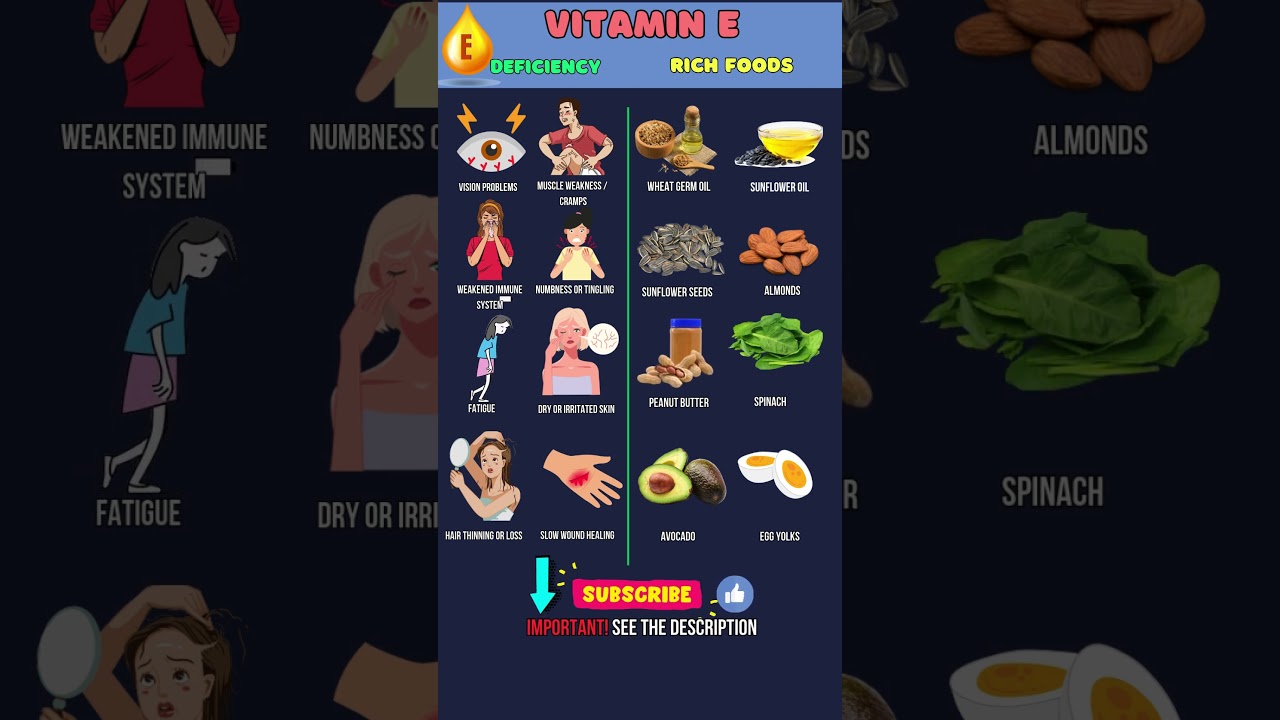
Many people overlook the importance of TOP Vitamin E Rich Foods, but including High Vitamin E Foods in your diet can protect your skin, heart, and brain—especially as you age. If you’re noticing signs like dry skin, fatigue, or muscle weakness, it could be Vitamin E deficiency, so don’t miss out on these Senior Healthy Tips for better vitality!
#vitaminebenefits #vitamine #seniorhealth
20 Vitamin E Rich Foods
Wheat Germ Oil – One of the richest sources (149 mg/100g)
Sunflower Seeds – 35.2 mg/100g (great snack or salad topping)
Almonds – 25.6 mg/100g (rich and convenient snack)
Hazelnuts – 15 mg/100g (high in vitamin E and healthy fats)
Sunflower Oil – 41.1 mg/100g (ideal for cooking or dressing)
Avocado – 2.1 mg/100g (contains healthy fats and vitamin E)
Spinach (cooked) – 3.5 mg/100g (great side dish or smoothie ingredient)
Swiss Chard (cooked) – 3.3 mg/100g (leafy green powerhouse)
Trout (cooked) – 2.8 mg/100g (fatty fish rich in both vitamin E and omega-3s)
Salmon (cooked) – 2.8 mg/100g (anti-inflammatory and brain-healthy)
Olive Oil (extra virgin) – 14.3 mg/100g (heart-healthy cooking oil)
Red Bell Peppers – 1.6 mg/100g (sweet, crunchy, and colorful)
Mango – 0.9 mg/100g (tropical fruit with immune-boosting vitamin C too)
Kiwi – 1.5 mg/100g (rich in both vitamin E and C)
Broccoli (cooked) – 1.5 mg/100g (fiber, antioxidants, and vitamin E)
Tomatoes (raw) – 0.5 mg/100g (adds freshness and nutrients to meals)
Butternut Squash – 1.3 mg/100g (good source of beta-carotene and E)
Peanut Butter (natural) – 6.9 mg/100g (delicious and nutritious spread)
Shrimp (cooked) – ~1.5 mg/100g (lean protein with antioxidant support)
Beef Liver (cooked) – ~0.7 mg/100g (a meat source with modest vitamin E)
DISCLAIMER: The information in this video is not intended as medical advice, diagnosis, or treatment. Always seek the advice of your physician. Also, product links may be affiliate links. Affiliate links support my YouTube channel so I can continue to create videos for you.
We does not provide medical advice. We intend to provide educational information only. The determination of the need for medical services and the types of healthcare to be provided to a patient are decisions that should be made only by a physician or other licensed health care provider. Always seek the advice of a physician or other qualified healthcare provider with any questions you have regarding a medical condition.
Related Posts