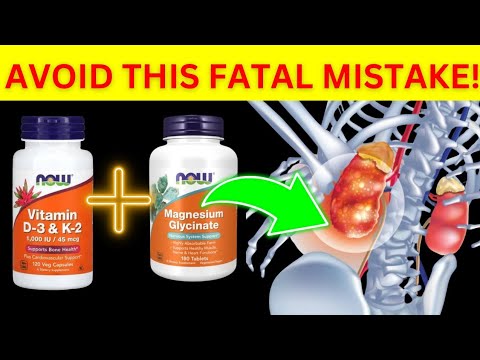
⚠️ Are You Taking Magnesium, Vitamin D3, or K2 the Right Way?
Millions of seniors rely on these essential nutrients for stronger bones, better heart health, and improved muscle function — but here’s the truth: most aren’t taking them correctly.
In this eye-opening video, we uncover the 7 most common and dangerous mistakes seniors make when using magnesium, vitamin D3, and vitamin K2. From wrong combinations and poor timing to overlooked side effects and interactions — these simple missteps can lead to weakened bones, irregular heart rhythms, kidney issues, and more.
🧬 In this video, you’ll learn:
✅ The right way to combine D3, K2, and magnesium for maximum benefit
✅ Which forms of these vitamins are best — and which to avoid
✅ Mistakes that may block absorption or increase health risks
✅ How to safely supplement for bone strength, muscle health & circulation
✅ What most people (and even some doctors) overlook
🔔 Whether you’re already taking these supplements or just getting started, this video could help you avoid serious pitfalls and get the full health benefits you deserve.
👍 Like, comment your experience or questions, and subscribe for more science-based tips for healthy aging.
Medical Disclaimer:
1. The contents of the video and its partner articles and websites, including all text, graphics, images, and other material contained on the channel are strictly for informational purposes only. The Content is NOT intended to be used as a substitute for professional medical diagnosis, advice, or treatment. Please ALWAYS seek the advice of a physician or other qualified health provider with all questions that you have related to or about, a medical condition. Never ignore professional medical advice or delay getting medical advice because of something that you have watched on YouTube.
2. If you think you may have a medical emergency call 911 immediately.
3. Wellness Bubble does not endorse or recommend any specific tests, physicians, products, procedures, opinions, or other information that may be mentioned in our videos. Relying on any information that is provided by Wellness Bubble, its employees, or others appearing in the content is solely at your own risk.
magnesium vitamin D3 and vitamin K2 are hands down some of the most important nutrients for seniors health They support strong bones a healthy heart better sleep improved immunity and even brain function And thankfully more and more seniors are starting to recognize how powerful this supplement combination can be But here’s the problem Because these supplements have become so widely used and recommended many people are now making critical mistakes without even realizing it And these aren’t harmless errors Some of them can lead to dangerous drops in blood pressure kidney stress heart palpitations or even stroke risk especially when taken the wrong way or in the wrong combinations In this video we’re going to break down seven of the most common and dangerous mistakes seniors make when taking magnesium vitamin D3 and K2 Mistakes that we have not covered before More importantly we’ll show you exactly how to avoid them so you can get the full health benefits safely But before we start please take a second to hit the like button and subscribe to the channel It helps this video reach more people who need it especially seniors who could benefit from this life-changing information Now let’s get into it One not getting the quantity you think you’re getting Now what exactly do we mean by this What we mean is that many seniors don’t pay close attention to supplement quality or consistency They switch between brands mix different products and assume that the numbers on the label always match what they’re actually getting But here’s the truth Not all supplement brands are created equal Some overd deliver others underdel and a surprising number don’t even contain what they claim And that can lead to serious health problems especially when you’re relying on magnesium D3 and K2 to correct a deficiency or support your heart and bones Let me give you an example One senior was doing the right thing getting his vitamin D3 and K2 from a reputable brand clearly labeled and well-reed But his magnesium glycinate came from a random less trustworthy brand The label on the bottle boldly said 400 mg of magnesium so he thought he was covered What he didn’t realize that 400 mg was the total amount of magnesium glycinate compound not actual elemental magnesium When tested he was only getting around 23 milligrams of absorbable chilated magnesium barely enough to support even the most basic vitamin D3 activation in the body So while he thought he was taking enough magnesium to support his vitamin D3 in reality he was unknowingly staying deficient This is dangerous because your body needs magnesium to activate vitamin D3 Without enough magnesium your D3 levels may not rise even if you’re taking high doses And that can keep you stuck in deficiency with all the risks that come with it Bone loss poor immunity fatigue and more And it’s not just about magnesium Some people take vitamin D3 and K2 separately which is fine in theory but if your K2 brand underdelivers you’re setting yourself up for calcium buildup in the wrong places like arteries instead of bones The takeaway stick with a single reputable brand for all three supplements magnesium D3 and K2 so you can trust the quality the dosing and the absorption Because when you’re dealing with nutrients that work together underd delivery in one can throw off the entire system This one mistake could be the reason you’re not seeing results Two taking magnesium vitamin D3 and K2 and forgetting potassium When most people start supplementing with magnesium vitamin D3 and K2 they often believe they’re covering all their bases And while these three are incredibly important especially for seniors there’s one critical mineral that’s almost always forgotten Potassium This might not seem like a big deal at first but here’s why it matters Your body’s electrical system everything from your heartbeat to how your muscles contract and your nerves communicate relies on a delicate balance between magnesium calcium sodium and potassium Leave one of these out and the entire system can fall out of sync Now here’s the problem Magnesium while essential can actually push potassium levels down inside your cells when taken in high doses That means if you’re taking magnesium everyday but your diet is low in potassium richch foods you could unknowingly be creating an imbalance Some people experience strange side effects like muscle cramps leg twitching weakness or fatigue that doesn’t make sense Others feel the exact opposite of what they expected more anxious or jittery after starting magnesium And while that may seem confusing at first it starts to make sense when you realize that magnesium only works properly when potassium levels are sufficient Let’s take a typical situation Someone is vitamin D deficient They start supplementing with D3 and K2 and they’ve wisely added magnesium to help activate that D3 in the body but they’re not eating enough potassium richch foods like avocados bananas coconut water sweet potatoes or cooked spinach The result they’re giving their body three powerful tools to rebuild health but missing the fourth tool that holds everything together This imbalance doesn’t always show up on blood tests right away but the body still responds with tension poor sleep heart flutters or sudden dips in energy And many seniors mistakenly assume it’s just aging medication side effects or stress when in reality it could be the quiet voice of potassium deficiency asking for attention The good news is that you don’t necessarily need a potassium supplement In most cases simply eating more potassium richch whole foods is enough to restore balance but it’s a step that far too many overlook when focusing solely on D3 K2 and magnesium Three taking vitamin D3 and K2 with the wrong form of magnesium One of the most overlooked mistakes people make especially seniors is combining vitamin D3 and K2 with the wrong type of magnesium often without even realizing it The most common example using magnesium citrate or magnesium oxide Now at first glance these forms may seem fine They’re cheap They’re easy to find and they’re in a lot of over-the-counter products But when it comes to effectiveness and safety especially in seniors they can actually cause more harm than good Let’s start with magnesium citrate While it’s slightly more absorbable than magnesium oxide it still has lower bioavailability compared to better forms like magnesium glycinate Magnesium citrate is also osmotic meaning it draws water into the intestines and that’s why many people experience loose stools or even full-blown diarrhea when taking it Now here’s the dangerous part That diarrhea doesn’t just cause inconvenience It actually strips your body of vital electrolytes Each trip to the bathroom is a quiet loss of potassium sodium and even magnesium itself Over time this creates an imbalance that can trigger muscle cramps heart palpitations fatigue weakness and even low blood pressure Magnesium oxide is even worse It’s poorly absorbed with bioavailability often as low as 4% meaning almost none of it reaches your cells So while you might think you’re taking 400 milligrams of magnesium your body may only be absorbing a tiny fraction of that and still suffering the digestive side effects Four sticking to the RDA for vitamin D3 and thinking it’s enough This next mistake is incredibly common and potentially dangerous Many seniors still believe that following the recommended dietary allowance for vitamin D is enough to maintain good health typically around 400 to 600 IU per day But here’s the truth For most older adults that’s nowhere near sufficient A large percentage of seniors are already chronically low in vitamin D without even realizing it Between aging skin that doesn’t produce vitamin D is efficiently and a sedentary indoor lifestyle that limits sun exposure it’s no wonder that deficiency is so widespread You might think taking a small RDA dose daily is doing the job But according to multiple studies these low doses are often about as effective as taking nothing at all especially if your levels are already depleted In fact many researchers now agree that most seniors require between 5,000 and 10,000 IU per day depending on their current blood levels body weight and sun exposure And this isn’t about mega dosing for no reason It’s about maintaining optimal levels that protect your bones immune system brain and heart But here’s the key Highdose D3 should never be taken alone When you take vitamin D3 without pairing it with vitamin K2 you increase the risk of calcium going to the wrong places like your arteries or kidneys rather than your bones That’s why experts recommend taking 50 to 100 mcg of vitamin K2 ideally in the MK7 form alongside your daily vitamin D Five underestimating the importance of co-actors like zinc and boron A lot of people focus heavily on the big three Magnesium vitamin D3 and vitamin K2 And while that’s a powerful combination there’s a critical piece that’s often missing from the conversation The co-actors specifically zinc and boron These may sound like minor trace minerals but don’t let that fool you Without them the other nutrients you’re taking may not work the way you expect Let’s start with zinc Zinc plays a key role in immune health hormone balance and vitamin D activation But what many people don’t realize is that a severe zinc deficiency can lead to something called leaky gut A condition where the lining of your intestines becomes too porous allowing undigested food particles and toxins to leak into your bloodstream This creates systemic inflammation weakens your immune system and disrupts nutrient absorption So imagine this You’re faithfully taking magnesium D3 and K2 every day You’re doing everything right but your gut is compromised because you’re low in zinc meaning your body can’t even absorb or utilize those nutrients properly It’s like pouring water into a cracked bucket Zinc deficiency is also shockingly common among seniors Then there’s boron a lesserk known but equally important mineral Boron helps your body hold on to magnesium supports bone strength and enhances vitamin D3’s effectiveness at the cellular level Without boron you may be losing magnesium faster than you’re taking it in especially if you’re under stress or have kidney issues Six not cutting out foods that deplete magnesium This final mistake is one that most people never think about even those who are faithfully taking their magnesium supplements every day It’s the mistake of continuing to eat foods that quietly deplete your magnesium without even realizing it And here’s the surprising truth It’s not just junk food or processed sugar that’s the problem Even so-called healthy carbs like oatmeal whole wheat bread brown rice and cereals can drain your body’s magnesium stores if you’re already borderline deficient And that includes most seniors Seven not going for periodic checkups One of the most dangerous mistakes seniors make when taking magnesium vitamin D3 and K2 is not going for regular medical checkups And this isn’t just about routine blood pressure or cholesterol checks It’s about understanding how your kidney function is doing Because your kidneys play a huge role in whether these supplements help your body or harm it See the kidneys aren’t just waste filters They regulate how much magnesium and calcium your body retains They help maintain the delicate balance of minerals in your blood and they determine how much vitamin D3 your body can safely process If your kidneys are underperforming even slightly it changes everything What might be a safe dose of magnesium or D3 for someone else could be too much for you simply because your kidneys aren’t clearing out the excess The most alarming part is that kidney changes often show up without any obvious symptoms You might feel fine no pain no swelling no warning signs But behind the scenes your kidneys could be working at 60% 40% or even lower and you wouldn’t know it until damage has already been done It often starts with subtle fatigue dry or itchy skin muscle weakness or slightly puffy ankles But many seniors write those things off as just getting older Now you know taking magnesium vitamin D3 and K2 can be life-changing but only if you do it right These nutrients are powerful especially for seniors But as you’ve seen just one mistake like using the wrong form of magnesium ignoring potassium or relying on outdated RDA doses can silently sabotage your efforts If any of these seven mistakes surprised you let us know in the comments Which one have you been making without realizing it Or do you have a personal story to share about your experience with these supplements We read every comment and we’re building a community here of people who are taking their health seriously the smart way If you found this video helpful please like it share it with someone you care about and don’t forget to subscribe and turn on the bell icon so you never miss new sciencebacked tips designed especially for seniors Thanks for watching and we’ll see you in the next one