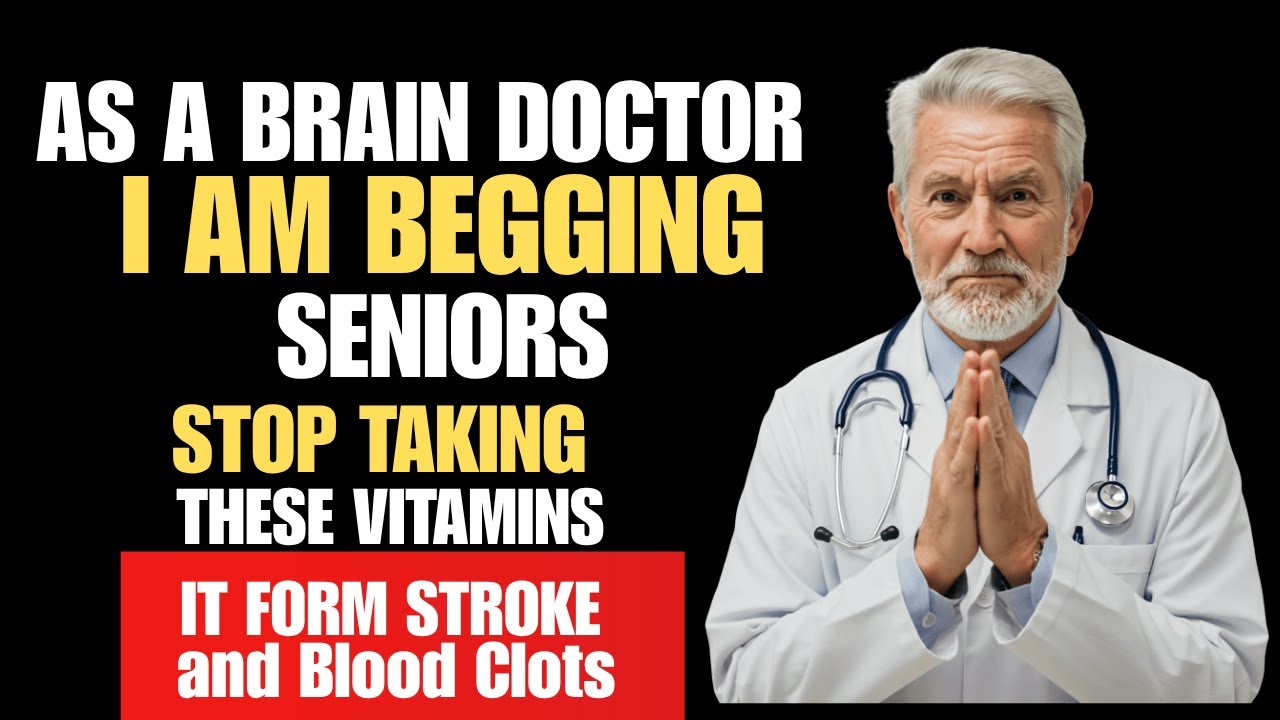
AS a BRAIN Doctor, I’m SHOCKED: These Eight Vitamins Raise Stroke Risk Overnight || Senior Health | Health Axis
Are your daily vitamins putting your brain at risk? Shocking new research reveals that 8 common vitamins often taken for better memory, bone health, and energy may actually increase your risk of stroke especially overnight while you sleep.
In this eye-opening video from Health Axis we break down the silent dangers of these vitamins, explain how they affect blood pressure, brain vessels, and clotting and share expert-backed advice for seniors over 50.
Some doctors warn that taking certain supplements at the wrong time or in high doses can quietly raise the chance of a brain bleed, clot, or hypertension even in otherwise healthy adults.
👉 Learn which vitamins to avoid, when NOT to take them, and what safer alternatives exist.
The 8 vitamins linked to increased stroke risk
Why morning hours are the most dangerous for your brain
Doctor-recommended guidelines for safe supplement use
Natural, safer alternatives for seniors
Especially important for:
Seniors over 50, caregivers, stroke survivors, and anyone taking vitamin supplements daily.
Subscribe to Health Axis https://youtube.com/@HealthAxis-y3u?si=Zg8ghwQEDVjIq2Qv for expert-backed videos on senior health, natural wellness, and medical alerts you need to know.
Uric Acid lowering naturally : https://youtu.be/VY4cRDVq9g8?si=W_tainQ4tFMsj7Am
#strokerisk #seniorhealth #VitaminWarning #SupplementsOver50 #brainhealth #strokeprevention #healthtipsforseniors #naturalhealth #doctorexplains
every night millions of adults over 50 take vitamins hoping to protect their health their brain their energy their bones but some of those very pills could be setting them up for a silent stroke no warning no pain just one moment life is normal and the next it isn’t some health experts are sounding the alarm about specific vitamins that when taken in the wrong dose or form may quietly raise stroke risk overnight irene Quay Clinical Health host Stacy Tip if you or someone you love takes daily supplements especially for brain or heart support this information could be more important than you realize if this kind of information helps you or someone you care about take a moment to subscribe for more health tips made especially for people over 50 your support means more people can avoid these hidden risks don’t forget to like and share with someone else who may need to hear this today vitamin B6 often found in B complex supplements is commonly taken by older adults to support energy brain health and nerve function while this vitamin plays a vital role in the body some health experts warned that taking too much of it especially in supplement form may actually increase the risk of stroke over time the concern lies not in B6 from food but in the highdosese pills that many people take daily without realizing the potential dangers studies have shown that when vitamin B6 levels become too elevated the nervous system can become overstimulated this overactivation can affect small blood vessels in the brain and elsewhere in the body weakening them and making them more vulnerable to damage one of the most troubling links between highdosese vitamin B6 and stroke risk involves homocyine homocyine is a natural amino acid in the blood but elevated levels of it are known to increase the risk of both heart disease and stroke although vitamin B6 along with B12 and folate is usually thought to help lower homocyine taking too much B6 can sometimes disrupt this balance some clinical findings suggest that in high concentrations vitamin B6 can act counterproductively triggering shifts in methylation pathways that may raise homocyine instead of lowering it especially if other nutrients are out of balance for seniors who are already at risk due to age blood pressure or circulation issues this creates a silent but serious threat a 72year-old man was experiencing numbness in his feet and assumed it was aging when he began falling more frequently doctors ran tests and discovered B6 levels more than 10 times the safe limit he had been taking a nerve health supplement daily unaware it contained 100 million of B6 the damage to his nerves was already done another concern raised by neurologists is that chronic highdosese B6 use typically over 100 mg per day can lead to nerve toxicity this may cause symptoms such as tingling numbness or even difficulty walking what makes this particularly dangerous is that these symptoms often develop slowly and may be mistaken for aging or arthritis over time the small vessels that nourish nerves and brain tissue may also be harmed adding yet another layer of risk for stroke or many strokes the recommended daily intake for vitamin B6 for adults over 50 is just 1.5 to 1.7 mg yet many over-the-counter B complex or energy supplements contain 50 100 or even 200 mg per pill taking these high doses regularly without medical guidance can quietly lead to toxicity some patients only discover the problem after nerve tests blood work or experiencing a vascular event doctors caution that unless a severe deficiency is diagnosed there is no benefit and considerable risk in exceeding 100 mgram daily in fact several cases have been documented where reducing vitamin B6 intake led to improved nerve function and better vascular health outcomes many people assume that all vitamins are safe at any level but that’s simply not the case fat soluble vitamins like A or D are more well known for toxicity but B6 though water soluble can accumulate in the body when taken in large quantities daily this is especially true for seniors whose kidneys may not process excess nutrients as efficiently some physicians now recommend checking all supplement labels carefully especially for those taking multiple products that may unknowingly stack B6 levels far beyond safe limits stroke risk in older adults is influenced by many factors but avoiding highdose vitamin B6 is one preventive step that can be controlled synthetic vitamin E often labeled as dalmanato is a common ingredient in multivitamins and standalone supplements while vitamin E in its natural form known as Dalma has shown protective benefits for the brain and heart the synthetic version may carry hidden dangers for older adults one of the most serious concerns is its effect on blood clotting synthetic vitamin E can thin the blood beyond what the body needs especially when taken in large or prolonged doses for seniors who may already be taking medications like aspirin or blood thinners this creates a significant risk of internal bleeding research has shown that excessive thinning of the blood can lead to hemorrhagic stroke a type of stroke caused by bleeding in or around the brain this form of stroke is less common than a schemic stroke which is caused by a blood clot but it is often more severe and more likely to result in long-term disability or death hemorrhagic stroke tends to affect older adults more severely and recovery is much more difficult doctors have raised concerns that seniors who regularly take synthetic vitamin E supplements without knowing the form or dose may be unknowingly increasing their risk for these dangerous bleeding events the body does not treat synthetic and natural vitamin E the same way studies comparing the two forms have found that natural vitamin E is more readily absorbed and better utilized while the synthetic version can linger in the bloodstream and interact with clotting mechanisms in unpredictable ways some physicians have reported that patients on synthetic vitamin E experienced increased bruising prolonged bleeding from small cuts and in rare cases bleeding in the brain these symptoms are sometimes dismissed or misattributed to aging or medication side effects delaying proper diagnosis and care another issue is dosage many synthetic vitamin E supplements provide far more than the recommended daily amount often 400 IU or more per capsule this is well above what most adults need and for older adults with delicate blood vessels or other cardiovascular conditions this excess can be harmful rather than helpful clinical reviews have indicated that high doses of synthetic vitamin E may interfere with the clotting process and amplify the effects of anti-coagulant drugs further increasing the likelihood of hemorrhage a woman in her late 70s added synthetic vitamin E to her daily routine after reading it could support circulation she was already on a lowdose aspirin and within weeks she developed unexplained bruising and was later hospitalized for a brain bleed the combination had thinned her blood too much something she had never been warned about because the label vitamin E doesn’t always specify whether it’s natural or synthetic many people don’t realize what they’re taking the difference between delta and DLPA may seem small but the impact on the body can be substantial medical professionals often advise patients over 50 to read labels carefully and avoid highdosese synthetic vitamin E unless specifically prescribed and monitored safer sources of vitamin E such as food or lowdose natural supplements do not carry the same risks for seniors concerned about brain and heart health it’s important to understand that not all vitamins are created equal while vitamin E has its benefits the synthetic form in many over-the-counter products may increase the danger of serious bleeding avoiding unnecessary supplementation and being aware of the form and dosage of vitamin E can play a critical role in protecting long-term health and reducing stroke risk vitamin D plays a key role in protecting cardiovascular and brain health especially for adults over the age of 50 low levels of vitamin D have been strongly linked to several conditions that increase stroke risk including high blood pressure insulin resistance and type 2 diabetes research shows that people with low vitamin D levels are more likely to experience arterial stiffness which reduces blood flow to the brain and increases the likelihood of both eskeemic and hemorrhagic strokes keeping vitamin D within an optimal range between 30 to 50 nanogs per milliliter is considered by many health experts to be one of the simplest ways to support vascular function and reduce stroke risk in seniors a retired school teacher had low energy joint pain and trouble sleeping her doctor found her vitamin D levels were dangerously low after supplementing correctly her blood pressure improved and her risk markers for stroke decreased but the same doctor warns that too much vitamin D especially over 4,000 IU daily can stiffen arteries and raise stroke risk instead doctors often check vitamin D status through a routine blood test especially in older adults who spend less time in sunlight or who have limited mobility when vitamin D levels fall too low the body can have trouble regulating inflammation and blood pressure this makes the blood vessels more prone to damage and can lead to the formation of clots or cause vessel walls to weaken over time maintaining healthy levels of vitamin D may also improve endothelial function the thin lining inside arteries and veins which plays a critical role in keeping the brain properly supplied with oxygenrich blood however more is not always better while correcting a deficiency is important excessive vitamin D supplementation can become dangerous intakes above 4,000 IU per day over time can cause calcium to build up in the bloodstream a condition known as hypercalcemia this can lead to hardening of the arteries kidney stones and in rare cases damage to the heart and brain seniors are particularly vulnerable because their kidneys may not process calcium as efficiently increasing the risk of complications from overs supplementation some cases have been reported where highdosese vitamin D taken without monitoring led to symptoms such as confusion weakness and even vascular calcification health professionals generally recommend that adults over 50 avoid self-prescribing large doses of vitamin D without a confirmed deficiency for most seniors a daily intake between 800 and 2,000 IU is sufficient to maintain optimal blood levels without crossing into the danger zone in cases of deficiency temporary higher doses may be prescribed by a doctor but should always be monitored through follow-up tests safe vitamin D levels not only help lower stroke risk but also support mood immune strength and cognitive clarity making it a valuable nutrient when used wisely and in proper balance vitamin A in the form of retinol is commonly included in multivitamins and supplements targeted at older adults often promoted for vision skin and immune health however when taken in excess this preformed version of vitamin A may silently increase the risk of stroke unlike beta carotene which the body converts to vitamin A as needed retinol is absorbed directly and stored in the liver high levels can accumulate over time especially in seniors whose metabolism and organ function may slow with age some studies have shown that long-term intake of highdosese retinol may raise blood pressure harden arteries and contribute to vascular calcification all key factors linked to increased stroke risk excessive vitamin A intake has been associated with changes in the elasticity of blood vessels when arteries lose flexibility the heart must work harder to pump blood through the body increasing both systolic and diastolic pressure this strain on the cardiovascular system can be especially dangerous in older adults who may already be managing hypertension or other circulation conditions in some cases retinol supplements may also interfere with vitamin D and calcium regulation leading to deposits of calcium in soft tissues including arteries these deposits can restrict blood flow to the brain increasing the likelihood of eskeemic stroke doctors warn that the danger is often hidden as early signs of vitamin A overload are subtle or mistaken for other issues such as fatigue dry skin or joint pain the upper limit for safe intake of pre-formed vitamin A is generally considered to be 3,000 micrograms per day for adults yet some supplements contain amounts close to or exceeding this in a single dose seniors who take multiple supplements without checking labels may unintentionally surpass this limit liver stores of retinol also deplete slowly meaning the effects of excess intake can linger even after supplements are stopped medical professionals often recommend avoiding highdosese retinol unless prescribed for a specific deficiency instead they suggest relying on foodbased sources or supplements that contain beta carotene which poses a lower risk of toxicity for individuals over 50 especially those with a history of cardiovascular issues or high blood pressure careful monitoring of vitamin A intake can be an important part of stroke prevention being aware of the form and dosage of this vitamin is a simple but powerful way to protect brain and heart health in later life vitamin K2 especially in the MK7 form plays a crucial role in supporting cardiovascular health by guiding calcium away from the arteries and into the bones where it belongs without enough vitamin K2 calcium absorbed through diet or supplements may end up in the blood vessels leading to hardening of the arteries this condition known as vascular calcification is a major risk factor for stroke particularly in seniors the process can develop silently over many years gradually reducing blood flow to the brain and increasing the chance of both eskeemic and hemorrhagic strokes an 80year-old woman took a multivitamin and a skin supplement daily both with high doses of retinol over time she developed rising blood pressure and early calcification in her arteries she didn’t know that too much preformed vitamin A can harden blood vessels silently raising the risk of stroke without any obvious early symptoms studies have found that people with low levels of vitamin K2 tend to have more arterial stiffness and are more likely to experience cardiovascular events this is especially concerning for older adults who are already at higher risk due to age changes in vessel elasticity the MK7 form of vitamin K2 is considered the most effective because it stays active in the body longer and reaches the blood vessels more efficiently it activates a protein called matrix gap protein which helps prevent calcium deposits in the arteries this function is essential for keeping the vascular system flexible and capable of carrying blood smoothly to the brain doctors often note that vitamin K2 works best when taken alongside vitamin D and magnesium vitamin D helps with calcium absorption while magnesium supports muscle and nerve function including the muscles that control blood vessels together these nutrients create a balance that promotes bone strength without putting strain on the heart or brain for seniors already taking vitamin D supplements adding K2 may help reduce the risk of unintended calcium buildup in soft tissues most people do not get enough vitamin K2 from diet alone especially those who do not regularly eat fermented foods or organ meats supplementing with MK7 in moderate doses has been shown to be safe and beneficial for long-term vascular health for adults over 50 maintaining healthy arteries is key to preventing stroke and vitamin K2 can be a valuable part of that protection niacin also known as vitamin B3 is commonly taken to help manage cholesterol levels especially by individuals concerned about heart health while it can be effective in raising HDL or good cholesterol highdosese niacin supplements carry risks that are especially concerning for older adults when taken in large amounts often 500 milligrams or more per day niacin can trigger sudden drops in blood pressure these episodes of low blood pressure known as hypotension may lead to dizziness fainting or reduced blood flow to the brain increasing the risk of stroke particularly in seniors who already have compromised circulation some doctors caution that highdosese niacsin can also disrupt how the body processes glucose leading to increased insulin resistance this effect is particularly troubling for older adults with type 2 diabetes or those at risk for metabolic syndrome both of which are known contributors to vascular damage and stroke when insulin resistance worsens it places additional pressure on the blood vessels and can accelerate the development of atherosclerosis the hardening and narrowing of arteries which directly elevates stroke risk another concern is the effect of nascin on heart rhythm studies have shown that excessive intake may provoke irregular heartbeats or palpitations in some individuals these arrhythmias can reduce the efficiency of blood circulation and raise the chances of clots forming in the heart chambers if such a clot travels to the brain it can cause an eskeemic stroke seniors with existing heart conditions or those on medications to regulate rhythm are especially vulnerable to this complication while niacin is available in both prescription and over-the-counter forms the non-prescription versions are often taken without proper monitoring the sustained release or timed release types can be particularly harsh on the liver and cardiovascular system health professionals stress the importance of using niacin cautiously and only under medical supervision for seniors the goal should always be to protect brain and heart health without introducing new risks highdosese niain may seem helpful for cholesterol management but the potential tradeoffs especially in terms of stroke risk can outweigh the benefits when not carefully controlled vitamin C plays a protective role in maintaining healthy blood vessels and reducing the risk of stroke particularly in adults over 50 it acts as a powerful antioxidant helping to neutralize free radicals that contribute to oxidative stress a condition that damages cells and accelerates the aging of arteries by reducing this oxidative burden vitamin C supports the integrity of vessel walls and helps prevent the buildup of plaque that can lead to clots or restricted blood flow to the brain studies have shown that individuals with higher vitamin C levels tend to have lower levels of inflammation a key factor in stroke and heart disease risk a 67year-old man with high blood pressure added a buffered vitamin C supplement to support his vascular health over time his inflammation markers dropped and his circulation improved doctors warned that while vitamin C is protective doses above 2,000 mg daily can strain the kidneys especially in older adults with existing health conditions in addition to its antioxidant effects vitamin C also promotes the production of collagen a protein that provides structure to blood vessel walls stronger vessels are less likely to rupture or leak making them more resilient against both eskeemic and hemorrhagic strokes for seniors whose blood vessels may naturally weaken with age this support can be especially valuable buffered vitamin C supplements which are gentler on the stomach or foodbased sources such as citrus fruits and vegetables are often recommended for daily use however the dosage matters while moderate daily intake is safe and beneficial excessive amounts especially above 2,000 milligrams per day can lead to complications in older adults high doses may strain the kidneys potentially leading to the formation of kidney stones or worsening existing kidney issues this risk increases with age as the body’s ability to filter and process nutrients declines doctors typically advise staying within recommended limits and choosing forms of vitamin C that are easier to absorb and less likely to cause side effects used wisely vitamin C can be an important part of stroke prevention by supporting vascular strength reducing inflammation and protecting the brain’s delicate network of blood vessels calcium supplements when taken alone without vitamin D or vitamin K2 can pose a serious health risk for older adults while calcium is essential for maintaining strong bones excessive intake especially in doses over 1,000 mg per day may increase the risk of arterial plaque buildup when not properly balanced with other key nutrients studies have shown that unopposed calcium can deposit in the walls of blood vessels rather than being directed into bones leading to calcification that stiffens arteries and narrows blood flow this can raise blood pressure and increase the likelihood of stroke particularly in seniors who already face age vascular changes without sufficient vitamin D the body cannot absorb calcium efficiently from the digestive system as a result calcium may accumulate in the bloodstream where it can settle in soft tissues like the arteries vitamin K2 especially in the MK7 form plays a crucial role in activating proteins that help guide calcium away from the arteries and into the bones when either of these vitamins is missing calcium metabolism becomes unbalanced fiber K2 doctors warned that this imbalance not only limits the benefits of calcium supplementation but may actively contribute to cardiovascular problems older adults are often advised to supplement calcium to protect against osteoporosis but doing so without considering the full picture of nutrient interaction may cause more harm than good excess calcium in the bloodstream can also interfere with the normal function of the kidneys leading to complications that further increase cardiovascular strain this becomes especially dangerous when combined with high blood pressure or pre-existing heart conditions medical experts consistently recommend that calcium supplements should never be taken in isolation instead they should be part of a carefully monitored regimen that includes vitamin D and vitamin K2 to ensure proper absorption and safe distribution throughout the body for seniors concerned about both bone strength and stroke prevention avoiding standalone calcium is a critical step toward protecting overall vascular health