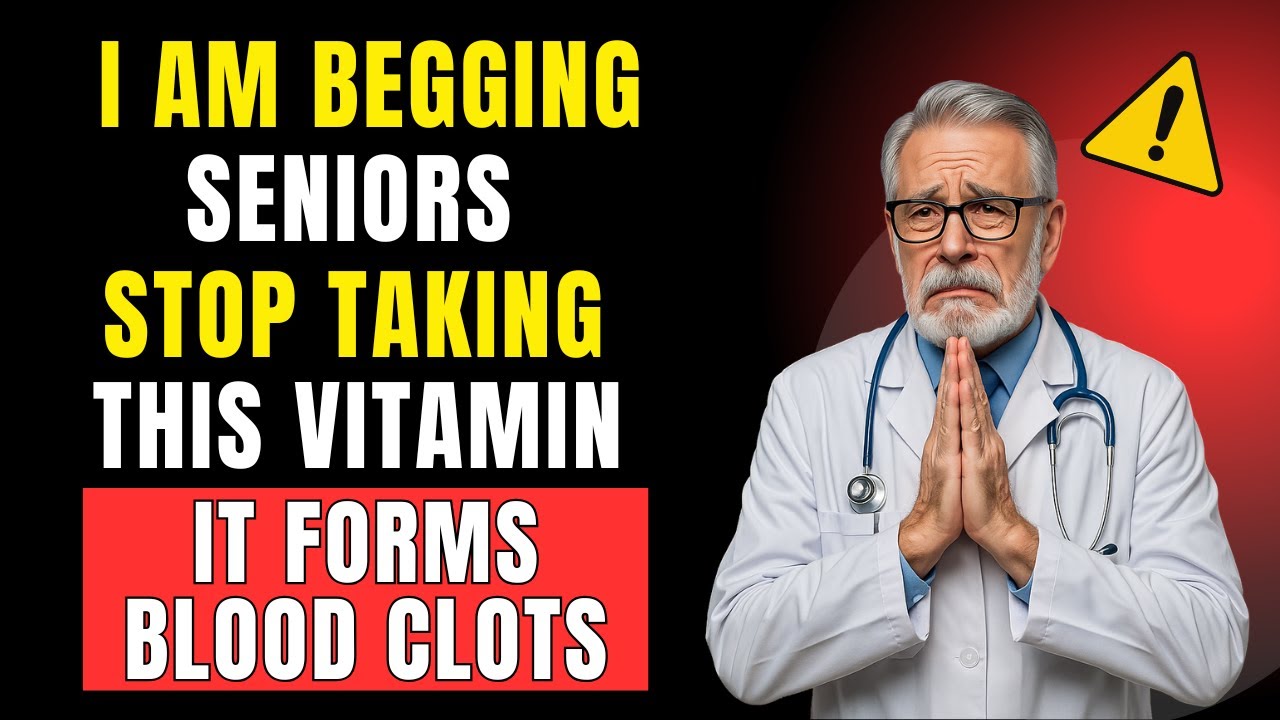
💊 This vitamin may increase stroke risk overnight in seniors. A brain doctor reveals how supplements can affect senior wellness, stroke prevention, and long-term brain health after 60.
You go to bed feeling perfectly fine. No warning signs. No pain.
But by morning, your body has changed. Your speech is slurred. One arm won’t move. You’ve had a stroke — in your sleep.
And it wasn’t caused by cholesterol, poor diet, or lack of exercise.
It happened because of something millions of older adults do every day — a “healthy habit” that may not be so healthy after all.
In this eye-opening video, you’ll discover: 👇
🔴 The shocking reason a popular vitamin may be dangerous to seniors
🧠 How it quietly affects blood flow and brain function while you sleep
😱 Why most people have no idea it’s harmful — until it’s too late
✅ What to take instead to support real senior wellness without risk
⚠️ This is not fear-mongering. This is medical truth — and it could save your life.
⏱️ TIMESTAMPS
00:00 The Shocking Truth About Stroke While You Sleep (Hook)
05:30 Vitamin D: Raises Stroke Risk
08:08 Vitamin E: Can Cause Brain Bleeds
11:33 Vitamin B6: Causes Nerve Damage
15:30 Vitamin A: Triggers Brain Pressure
21:28 Niacin (B3): Spikes Blood Pressure
23:40 Brain-Healthy Foods, Final Advice for Senior Wellness & Vitamin Safety
⚠️ Don’t Assume You’re Safe
If you (or someone you love) is over 60 and taking vitamins…
you NEED to watch this.
This video could change how you think about supplements forever.
🎯 Watch now before it’s too late
📤 Share this video with every senior you know
👍 Like if you care about real health, not hype
🔔 Subscribe for weekly expert content on brain health, stroke prevention & senior wellness
https://www.youtube.com/channel/UCEhZZknYKaAsd1Y7xl_nrZA?sub_confirmation=1
🧓 Why It Matters for Senior Wellness
We created this video to bring clarity, truth, and urgency to what’s becoming a silent crisis in senior wellness.
While most people trust vitamins, not all supplements are safe — especially not for older adults.
Let’s fix that.
We’re here to help you protect your mind, your body, and your future — one fact at a time.
This is senior wellness with eyes wide open.
———————————————
#seniorwellness #seniorhealthtips #seniorhealthcare #seniorhealthadvice #seniornutrition #goldenage365 #seniorhealth #elderlywisdom #food #SeniorWellness #StrokeRisk #VitaminWarning #BrainDoctor #Over60Health #SilentStroke
You go to bed feeling perfectly fine. No pain, no
warning signs, just another ordinary night. But sometime between midnight and morning, something
changes. You wake up and suddenly your speech is slurred. One arm won’t move. It wasn’t caused by
lack of exercise or high cholesterol. Your balance is off. It’s not a bad dream. It’s a stroke. And
it happened while you were sleeping. Now, here’s the part that shocks most people, especially older
adults. This didn’t happen because of a poor diet. It wasn’t even due to smoking. In fact, the person
this happened to had done everything right. Or so they thought. Something labeled as natural,
essential, even doctor recommended. Because the truth is, there’s a small daily habit that
millions of Americans over 60 are doing right now. A habit they believe is helping their health.
Something that’s sold in nearly every pharmacy and grocery store across the country. But this one
simple habit could quietly be raising your risk of a stroke every single night. What is it?
Vitamins. Yes, vitamins. For decades, we’ve been told that vitamins are the key to staying
healthy as we age. Stronger bones, better memory, more energy. Patients in their 60s,7s, and 80s.
People just like you who are active, smart, and healthconscious, blood pressure spikes, especially
overnight when your brain is most vulnerable. And today I want to share something I believe every
person over 60 needs to hear us. But all it took was one overlooked mistake and everything changed.
In many cases, it’s a supplement, a vitamin, something they thought was helping them. I
meet patients who eat well, stay active, take their medications, and still they show up with
symptoms of stroke, memory loss, or nerve damage. Many are essential, especially when prescribed
based on your lab work. And while some can be beneficial, others, when taken in the wrong
amount or at the wrong time, can silently do more harm than good, especially to your brain. As a
neurologist, I’ve seen it firsthand. The truth is, what works for a 30-year-old may not work or may
even be dangerous for someone in their 70s. So, here’s my question to you. Could your daily
vitamin routine be quietly putting your brain at risk? Have you ever questioned whether your
vitamins might be doing more harm than good? Type one in the comments if you’ve wondered.
Type zero if this is all new to you. He’s 73, a retired mechanical engineer, sharp as attack,
and proud of keeping a steady daily routine. He had picked it up at the local health store
because he’d heard it was good for his bones. In today’s video, we’re going to uncover the five
most common vitamins that can increase your risk of stroke, brain bleeds. So stay with me because
the truth about your vitamins could be the key to protecting your brain and your independence for
years to come. It’s all traced back to vitamin D toxicity. His right arm was limp. We ran a
brain scan and the diagnosis was clear. He had suffered a stroke. It’s promoted as essential
for strong bones, immune support, and even mood. But when you take large doses of vitamin D,
especially without proper medical supervision, your body can absorb too much calcium, especially
at night, when your body is dehydrated, your blood is thicker and your brain is more vulnerable.
And if your kidneys can’t flush it all out, that extra calcium starts to build up in your
blood. In fact, taking vitamin D before bed may increase your risk of a nighttime calcium spike,
which makes strokes more likely during the early morning hours when most strokes occur. And to be
fair, vitamin D does play a crucial role in your overall health. How many international units are
in each capsule? If it’s more than 1,000 to 2,000 IU and you haven’t had your blood levels tested,
talk to your doctor. This might be one of the most important videos you’ll watch this year. So, even
if you stop for a while, the effects can linger. Your body handles it better earlier in the day
when you’re more active and better hydrated. I’m Dr. James Cartwright, a neurologist who has spent
more than two decades working with older adults, helping them preserve memory, mobility, and
independence. 5,000 IU, 10,000 IU, in some cases, even life-threatening. But he told me something
I’ll never forget. I thought I was doing the right thing. I had no idea a vitamin could hurt me.
They hear it’s safe and natural. So, they take it without thinking twice. Because when it comes to
your brain, it’s not just about what you add. It’s about understanding what your body truly needs and
when. But research shows that even 2,000 IU per day might be too much if you re, not actually
deficient. But in the wrong context can lead to something even more dangerous than a clot, a
brain bleed. Because in all my years of practice, one pattern keeps coming back. When we trace it
back, the cause isn’t always what you’d expect. Now, don’t get me wrong. I’m not here to say all
vitamins are bad, but when vitamins are taken in high doses or mixed with certain medications
or taken at the wrong time of day, that’s when problems begin. This video is for anyone who’s
ever bought a bottle of supplements thinking, “It’s natural. It must be safe.” So today we
were going to look at five common vitamins that may quietly raise your risk of stroke or
other brain related complications, especially when taken at night. These are vitamins you’ve
likely seen on storeshelves, maybe even in your own cabinet right now. Before we begin, I’d love
to hear from you. Now, let’s begin with the first and perhaps the most misunderstood supplement on
the list. There’s one vitamin most seniors have been told to take. It’s vitamin D. But here’s what
most people don realize, especially as they age. When taken in high doses or at the wrong time,
vitamin D can actually become dangerous. Let me tell you about a patient of mine, Mr. Robert
Miller. Every morning, he lined up his pills, blood pressure meds, a baby aspirin, and a large
vitamin D capsule minus 10,000 IU. At first, nothing seemed wrong. But then one morning, his
wife found him sitting at the kitchen table, confused and barely able to speak. What shocked
his family and even his primary doctor was what caused it. Extremely high calcium levels in his
blood, stiffened arteries, and unstable blood pressure. Here’s the science behind it. Vitamin D
helps your body absorb calcium, which is good in moderation. What happens next? The calcium doesn’t
just float around harmlessly. gets deposited into your arteries, making them hard and narrow. That’s
the perfect setup for a blood clot and a stroke. And here’s something even more concerning. Many
over-the-counter supplements in the US contain far more vitamin D than most older adults need.
Some people take these amounts daily for years, thinking more must be better. Now, most seniors
aren’t told this, and many never have their vitamin D levels checked. But the reality is
your body dose and tea need high doses every day and it definitely dose and tea need them at
night. So what should you do? First, if you’re taking a vitamin D supplement, check the label.
Second, always take vitamin D in the morning, not at night. Third, be especially cautious
if you’re also taking calcium supplements or medications for the heart or kidneys. These
combinations can amplify the risks. And finally, remember that vitamin D is fat soluble. It means
it gets stored in your body, not flushed out like vitamin C or B complex vitamins. Mr. Miller is
recovering now. He’s walking again slowly and working with a speech therapist. That’s why this
conversation is so important. Now, if you thought that was surprising, wait until you hear about
the next vitamin. one that’s often praised for heart health, but in the wrong context can lead
to something even more dangerous than a clot, a brain bleed. Among all the vitamins people
take for heart health, vitamin E is one of the most popular. It’s often marketed as a heart
helper. Praised for its antioxidant properties and its supposed ability to improve circulation
and even memory. You’ll find it in multivitamins, brain support formulas, and standalone capsules,
sometimes in very high doses. But here’s the part most labels Dante tell you. When taken in large
amounts, especially if you’re also on heart medication, vitamin E can significantly increase
your risk of internal bleeding, including bleeding in the brain. She took good care of herself. Let
me share the story of Mrs. Eleanor Hayes. She’s 81 years old, a retired librarian from Vermont.
Always sharp, always organized, and wellinformed. She had a heart valve issue and was on Warfaren, a
common blood thinner. Her blood work was monitored regularly. Everything looked fine until it wasn’t.
Eleanor had recently started taking a vitamin E supplement 800 IU per capsule because she d read
in a magazine that it might help with memory and circulation. She thought it was a safe natural
addition. Just 3 weeks later, she was rushed to the ER after experiencing a severe headache,
confusion, and vomiting. It’s not from trauma, not from high blood pressure, but from her blood
becoming too thin to clot properly. A brain scan revealed a hemorrhagic stroke, bleeding inside
the brain. And you add highdose vitamin E to the mix. Your blood may become dangerously thin.
It means it slows down your blood’s ability to form clots. The culprit, the interaction between
highdose vitamin E and her blood thinner. Most people don’t realize that vitamin E, especially in
large amounts, acts as a natural anti-coagulant. It builds up over time. It means even if you
stop, the effects may continue for weeks. So, if you’re already taking aspirin, Plavix, or
a prescription blood thinner like Warfaren, she now walks with a cane and her short-term
memory hasn’t fully returned. She told me later through tears. I just wanted to help myself. I
didn’t know I was doing harm. A single fragile vessel in the brain can rupture, causing symptoms
like slurred speech, vision changes, weakness, or even unconsciousness. So many seniors believe that
if it’s labeled as a vitamin, it must be safe. And unlike external bleeding, brain bleeds often
have no warning signs. What makes this even more concerning is that the recommended daily intake of
vitamin E for older adults is just 15 mg, about 22 IU. Because the next vitamin is often marketed as
nerve support. But in older adults, too much of it can actually damage your nerves permanently. Yet,
most over-the-counter supplements come in doses of 200, 400, or even 1,000 IU per capsule. Many times
more than your body actually needs. And because vitamin E is fat soluble, it doesn’t leave your
system quickly. Eleanor survived her brain bleed, but it changed her life. Then he started falling.
Once in the kitchen, again in the bathroom. The third time he hit his head and ended up in the
ER. You’ll see it in supplements that claim to help with energy, memory, or even mood. He’d been
taking a nerve support formula he found online. And that’s the heartbreak cuz she’s not alone.
They assume it’s arthritis or circulation problems or early dementia. And in older adults, excess B6
can strip away the protective coating around your nerves. Kind of like peeling the insulation off
electrical wires. That’s 200 mg daily. Over 10 times the upper safe limit for older adults.
But the truth is, not all vitamins are safe, especially when combined with certain
medications or taken in excess. He’s 76, a retired long haul truck driver from Indiana.
Tough, disciplined, and always independent. He came to see me because his feet had started
feeling numb. He stopped taking the pills and while some of the nerve damage improved, he still
uses a cane and no longer drives. Ask whether you really need it and whether your levels have
ever been tested. So if you’re taking vitamin E, especially for heart or brain health, check your
dosage. Are you also taking aspirin or any blood thinner? Once nerves are damaged, healing can be
slow and in some cases the damage is irreversible. Often they’re taken daily for months or years
without anyone checking. Look for vitamin B6 and check the amount. So talk to your doctor
before continuing. You may be putting yourself at risk without realizing it. And remember, more
is not always better, especially when it comes to the delicate balance of your blood and brain. It
can quietly increase pressure inside your brain and in some cases mimic the symptoms of a stroke.
If you found this story surprising, stay with me. Vitamin B6 is often labeled as a brain booster or
nerve support. And many older adults are drawn to it, especially if they’ve been feeling tired,
foggy, or a little unsteady on their feet. But here’s something that rarely makes it onto the
label. Taking too much vitamin B6, especially over a long period of time, can actually
damage your nerves, sometimes permanently. I want to tell you about a patient of mine, Mr.
Harold Jackson. Then his hands began to tingle. His balance was off. At first, he thought it was
arthritis. When I reviewed his daily supplements, I saw the problem immediately. The label promised
healthy circulation and cognitive support. Each tablet contained 100 mg of vitamin B6, and he was
taking two per day. Unlike some vitamins that your body flushes out quickly, B6 can accumulate in
your tissues. Over time, this leads to tingling, numbness, muscle weakness, tremors, and even
cognitive problems. What makes B6 toxicity tricky is that the symptoms come on gradually.
Many people think they’re just getting older, but what they really experiencing is preventable
and sometimes permanent. Nerve damage caused by a supplement meant to help. Thankfully, we
caught Harold’s situation in time. He told me, “Doc, I thought I was protecting my brain. I
didn’t know I was poisoning it. You’re asked what you need to know. Older adults only
need about two to 10 milligrams of vitamin B6 per day. And that includes what you
get from food. But many over-the-counter supplements marketed for brain or nerve health
contain 50, 100, or even 200 mg per dose. So, if you’re using any kind of supplement that
says nerve, brain, energy, or cognitive support, check the label. If it’s over 10 milligrams
per serving, talk to your doctor. Remember, more isn’t always better, especially when it comes
to your nervous system. The key takeaway is this. Even a vitamin with a good reputation can become
harmful if taken in the wrong amount for too long, or without proper guidance. And for older adults
whose systems process nutrients differently than younger people, the risk is even higher. Now, you
might be thinking, “At least vitamin A is safe. That’s just for eyesight, right? Not exactly.
Because too much vitamin A doesn’t just affect your vision. Vitamin A is one of those nutrients
most people associate with eye health. You’ve probably heard it’s important for vision,
especially as you age. And that’s true in the right amounts. But what many seniors Dante realize
is that too much vitamin A can silently build up in your body. She’s 78, a retired piano teacher
from Oregon who still gave private lessons from her living room. She was vibrant, independent,
and never missed a beat. Until one day, everything changed. And over time, it can cause
serious damage, not just to your eyesight, but to your brain. Let me introduce you to Mrs. Dorothy
Clark. But when we ran scans of her brain, we didn’t find a blood clot. We didn’t see bleeding
either. It started with mild headaches. Then came blurry vision, dizziness, fatigue. At first, her
family thought she might be having a stroke. Her speech started to slur and she was struggling
to keep her balance. Her spinal fluid wasn’t draining properly and tiny blood vessels in her
brain were under stress. The culprit, vitamin A toxicity. What we found was elevated intraraanial
pressure. Too much pressure inside her skull. Dorothy had been taking a highdose supplement for
years. I never imagined I was putting pressure on my brain. And like many fats soluble vitamins,
it had been quietly building up in her liver, her tissues, even her brain. That’s because it
hides in multiple supplements. A multivitamin here. It’s an anti-aging capsule there, a skin
or eye support formula somewhere else. It was marketed for skin and eye health minus 10,000
IU of vitamin A per day. As we get older, our liver slows down. The body becomes less
efficient at breaking down and clearing out excess vitamin A when taken daily over months or
years. That’s a setup for toxicity. She had no idea it was more than three times the safe upper
limit for her age group. Add up the total amount of vitamin A you’re getting per day. If you’re
exceeding 3,000 IU without medical supervision, it’s time to rethink your routine. This could be
your body’s way of whispering that something isn’t right. This causes pressure inside the skull
to rise, which can lead to severe headaches, vision problems, nausea, and even permanent
damage to the optic nerves. You’ll find it in heart-healthy supplements, multivitamins, even
some energy drinks, and fortified cereals. Unlike water- soluble vitamins like B and C, which your
body flushes out, vitamin A gets stored. That’s when toxicity starts to creep in. Slowly, quietly,
and often without obvious symptoms at first. He came to my clinic after experiencing strange
symptoms. Sudden facial flushing, a pounding in his chest, lightadedness in the morning, and
episodes of dizziness that seem to come and go without warning. Most people get plenty from their
diet. Foods like carrots, spinach, sweet potatoes. But when we reviewed his supplement list, we
found the answer. And eggs naturally provide this vitamin in a balanced form that your body
knows how to handle. The front of the bottle said, “Supports heart health.” His balance wobbled,
but he recovered. Still, it was a warning sign we couldn’t ignore. This sudden tightening
raises blood pressure, stresses the heart, and can restrict blood flow to the brain. The back,
each serving contained 1,000 mg of niacin. That’s 2,000 milligs a day, more than 60 times what
most seniors actually need. In Dorothy’s case, the result was a condition called pseudotumor
cerebri, which literally means false brain tumor. Anything above 50 milligs per day should only
be used under medical supervision only if your doctor has confirmed that you truly need it. With
support from his cardiologist, he made changes to his diet, adjusted his prescription medications,
and focused on more consistent, gentle ways to support his heart health. It’s not a tumor, but
it behaves like one. It’s often recommended for heart and cholesterol health, but in high doses.
It can spike your blood pressure and quietly push your brain toward a stroke. But I’ll never
forget what he said during that first visit. Doc, I really thought I was doing everything
right, but in large doses, it stops acting like a simple nutrient and starts behaving more like a
drug. I had no idea I was gambling with my brain. Dorothy’s condition required multiple follow-up
visits, vision checks, and a careful reduction of her supplement regimen. Flushing, dizziness,
or pressure changes aren’t just side effects, they’re signals. Look at the dosage. She’s doing
better now, but she told me I thought I was helping my eyes. And she’s not alone. Many older
adults unknowingly take in far more vitamin A than they need. And unlike a prescription, most people
don’t get any guidance on how much is too much. The recommended upper safe limit for vitamin A in
older adults is about 2,500 to 3,000 IU per day, and only if needed, or better yet, what should I
eat? But many supplements on the market contain 5,000 to 10,000 IU or more per capsule. So, what
should you do? First, check all your supplements, especially those labeled for eye skin or
immune health. Second, consider whether you truly need extra vitamin A. And finally, if
you’re experiencing symptoms like headaches, vision changes, dizziness, or unexplained fatigue,
don’t assume it’s just aging. Now, if that came as a surprise, the final vitamin on our list might
shock you even more. If you’ve ever been told to manage your cholesterol naturally, there’s a good
chance someone recommended niacin, also known as vitamin B3. It’s often praised for its ability to
lower LDL cholesterol and support heart health. But here’s what many older adults don’t know. In
high doses, niacin can do more than just lower cholesterol. It can quietly cause sharp swings in
your blood pressure, disrupt your heart rhythm, and in some cases trigger a stroke. Let me tell
you about Mr. Thomas Green. He’s 84, retired male carrier from Florida. His son suspected his blood
pressure medication needed adjusting. At first, his wife thought it was stress. He was taking an
over-the-counter cholesterol support formula twice a day. Here’s what happens when you take nascin
in high doses. First, your blood vessels expand, which is why many people feel a hot flush or
redness in the face. But then, shortly after, those same vessels can constrict again,
especially as the nasin wears off. His speech slurred briefly, then returned. Over time, this
yo-yo effect on your blood vessels is like gently tapping a hammer on a sheet of fragile glass.
Eventually, something cracks. In Thomas’s case, he suffered a transient eskeemic attack or TIA,
often called a minstroke. The risk is even higher for older adults, especially those already
taking medications for high blood pressure, heart rhythm issues, or diabetes. And many
seniors, Dante realize that even flush-free or slow release versions of nascin can still
affect blood pressure and circulation, sometimes more unpredictable than regular niacin. So, how
much nascin do you actually need? The recommended daily allowance for adults over 70 is just 16
milligs for men and 14 milligs for women. Thomas stopped his supplement the same day we had that
conversation because nascin sounds so harmless. It’s just a vitamin, right? He hasn’t had another
TS since. And that’s the danger. And if you’re not monitoring how your body responds, you might not
know there’s a problem until it’s too late. So if you’re taking any supplement for heart health or
cholesterol control, check the label for niacin. Ask your doctor whether it’s necessary and most
importantly, listen to your body. Now that we’ve looked at five common vitamins, each with the
power to quietly harm the brain, you may be wondering if these supplements are risky. So, what
should I take instead? Let’s talk about the simple real foods that support brain health without the
hidden dangers. After everything we’ve covered, the risks tied to vitamin D, E, B, 66, A, and
nascin, you might be wondering, if I shouldn’t rely on these supplements, then what should I be
doing to protect my brain? And here’s the good news. Your body wasn’t designed to run on pills.
It was designed to thrive on real food. She’s 74, a retired school principal from Arizona. It’s
a great question. Whole, natural, nutrientrich food that your brain recognizes. absorbs and
uses in just the right amounts without the risk of overdose or dangerous interactions. Let me tell
you about a patient of mine, Mrs. Margaret Wilson. When I first met her, she pulled a drawer open
and showed me at least eight different supplement bottles. Vitamin D for bones, E for heart, B
complex for energy, nascin for cholesterol, a multivitamin, and several labeled for brain
support. She looked me in the eye and said, “Doc, I’m doing everything right. Why do I still feel
dizzy in the mornings? Why is my blood pressure all over the place? Why don’t I feel well?” Her
brain was overloaded, not with toxins or disease, but with too much of a good thing in the wrong
form. And she was right to ask, cuz sometimes when we try to do everything, we end up overwhelming
the system. One by one, we remove the pills and replace them with food. No trendy diet, no strict
rules, just real balanced meals built around nutrients her brain needed. So, we did something
radical. We cleared the clutter. Her dizziness faded. Her energy returned. Her blood pressure
stabilized. It needs hydration, healthy fats, steady fuel, and micronutrients in their natural
form. In her mind, and her words felt clearer than it had in years. Let me walk you through her new
breakfast because this one small change made a big difference. It started with one boiled egg,
clean protein to fuel her brain, half an avocado packed with healthy fats that help keep brain
cells flexible and protected. One slice of whole grain toast. Four slow, steady energy release
to avoid crashes later in the day. A handful of blueberries rich in antioxidants that reduce brain
inflammation. and a glass of room temperature water to rehydrate the brain after a long night
of sleep. Sometimes she’d add a few walnuts or almonds for extra omega-3 south and magnesium.
That’s it. No powders, no pills, just simple food. And after just a few weeks, Margaret noticed
a change. Here’s why it worked. The brain doesn’t need mega doses. It needs consistency. Let’s take
a quick look at some of the best brain protective foods for older adults. Leafy greens like spinach,
kale, and Swiss chard. Rich in folate, fiber, and antioxidants. Fatty fish such as salmon,
sardines, and mackerel. Packed with omega-3 fatty acids. Berries, especially blueberries, and
strawberries. Full of polyphenols that protect brain cells. Nuts and seeds, sources of vitamin E,
magnesium, and healthy fats. Dehydration is one of the most common causes of fatigue and brain fog in
older adults. whole grains like oats, brown rice, and quinoa. They stabilize blood sugar and improve
circulation. These foods support your heart, your bones, your mood, and even your mobility.
There are still times when vitamins are necessary, especially if your doctor confirms a
deficiency. Legumes and beans for fiber, protein, and B vitamins in safe natural levels.
You simply need to respect them because your body, especially after 60, dose and tea processed
nutrients the way it did when you were younger. Your blood vessels become more delicate. What once
felt harmless can start to carry risk that says immune support or brain booster on the bottle?
It must be good, right? It’s like what time you take your vitamins, what’s in the supplements
you choose, especially when combined with blood thinners, heart medications, or taken in high
doses over time, or whether you reach for a pill or a plate of real food. It could be your body’s
way of whispering a warning about your brain, your future, your independence, olive oil and
avocado oil, heart-healthy fats that support brain structure. Will you check the labels on
your vitamins? water. Simple but essential. The beautiful part about eating this way is that you
re not just helping your brain, you’re rehelping your entire body. And no, this doesn’t mean you
have to give up every supplement. And it’s never too late to protect your brain, not with fear,
but with knowledge, awareness, and smart choices. But when in doubt, choose food first cuz nature
packages nutrients in the perfect balance your body knows how to use. And that brings me to the
final most important takeaway of all. At this stage in life, every decision we make matters more
and that includes the small ones. But here’s so what I want you to remember. You dantine need to
be afraid of vitamins. Your liver slows down, your kidneys work a little harder. And that’s where
awareness becomes your best medicine. Most people don’t think twice before adding a new supplement
to their routine. But now you know the truth. Not all vitamins are safe in all situations. That’s
why the smartest thing you can do for your brain, ESNT, buying more pills. It is understanding
your body, reading the labels, and asking the right questions. If something feels off, if you’re
dizzy in the morning, if your balance is changing, if you’re more forgetful than usual, don’t assume
it’s just age. Like I always tell my patients, the earlier you listen, the easier it is to make a
change. Now, you’ve made it this far in the video, and that tells me one thing. You care. So,
before we finish, I want to ask you this. What else change UL makes starting tomorrow?
Talk to your doctor about your supplement list. Swap one capsule for one serving of real
food. Whatever it is, I encourage you to take that step today. Because the truth is, it’s
never too late to take back control of your