
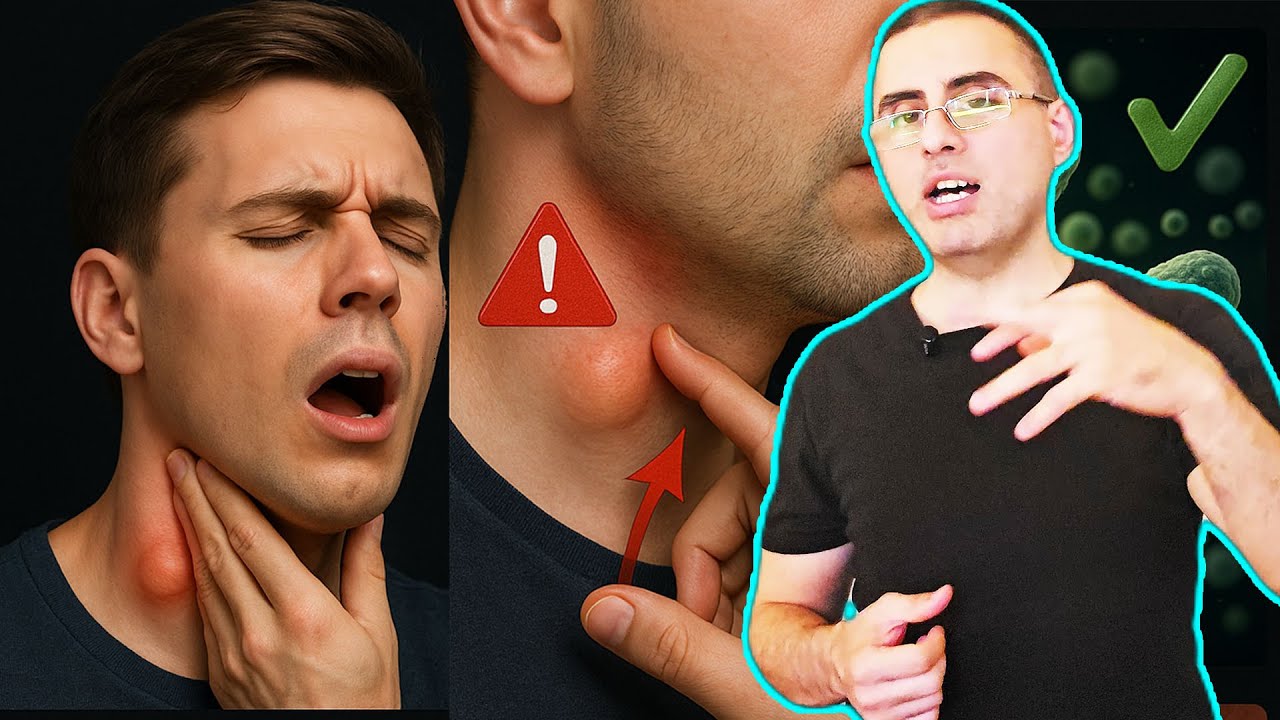
We have around 500 lymph nodes, shaped like small beans. Enlargement above 1 centimeter is typically considered abnormal, and this is called lymphadenopathy.
The most common cause of enlarged lymph nodes is infection, especially viral (e.g., common cold, Epstein-Barr virus) or bacterial (e.g., strep throat, skin infections). These are usually temporary and resolve in under one month.
If the swelling lasts more than 4 weeks, it’s called chronic lymphadenopathy. Causes include tuberculosis, toxoplasmosis, and cat scratch disease, and it may involve solitary or multiple nodes.
Cancer (malignancy) causes around 3 percent of all chronic lymphadenopathy in adults. Hard, fixed, or supraclavicular nodes larger than 0.7 centimeters are considered red flags.
Normal lymph nodes are oval or bean-shaped, have a visible hilum (in 90 percent of cases), smooth borders, and central blood flow on Doppler ultrasound. They are also mobile when pressed.
Malignant lymph nodes are typically round, lose their hilum, have irregular cortex 3 millimeters, blurred borders, and show peripheral or mixed blood flow. Many show necrosis or microcalcifications.
Reactive lymphadenopathy occurs after infections and may cause persistent enlargement in areas like the neck or armpit. Most solitary nodes are due to reactive or infection-related causes—not cancer.
Echinacea can modestly reduce respiratory infections by around 20 percent, stimulating immune cells like lymphocytes and macrophages, making it helpful for lymphatic health short-term.
Turmeric and curcumin are backed by studies showing a 30 percent reduction in inflammatory markers like C-reactive protein and IL-6, helping indirectly reduce lymphatic inflammation.
Turkey tail mushroom, especially PSK and PSP forms, has well-studied anti-cancer immune effects, improves survival in cancers like gastric and colorectal, and is considered one of the most effective natural immune boosters that indirectly supports the lymphatic system.
Disclaimer:
This information is provided for general knowledge and educational purposes only. It is not intended to be a substitute for professional medical advice, diagnosis, or treatment. Always consult with your doctor for any questions or concerns you may have about your health.
Lymph nodes are small organs in our body. We have around 500 lymph nodes and they are shaped like small beans. If they are more than one cm, they are usually considered abnormal and enlarged. Enlarged lymph nodes are called limp adenopati. Generally, lymph nodes work like a trap for bacteria, viruses, cancer cells and other foreign substances. Lymph nodes are filled with white blood cells like lymph lymphosy and macropages and they help fight infections and destroy harmful invaders. When you get lymph node enlargement it usually means that your body is fighting something most commonly it’s infections but in some cases it can be cancer. So that’s why I will tell you top 10 causes of limb node enlargement and how to treat them. The most common cause of lymph node enlargement is infections. Most infections like common cold rhino viruses, adeno viruses, influenza, empar virus and stoomegalo virus and other viral infections also enlarge lymph nodes. Also bacterial infections like streptocoal parenitis, strep throat, stapilocal skin infections and dental absences. Almost any bacterial infection can cause lymph node enlargement. They usually cause temporary lymph node enlargement. Usually up to one month. If it lasts more than 1 month, it’s not considered acute anymore and it need further investigation. When lymph node enlargement last more than four weeks, it is called chronic lympadenopat. In almost half of cases, it affects one or solitary lymph node. In the rest of cases, multiple lymph nodes are affected. The most common cause of chronic lympadenopathy is infections like tuberculosis, cat scratch disease or toxo toxopplasmosis. In case of tuberculosis, the most common affected area is neck or cervical lymph nodes. The second most common cause is reactive lympadenopathy. Reactive lympadenopathy is also called non-specific and it happens as a reaction to a viral or bacterial infection in the past. Due to the immune response, lymph nodes stay enlarged for prolonged period of time. The third most common cause is autoimmune disease like system glucosertosis, rheumatoid arthritis or sarcoidosis. This usually cause generalized lympodenopathy which means lymph nodes are enlarged in multiple areas not only in the neck or axilla. Malignancy is the first most common cause. It happens in around 3% of all chronic lympadenopathy in adults. It can be caused by lymphoma luccomia or metastatic cancer. The enlarged lymph nodes can be multiple or solitary. is solitary especially in metastatic cancer cases they can appear in any region but supraclavicular region or heart and fixed nodes are red flags. The fifth most common cause in medications. Some drugs like anticonvulsants, penitelline and some antibiotics or alopurol they can cause lymph node enlargement but such cases are less common. And skin infections like chronic eczema, psoriasis and local infections can cause solitary lymph node enlargement near the affected area like axilla groin or near the leg. If the skin is damaged in the leg, the skin conditions can also lead to chronic lympadenopathy when there is a solitary enlarged lymph node. Most commonly, it is reactive lympadenopathy which is infectious related. It’s more common in neck lymph node region due to local or recurrent infections like throat, dental, scalp or skin infections. Also tuberculosis, cat scratch disease and toxoplasmosis can cause localized chronic inflammation and enlargement of solitary lymph node. Only 3 to 4% of solitary enlarged lymph nodes are due to cancer. Usually in older adults, sometimes it can be benign cyst or benign tumor. with suspect enlarge lymph node when lymph node is more than 1 cm or 10 mm in short axis diameter. This number is common for neck lymph nodes. In the armpit also around 10 mm is considered normal but in the groin short axis diameter can be up to 15 mm and it can be normal. In the other regions like subclavical area lymph nodes are usually less than 0.7 cm. Children often have slightly larger lymph nodes usually in the neck but about 2 to cm it usually considered abnormal at any age. Neck lymph nodes in children are often palpable. If a lymph node is hard or fixed, it requires more attention in the superclavicular region. Lymph nodes larger than 0.7 cm or 7 mm are considered abnormal and require further investigation because of high risk of malignancing. Normal lymph nodes usually is been shaped or oval shaped and its long axis usually two times more longer than short axis. On ultrasound, the helum is important characteristics which means clear and visible center of lymph node. It is present in 90% of normal lymph nodes. The border should be well defined and central blood flow is detected in the helum on Doppler. Lymph nodes usually move when you press gently with the probe. In case of reactive lympadenopathy, the helum is still preserved and visible in most cases. and borders are still smooth and regular but the lymph node itself can be mildly enlarged from 1 cm to 1.5 cm. In case of malignant liymph nodes they are usually round shape not oval. 80% of malignant lymph nodes become round rather than oval. The helum is not visible in 90% of cases in malignant lymph nodes. The cortex is irregular and can be more than 3 mm. Borders are irregular blurred and poorly defined. Peripheral or mixed blood flow is seen or on Doppler instead of central flow. The lymph node can show micro classifications and necrosis inside the node. They may be fixed usually larger than 1.5 to 2 cm. If we talk about supplements that can be effective for enlarged lymph nodes, the direct answer is that there is no supplement that can directly treat lympadenopathy. But among the most effective ones we can name aa it boosts immune system. It can stimulate immune cells like pocosytes and lymphocytes and also has anti-inflammatory action. This effect reduces risk of respiratory infections modestly around 20% and indirectly supports lymphatic system especially when the cause is infection. The second is turmeric. It is proven that turmeric and its active compound curcumin significantly reduce inflammation markers like seractive proteins and interlacing six around 30%. This help reduce lymphatic inflammation indirectly. The main mechanism is that curcumin suppress inflammatory cytoines and astrogalus is another plant. In animal studies, it improves immune response by affecting blood cells and cytoines activity. It enhances macrofase function and interferon production. uh dosage of ekinasa is 300 to 500 mgs two to three times per day for short term usually after two weeks for curcumin around 500 to 1,000 mg daily with black pepper extract which is called piperine for better absorption and astrolagus around 200 to 500 mg twice a day not recommended for a long term without supervision And another important supplement is turkey tail which is wellsted mushroom which has anti-cancer effect. It stimulates natural killer cells macrofasages and increases cytoin production. So it stimulates anti-cancer immune system and even improves survival rate in case of colorctal cancer and gastric cancer. It is considered effective and it can indirectly help lymphatic system. A typical dosage for turkey tail if it’s taken a standardized form of PSK then three grams per day. If it intake a form of PSP then dosage is one gram to three grams per day usually taken with foods.