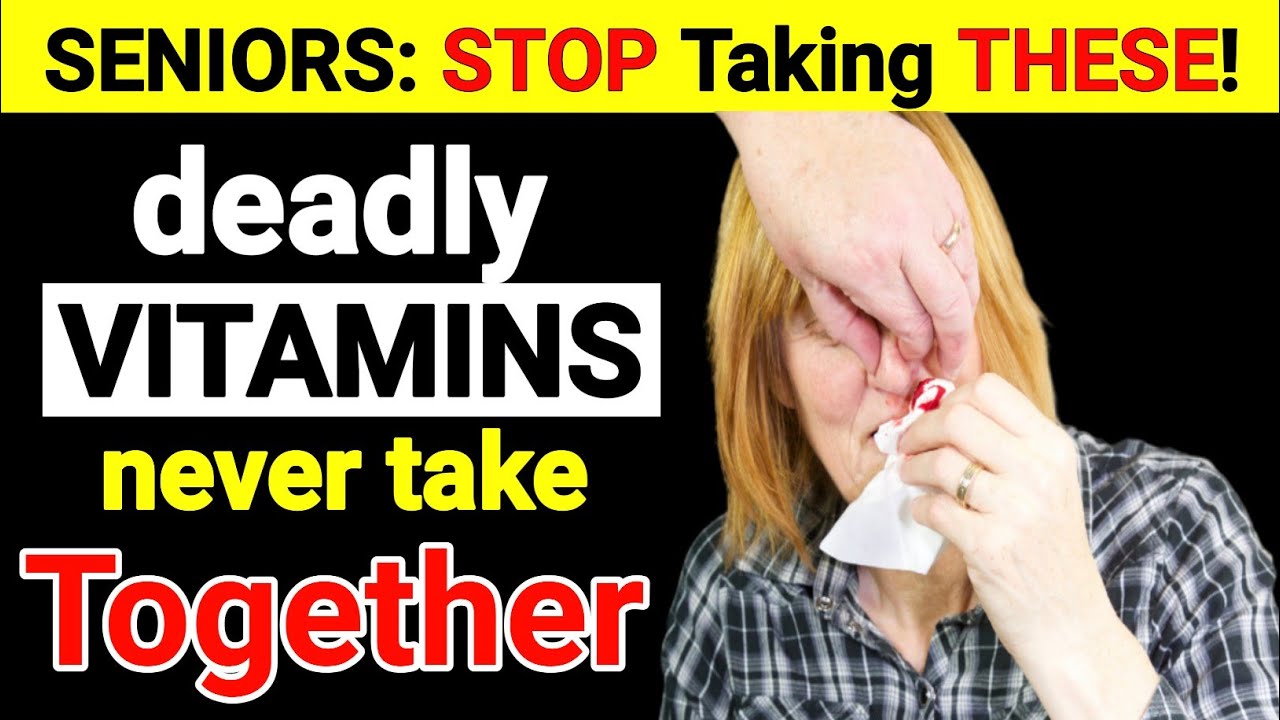
🚨 Are you over 60 and taking daily vitamins? You might be combining nutrients that could silently harm your health!
In this video, we reveal 3 dangerous vitamin combinations seniors should NEVER take together — and why. Backed by real science and expert advice, we expose how these combos may lead to kidney damage, internal bleeding, poor absorption, and even stroke.
If you or someone you love takes Calcium, Magnesium, Zinc, Iron, Vitamin D, K2, Fish Oil, or Vitamin E — you MUST watch this to protect your health.
📌 Learn which supplements are safe, which combinations are deadly, and how to take vitamins the right way.
👍 LIKE this video if it helped you
🔔 SUBSCRIBE to Seniors Vitality Zone for weekly senior health tips
📤 SHARE this video with your loved ones — it could save a life.
Chapters (Timestamps):
00:00 – The Hidden Danger in Your Daily Vitamins
01:43 – Vitamin Combo #1
06:18 – Vitamin Combo #2
10:47 – Vitamin Combo #3
15:37 – Final Recap!
#SeniorHealth
#SeniorsVitalityZone
#VitaminsForSeniors
#SeniorsVitalityZone
#Supplementvitamins
#HealthyAging
#SeniorsVitalityZone
#DangerousVitamins
#VitaminInteractions
#Over60Health
#SeniorWellness
#BoneHealth
#BloodThinnersWarning
#ElderlyCare
#SeniorSupplements
#StayHealthyAfter60
#HealthySeniors
#AgingWell
#SupplementRisks
#VitaminSafety
#SeniorNutrition
#NaturalHealthTips
—————————————————–
Welcome to Seniors Vitality Zone your source of inspiration and trusted knowledge for living stronger, longer, and healthier!
At Seniors Vitality Zone, we focus on helping seniors take charge of their wellness through practical tips, smart nutrition, and proven lifestyle strategies. Whether you’re in your golden years or supporting someone who is, our content is designed to make senior health simple, enjoyable, and effective.
We believe that senior health is about more than just avoiding illness – it’s about thriving, moving with energy, and enjoying life every day. From meal ideas to mobility tips, Health Weekly brings fresh insights for seniors who want to feel their best.
Join a growing community that puts senior health.
👉 Don’t forget to LIKE, SUBSCRIBE, and SHARE this with someone who needs this info!
📌 DISCLAIMER: This content is for educational purposes only and is not medical advice. Consult your doctor before making dietary or lifestyle changes.
If you’re over 60 and taking daily vitamins,
stop for a moment and listen closely because today’s video could literally protect your life.
Millions of seniors take vitamins every single day for stronger bones, better immunity, more energy.
And while that sounds healthy, there’s a hidden danger almost no one talks about. It’s not just
about what vitamins you take. It’s about what you take together. Yes, some vitamin combinations
can silently interfere with your heart, kidneys, or blood. And you may not feel the damage until
it’s too late. Today, we’re exposing three deadly vitamin combos that you should should never
take together, especially if you’re over 60. These are combinations that might seem safe, even
recommended, but the wrong mix can cause dangerous bleeding organ stress, nutrient blocking, or
even worsen your existing medications. Before we dive in, take one second to like this video. It
helps spread this life-saving message. Subscribe to Senior’s Vitality Zone, your go-to channel for
senior health and wellness, and share this video with a loved one because many seniors are taking
these harmful combos right now without knowing it. Get ready because this video will give you the
facts, the science, and the safe alternatives you need to protect your health or someone you
love. Let’s dive in. Vitamin combo number one, calcium plus magnesium plus zinc. Let’s talk
about one of the most commonly used supplement combinations among seniors. Calcium, magnesium,
and zinc. These three are often bundled together in one single pill. Marketed for bone health,
muscle support, and immune strength. Sounds perfect, right? But here’s the catch. Taking all
three at the same time can actually lead to more harm than good, especially for adults over
60. Why seniors take these together? Calcium is essential for preventing bone fractures and
osteoporosis. Magnesium helps with muscle cramps, sleep, and heart rhythm. Zinc boosts
immune function, supports wound healing, and helps fight infections. You’ll even find all
three in popular bone health supplement blends, which seems convenient. But here’s the truth. Most
supplement companies won’t tell you what happens when taken together. The problem is competition.
These three minerals compete for absorption in your small intestine. When taken at the same time,
your body struggles to absorb them properly. As a result, calcium can dominate, blocking the uptake
of magnesium and zinc. Zinc, when taken in excess, can interfere with copper absorption, leading to
neurological problems over time. A and magnesium, though beneficial, can interfere with calcium
channel blockers. Common medications seniors take for high blood pressure. According to a
study published in the journal of trace elements in medicine and biology, combined mineral
supplementation in high doses led to reduced bioavailability and elevated risk of kidney stress
in individuals over 60. Potential side effects in seniors. If you take these minerals together,
especially without spacing or doctor supervision, you may experience constipation, commonly
from too much calcium, nausea or upset stomach fatigue or dizziness, irregular heartbeat, or even
calcium buildup in soft tissues such as arteries, which can raise your risk of heart disease.
Imagine thinking you’re protecting your bones, but you’re actually increasing your risk of
artery hardening and heart attack. Scary, right? What should you do instead? Safer strategy
for seniors. One, split dosing. Take calcium in the morning with food. Take magnesium at night. It
helps with relaxation and sleep. If you need zinc, take it at least 2 hours apart from the other two.
Two, avoid all-in-one highdosese pills. Check your labels. If the doses are above 500 mg calcium,
400 mg magnesium, and 20 mg zinc combined, it’s too much at once for most seniors.
Three, focus on food sources. calcium, yogurt, leafy greens, sardines, magnesium,
pumpkin seeds, spinach, avocado, zinc, chickpeas, eggs, beef in moderation. Four, talk
to your doctor before taking all three together, especially if you have kidney disease, are on
diuretics, or are taking medication for blood pressure. Quick question for you. Do you currently
take a calcium, magnesium, zinc combo pill, or do you take each one separately? Comment below
and let us know. Your experience could help others make safer choices. If you’re learning something
new, take a second to to like this video. It helps us reach more seniors who need this information.
Subscribe to Seniors Vitality Zone for weekly expert-backed health videos. Share this with
a friend, parent, or neighbor who takes daily supplements. They deserve to know, too. Up next,
we’ll uncover a vitamin combination that becomes downright dangerous if you’re taking blood
thinners or heart medication. You don’t want to miss this. Vitamin combo number two, vitamin
D plus vitamin K plus blood thinners. All right, seniors. If you’re taking vitamin D, vitamin K,
and you’re also on a blood thinner like warerin, aspirin, or plavix. This next combination is one
of the most dangerous of all. And the worst part, many of you are taking it right now, completely
unaware of the risk. Why seniors take these together? Vitamin D is crucial for bone health,
calcium absorption, and immune support. Vitamin K, especially K2, is often added to D supplements
because it directs calcium to your bones and away from your arteries. And blood thinners are
prescribed to prevent strokes, heart attacks, or blood clots. Sounds good on paper, right? But when
these three elements mix, your blood chemistry changes in ways that can become very dangerous.
The danger, internal bleeding and stroke risk, here’s the problem. Vitamin K plays a central
role in clotting your blood. But blood thinners are designed to stop clots from forming. When you
add vitamin K while on a blood thinner, your body gets conflicting signals. One part says clot, the
other says don’t clot. This tugof-war can lead to uncontrolled internal bleeding, dangerous bruising
or stroke, either from clotting or hemorrhage. And remember, seniors have thinner blood vessels and
are already at higher risk for stroke or falls. The scientific insight a study in the journal
of thrombosis and hemostasis showed that say supplemental vitamin K interfere with the
effectiveness of oral anti-coagulants like warfarerin in 86% of elderly patients who were not
monitored. Most seniors don’t get regular blood tests which makes this situation even more risky.
Warning signs to watch for. Nose bleeds that won’t stop gums bleeding while brushing dark or bloody
stools. Purple patches or bruises without trauma. Headaches with no clear cause. Possible brain
bleed. If you’re taking these supplements and notice any of these, call your doctor immediately.
Safer supplement strategy for seniors. One, do not mix vitamin K and blood thinners without medical
guidance. Even low doses can disrupt medication balance. Two, if your doctor approves vitamin D3,
consider taking it without added K2 or monitor your INR level regularly. Three, get vitamin
K from food in consistent small amounts, kale, spinach, and broccoli. But don’t suddenly increase
your intake if you’re on blood thinners. Four, always read supplement labels. Many bone support
or D3 supplements contain hidden K2. Now, let me ask you this. Are you or a loved one currently
on blood thinners and also taking vitamin D or K? Drop a comment below if you’ve ever been confused
about this combo. We want to hear your story. This might be the most important health tip you hear
all week. So, please like this video if you’ve learned something valuable. Subscribe to Senior’s
Vitality Zone for practical doctorbacked senior health tips. Share this video with anyone
over 60, especially those on medications, because knowledge is prevention. Mixing vitamin
K with blood thinners can be a silent killer, and too many seniors are in danger without even
knowing it. Now, get ready because up next, we’re uncovering a surprising trio that can
make your blood too thin, leading to bruising, fatigue, and even bleeding strokes. Stick
around. You don’t want to miss this next one. Vitamin combo number three, iron plus vitamin E
plus fish oil, greater than. Now, let’s talk about a combo that many seniors take thinking they’re
doing the right thing for their heart, energy, and brain. But when taken together, this trio can be
shockingly dangerous, especially for adults over 60. We’re talking about iron, vitamin E, and fish
oil. Three nutrients that all affect your blood, but in different ways that can go horribly wrong
when mixed. Why seniors? Take these together. Iron helps treat anemia and boosts oxygen flow in the
blood. Vitamin E is taken for antioxidant support, brain health, and skin aging. Fish oil, omega-3,
is often used to improve heart health and reduce inflammation. Each seems helpful on its own,
but taken together, they can make your blood way too thin. The danger, too much blood thinning,
internal bleeding or risk. These three supplements all affect your blood’s ability to clot. Iron
supplements can irritate the stomach lining, increasing the risk of gastrointestinal
bleeding, especially in seniors with ulcers or on medications like aspirin. Vitamin E
is a known natural blood thinner. In high doses, it can reduce platelet clumping and interfere
with clotting. Fish oil is another natural blood thinner and when combined with vitamin E, it
amplifies the effect. That means even a small cut, a minor bump or a fall can lead to uncontrollable
bruising, nose bleeds, stomach bleeding, or in severe cases, hemorrhagic stroke. scientific
evidence. A 2018 review in the American Journal of Clinical Nutrition found highdosese vitamin E
and fish oil supplementation increase the risk of spontaneous bleeding events in older adults,
especially when taken with iron or blood thinning medications. This is especially concerning
for seniors already on aspirin, warfare, and plavix or even anti-inflammatory drugs like
ibuprofen symptoms that you might be at risk, purple or red spots under the skin, peraa,
bleeding gums, fatigue or dizziness from hidden blood loss, black terry stools, a frequent or
large bruises with light pressure. If you notice any of these while taking these supplements
together, call your doctor immediately. Safer supplement strategy for seniors. One, don’t take
fish oil and vitamin E at high doses together. If you must, keep doses low and monitor for
bruising or bleeding. Two, avoid iron unless your doctor confirms you are deficient. Too much
iron can cause oxidative stress and damage. Three, if you’re on any blood thinning medication, talk
to your doctor before adding fish oil or vitamin E. Four, get omega-3s from food instead. Fatty
fish like salmon, sardines, or flax seed. Five, get vitamin E from real sources. Let’s hear
from you. Have you ever experienced unexpected bruising or bleeding while on supplements? Comment
below if you take fish oil, vitamin E, or iron, and let us know what combinations you use. Pause
for a second and do this. Like this video if you found this section helpful. Subscribe to Senior’s
Vitality Zone. We break down the science for your safety. Share this video with someone taking daily
supplements. They need to know this combo could be putting their health at risk. Supplements are
powerful, but they can also be harmful when taken without proper guidance. Iron, vitamin E,
and fish oil all have their place. But together, especially in high doses, they can increase
your risk of internal bleeding. As we age, our bodies become more sensitive, and being
informed is the best defense. Now, let’s wrap up this video with a quick recap and a list of
safe supplement habits every senior should follow daily. Stay with us. Let’s take a moment to recap
the three dangerous vitamin combinations that seniors must never take together. And why? Combo
number one, calcium plus magnesium plus zinc. These compete for absorption and may block
each other. Can lead to poor bone health, constipation, or kidney stress. Safer tip, take
them at different times of day, not all at once. Combo number two, vitamin D plus vitamin K plus
blood thinners can interfere with your clotting medication. Increases risk of bleeding, bruising,
or stroke. Safer tip, always talk to your doctor before adding K2 while on blood thinners. Combo
number three, iron plus vitamin E plus fish oil together. They thin your blood too much. This can
cause internal bleeding or severe bruising. Safer tip: Avoid this combo unless prescribed
and monitored by a health care provider. These combinations aren’t always bad, but when
taken in the wrong doses or without guidance, they become silent threats to your health. If
this video helped you, don’t forget to like this video. It tells YouTube to show it to more
seniors. Subscribe to Seniors Vitality Zone for weekly expertbacked videos on senior health.
Share this with your family, your friends, or your caregiver because one click could
save someone’s health. You’ve got the wisdom, the life experience, and now the health knowledge
to match. At Senior’s Vitality Zone, we’re with you every step of the way. Stay strong, stay
informed, and we’ll see you in the next video.