The Shocking Truth About Vitamin Combos & Heart Risk After 60
🔴 Are the vitamins you’re taking actually harming your heart?
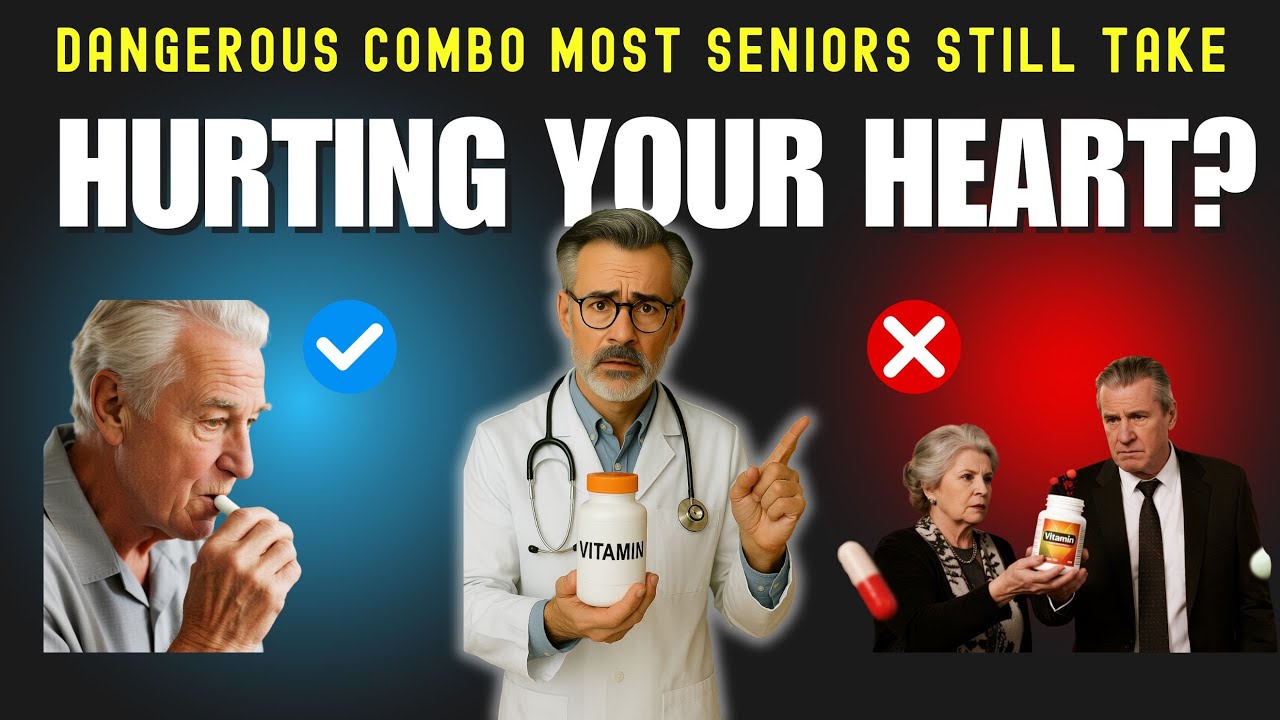
Many seniors believe their daily vitamin routine is protecting them. But shocking new research shows that certain vitamin combos could be silently harming your heart. In this video, we reveal the common mistakes seniors make with supplements — and how it may increase the risk of heart disease, calcium buildup, and even stroke.
💊 Whether you’re taking Vitamin D3, Vitamin E, or Calcium — without proper balance like K2 or Magnesium, it could be doing more harm than good.
❤️ Don’t miss this if you care about heart health, supplements for seniors, and how to age well. The truth about vitamin risks and heart safety is something every senior should know.
👉 Are you or a loved one taking these vitamins? Comment below and share your experience. Let’s help protect each other from silently harming the heart.
🔔 Subscribe to Wellness Unfolds for weekly videos on senior wellness, aging tips, and natural health:
https://www.youtube.com/@WellnessUnfolds?sub_confirmation=1
Video Timeline Summary:
00:00 The video highlights the potential harm of certain vitamin combinations for seniors.
00:59 Discusses Vitamin D3 + K2, emphasizing the risks of D3 without K2.
06:44 Explores Omega-3 + Vitamin E, noting dangers when combined with blood thinners.
12:08 Examines Calcium + D3, warning about heart risks without K2 and magnesium.
16:32 Concludes by emphasizing informed health decisions and food sources.
#VitaminWarning #HeartHealth #SeniorWellness #CalciumAndK2 #WellnessUnfolds
The Vitamin Combo Seniors Take
That Could Be Harming Your Heart You might be taking vitamins to
protect your heart — but what if they’re actually… putting your heart at risk?
I know that sounds serious. But let me speak to you the way I would to a longtime friend —
sitting across from you, holding a cup of tea, and asking you this simple, honest question:
Have you ever considered that the thing you take every morning for your health might be
the very thing quietly making you weaker? I’m Dr. Sam Wells. I’ve spent over 25
years caring for adults over 60. And one thing I see again and again — maybe in
you too — is a deep trust in vitamins. We all want to stay healthy, live longer,
and avoid being a burden on our families. So we hear suggestions from friends, read a few
articles, and walk into a pharmacy thinking: This one will strengthen my bones.
That one will protect my heart. And soon… we’re taking more
pills than we realize. But here’s what most people don’t know: some of
the most popular vitamin combinations can quietly turn into health traps — especially after 60.
I’m talking about combos like: Vitamin K2 + D3, Omega-3 + Vitamin E, or Calcium + D3.
Do those sound familiar? Maybe you’re taking one right now.
And if you are… you need to hear the rest of this story.
Please consider hitting Follow on Wellness Unfolds — because what I share here are the things I wish
my own parents had known. Simple knowledge that could change how you care for yourself — not just
to live longer, but to live better and lighter. Save this video. Share it with friends or
anyone over 50 who’s taking supplements daily. Let’s begin.
Vitamin D3 + K2: A Well-Meaning Mistake Picture this:
A 70-year-old woman, sharp and thoughtful, sits at her kitchen table
each morning. She takes a vitamin with warm water, believing it’s her heart-protection pill.
That belief probably came from a yoga class chat or an article she saw online.
But what she doesn’t know is this — that same pill, if misunderstood, might slowly damage
the very heart she’s trying to protect. As we age, many of us start caring more
about heart health, bones, and immunity. One of the most hyped duos
in this space is D3 and K2. D3 helps absorb calcium. K2 directs
calcium into the bones and away from arteries. Sounds like a dream team, right?
And to be clear — both of these vitamins matter. The problem lies in how they’re combined in a
single capsule, and how they’re used. Often, it’s not as safe as it sounds.
There’s a big misconception I hear often: People believe K2 acts like a
scrub for the arteries — like a pipe cleaner, washing away years of plaque.
But the body doesn’t work like a plumbing system. There’s no pill that cleans
out your arteries like that. In reality, K2’s role is more like a traffic cop.
It activates proteins that prevent calcium from going to the wrong places — like arteries — and
guides it to your bones, where it’s needed. It’s prevention — not reversal.
One of my patients, Eleanor, age 68, truly believed her D3-K2 supplement
was cleaning out her arteries. Her husband had survived a heart
attack, and she was doing everything she could to avoid the same path.
Her supplement had 100 mcg of K2 and 5,000 IU of D3 — a common combination.
But then she told me she was planning to increase her K2 to 400 mcg, based on what she’d read.
I did the math and said, To reach that dose, you’d need to take four pills
a day — which means 20,000 IU of D3 daily. Her eyes widened. 20,000 IU? Is that safe?
I shook my head gently. It can be very dangerous if taken long term.
D3 is fat-soluble. That means your body stores the extra — it doesn’t flush
it out like water-soluble vitamins. Too much D3 = high blood calcium
High calcium = it starts sticking where it shouldn’t — kidneys, arteries, even your heart.
Result? Artery calcification. Kidney
stones. Irregular heartbeat. And if it goes unnoticed, the
damage may be irreversible. Eleanor’s case isn’t unique.
Many older adults take this combo daily with good intentions — but very few
know how much they’re actually absorbing. They don’t test their blood.
They don’t check D3 levels. And they aren’t warned about the
slow, silent risks of overdose. Right now, you might be thinking:
So what should I do? Just stop taking it? No. The answer isn’t to stop
— it’s to be smarter. First, I always tell my patients:
Separate your D3 and K2. Don’t rely on one-size-fits-all combos. When
separated, you can adjust each dose precisely. For D3 — always test your levels first
(specifically: 25-hydroxy vitamin D). Everyone’s baseline is different.
Someone living in Arizona may get enough sun, while someone in
Maine during winter gets none. The ideal range for older
adults is 50 to 90 ng/ml. Below 30 is deficient. Even 30–40
may not be enough for prevention. Once you know your number, your
doctor can recommend a safe daily dose — usually between 2,000 and 5,000 IU.
And after 3 months, retest and adjust. For K2 — a daily dose of
200–400 mcg is a good start. Use the MK-7 form — it lasts longer in the
body and only needs to be taken once a day. If you have osteoporosis, type 2 diabetes,
or mild artery calcification, K2 can help. But if you’re on blood thinners like Warfarin,
you must consult your doctor first — K2 can interfere with these meds.
I had another patient, Paul, 72, who’d been taking a D3-K2 combo for 3 years.
His blood calcium was high — even though he didn’t take calcium pills.
The excess D3 made his body absorb too much calcium from food.
But because he didn’t have enough K2, that calcium wasn’t directed properly.
A scan showed calcification in his abdominal aorta.
Thankfully, he came in just in time. We split his vitamins, added magnesium, increased
light exercise, and started regular testing. Six months later, his calcium returned to normal.
And the calcification didn’t worsen. You see, health doesn’t live inside a pill.
It lives in your awareness, your patience, and your daily choices.
Taking vitamins isn’t wrong. What’s wrong is doing it blindly — without
knowing what your body truly needs. If you’ve listened this far, it’s
because you care — about your health, your independence, and your future.
So I’ll ask you to do three things today: 1. Grab your vitamin bottle
and read the label carefully. 2. If you’re taking a D3-K2 combo, consider
splitting them for better control. 3. Schedule a blood test — especially if you’re
over 60 and taking any supplement regularly. Your body doesn’t ask for perfection.
It just asks you to understand it, listen to it, and care for it with clarity.
And if someone comes to mind — a friend, a loved one, or your partner — who’s taking
vitamins every day hoping to stay well… share this video with them.
Because the best gift we can give isn’t a bottle of pills — it’s the understanding
that lets us live a little lighter each day. I’m Dr. Sam Wells. And I’ll be right here
— helping you build a life that’s stronger, steadier, and not fooled
by flashy miracle pills. Next, we’ll take a closer look at the
second common vitamin combo that might be silently harming your heart.
Omega-3 and Vitamin E: A good but dangerous duo when taken wrong
I know for many older folks, Omega-3 is practically the poster child of
heart supplements. You hear about it on TV, read about it in health magazines – all
highlighting its benefits: anti-inflammatory, lowers triglycerides, sharpens memory, and
protects the heart. And Vitamin E? It’s praised as an antioxidant that keeps cells young
and may lower the risk of chronic diseases. There’s nothing wrong with believing they’re good.
In fact, I recommend both Omega-3 and Vitamin E – but only when I know my patient’s health
status, exact dosage, and the type of product they’re using. Because in medicine, nothing is
always good – it’s only good when it’s the right dose, for the right person, at the right time.
Let me tell you about Gerald – a 74-year-old patient of mine in Boston. He’s the type who
reads every label, writes down everything he takes. He came to see me with dizziness, bruising
on his arms, and frequent nosebleeds. At first, I suspected high blood pressure or diabetes. But
all his labs were normal. Then, after digging a bit deeper, I found out he was taking a 3-in-1
fish oil capsule every morning – with Omega-3, Vitamin E, and some CoQ10. Each capsule had
1200mg Omega-3 and 400 IU of Vitamin E. Here’s the issue: he was taking two capsules a
day – which doubled his vitamin E intake – while also on Warfarin, a common blood thinner
for people over 60 with heart conditions. Let’s be clear. Omega-3, especially EPA and
DHA, reduces platelet stickiness – meaning your blood gets thinner. Combine
that with Vitamin E – especially in high doses or in synthetic form – and that
blood-thinning effect can become dangerous. If you’re on blood thinners,
or even a daily baby aspirin, this combo can increase your risk of internal
bleeding – like a brain bleed, GI bleeding, or large bruises from the slightest bump.
I’ve seen patients have hemorrhagic strokes – not because their blood pressure was too high, but
because their blood was too thin from high-dose Omega-3 and Vitamin E supplements. They
had no idea that the healthy pills they were taking were what landed them in the ER.
The sad part? No one warned them. Product labels don’t say much. Ads just focus on benefits. And
friends – who are also taking them – usually just share personal experience, not science.
I don’t want that for you. Especially after 60, your body doesn’t work the way it did at
30. Your liver clears toxins more slowly. Your kidneys aren’t as efficient. Your blood
vessels are more fragile. And your body doesn’t recover from damage as quickly. So even good
nutrients, in the wrong amounts, can hurt you. One more thing – not all Vitamin E is the
same. There are two main types on the market: synthetic (dl-alpha-tocopherol) and natural
(d-alpha-tocopherol). Synthetic is cheaper, but it can interfere with the absorption of other
important forms of Vitamin E. Some studies even link high doses of synthetic E to increased risk
of prostate cancer in older men, or heart failure in people with existing heart disease.
And cheaper fish oils? They often contain preservatives or fillers that can strain
your liver or upset your stomach. That’s why I always tell my older patients – if
you want Omega-3, look for products with IFOS certification (International Fish Oil
Standards) and use the natural triglyceride form – it absorbs better, causes less reflux,
and is gentler on the digestive system. I remember once during a community talk, a
woman asked me, Sam, how much fish oil should I take? I laughed and said, That’s like asking
me: how much water should I drink? Everyone’s different. Some people eat fatty fish three
times a week – they need very little. Some are strict vegetarians – they may need more.
And if someone’s on cholesterol meds, they have to be even more careful about combinations.
The best way to know if you’re low in Omega-3? Get your Omega-3 Index tested – it measures the
EPA/DHA in your red blood cells. The ideal is above 8%. Below 4% is considered deficient.
This test isn’t common yet, but if you can, ask your doctor about it.
If testing isn’t an option, take fish oil cautiously: 500–1000mg
a day if you don’t eat fish regularly. And if you’re on blood thinners, consider a
lower dose and always tell your doctor. As for Vitamin E – get it from food if you can:
almonds, sunflower seeds, olive oil, avocado. If you truly need to supplement, choose the natural
form (d-alpha-tocopherol) and stick to 100–200 IU/day unless your doctor advises otherwise.
I once told a patient, You don’t need a pill to live 10 more years. You need smart choices
each day to live well for those 10 years. And I want to say the same to you.
Are you taking any kind of vitamin every day – especially combo pills like
Omega-3 with Vitamin E or D3 with K2? If so, I truly encourage you to drop the
name and dose in the comments. I’ll try to respond and help you spot any red flags
– before something unfortunate happens. And if you found this useful –
please don’t keep it to yourself. Share this video with your loved ones, your
friends, your neighbors – anyone over 60 who’s faithfully taking supplements every day,
thinking they’re doing something good. Just one click to share could spare
someone from a major health scare. Don’t forget to hit Subscribe to the
Wellness Unfolds channel – where I, Dr. Sam Wells, will continue bringing
you simple, clear, and genuinely helpful content for your golden years.
Click that button now. Because your health doesn’t always give you
a second chance to get it right. We still have so much more to explore together
– and I’d love to be here every step of the way, as a trusted companion on your journey.
Calcium + D3: Good for bones, but hard on the heart
I once told an elderly patient, Some pills won’t make you feel weaker right away, but they quietly
chip away at your health year after year – and you won’t even know it. That sentence made her pause.
And when I mentioned the calcium + D3 combo she’d been taking for over five years, the look on
her face changed from surprise to concern. The truth is, many older adults take calcium + D3
with the best intentions – to protect their bones, prevent osteoporosis, and avoid hip fractures,
which are a real fear after 60. But what most people don’t realize is that, without the right
knowledge, this well-meaning combo could come at a cost your heart ends up paying.
Let’s start with D3. Vitamin D3 – or cholecalciferol – is fat-soluble and acts like a
key that unlocks calcium absorption from the gut into the bloodstream. Without it, you could eat
seafood every day and drink milk regularly, and your body still wouldn’t absorb calcium well. So
yes, taking D3 makes perfect scientific sense. And calcium? That’s the basic building block of
bone. After 50 – especially for postmenopausal women – bone loss speeds up dramatically.
So calcium supplements become a routine part of life for many older folks.
Here’s where the problem starts: We focus so much on getting calcium in that we
forget where it actually goes matters way more. Imagine this. You’ve got a truck full of bricks
– but no map, no foreman, and no building plan. Those bricks could end up dumped in the middle
of the street instead of being used to build a house. That’s what happens in your body. D3
brings the calcium in, but K2 and magnesium are the foreman and the site manager – they make
sure calcium ends up in the bones and teeth, not stuck in blood vessels, kidneys, or the heart.
If you’re taking calcium and D3 daily without enough K2, calcium does enter your bloodstream –
but there’s no one guiding it to the right place. Instead of building bone, it starts sticking to
your blood vessel walls. Layer by layer, year after year, it creates calcified plaques. There’s
no pain, no fever, no obvious symptoms. But over time, it can lead to high blood pressure, stiff
arteries, or silent strokes – complications often mistaken for just aging, when they’re actually
side effects of pills that were meant to help. I saw this firsthand with Mr. Richard, 78, from
Michigan. He’d been taking calcium + D3 every day for nearly 10 years – ever since his wife
fractured her hip. He never tested his vitamin D levels, and no one ever told him about K2 or
magnesium. When he came to see me, he had poorly controlled hypertension and irregular heartbeat.
An echocardiogram and artery scan revealed: calcified aortic valve and mild coronary artery
calcification. He nearly collapsed in his chair when he heard that.
I was just trying to take care of my bones, he said.
And I replied, And all that time, no one was taking care of your heart.
What happened to Mr. Richard isn’t rare. A major study published in BMJ found
that high-dose calcium without K2 can raise the risk of heart attack by up
to 30% in older adults. Sounds ironic, doesn’t it? Taking supplements to avoid a broken
bone, and ending up with a damaged heart. Let’s talk about magnesium, too – a mineral that
often gets ignored. Think of magnesium as the site manager. It helps activate vitamin D3 and
ensures calcium is used properly. Without enough magnesium, D3 doesn’t work well, and calcium
tends to wander around the body. Many older adults are magnesium deficient due to low intake
of leafy greens or long-term use of diuretics. But it’s rare for doctors to prescribe magnesium along
with calcium and D3 – even though they should. The bottom line? A calcium + D3 combo isn’t
automatically dangerous – but it becomes risky when taken in isolation. If you’ve been
on this combo for years without ever checking your vitamin D levels or learning about K2 and
magnesium, you could be silently setting yourself up for vascular problems.
So, what should you do? First, get a blood test to
check your vitamin D levels. Second, don’t take combo supplements
blindly. Take them separately when possible, and adjust the dose based on your needs.
Third, make sure your calcium supplement includes or is taken alongside vitamin
K2 (preferably MK-7) and magnesium (in a bioavailable form like glycinate or citrate).
And lastly – food first, always. Get calcium from dairy, leafy greens, tofu, and small fish
like sardines. Get vitamin D from morning sun. Get magnesium from nuts, seeds, and whole
grains. Supplements should fill gaps – not become your main source.
I’ll leave you with this: Your bones may need protection.
But so does your heart. Don’t save one only to sacrifice the other.
If you or someone you love is taking calcium and D3, please – share this message.
It might help prevent the kind of heart trouble that sneaks up quietly, without warning.
And don’t forget to subscribe to Wellness Unfolds. I’m Dr. Sam Wells, and I’ll be here every week
with more practical, easy-to-understand advice to help you age well – and wisely.
So what’s the solution? First, I always say this: a blood test
is non-negotiable. There’s no substitute for clear numbers. Check your 25-hydroxy
vitamin D level. If it’s under 30 ng/ml, you can consider supplementing D3 — but don’t go
beyond 2,000 to 5,000 IU a day unless your doctor advises otherwise. After 3 to 6 months, get tested
again. While you’re at it, check your magnesium levels too — both serum and RBC if possible.
As for calcium, don’t rush to take a supplement if your diet is balanced — includes dairy, seafood,
beans, leafy greens. Your total calcium from food and supplements shouldn’t exceed 1,200 mg per day.
And here’s the key: if you do supplement calcium, make sure it comes with K2 (at least 200–400
mcg/day) and magnesium (300–400 mg/day). I once advised Mrs. Elaine — an 82-year-old
gardening enthusiast from San Diego — that every pill you take needs the right partner.
After our talk, she stopped taking her high-dose calcium supplement — two tablets a day —
and instead focused on a diet rich in kale, almonds, and sardines for natural calcium,
paired with a low-dose D3 and separate K2. A year later, not only had her bone
density improved, but she felt lighter, had fewer headaches, and her blood pressure
stabilized. I thought I was just taking care of my bones, but it turns out I was
freeing my heart too, she laughed. Her story isn’t rare. It proves something I
deeply believe: your age doesn’t limit your ability to make smart choices. You just need the
knowledge — and the willingness to change. And I hope you — the one listening to me
right now — take a few minutes this week to review every supplement you’re taking. Read
the labels. Write down the dosages. If you can, bring that list to your next doctor’s visit. Don’t
be afraid to ask, Am I doing this right? You have the right to ask. You have the right to know. And
you have the right to live in good health — not by chance, but by informed decisions.
Let me remind you of this: your health doesn’t depend on how many pills you take
each day — it depends on how mindful you are about the ones you choose to take.
For older adults, one small shift in how you take calcium + D3 today could mean
avoiding a silent stroke tomorrow. If you think what I’ve shared today is important
— share it. Don’t keep it to yourself. Maybe your parents, your partner, or someone in your
senior dance class is quietly taking a bone pill every morning, thinking it’s enough.
Send them this video. And if you want to keep getting real, practical, and trustworthy
guidance like this every week, hit subscribe on the Wellness Unfolds YouTube channel.
I’m Dr. Sam Wells — and I’m not just here to share facts. I’m here to remind you that
your heart deserves protection just as much as your bones. I’ll see you in the next video.
We still have a lot to uncover — together. No pill is more powerful
than the right lifestyle. Vitamins aren’t miracle workers like many believe.
They’re just assistants — meant to support a solid foundation built on healthy food, regular
movement, deep sleep, and a calm mind. No amount of supplements can fix a careless lifestyle.
I’m not saying all this to scare you — I’m saying it to help you pause and reflect. Are you
taking vitamins just because someone said you should? Have you ever done any bloodwork before
starting? Have you fallen into the belief that taking supplements is enough — while forgetting
your heart needs a full support system? Take a moment. Look at the supplements
you’re taking. Jot them down. Ask your doctor. And if needed — make a change.
If this video helped you understand better — and act smarter — share it with
your parents, your spouse, your neighbors, your loved ones who are quietly taking
vitamins to stay strong every day. Don’t keep it to yourself. Because health
knowledge only matters when it’s shared. And if you want to keep walking
this path of living better, living stronger after 50 — hit subscribe on the
Wellness Unfolds YouTube channel right now. I’m Dr. Sam Wells — and I’ll
be back in the next video, to keep helping you build real, lasting
health from the inside out. Every single day.