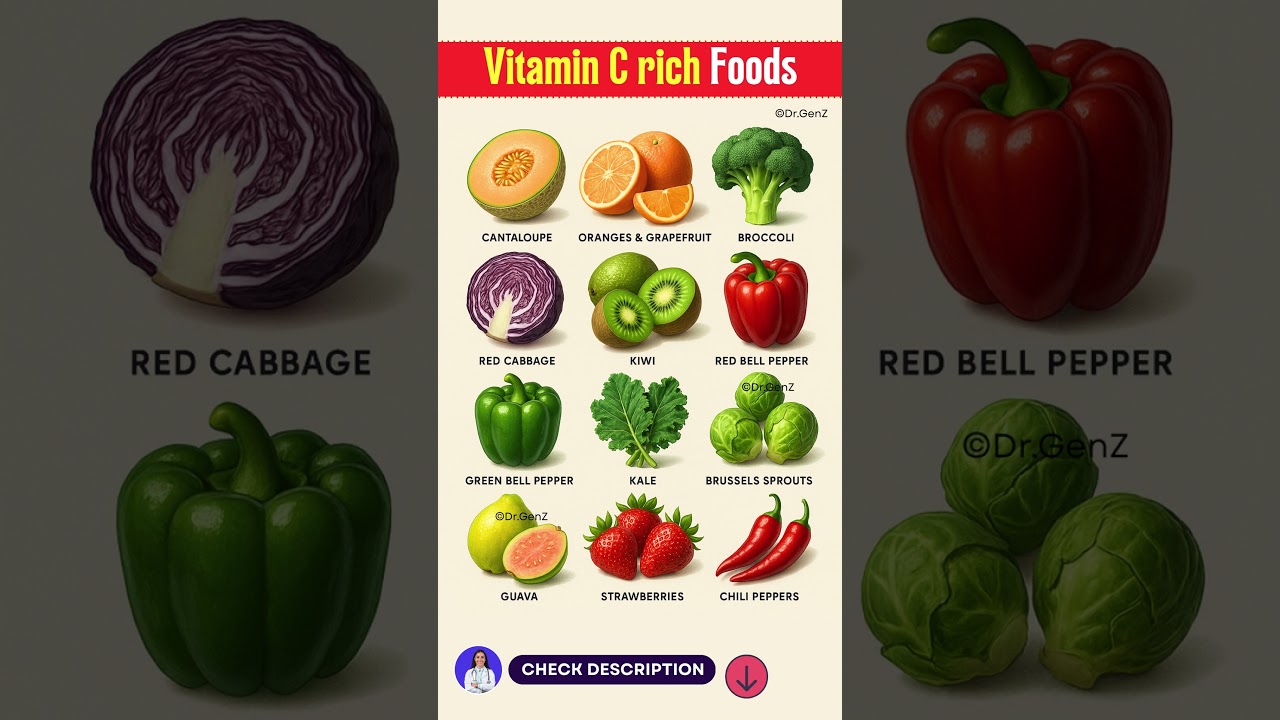
Top 12 Vitamin C-Rich Foods for Better Immunity and Health | Vitamin C Rich Foods
Vitamin C is an essential nutrient that supports immunity, collagen production, and wound healing while acting as a powerful antioxidant. Here are 12 vitamin C-rich foods that can help you meet your daily needs naturally.
1. Cantaloupe
A medium melon delivers over 200 mg of vitamin C — more than double your daily requirement.
2. Citrus Fruits
Oranges and grapefruits provide 70–96 mg of vitamin C per fruit, making them classic immunity boosters.
3. Broccoli
One cup of broccoli contains as much vitamin C as an orange, along with fiber and antioxidants.
4. Red Cabbage
Half a cup offers nearly 30% of your daily vitamin C needs and supports heart health.
5. Kiwi
One kiwi can provide up to 56 mg of vitamin C, plus potassium and fiber.
6. Red Bell Peppers
A cup of chopped red peppers has 191 mg of vitamin C, while green peppers provide 120 mg.
7. Kale
Whether raw or cooked, kale is packed with vitamin C along with vitamin K and antioxidants.
8. Brussels Sprouts
Half a cup contains 49 mg of vitamin C, plus fiber and beneficial plant compounds.
9. Guava
Just one guava packs 125 mg of vitamin C and is loaded with antioxidants.
10. Strawberries
A cup offers 97.6 mg of vitamin C, making them great for skin and immune health.
11. Mustard Greens
One cup provides 117 mg of vitamin C, along with vitamins A and K.
12. Chili Peppers
Green chili peppers give 109 mg, and red chili peppers provide 65 mg of vitamin C per serving.
✅ Tip: Eat a variety of these vitamin C-rich foods daily to maintain strong immunity and vibrant skin.
#vitaminc #vitamincrich #vitamin #healthyfood
Medical disclaimer: Dr. GenZ does not offer medical advice. The content presented in our channel does not serve as a diagnosis or treatment recommendation and should not be construed as a substitute for the professional judgment of a healthcare practitioner in diagnosing and treating any individual or animal. Our goal is to provide educational information exclusively.
Decisions regarding the necessity of medical services and the appropriate healthcare interventions for a patient should be made solely by a licensed physician or qualified healthcare provider. For any inquiries regarding a medical condition, always consult a physician or other competent healthcare professional.