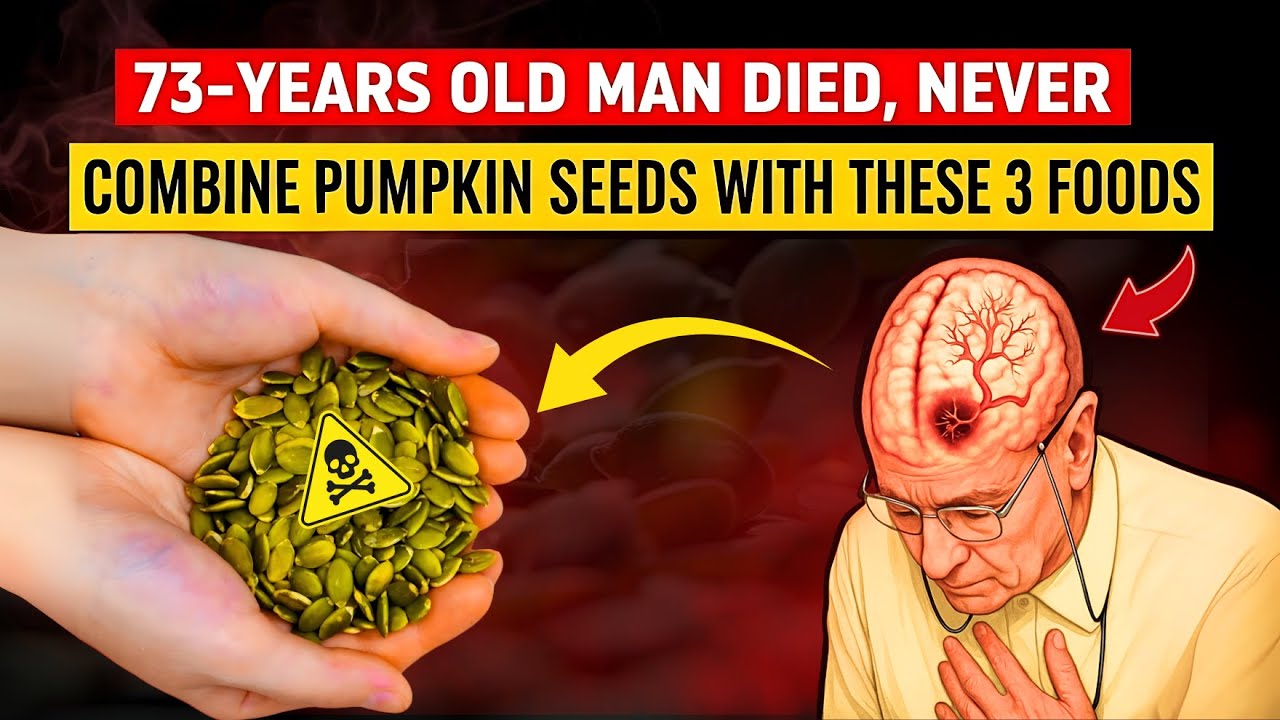
🚨 Seniors: Never Eat Pumpkin Seeds With These 3 Foods! (Doctors Warn) 🚨
Pumpkin seeds (pepitas) are a magnesium‑ and zinc‑rich superfood for seniors—fantastic for heart, brain, joints, sleep, and energy. But certain food combos can block nutrient absorption, irritate your gut, and blunt their benefits. Watch to learn the 3 foods you should NEVER mix with pumpkin seeds—and the smartest pairings for maximum results.
🔍 In This Video, You’ll Learn:
✅ The #1 breakfast habit that shuts down magnesium & zinc absorption
✅ 3 everyday foods to avoid with pumpkin seeds (including a common drink)
✅ Best time to eat pumpkin seeds for sleep, recovery, and steady energy
✅ Perfect pairings that boost heart, brain, and joint support
✅ One mistake 90% of seniors make that quietly spikes inflammation
💬 Your Turn:
“Did you know about these combos?” Drop a comment below and tell us which one surprised you! 👇
⚠️ Heads‑Up:
Some mixes can reduce mineral uptake, trigger bloating, or raise blood sugar. Learn the right way to enjoy pumpkin seeds for real benefits.
👍 Like this? Smash LIKE, SHARE with a friend over 60, and
🔔 SUBSCRIBE for weekly senior‑friendly nutrition tips!
#SeniorNutrition #SeniorHealth #PumpkinSeeds #Pepitas #HealthyAging #HeartHealth #BrainHealth #Magnesium #Zinc #GutHealth #FoodCombining #Over60 #AntiInflammatory #SleepTips
A/B Test Titles :
1) Seniors: Avoid These 3 Foods With Pumpkin Seeds (Doctor Warning)
2) Stop Mixing Pumpkin Seeds With THESE Foods (Seniors Over 60 Must Watch)
3) Pumpkin Seeds: The 3 Dangerous Combos Blocking Your Benefits
4) Do NOT Eat Pumpkin Seeds With This (Most Seniors Don’t Know)
5) Pepitas Power: Best & Worst Pairings for Seniors
Related Videos You’ll Love:
Eat GARLIC🧄, but NEVER MAKE THESE 8 MISTAKES ❌
WARNING! Avoid These 7 Common Mistakes When Eating EGGS!
If you’re OVER 50 and take 3 DATES Everyday, THIS will happen after 7 DAYS
STOP These 10 Foods After 50 for a Fit and Healthy Life
🛑 Disclaimer: Before incorporating any dietary changes or trying new foods, it is crucial to consult with a qualified healthcare professional or nutritionist. The information provided in this video is for educational and informational purposes only and should not be considered as medical advice. Individual responses to pumpkin seeds consumption may vary, and it is essential to be mindful of any allergies or sensitivities. Always prioritize your health and well-being above all else. Happy watching!
pumpkin seeds health benefits, pumpkin seeds benefits, pumpkin seeds benefits for men, are pumpkin seeds healthy, pumpkin seeds benefits for hair, pumpkin seeds benefits for women, pumpkin seeds uses, pumpkin seeds how to eat, pumpkin seeds for diabetics, pumpkin seeds for hair growth, pumpkin seeds, pumpkin seeds for weight loss, pumpkin seeds for prostate problems, benefits of pumpkin seeds for men, pumpkin seeds daily dosage, are pumpkin seeds good for you, pumpkin, seeds, minerals ,vitamin, nutrient, prostate, antioxidants, diet, zinc, fiber, source, cancer, benefits, magnesium, heart, heart, blood, sugar, control, bladder, healthy, fertility
#PumpkinSeeds #PumpkinSeedsHealthBooster #DailyPumpkinSeedMagic #SeedYourHealth
Wait, before you grab that handful of pumpkin seeds, there are three common foods you should not mix with them until you hear this. These combos can block the very minerals you want, upset your stomach, and even throw off how some medicines work. The best part, you don’t have to quit pumpkin seeds at all. With a few smart swaps and a little timing, you can enjoy every crunchy bite and get more out of it. This is educational content to help you make smart choices. Let’s keep it simple and practical. Pumpkin seeds are tiny powerhouses. They bring magnesium for your heart and muscles, zinc for immune support and wound healing, fiber for regular digestion and healthy fats and plant protein to keep you full and steady your blood sugar. They are one of the easiest ways to add nutrition to your day. The trick is knowing what to pair them with and what to separate so your body can use those nutrients well. The first pairing to be careful with is a big bowl of spinach or kale if you take a blood thinner like warerin. Here’s the simple story. Vitamin K helps your blood clot. Warerin works by balancing vitamin K. Spinach and kale are loaded with vitamin K. So much so that a big salad can give you a whole day’s worth or more. If your vitamin K suddenly jumps, your clinic may see it in your INR blood test. The seeds aren’t the problem. The leafy greens are. If you don’t take warerin, a spinach and seed salad is a great choice. If you do, steadiness is key. Use greens with lower vitamin K most days, such as Roma, iceberg, or arugula, and sprinkle on the seeds for crunch. If you love spinach or kale, keep your usual portion about the same from day to day instead of going from zero to a giant bowl. Anti-coagulation clinics teach this consistent vitamin K approach because it helps keep INR stable. Large reviews and practice guidelines support it. A simple example, build your lunch salad on romaine or arugula. Add tomatoes and cucumbers. Squeeze fresh lemon and finish with a light handful of pumpkin seeds. Fresh, crunchy, and steady. The second thing to watch is drinking black tea or coffee at the same time as your pumpkin seed snack, especially if your iron or zinc tends to run low. The iron in seeds is plant iron. Your body absorbs it well when nothing gets in the way. Tea and coffee have natural compounds that latch on to that iron and slow it down. Research in the American Journal of Clinical Nutrition shows black tea with a meal can cut plant iron absorption by roughly 60 to 70%. And coffee can reduce it by about 20 to 40%. That’s a big hit if you’re trying to rebuild your levels. The fix is easy. Put a little time between your drink and your seeds. About 1 to two hours is plenty. Another helpful trick is to add vitamin C to the meal because it turns on iron absorption. Think orange slices, strawberries, kiwi, or bell peppers, or even a squeeze of lemon on your salad. Studies show that a small serving of vitamin C can sharply increase plant iron absorption, sometimes doubling it. You can also lightly roast or soak your seeds to make their minerals easier to reach. Here’s how that looks in real life. Enjoy your morning coffee at 9. Then around 11:30, have a handful of pumpkin seeds with a clementine. or sip herbal tea with lunch and save your black tea for an hour later. Same foods, better timing, better results. The third combo to avoid in the same bowl is bran cereal with pumpkin seeds. Bran is the outer layer of the grain. It’s very high in fiber and in natural blockers called phitates. Pumpkin seeds also contain some phitates. These compounds are not bad, but they do grab onto minerals like iron, zinc, and magnesium and carry them out of your body. When you stack bran and seeds together, you may absorb fewer minerals from both. The heavy fiber can also feel rough on a sensitive stomach, causing gas and bloating if you’re not used to it. Research in the Journal of Nutrition has shown that meals high in fitate lower zinc and iron absorption. The fix is simple. Swap the brand base for something gentler. Oatmeal is a great choice, and soaking oats overnight makes them even easier to digest. In the morning, top your oats with a small spoon of pumpkin seeds and a few berries. Or build a yogurt bowl with fruit and a sprinkle of seeds. Sip water with higher fiber meals. And if seeds are new for you, start with a tablespoon or two and increase slowly. Comfort first, then build up. There’s one more piece that matters a lot. Tim timing with certain medicines. If you take thyroid medicines such as levothyroxine, it absorbs best on an empty stomach with water. Many people wait 30 to 60 minutes before breakfast, and they keep minerals like iron, calcium, and magnesium a few hours away. Since seeds contain fiber and minerals, a simple plan is to take your pill when you wake up and enjoy seeds at lunch or later. If you take certain antibiotics like doxycycine or cyproloxine, minerals in foods can stick to the pill and lower how much gets into your system. So keep those pills separate from seeds, dairy, and mineral supplements. Often 2 hours before or 6 hours after is used. Bone medicines like alendrinate work best with plain water on an empty stomach and no food for at least 30 minutes after. These small timing choices make your medicines and your food work better side by side. Now let’s talk about what to enjoy without worry. An easy, safe salad starts with arugula, which is naturally lower in vitamin K than spinach or kale. Add cherry tomatoes and cucumbers. Drizzle olive oil and fresh lemon and sprinkle a light handful of pumpkin seeds. The lemon brings vitamin C to help you use the iron in the seeds. For a quick snack plate, slice bell peppers and carrots. Add a couple of orange wedges and toss on a small handful of seeds. Bright colors, great crunch, and smart nutrition. If you like a creamy breakfast, a plain Greek yogurt bowl with berries and a spoon of pumpkin seeds gives you protein, healthy fats, fiber, and minerals without the heavy hit of bran. If you prefer a warm start, mix oats with milk or a dairyfree milk and a spoon of yogurt in a jar and let it rest in the fridge overnight. In the morning, stir, top with berries and seeds, and enjoy. If coffee is part of your routine, simply enjoy it an hour before or after these meals. Let’s clear up a common fear. Many people were told for years to avoid seeds and nuts if they have diverticulosis. A large study in JAMAMA followed people for years and found that eating nuts, corn, and popcorn did not raise the risk of diverticulitis. It was not linked to more flares and might even be linked to lower risk. That’s reassuring. Many people do well with small amounts of seeds as part of a balanced diet. Pay attention to comfort and adjust the amount to what feels good for you. Here’s a simple day that puts all of this into action. Start your morning with your usual routine. If you take a pill that needs an empty stomach, take it with water and let it do its job. Enjoy a gentle breakfast like oatmeal or a yogurt bowl with fruit. Have your tea or coffee an hour later. At lunch, build a salad on romaine or arugula. Add veggies, squeeze lemon, and finish with a sprinkle of pumpkin seeds. In the afternoon, grab a small handful of seeds with orange slices or strawberries. At dinner, keep your greens steady from day to day if you use a blood thinner and sit back knowing your timing is on point. None of this is complicated. It is just smart spacing and simple swaps. Let’s pull it together in one clear picture. Pumpkin seeds are a great food when you use them well. Be careful mixing them with large servings of spinach or kale if you take warerin. The issue is the big jump in vitamin K. So, keep greens steady and lean on Roma or arugula when you want an easy win. If this helped you, tap like so more people can find it. In the comments, tell me if you want a printable cheat sheet with the safe pairings and timing tips. Type list and I’ll share it. And if you want a follow-up video focused on blood thinners or on thyroid timing, type thinner or thyroid so I know what to make next. You can enjoy pumpkin seeds every week. With smart pairings and simple timing, you get the crunch you love and the benefits your body needs.