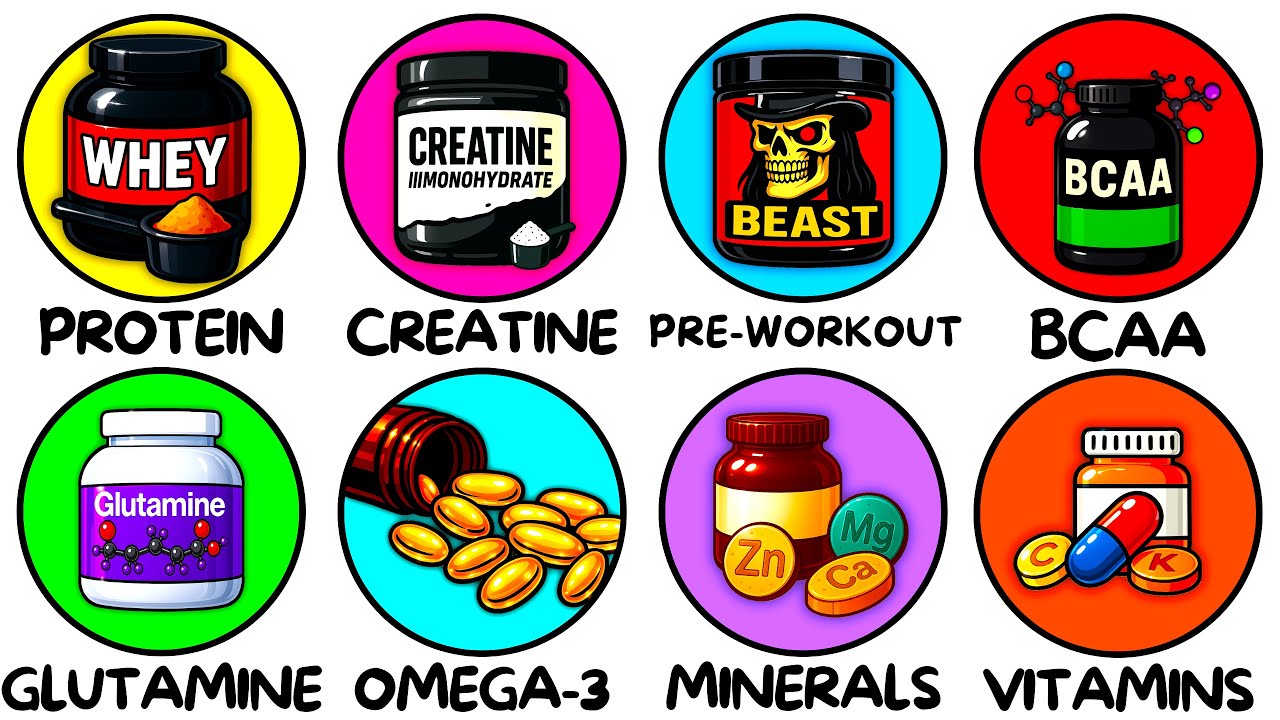
Every major fitness supplement explained in just 9 minutes! From protein and creatine to BCAAs and pre-workouts, learn how they work, their benefits, and risks to find the best fit for your fitness goals!
Disclaimer:
This video is for educational purposes only and is not intended as medical or nutritional advice. The information shared is based on general knowledge of fitness supplements. Always consult with a licensed healthcare professional or registered dietitian before starting any supplement, especially if you have pre-existing health conditions or concerns. Individual results may vary.
Fitness Supplements covered:
✅ Protein – Essential for muscle growth and recovery.
✅ Creatine – Boosts strength and performance during intense workouts.
✅ Pre-workout – Enhances energy and focus for better training sessions.
✅ BCAAs – Supports muscle recovery and reduces soreness.
✅ Glutamine – Aids in recovery and immune system support.
✅ Omega-3 – Helps with inflammation and overall heart health.
✅ Minerals – Important for hydration, muscle function, and bone health.
✅ Vitamins – Essential for energy, immunity, and overall well-being.
TIMESTAMPS
0:00 – Protein
1:28 – Creatine
2:55 – Pre-workout
4:16 – BCAA
5:21 – Glutamine
6:19 – Omega-3
7:07 – Minerals
8:09 – Vitamins
#supplements #fitness
protein protein powder is the most popular supplement in the fitness world it’s a powdered form of you guessed it protein typically derived from whey soy peas or other sources it’s used to help build muscle recover from workouts or just sneak more protein into their day without devouring 20 eggs there’s whey casein plant-based concentrate isolate basically a whole protein family reunion it’s like a shortcut for your nutrition instead of grilling a steak you can shake up some powder with water or milk and boom protein on the go it’s popular with gym lovers busy people and anyone sick of chewing oh and flavor-wise protein powder is basically ice cream’s awkward cousin you’ve got chocolate vanilla strawberry and then it gets weird like mocha cookie crunch or blueberry cinnamon unicorn cheesecake cereal pumpkin spice some are amazing others taste like regret and powder form start with a small tub first trust me because forcing yourself to finish the same flavor is like sitting through Athleene X’s thousandth shoulder injury prevention lecture loads of people think you need to chug protein shakes immediately after working out for them to be effective not true your body has a much bigger recovery window than that benefits: easy protein faster recovery and muscle support risks: If you overdo it your stomach might stage a protest hello bloating and always check the label some powders are sneakily full of sugar or sketchy fillers fun fact NASA astronauts have used protein powder in space so you could say it’s pretty much out of this world pro tip: Use protein powder in pancakes oatmeal or muffins to sneak extra protein into your meals and let me know what’s the most disgusting protein powder flavor you’ve ever tried creatine creatine is one of the most well-known and well-loved supplements in the fitness world it’s a naturally occurring compound in your muscles that helps fuel intense workouts unlike protein which helps you recover post-workout creatine is like your body’s energy booster for those heavy lifts or highintensity workouts it builds up over time giving you sustained energy to push through those last few reps or run just a bit faster helping you perform better session after session let’s bust some myths first off creatine does not cause kidney damage unless you’ve already got kidney problems you’re good to go just make sure to drink plenty of water while taking it as creatine helps your muscles hold water and no creatine won’t make you bald unless you’re already genetically predisposed to a receding hairline in which case well that’s on your DNA not your supplement scoop benefits: more energy improved strength and better muscle recovery risks you want fit through the door frame anymore just kidding stick to 3 to 5 g a day and you’re good to go otherwise you might just feel a little bloated so yeah not the kind of growth that’ll have you needing to squeeze through doors let’s not forget there are different types: monohydrate HCL ethylster and a lot more if you’re curious beef has about4 to.5 gram of creatine per 100 g pork’s around4 g and chicken has.3 g to hit your daily 5 g of creatine you’d need to eat over 2.2 lb of beef or 3.8 lb of chicken might be easier to just grab a scoop of creatine powder creatine works best when you’re consistent no need to cycle it take it every day even on rest days no need to stress about timing just take it whenever works best for you pre-workout pre-workout is a go-to supplement for a quick boost of energy and focus it’s packed with ingredients like caffeine beta alanine nitric oxide boosters all designed to give you that extra kick to power through your workout unlike creatine which builds up over time to enhance your performance pre-workout gives you a quick temporary boost of energy think of pre-workout as a rocket fuel shot for your workout you take it before hitting the gym and boom suddenly you’re lifting more and feeling like a total beast it’s like turning on a Tren Twins video and instantly feeling like you’re going to bench press a car without needing to inject anything when it comes to flavor pre-workouts can be hit or miss you’ve got your classic fruit punch watermelon and blue raspberry but then there’s always that mystery flavor that might taste like something you’d find in a lab experiment with a single serving shot to see if you like the taste before committing to a whole tub trust me some flavors make you question your life choices and believe me never ever try mixing it with milk benefits: more energy huge pumps better focus and better performance during your workout risks: If you overdo it you might feel jittery or crash hard afterward and be careful with the caffeine content taking too much can lead to heart palpitations and high blood pressure always check the label to make sure you’re not overdoing it also don’t use it as a daily crutch as you may easily get dependent on it take breaks to prevent building up a tolerance and also avoid taking pre-workout in the evening unless you want your recovery to include staring at the ceiling all night bcaa BCAAs are branch chain amino acids are a supplement known for boosting muscle recovery and endurance if you’ve been lifting for a while you’ve probably seen this acronym pop up in almost every gym bag think of BCAAs as the building blocks for your muscles there are three essential amino acids leucine isolucine and veene that help fuel your muscles prevent muscle breakdown and speed up recovery taking BCAAs is like giving your muscles a VIP pass to the recovery club while everyone else is stuck in the general admission line your muscles are sipping on protein shakes getting massaged and hitting the sauna prime to recover faster than your excuses for skipping leg day bcaas come in powders capsules or ready to drink bottles you might find them mixed with electrolytes or glutamine for even more recovery power don’t buy into the myth that you need them with every meal as long as you’re hitting protein targets bcaas are most useful during or after tough workouts bcaas are just a supplement not a replacement for proper nutrition benefits: Faster recovery reduced muscle soreness and protection from muscle breakdown risks: BCAAs are generally safe but they can cause stomach upset if taken in high doses if you’re already eating enough protein you may not need a massive amount of BCAAs glutamine glutamine is the most abundant amino acid in your body and it’s key for muscle recovery immune health and overall well-being whether you’re crushing weights running miles or pushing your limits think of glutamine as your muscle’s personal repair crew after a tough workout it rushes in to fix the damage and get you back in action like a pit crew for your body but without the tires people often confuse glutamine and BCAAs the difference bcaas prevent muscle breakdown during your workout while glutamine helps with recovery and immune support afterward glutamine comes in both powder and capsule forms when it comes to flavor glutamine is usually a pretty neutral powder it blends well with other drinks you can mix it with whatever suits your taste benefits: faster recovery improved immune function and gut health support risks: Glutamine is pretty safe but taking too much can lead to stomach discomfort stick to the recommended dose and you’re good to go did you know glutamine is often used in hospitals to help patients recover from surgery or illness it’s a legit recovery tool for anyone in need of healing take glutamine right after your workout to help speed up recovery omega-3 omega-3 fish oil is a powerhouse supplement packed with essential fatty acids that support heart health reduce inflammation and boost brain function think of omega-3 fish oil like the WD40 for your body it lubricates your joints promotes cardiovascular health and even enhances cognitive function if your body were a car omega-3 would be the high quality oil that keeps everything running smoothly and efficiently so you don’t burn out you can find omega-3 in fish oil krill oil and even algae based supplements fish oil doesn’t exactly win any awards for taste but you can find flavored versions like lemon or orange that make it easier to swallow if you’re not a fan of the taste capsules are a solid option to avoid the fishy aftertaste just don’t go chomping on raw fish leave that to the sushi lovers downsides: Fish oil is pretty safe but taking too much can cause a fishy smell in your urine stick to the recommended dose of 1 to three grams daily and you’re good minerals minerals are like the support staff for your body while vitamins get all the attention minerals are quietly doing the heavy lifting they’re essential for muscle function bone health energy production and keeping everything in balance there are major minerals like calcium magnesium potassium and trace minerals like iron and zinc each mineral has its own specific role and while they’re needed in smaller amounts they’re still just as important they’re like the gears and cogs that ensure everything in your body works smoothly from your heart to your muscles there’s a common myth that you need to take mineral supplements but if you’re eating a balanced diet with mineral- richch foods supplementation isn’t always necessary leafy greens nuts seeds whole grains and lean meats are all packed with minerals like calcium magnesium and iron benefits: healthy bones muscles heart and nervous system plus minerals like magnesium help reduce cramps and improve sleep risks: Overdoing it can cause things like kidney problems from too much calcium or digestive issues from excess magnesium random fact if you’re running low on magnesium it can actually interfere with your body’s ability to use other nutrients like vitamin D so make sure you’re getting enough vitamins vitamins are like power-ups for your body without them your body wouldn’t be able to run at full capacity just like how a coach motivates you a trainer guides you and the gym equipment helps you get stronger vitamins play a crucial role in helping your body perform at its best for example vitamin D keeps your bones strong for those heavy lifts while vitamin C helps repair muscle tissue after a tough training session there are fats soluble vitamins like A D E and K which are stored in your fat for later use and water- soluble vitamins like B vitamins and C which need to be replenished regularly the crucial difference between minerals and vitamins is that minerals are inorganic elements that help with structure and function while vitamins are organic compounds that support metabolic processes and immune function you don’t need vitamins only if you’re sick or old the truth is anyone with an active lifestyle needs vitamins to support performance recovery and overall health you can’t get away with skipping them even if you’re young and fit downsides: Too much of certain vitamins especially fats soluble ones can build up in your body and cause toxicity eating a variety of fruits vegetables whole grains lean meats fish nuts and dairy will cover all your vitamin needs: A B C D E and K plus don’t forget about vitamin D from the sun no need for supplements if you’re getting these through food and a little sunshine this was part one like and subscribe for part two