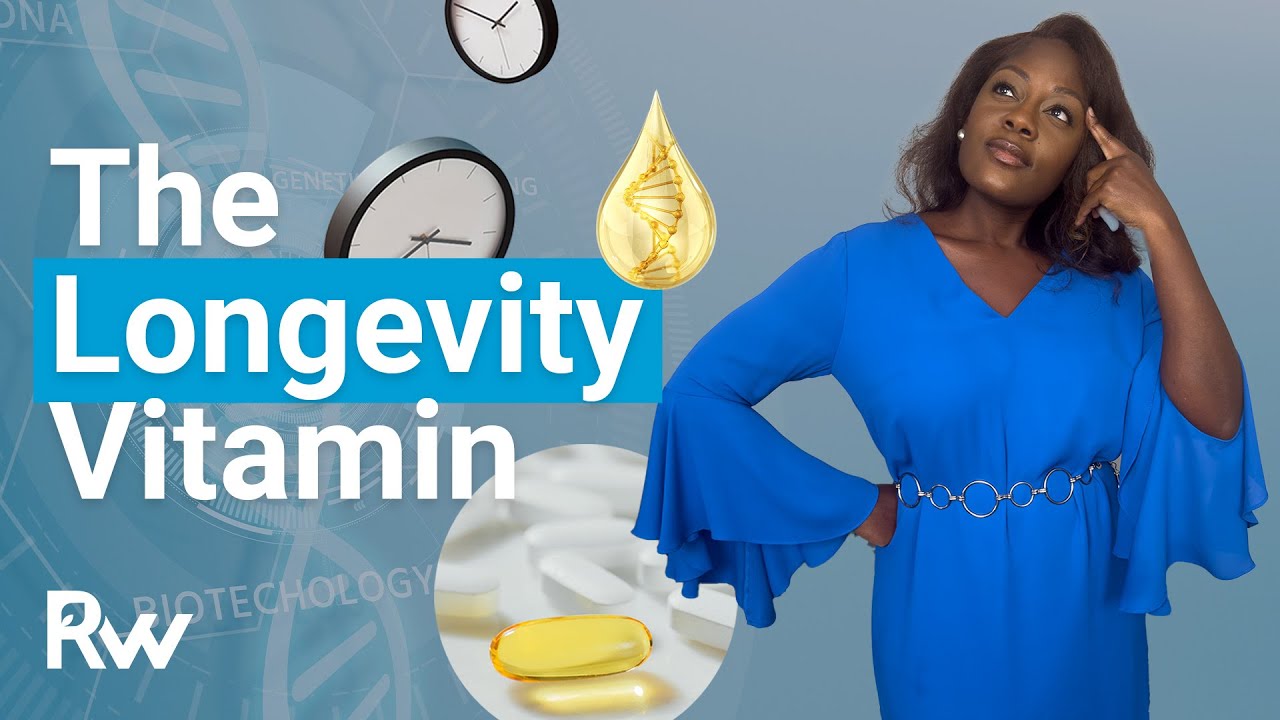
Ergothioneine is an amino acid making waves for targeting key pillars of aging and you can only get it through your diet, particularly mushrooms. In this episode of Real Wellness, Dr. Mike and Dr. Crystal discuss this emerging nutrient and also highlight how CoQ10 helps with migraines and tips for eating healthy on busy days.
Would you like us to feature you winning? Submit your 15-30 second video to wellnesswin@lifeextension.com to be highlighted on Real Wellness with Dr. Mike and Dr. Crystal! #LELEARN #EDURealwellness
SUBSCRIBE for new videos every week! https://www.youtube.com/LifeExtensionWellness?sub_confirmation=1
Discover more health info at the Live Extension® Health Hub https://www.lifeextension.com/education
Let’s connect:
Facebook: https://www.facebook.com/LifeExtension
Instagram: https://www.instagram.com/LifeExtension
Pinterest: https://www.pinterest.com/LifeExtension
Twitter: https://twitter.com/LifeExtension
TikTok: https://www.tiktok.com/@life_extension
Threads: https://www.threads.net/@lifeextension
The information in this video is not intended nor implied to be a substitute for professional medical advice, diagnosis, or treatment. All content, including text, graphics, images, and information, contained in this video is for general information purposes only and does not replace a consultation with your own doctor/health professional.
ergoamine as a longevity vitamin, CoQ10 in migraine, and healthy eating habits when you’re busy. All on the next episode of Real Wellness. So, you know about the basic vitamins, right? Vitamins’s A, the B vitamins, vitamin D, you know that stuff. What about ergoane? Some people call it the longevity vitamin. So, what is ergoionine? Dr. Crystal, you’re familiar with this? I am. We did a podcast on it, Dr. Michael Live Foreverish podcast. Go check it out. So, it’s an amino acid, right? Basically, um, but what’s interesting about it, it it turns out it has like its own internal transport system to get into cells and that has scientists excited. Yes, they do. And we’re also seeing that it’s targeting some big pillars of aging like oxidative stress and chronic inflammation as well. So yes, absolutely. When you see that the body has a transport mechanism saying we need this nutrient, then you better keep a close eye on it. It’s in mushrooms, right? A lot a lot of different mushrooms. I think a lot of different ones. I don’t know if there’s one more common with it, but you know, mushrooms in general. And I got a study here. It found that people who regularly consume mushrooms had a 16% lower risk of mortality during a 20-year period compared with individuals who don’t consume them. And they do. We’re starting to think I I think we still need more research, but we’re starting to think ergoing is that key compound. We do. And then we also see that it crosses the bloodb brain barrier, Dr. Mike. And that’s excited because now we’re thinking that it can support cognitive health that that that happens during the aging process. Yeah. You a lot of people don’t know, you know, the brain protects itself really good, right? And so it doesn’t allow a lot of things in and so when a nutrient naturally can get in, you know, it’s going to have a profound effect down the line. Yeah. Um now tell us about tieamir ex. Well we’re also seeing that the erggoine may support healthy tieumirs. Now the tieumirs these are uh the encaps I guess your DNA pretty much. Yeah and they get shorter and shorter every time that cell replicates and we it’s a marker of aging. It’s like a clock. Yeah. Yeah. Yeah. cell replicates and it gets shorter. The tie gets short. So it’s a chunk of DNA at the end of the chromosome. It just gets shorter and shorter and at some point it gets so short the cell now knows don’t divide anymore. Yeah. And so that tie shortening that’s one of our key mechanisms of aging. I wouldn’t call it a major mechanism of aging. We’re we’re not quite sure if it’s uh if the shortening is good or bad, but we do right now we’re seeing that the shortening is potentially a sign that you are aging. You are aging. And then if you if you we don’t we we like to wait for the clinical data, right? But if you go into a petri dish with some animal model like a mouse cell um and you if you can slow down the shrinking of that tie that cell does live longer at least in a pet treated. Now what does that mean about me and you that’s why we need the clinical evidence but it’s still very exciting stuff even outside of all that ergoine um you know with with its reduction of oxidative stress inflammation getting into your brain it’s still I think an exciting nutrient. It is. And and so we talk about food first. I would always suggest eat lots of mushrooms. Unfortunately, it’s a food that most people just do not consume on a regular basis. Think about it. When is the last time you’ve had mushrooms? And I’m not talking about mushrooms on your pizza. I’m talking about mushroom as the main deal. You know, a nice thick porttoella mushroom or or a mushroom sandwich. I did. Okay. I made I made a homemade cream of mushroom soup. Oh, and I used like three or four different types of mushrooms. Yum. So, did you use these? Well, oyster. I don’t know. I’ve given you these are the ones that contain the ergoing mataki. Well, what I don’t even know if I know what king oyster is, so I didn’t use that one. I had mitake, shiakei. There were a couple other ones that are weird looking. Okay. I couldn’t I don’t know if I could pronounce them. So, those would contain more than say the porttoella mushroom as well. And and the white button mushroom will give you some ergoionine, but you usually want to look for an addin. How, you know, as the nutritionist on the team, how often I I you had mentioned a lot of people don’t eat mushroom. When was the last time blah blah blah? Well, what would be a decent like schedule for making sure you’re getting that porttoella in there as well? Orgoine every day. Get some mushrooms every have some mushroom every day if you can with breakfast, with lunch or with dinner. Just throw it in there. You can throw it in in many meals as kind of to bulk it up. Uh they’re not very expensive and it’s a great way to get this longevity nutrient. So there you go. Ergoine, listen, it is becoming known as the longevity vitamin that your body makes and has this internal transport for. We’re pretty excited about it. got more research, you know, we got we got to look for that research, but I think it is going to come. By the way, you can go to lifeextension.com/ergo and that is a magazine article titled the real power of mushrooms. And don’t forget coming up next, CoQ10 and migraine. Migraine is tough. Don’t give up. CoQ10 may help. Migraine is is it’s serious. Dr. Crystal. And it’s chronic. It’s not the occasional headache. No. And it’s debilitating. Debilitating. We know we know people um personally that that suffer migraine. And it’s more than just the headache. It can be all kinds of stuff. I think what people what I hear cuz I don’t have them, but the nausea. Nausea. There’s eye things that there’s light sensitivity. It really does go on and on. And you know, some people have to blacken everything in their room and just lay there for 3 days as as best they can. And so anytime something new comes around in research, right? That’s important in research uh that might offer some relief of migraine, we definitely want to want to talk about it. And that is CoQ10. You want to give us a review? Co-enzyme Q10. It is an antioxidant. It’s known as ubiquinon or ubiquinol and that’s just because it’s ubiquitous all throughout the body. Most people are familiar with CoQ10 for heart health. We know that it’s needed for the the heart mitochondria for that heart to pump or cells to make energy. Uh and those mitochondria that’s in your cell that’s producing energy, producing ATP. But we’re also seeing that it can be beneficial to help individuals dealing with migraine headaches. And we do have the clinical research to to show this, right? We know that in human studies, CoQ10 has been shown to decrease the length and frequency of migraine episodes in comparison to a placebo. And there was one specific metaanalysis. Now remember, that’s when you pull a bunch of different clinical trials together. It it simply brings in more people, more data, and it gives you a it gives you a little more confidence. Yes. Than just one single study, right? So that’s why we like the metaanalysis. So this was six randomized trials that looked at CoQ10 compared to a placebo and concluded that CoQ10 reduces the duration of migraines by an average of 19 minutes and a frequency by an average of 1.5 days. So I think the next topic or the next question is how much should you take? Uh when we look at the research with migraine about 30 milligrams up to 800 mg of CoQ10 daily has been shown to be beneficial. Now, of course, there’s lab testing for CoQ10. You may want to consider and anyone who may be on a statin medication where we know that the the production, the natural production of CoQ10 in the body is diminished from that statin medication. You may need to take more, but generally speaking, the research is showing from 30 to 800 milligrams per day. And then there are a couple of nutrients that work synergistically with CoQ10. Yes. And those are curcumin and carnitine. Yeah. So they work uh all of those can work together to bring down that severity, that duration, frequency. So here here’s here’s if you’re if you’re suffer from migraine, here’s what you do. You talk to your doctor. You talk to your doctor about CoQ10. You talk to your doctor about those synergistic nutrients, carnitine and curcumin, and how they may or may not work with your medication. Uh but we do think based on the clinical research, it’s definitely something to have that conversation about. Yes. And and if your doctor says, “Oh, there’s nothing to it.” Then you can head to lifeextension.com/migraine. We have a migraine protocol and you’ll find all of the clinical information there. And then maybe you can take it to your doctor and say, “Hey, take a look at this. Tell me tell me what you think about about this.” Yeah. copiously referenced as like we we like to say copious, right? So those protocols really are true medical reviews. So check that out again at lifeextension.com/migraine and stay tuned. Coming up is our smartbite healthy eating habits when you’re busy. You know, whether you’re swamped at home or on the go, you can still eat healthy. So, we’re going to be talking about how to eat healthy when you are really busy. But I want you to know, Dr. Chris, you don’t know this, but I sent my guy into your office and I wanted to see the types of snacks that you had in there and see if you talk the talk and walk the walk. That’s right. You show up to record and then all of your food from your office on the table. So, Cameron found an apple. That’s good. A beef stick. I know some people may like beef. No, it’s a good one. No, that’s grass-finish beef. Yeah. Finished. That’s a big thing now. Sardines. Listen, as gross as they sound, you you know, you may not like them, but they are so healthy. Omega-3s, and these are in extra virgin olive oil, peanut butter, fantastic, really what a powerful, nutritious food. And then, of course, the lonely old banana. And it’s not lonely. This is a pair. This is a pair. That’s a good pair for sure. That’s how you turn it up. You add some extra protein, some healthy fats. All right. They’re busy at home. Things are going on, cooking, kids, homework. I just go go, you know how it is. Um, but we still want to give you some tips for eating healthy. And guess what? The first tip really, it’s it’s not about the eating part. It’s about getting it ready part. It’s and it well it’s really about the shopping experience. Be prepared. Shop for healthy foods in advance. And don’t shy away from the frozen section. You’re busy. If you don’t have time to cook, let me tell you, frozen food has come a long way. Frozen vegetables are great. They’re great. Absolutely. And they’re making them now without a lot of preservatives. You can get the organic. You can get the vegetarian, you can get the vegan foods. And one thing about frozen foods, they used to be really high in sodium. They’re now companies are kind of monitoring the salt content. So these that’s that’s a strategy. And I just have to tell you sometimes I keep my my freezer stocked for those busy days where you know you have to work late. Now it’s 6:30. Yeah. the kids need to eat. You want them in bed by 8:30. So, it’s kind of having that backup reserve. And I think that’s that’s one strategy. Readymade salads. Yesterday, I bought readymade uh salmon. It was blackened salmon. Four pieces came in the container already cooked, ready to heat up, ready to go. You have that. Not bad. You make your salad, you throw that salmon on top, you’ve got two good meals with with salmon. So, I think you can take advantage of these things. Of course, often times the pre-made foods are going to be a little more expensive. Of course. Yeah. So, you don’t make it. This is not your everyday thing. Of course. Yeah. Most of the time you want to be the whole foods. Get get the get those vegetables that are fresh. But what we’re saying is there are options that can still be healthy. Absolutely. And it’s much better than going to fast food restaurants. Now, this next tip is, you know, it’s really not about the food. It’s more about a process, right? And that is chew your food slowly. Now, when we found this out, we thought it was a great one. And it reminded me, but remember I told you about the monk who wrote about this. I don’t remember the monk’s name. I don’t remember. But it was like 500 years ago. It was It really was. It’s in his manuscript. If you know anything about this monk, please put it in the chat. Let us know in the comments. It was in his manuscript. Okay. And and it’s like it was like the last one thing he wrote. And he gave some tips before he died. Yes. And he gave some tips. And one of the tips 500 years ago was to eat slowly. And he like he he didn’t know anything, no sign, no nothing. But he said eat slowly, help your digestion. H ah. So, I agree with it. Well, I eat slow just by default. Um, and I’m trying to slow down everyone around me. No, I’m not a bad I’m a medium. Um, but here’s the thing. You know, you we want to be more in the moment of eating, I think, is what is what’s key here. Um, if if you slow down, slow your chewing, it does help digestion, but you just enjoy more of the flavors and savor that time. um and be more mindful. It also then ends up or translates into you eating healthier foods too. Yeah. And then our third tip, eat only when you are hungry. Don’t wait for the big meal. Hence all my snacks that I have here. Yeah. You want to if you’re if you got that you’re sitting at the office and a little my belly is great. Get something to eat. Grab a snack. Again, maybe it’s a protein shake. Maybe it’s a bar. Uh, but have some snacks on deck and eat and eat them when you’re feeling that hunger pain because if you wait, that’s when you gorge. You’re going to gorge. Now, the flip side to this is if you’re bored on a Saturday and you’re going in and out of the fridge and you’re not hungry at all, that’s just adding calories. Well, that’s why you have to be prepared to have only the healthy food in the house. So, like you’re going for chips and there are no chips in the pantry and the only thing is carrots. Maybe disappointing in the moment, but you’ll like it. It’ll be fine. The point being though is you don’t you got to watch that that refrigerator snacking. Uh because it can really add calories to to everything. So, there you go. Some tips to just eat healthy when you’re on the go, when you’re swamped, when you’re busy, just to make some better choices. Be prepared, chew slowly, and and and eat when you’re hungry, watch that refrigerator snacking. All of those could really help. Coming up next is our wellness win. All right, welcome to the last segment of today’s show, and it’s our wellness win. Let’s take a look. Hi, my name is Nerva and my wellness wind is my 366 day devotional that I do every day to make sure that my heart posture is in the right place and I’m super intentional with everything that I do. And once I start moving my body around, my day just goes on smoothly. Oh, that’s really sweet. That gives me like makes me emotional. That is that is awesome. Yeah. Not 365 366 days. Yeah, I like that. That what did she say? It’s her heart, her heart posture. So, it’s just kind of making sure your intentions, your heart is in the right place, have the right motives as you go throughout your day. And you know what that helps Dr. Mike? It helps you to expect have expect the best in other people. Like expect positive intentions even when they may not do something right. your your heart posture is saying, you know what, you can have compassion on others. Yeah. And I like for me it’s I like it’s like it’s not I don’t think of it in 24 hours. I think it like moment to moment. Yeah. Try to always do that. Be put that positivity out. Have your the right heart position every interaction. Yes. That you have. Yeah. And you know that translates to overall wellness. It translates to longevity. It translates to less stress. that positive mentality. So, thank you, Nerva. Yeah, that was great. Hey, by the way, if you want to submit your win, you can email it to wellnesswinlifeextension.com. And when you’re doing that, go to lifeextension.com because then you can use the discount code wellness and you’ll get $10 off $50 or more, plus free shipping and handling. And make sure you can follow us and subscribe to our channel, our YouTube channel. We’re posting shows weekly and thank you for your support of Real Wellness.