I break down everything you need to know about vitamin C serums as a board-certified dermatologist.
I explain why L-ascorbic acid is the gold standard ingredient to look for, how proper vehicle delivery systems work, and why packaging matters for stability.
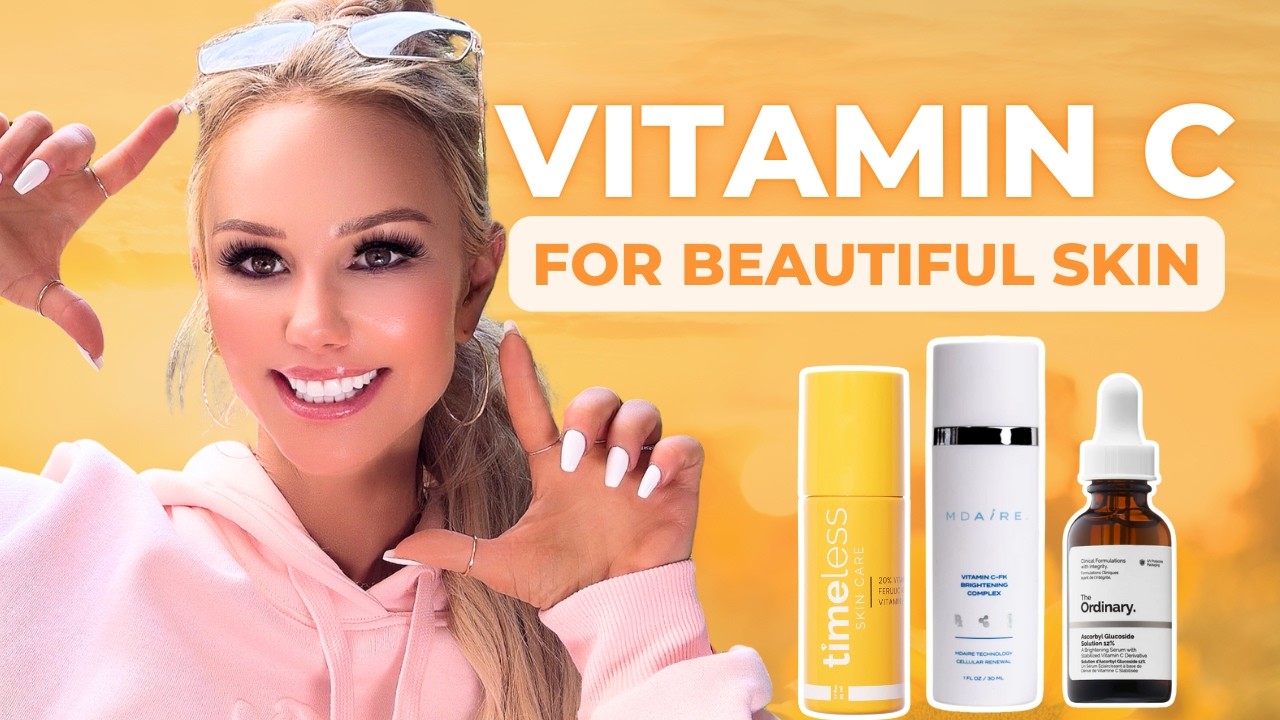
I share my insights on treating melasma and hyperpigmentation with vitamin C, discuss whether you can use retinol and vitamin C together, and provide affordable drugstore alternatives, such as The Ordinary and Timeless.
Topics Covered:
Why most vitamin C serums fail (and what to look for instead)
L-ascorbic acid vs other vitamin C derivatives
Vehicle delivery systems that actually penetrate skin
Packaging mistakes that ruin vitamin C potency
My personal melasma routine and timing tips
Can you use retinol + vitamin C together?
Best drugstore alternatives
How I treat melasma with lasers in darker skin tones
Why some dermatologists say “lasers don’t work” (they’re wrong)
Maintenance protocol after laser treatments
Red flags in vitamin C marketing claims
🩵 Visit https://www.mdaire.com/ to shop my SCIENCE-BASED COLLAGEN BOOSTING Skincare Line
🩵 Subscribe to the channel: https://www.youtube.com/@DrStefaniKappel?sub_confirmation=1
CHAPTERS
0:00 intro
1:30 what is Vitamin C skincare?
4:28 how to layer vitamin c serum
6:18 Vitamin C Packaging
10:28 Vitamin C for Melasma and Hyperpigmentation
11:59 Hydroquinone vs Vitamin C
13:54 what to look for in a vitamin c serum
15:20 seeing results from vitamin c serums
16:13 can you use retinol with vitamin c?
19:37 budget-friendly vitamin c serums
21:00 treating melasma
PRODUCTS MENTIONED IN THIS VIDEO:
Mdaire RXR Retinol Anti Aging Serum: https://bit.ly/3RN6qmV
Mdaire Vitamin C-FK: https://bit.ly/4eC5hZ4
#vitamincserum #vitamincskincare #skincare
Disclaimer: The videos on this Youtube channel are for informational purposes only and are not intended for medical advice or management. Information on this channel should not be used to treat, diagnose or manage medical and/or dermatologic conditions. Please consult with a physician or other medical professional regarding the diagnosis and management for any skin or health related issues.
Vitamin C serum. Best vitamin C for melasma. Best vitamin C serum for hyperpigmentation. These are questions I get in my office every day from my patients about vitamin C as an anti-aging and anti- melasma pigment correcting serum. So, what’s all the hype about vitamin C? What do you look for in a vitamin C? How do you know what vitamin C serums are better than others? After watching this video, hopefully you’ll have more insight to choose wisely and selectively, carefully decide which vitamin C serum would be right for you. My name is Dr. Stephanie Kappell and I’m a board-certified dermatologist and a fellowship trained aesthetic dermatologist. And what that means is after completing a dermatology residency, I went on for advanced fellowship training in aesthetics, getting advanced training in lasers, injectables, and aesthetics and actually keep up with new innovations in our field of dermatology and aesthetic medicine and try to keep you guys updated by producing this educational non-sponsored content. So, the only way to grow, because I’m proud to be nonsponsored, is for word of mouth and organic growth. So, if you could share this channel or this video with anyone else who wants non-sponsored content in a world where YouTube and the internet is flooded with sponsorships, paid partnerships, and a hidden agenda, I really just love this specialty and want to educate you guys and provide you with the best information so that you can make the best informed, educated decisions on procedures you want to invest your money in or products that you want to buy. And just for the love of aesthetics, I love sharing information with those who want to hear about it. So, before you dive in, just want to ask you to share this channel and this video. and thank you so much for your support. All right, so vitamin C, vitamin C is a very finicky active ingredient. And in the marketing world, of course, I see the good, the bad, and the ugly of the aesthetic space in the skincare industry that’s flooded with a lot of non-experts who like to embellish credentials that they may or may not have. But when it becomes a problem is when they overpromise vehicle delivery systems or mechanisms of action that they cannot deliver. and studying this field for almost 30 years now and being a skincare formulator myself with a background in dermatology and looking at skin under the microscope for decades. I just kind of want to enlighten you guys and give you the tools to pick apart and see through some of the false advertising and misinformation in marketing that exists today. For example, number one, vitamin C serum can contain various forms of vitamin C. Now, eloscorbic acid is the most powerful derivative of vitamin C, but it is the hardest to engineer and formulate. So, a lot of skincare companies want to cut corners and will say vitamin C, but they don’t say in their product that it does not contain eloscorbic acid. Lcorbic acid is what you want to look for in an active ingredient in a vitamin C serum. That is the most important. Now there’s other forms of vitamin C THD and there’s other forms of not only eloscorbic acid but deoscorbic acid which is actually not even bioavailable or so clinically when you have people who have that just beautiful glow and their skin pigment is all even under the microscope that correlates with seeing histoologically cellularly under the microscope all the melanin pigment is distributed in this nice beautiful plane. It’s not all patchy and disregulated and thick in some places and partial thickness in other places. It’s just this beautiful melanin distribution in the skin and clinically they have that beautiful glow. So that’s what vitamin C can achieve when you have the right formulation. Now sometimes if the melanin’s deeper or it’s a little bit more stubborn, we have to combine it with different lasers. As you see in the background, I have my what? Oh, that’s a V beam. That’s more for redness. But you have like the Pico laser which is next door. We have Fraal 1927. We have a YAG. We have different lasers that can target melanin depending on the skin thickness, your skin pigmentation, the level of melanin distribution in the ailments that we’re treating. And it gets not to get too scientific or fancy, but basically you want to use skinincare and sometimes lasers are needed to kind of augment the response and then maintenance can be achieved by using a non-hydroinone skin brightener like vitamin C. And vitamin C is such a powerful active ingredient because not only does it help regulate hyperpigmentation and fade melasma, but it’s also powerful for anti-aging, for collagen synthesis, for elastin fiber synthesis, for cellular renewal, for a beautiful glow, shrinking pore size, treating acne, and for my beauty or my patients who have sensitive skin. You want to formulate a skin care product that contains eloscorbic acid that’s not going to make your skin too dry or irritated. You want a vehicle delivery system that’s going to get the vitamin C where it needs to go. And the vitamin C molecule is very finicky. It has to operate at a certain cellular mu. It has to be in a certain pH for it to be active. And to achieve that is really difficult. That’s why in a skincare regimen when you’re layering on your products, you want to wash your face and one of the first things you put on is the vitamin C serum because the acid mantle and the pH balance of the skin affects the way that the vitamin C is absorbed. Now if you use my vitamin C by MDR and again I spent years studying the skin and know exactly how to formulate these products just from knowing how the skin behaves and drug phic kinetics in skin hisytologology. Basically you want that vehicle delivery system to absorb the vitamin C right away. So when you put on my vitamin C serum or if you use a really amazing you know vitamin C serum it’s going to absorb within a minute. You don’t have to worry about what layering of products come on afterwards because the vitamin C is already gone. It’s in the epidermis doing its thing, inducing signal transduction cascades and having downstream path pathways that are already upregulated by the time you put on your hydrator or your retinol or your sunscreen or your makeup. So, vehicle liver systems and vitamin C products should be fast. They should be simple. They should be non-erritating. And within weeks of use, you should notice results. And if you don’t, something’s wrong. And you should probably toss your product. Okay, you guys. I just got a call from my son, and he needs to be picked up from surfing. So, I’m going to go pick up my kiddo and I will continue this video as soon as I get home. Hey, you guys, quick pattern interrupt and vitamin C interruption really quick to show you my very favorite workout. So, you guys who follow me on Instagram, I always post my Leree videos. Lree, in my opinion, is like one of the best workouts. It literally smashes your waist. It just the results that I’ve seen on my body are amazing. Doesn’t agree. When they come forward, then we’re going to go opposite side. Got it. Okay, we’ll get back to vitamin C when I get back home. Okay, guys. So, I just finished my workout. I dropped my kids off and pick them up from practice. Now, I have to go home and make dinner and we’ll finish the video tonight. Also, another important factor in a vitamin C serum is the packaging. So the packaging is really really important so that the active molecule of the eloscorbic acid or any of the other vitamin C derivatives is really important because it is a very unstable molecule especially the eloscorbic acid remember out of all the vitamin C derivatives eloscorbic acid is the most impactful for the skin with the most amount of data showing its changes induced in the skin and also it is the most difficult to formulate and stabilize. So, eloscorbic acid gets very finicky and unstable with light, heat, and air. So, if you have a vitamin C serum that’s in a dropper, for example, and it’s getting exposed to the atmosphere, it’s decaying every time it gets exposed to the atmosphere. Now, it’ll still be effective, but it loses its efficacy over time, and that’s the fastest way to deplete the efficacy of a vitamin C serum because it’s, you know, being oxidized and in contact with the ambient atmosphere. When you have a vitamin C serum in airtight chamber that’s nitrogen lined, you have protection of the molecule for a longer period of time. So the efficacy remains for a longer period of time. It doesn’t have a decay that happens when it is introduced to the atmospheric you know exposure. So light heat air can make the eloscorbic acid derivative very unstable and you want an airtight nitrogen lined chamber. You don’t want it in a drop that’s just going to lose its efficacy. Now, the reason why the vehicle delivery systems in a vitamin C serum is so important is because half the time when you put on vitamin C, it’s just sitting on the top of the stratum corneium of the epidermis. It’s not even getting absorbed. But if there’s a vehicle liver system that takes it through the epidermis, takes it through the skin cells where it needs to become active and then gets activated in that environment and it you know downstream signal transduction cascades and pathways that are upregulated to synthesize new collagen, synthesize new elastin, regulate um melanin production, cellular renewal, free radical scavengers that help decrease, you know, carcinogenesis, all these good things that vitamin C does. It has to get there to do the work. and it can’t just sit on top of the skin. So, I always say when I’m teaching the medical students, it’s like having an astronaut in a spaceship. The astronaut can be sitting there on the spaceship on land and not being able to do, you know, the work in outer space that he is supposed to be doing or she. And you can also have the spaceship and take the astronaut to the moon or in outer space and not be able to allow the astronaut to leave the spaceship once he gets to the destination or she gets to the destination to do the work. So I think it’s really important to like you know conceptualize putting it on my skin does not mean it’s g going to have an effect. It needs to get to where it needs to go and it needs to become active in that environment in that cellular mu and the extracellular matrix wherever it is going. So this is the vitamin C by MD. Now if you can see it’s in a airtight chamber and when it pumps out it’s kind of like this white this white formula and when you put it on your skin it absorbs pretty rapidly. It feels so nice. It literally makes the skin glow. You can see. And it kind of has that vitamin C smell, but if it didn’t have that smell, I’d be worried. And basically, over time, this can sometimes change color as it gets oxidized, but it’s still effective. So, I think I had a patient like years ago who posted putting vitamin C on an apple, a sliced apple versus the unvitamin C covered apple slice, and the slice that had the vitamin C didn’t oxidize or turn brown. Hi. It didn’t turn brown and the the slice that had the vitamin C on it just didn’t get oxidized or have that brown kind of discoloration. So, even though the vitamin C can turn like oxidized or brownish color over time, the halflife and the time stamp on these is 1 year, you know, to have the downstream effects. So, not only is the packaging important, but the vehicle delivery systems also because half the time, you guys, half the vitamin C’s out there that you’re putting on your skin is just sitting on top of your skin. And it may feel nice when you put your fingers on it because your fingers are touching it because it’s sitting on your skin. It’s not rapidly absorbing. So, the vitamin C, of course, when you put it on, you’ll see within like a minute or less that your skin is brighter and it has been absorbed and it’s already downstream doing its thing. So that’s why when I do hot yoga because I struggle with mealasma and I’m in the heat, I usually put on my vitamin C serum about an hour before class to know that my melanocytes are going to be downregulated because they’re going to be stimulated by the heat to make more melanin. And we need to suppress the melanin synthesis pathway in the melanocytes and I know if I put on my vitamin C about an hour before hot yoga, then my melanocytes are going to be under control and producing melanin at a normal rate, not a hypervigilant rate. And that, you know, the vitamin C is already there where it needs to go. So I don’t have to worry about sitting on my skin and sweating it off in class. So moving on with vitamin C serum. So sometimes they can be formulated with other antioxidants that help regulate the melanin synthesis pathway. And what do I mean by that? Melanocytes are the pigment producing cells. And there’s a 1 to 10 ratio between the melanocytes which are the pigment producing cells and the keratinocytes which are the skin cells. So it has denderites which are like these little finger-like projections where the melanocy making melanin has a transportation system where it drops off little melanin endoomes or little capsules of pigment and it distributes them through the skin cells and that’s what presents with a tan post-inflammatory hyperpigmentation overall or normal pigmentation and normal tone but also you know melasma and other um dermatosses that present with irregular pigment distribution. that when the melanin is being synthesized at a more rapid rate by the melanocytes juxtaposed to melanocytes next door that aren’t making the melanin at that same rate it has to be suppressed now also when I do you know when I teach medical students and derm residents you basically have to think of the melanin synthesis pathway is like a ladder so the ladder is going to take you from point A to point B and there’s multiple steps in the ladder that you can take out now hydroquinone is one of the most profound and powerful active ingredients to inhibit the melanin synthesis pathway but vitamin C and eloscorbic acid in particular is one of the most powerful antioxidants that is a little bit I don’t want to say safer than hydroquinone because hydroquinone is very safe. I know it gets a bad rap from some miscommunic misinformation online but for all intents and purposes you know some people choose not to use hydroquinon which I fully support. As a dermatologist I think hydroquinone is fine when it is prescribed at like a 4% or less over a short period of time with intermittent pulses. But we’re not talking about hydroquinon. We’re talking about vitamin C and in particular eloscorbic acid. It’s also going to take out one of the steps in the ladder leading to melanin synthesis in that pathway. So if you think about being on hydroquinon and you don’t want to be on a hydroquinon long term. So you put you know you inhibit that step for a little while and then when you take the hydrochinone off your regimen you add in a vitamin C and that’s going to take out another step in the ladder. So when you have a vitamin C serum that has other melanin suppressing agents in it like kic acid, a furuic acid, azelleic acid, glycolic acid, a lot of the alpha hydroxy acids, it will help augment and kind of amplify the effects of vitamin C. Now it can do it two ways. It usually can do it by inhibiting other steps in the bladder in the melanin synthesis pathway or it can cause an exfoliation process of those keratinocytes the dead skin cells the dead stratum corneium cells that are kind of laying around with irregular pigment distribution. So the way to treat melasma and the way to treat hyperpigmentation or pH or any pigment irregularities in the skin is to a calm down all the melanocytes that are overproducing melanin at a rapid rate which is what eloscorbic acid does but also to help exfoliate with a gentle exfoliation process whether it be chemical or mechanical to help get rid of that dead skin cell layer that’s holding on to melanin that was produced weeks ago that’s irregularly distributed. I hope that makes sense. exfoliation and melanin synthesis pathway inhibition and vitamin C eloscorbic acid actually does both. Okay, so what to look for when you’re looking for a vitamin C formulation? Number one, you want an eloscorbic acid in that vitamin C formulation and ideally it’ll be between 10 and 20%. You also want dark or opaque packaging to protect the vitamin C or eloscorbic acid from light heat or the ambient air. So, droppers and, you know, anything that’s open or glass or see-through is a big no no. Also, pairing your vitamin C with hydrating or barrier supportive serums is really, really important, too, and that can help minimize irritation. It’s always good, though, to put on your vitamin C first in the lineup of multiple layers of skincare. But, it’s okay to put a moisturizer on or hydrator on within like a minute or so after your vitamin C serum, assuming that it has a very robust and scientifically advanced vehicle delivery system. Now, I know some of you guys are going to say, “Oh, I’ve been using Skinudicles C Fruic.” Now, that one has been around since I was a dermatology resident at UCLA in 2008. So, not to age date myself and like show you guys how old I am, but it has not changed the formulation since I was a first year at UCLA at in 2008. So, just keep that in mind because there’s been so much advances advancements in technology and vehicle delivery systems. If you’re using the same formulation that you were using in back in 2008, that’s something to consider. Also, it’s in a dropper, too. But you know what? If it works for you and you’re married to it, to each his own. I always say that to all my patients. If what I say doesn’t go along with what your skin is responding to, what you’re using at home, and if it’s working for you, great. But also, just know that within weeks, days or weeks of use of a vitamin C, you should notice results. So, if you’re using a product and you’re not getting the results, then it should make you question whether that serum is actually doing what, you know, the company is saying that it’s supposed to do. And then also on the other hand you know if you you know are using a vitamin C serum and say you have melasma that’s very recalcitrant in medicine what that means is very hard to treat or resistant to treatment and you are using it religiously and you have it better but it’s not cleared that doesn’t mean that that vitamin C is not working. So sometimes melanin goes deeper than just a vitamin C or a topical alone can cure or correct or maintain. Sometimes you’ll need a laser to kind of get your skin from point A to point B and then you maintain afterare with a vitamin C serum or some type of skincare at home. So it doesn’t mean it’s not working if your meal is still there. As long as it’s better and if you’re not noticing results within, you know, maybe 2 weeks of a new vitamin C serum, I say toss it. Now, can you use a retinol and a vitamin C on the same day or at the same time? I get asked this question by my patients a lot. And the answer is yes, but it depends on the actual retinol and vitamin C formulations, of course. And it also depends on your skin type and texture and skin thickness. There are multiple factors that can contribute to irritation or not being able to use a retinol and a vitamin C at the same time. But for most people, if you use it correctly and you’re using great products that have vehicle delivery systems and activives that are next level in the technology, then you should be fine. For example, I put on my vitamin C in the morning first thing. I wait about a minute to pass. Then I put on my NMF hydrator, which is a moisturizer. And then maybe, you know, a minute later, I put on my RXR retinol. Now, my retinol, the RXR retinol by MDR is a microencapsulated vehicle delivery system that really packs a punch with efficacy, but it doesn’t cause all that irritation because it stays inside the cell. It doesn’t go into the extracellular matrix where your immune system is going to come and, you know, cause you to have that red dry peely effect. Now, in English, what that means is yes, you can use a vitamin C and a retinol as long as they’re getting through the skin and not just sitting on top of the skin. And maybe you need to work up to it. Maybe you do vitamin C in the morning and then you do a retinol at night and then when you start to introduce them at the same time, maybe you do vitamin C in, you know, in the morning and wait a couple minutes and the retinol in the morning and then you skip it for that night. So, everyone’s different. Everybody’s skin’s different and it’s also highly dependent on, you know, your atmosphere, the environment that you’re in, your skin condition, like do you have eczema or do you have dry skin or do you have oily skin? It’s so across the board different that you just do what’s best for you. But it’s always smart with any skincare active to start low and go slow. So, if you want to try to introduce a vitamin C and a retinol at the same time, they’re not going to counteract each other. If anything, it may cause a little bit of irritation if you’re trying to get used to it and your skin’s not used to it. But by separating it out by a couple minutes and maybe using a hydrator in the meantime in the intrum and using a very safe, effective yet safe for sensitive skin retinol, I think that it they definitely can be used at the same time. And I use my retinol and my vitamin C every morning and every evening. And I never I never really take a break unless I’m taking, you know, using a tininoan for the evening. And I still do my vitamin C first before I put on my tininoan, which I mix with my hydrator. And I do that once or twice a week depending on the time of year. Now it’s summer, so I do it once or twice a week. But again, everyone’s different. Now, part of the reason why I wanted to start my own skincare line is because some so many of the medical grade skincare products that I was using as a provider and providing for my patients would swap out over time when they’d get bought out by bigger companies, swap out active ingredients for cheaper alternatives. And as a wholesaler in my office, when I would recommend these products to my patients, we would get notifications from the company, hey, we’re changing our formulation. And over time, I just started to notice that a lot of these medical grade skincare products weren’t performing like they were years ago. And so I wanted to have be able to have my own control over my own products and be able to know what I was getting my patients was the very best best vehicle liver systems best active ingredients in keeping up with recent technology which is really important not only for my patients but for my family members my friends and for myself. So I wanted to create this skincare line that I didn’t have to worry about buying bought out by a bigger company and swapping out for cheaper alternatives and so forth. But because I want to be cost you know be cost aware and I also discussed in this video that I was going to talk about drugstore alternatives. I think the most important thing for people to know if you’re shopping, you know, for a drugstore price for a vitamin C serum, yes, you don’t have to spend hundreds of dollars. You don’t have to get my vitamin C from MDR. I want you to have the best of the best, but I also want to educate you and empower you so that you can make good informed decisions when you buy a product. So, I don’t usually talk about products in general, but I think, you know, for this video, I wanted to mention a few that I came across or that my patients have used with good anecdotal data for a cheaper alternative drugstore option for a vitamin C. And one of them was, let me write, I wrote it down. One of them was Timeless. So Timeless, I believe, you can buy at Target. And I have had some of my patients with mealasma use this vitamin C serum at a good price. I think it’s $26. And it has a 10% eloscorbic acid, vitamin C derivative. So what to look for? You’re looking for your vitamin C in the derivative form of eloscorbic acid, which it meets this criteria. A better price point of under $30, I think, is great. And people seem to be very happy with this. So to provide you a drugstore alternative, I would go with maybe Timeless. You can get this at Target. Another better even better one because the price point’s better is for $8, The Ordinary has a vitamin C serum that has a 25 or 23% eloscorbic acid vitamin C derivative. It also has I think it has it has other antioxidants is in it as well. But I kind of take note when patients come in saying, “Dr. Cabbell, I just can’t afford my medical grade skincare. I want to treat my melasma. I’ve been using this and it’s given me a great response.” I actually take my phone and I put it into my notes so that when I do videos like this, I can share, you know, drugstore alternatives and options for you guys. The next thing I wanted to mention is malasma and how we treat mealasma in our office because as a laser specialist, we have many different lasers in our office that can be very efficacious and amazing with the results that we can get when treating melasma even in skin types 3 through six. So a large part of my laser fellowship training was treating skin of color and mealasma in skin of color safely and effectively with the pre and post appropriate afterare the right laser selection and the correct settings and parameters. And I tell this to all my patients and other doctors who ask me for my settings. It’s just an art of medicine that you learn over time and understanding how the physics of these lasers work and how the skinological changes are, you know, affected by the lasers to appropriately manage. I just don’t have one cookie cutter. Okay, for a Fitzpatrick 4 with mealasma that’s mid superficial and deep. I use these settings with the pico. It doesn’t work like that. And it has to do with endpoints and a lot of you know education that goes into using lasers. But I can tell you firsthand and if you’re my patient you can vouch for this statement that I’m about to say that lasers can have a huge impact on not curing clearing mealasma. And then the aftermath of the afterare for maintenance is you know usually part two or phase two of controlling mealasma. we can erase mealasma and get melasma to look a lot better. But it’s the afterare that becomes really important after your laser, you know, corrects the mealasma or the the pigmentation because it’s almost like going to the gym and getting really fit for a fitness competition and then going home and eating clean. If you don’t eat clean when you go home, you I don’t care what you do at the gym. If you’re going home and not eating clean and you’re eating high glycemic index foods and on, you know, an unhealthy diet, you’re not going to maintain those results that you’re putting all that effort in the gym with. So, I’ve heard of some other dermatologists saying lasers don’t work. Lasers will make pigmentation worse. Those are for people who aren’t educated or highly trained in lasers because if a person is lasering somebody and giving the patient at the appropriate aftercare and protocol to follow, there’s no one who should have worsening of melasma with a laser. If you follow the protocol and you go to somebody highly trained, so I don’t want you to think that if you have darker skin or if you’re, you know, olive skin tone or somebody told you that melasma is worse worsened by lasers. That’s just not true. You just have to find a laser specialist who’s comfortable with lasers and laser parameters and settings to give you the response that you’re going for. And sometimes it takes multiple treatments and sometimes we have to mix and match different lasers depending on how deep that melanin goes. But, you know, usually post laser we will use a hydroquinon and then we’ll taper the patient off the hydroquinone by, you know, substituting with a vitamin C or some type of antioxidant melanin pathway synthesis inhibitor. So, um, that’s where vitamin C comes into play and can really, really help maintain the results that you achieve from a laser for treatment of melasma hyperpigmentation. All right, with that said, end of summer, you can see the sun is setting here. I feel like this is an appropriate area to talk about vitamin C, hyperpigmentation, and mealasma, especially coming out of summer. And if you’re like me who struggles with measma on a day-to-day basis, you know, I hopefully this video was was helpful to you. Share this content with anyone who wants non-sponsored, unbiased, science-based content from a dermatologist. And I really appreciate you guys spreading the word cuz the only way to grow is organically. All right, you guys take care and we’ll see you next week. Thank you so much for watching. Drop a comment in the comment section and share this video with someone who may find it useful. As always, I love you guys. [Music]