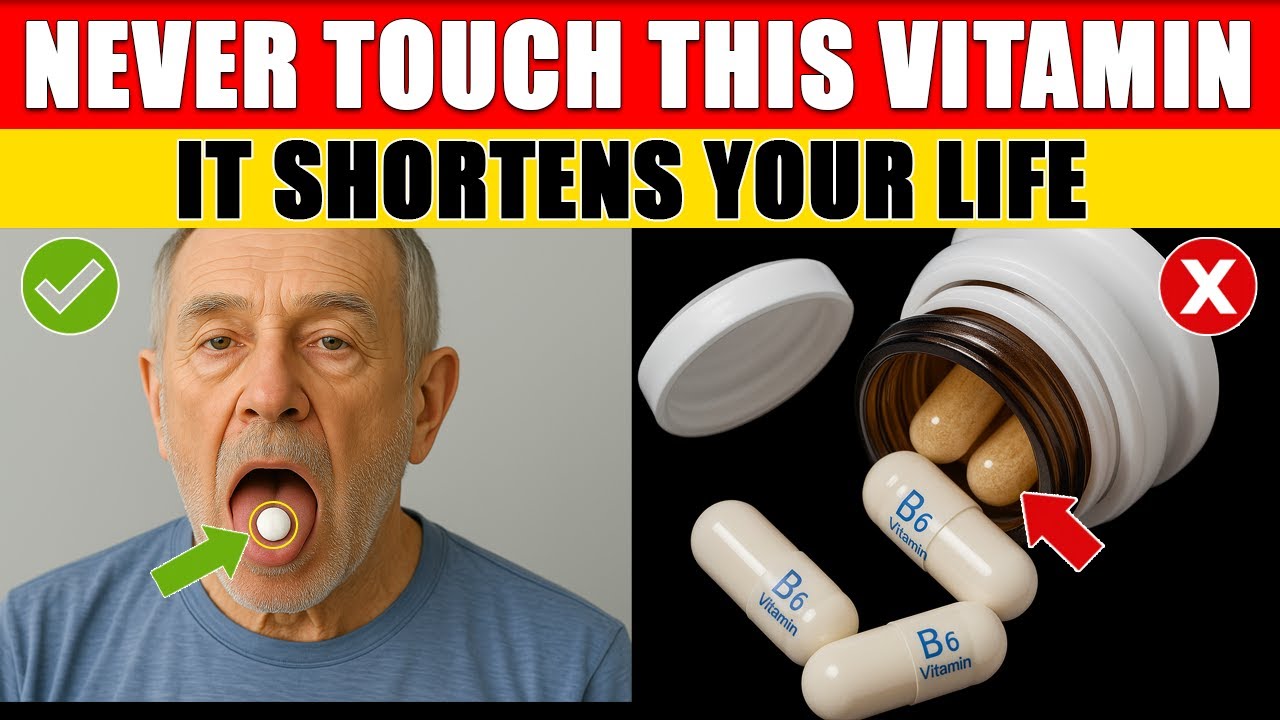
Over 60? 4 WORST Vitamins You Should NEVER Take and 4 You MUST Take Daily| Dr Sam Senior Health Tips
Are you over 60 and taking vitamins every day? ⚠️ Some supplements can do more harm than good — increasing your risk of fractures, nerve damage, or even heart problems. In this video, Dr. Sam (30+ years helping seniors stay strong and independent) reveals:
❌ 4 vitamins and supplements you should AVOID after 60:
– High-dose Vitamin A (retinol)
– High-dose Vitamin B6
– Iron supplements (unless deficient)
– Calcium supplements taken alone
✅ And the 4 essentials you SHOULD take daily to protect your brain, heart, and bones:
– Vitamin D3
– Vitamin B12
– Magnesium
– Omega-3 fatty acids (EPA & DHA)
You’ll learn what the science says, real-life patient stories, and practical advice on how to use these nutrients safely. Plus, Dr. Sam shares the best times of day to take them for maximum absorption.
👉 If you want to age with strength, energy, and confidence, this video is for you.
⌛Timestamps:
00:00 – Intro
02:30 – Worst Vitamin No.1
04;58 – Worst Vitamin No.2
07:25 – Worst Vitamin No.3
09:54 – Worst Vitamin No.4
12:50 – Best Vitamin No.1
17:49 – Best Vitamin No.2
21:22 – Best Vitamin No.3
23:28 – Best Vitamin No.4
—————————————————————————————————————
“🎥 More Videos You May Like:
🌟 As a BRAIN Doctor, I’m SHOCKED: THIS Sleeping Position Raises Stroke Risk Overnight | Dr Sam
► https://www.youtube.com/watch?v=1dYMBp1BBPM&t=10s
Build muscle after 60: THIS PROTEIN works better than eggs! | Dr Sam Senior Health Tips
► https://www.youtube.com/watch?v=cL9e68JvVtE&t=1s
🌟 Over 60? Can’t Sleep Through the Night? Drink THIS Instead of Water for Instant Deep Sleep | Dr Sam
► https://www.youtube.com/watch?v=sXfUVBRUcio
🌟Over 60? 3 Teas to REBUILD MUSCLE and Walk Strong Again | Dr Sam Senior Health Tips
► https://www.youtube.com/watch?v=oz6rytZUkN0&t=156s”
—————————————————————————————————————
Welcome to Dr Sam Senior Health Tips – your trusted guide to healthy aging, muscle strength, and better living after 60. On Dr Sam Senior Health Tips, we share practical senior health tips about nutrition, mobility, and everyday habits that keep you strong and independent. With over 30 years of experience, Dr. Sam brings you simple yet powerful Senior Health Tips you can use daily to improve your quality of life. Subscribe now and join the growing community at Dr Sam Senior Health Tips for expert guidance tailored to seniors.
#drsamseniorhealthtips #seniorhealthtips #healthyaging
After the age of 60, many seniors begin taking a handful of vitamins every day, thinking, “The more I take, the healthier I’ll be.” But here’s the truth. Not every vitamin is safe for older adults. Some that look harmless can silently damage your liver, nerves, or even your heart if taken the wrong way. On the other hand, there are a few essential vitamins and nutrients that most people over 60 actually need more of. and skipping them can lead to weaker bones, fading memory, and a fragile immune system. I’m Dr. Sam, and for over 30 years, I’ve been helping older adults stay healthy, strong, and independent. In today’s video, I’ll walk you through the four vitamins you should avoid after 60, uh, and the four you should take daily to protect your brain, heart, and bones. And at the end, I’ll also share the best way to time these supplements during the day so your body absorbs them properly and you avoid unwanted side effects. Make sure you watch until the end because the number one must take nutrient is the key to protecting your memory and extending your brain health. And if this is your first time here at Dr. Sam’s senior health tips. Don’t forget to hit subscribe and tap the bell so you never miss another sciencebacked health tip designed especially for seniors. Now, before we talk about the nutrients you should take, let’s start with the ones you need to be cautious about. Many seniors think that more is better when it comes to vitamins, but the reality is that certain supplements can backfire. Now, either because your body can’t process them properly after 60 or because they increase the risk of serious health problems when taken in excess. In this section, I’ll walk you through the four vitamins and supplements older adults should be very careful with or even avoid altogether. Each one might look harmless on the bottle, but research shows that especially in people over 60, they can do more harm than good. Coming up first is a vitamin that has long been marketed for healthy skin and vision. Yet in high doses, it can actually make your bones weaker and increase your risk of fractures. Let’s begin with vitamin A. Vitamin A often shows up on supplement bottles as retinol or retinol palmitate, and it’s advertised for better vision, skin, and immunity. But here’s the hidden danger. After 60, taking too much vitamin A in this form can actually backfire. Damaging your liver and making your bones weaker, not stronger. Unlike water soluble vitamins that flush out of the body easily, vitamin A is fat soluble. That means it builds up slowly in your liver and bones over time. When the levels get too high, toxicity sets in. Several major studies have proven this risk. For example, a large perspective study in the New England Journal of Medicine, 1998, reported that women with the highest intake of preformed vitamin A had nearly double the risk of hip fracture. Another study in JAMAMA 2002 found that post-menopausal women with elevated plasma retinol levels were far more likely to suffer osteoporosis and fractures. I remember one of my patients, Mrs. L, age 67, who took 25,000 IU of vitamin A daily because she thought it would protect her eyesight. Within a year, her liver enzymes spiked and her bone scans showed worsening osteoporosis. Once she stopped the highdose supplements and got her vitamin A naturally from carrots, pumpkin, and leafy greens, all rich in beta carotene, which the body converts safely as needed, her health steadily improved. That’s the key lesson. Avoid highdosese preformed vitamin A supplements unless specifically prescribed by your doctor. Instead, rely on colorful vegetables like carrots, spinach, or sweet potatoes. They provide beta carotene, a safer source that your body regulates on its own. And while vitamin A in excess can weaken your bones and liver, the next vitamin on our list is a different kind of danger. It doesn’t attack your skeleton. It quietly damages your nerves. Let’s move on to vitamin B6. Vitamin B6 is often praised for supporting brain function and energy metabolism. And in small amounts, it truly is essential. But after 60, taking it in high doses can turn from helpful to harmful. quietly damaging the very nerves you rely on for balance, coordination, and independence. The problem is that vitamin B6, unlike many other B vitamins, can become toxic if taken above safe limits for long periods. Clinical evidence shows that doses above 100 mg per day increase the risk of peripheral neuropathy, a condition where the nerves in your hands and feet become damaged. Symptoms include tingling, burning, numbness, and eventually weakness that can make it difficult to walk or even button a shirt. In fact, a safety review by the European Food Safety Authority 2023 concluded that long-term use of highdosese B6 clearly raises the risk of irreversible nerve injury. I think of one patient, Mr. P, a 72-year-old retired engineer who came to my clinic complaining of numbness in his feet and unsteady walking. He was taking a mega B complex that gave him over 200 meg of B6 every single day. Within a year, the damage had started. When we stopped the supplement, his symptoms slowly improved, but not completely. A reminder that nerve damage from too much B6 can sometimes be permanent. The reality is that your body needs only one five to two minos of vitamin B6 per day. An amount easily found in everyday foods like chicken, fish, bananas, and whole grains. There’s no benefit to taking 50 or 100 times that amount. Only risk. So, while vitamin A in excess can weaken bones, vitamin B6 in excess can quietly erode your nerves. And that brings us to the next supplement seniors should be cautious with. One that many people continue taking even when they no longer need it. Iron. Iron is essential earlier in life. It builds healthy red blood cells and prevents anemia. But after age 60, for most people, especially women after menopause, the body’s iron requirements drop significantly. Continuing to take daily iron supplements just in case, can do more harm than good. Here’s why. Excess iron doesn’t simply pass out of the body. It accumulates, particularly in the liver, heart, and pancreas. This buildup triggers oxidative stress, essentially rusting your tissues from the inside out. Research has linked high iron stores to an increased risk of heart disease, diabetes, and even neurodeenerative conditions like Alzheimer’s disease. In fact, a large cohort analysis published in the Journal of the American Medical Association, Jama 2004, found that post-menopausal women with the highest iron levels had a two-fold increase in heart disease risk compared to those with moderate levels. I recall a patient, Mrs. H, age 70, who felt fatigued and assumed she was anemic. She started taking iron tablets on her own, 65 mmols daily, without testing her blood. 6 months later, her ferotin levels were skyhigh. Her liver enzymes were abnormal, and her fatigue was worse, not better. Once she stopped unnecessary iron and focused instead on a balanced diet with leafy greens, lean proteins, and vitamin C rich foods to enhance natural absorption. Her energy and lab results gradually return to normal. The lesson is clear. Iron should only be supplemented if blood tests confirm a deficiency and your doctor recommends it. For most older adults, the daily iron found naturally in foods like beans, poultry, or leafy greens is more than enough. So far, we’ve seen how vitamin A can weaken bones, vitamin B6 can harm nerves, and iron can overload your organs. But there’s one more supplement many seniors take for bone health that actually increases risks when used the wrong way, and that’s calcium taken alone. For decades, calcium was promoted as the magic pill for strong bones. Many seniors still believe that swallowing a highdosese calcium tablet every day is the best way to prevent osteoporosis. But here’s the problem. When calcium is taken by itself without the supporting nutrients it needs, it can cause more harm than good. Calcium on its own doesn’t know where to go. Instead of moving into your bones, a large portion can deposit in the wrong places like your kidneys where it forms painful stones or your arteries where it contributes to hardening and blockages. A landmark metaanalysis published in the BMJ 2010 reviewed over a dozen randomized trials and found that older adults taking calcium supplements without vitamin D had about a 25% higher risk of heart attack compared to those who didn’t. That’s a sobering number, especially for seniors already at risk of cardiovascular disease. I think of Mr. T, a 65-year-old retired accountant who took 1,200 milloserus of calcium carbonate every day because he was worried about fractures. A year later, he was in the emergency room with severe kidney stones. After switching to a balanced plan, moderate calcium from food sources like yogurt, cheese, and canned salmon combined with vitamin D3 and magnesium, his bone density stabilized, and he never had another kidney stone episode. The message here is simple. Calcium is not the enemy, but it should never be taken in isolation. Your bones need vitamin D3 to absorb it, magnesium to balance it, and vitamin K2 to direct it into bone instead of blood vessels. Without these partners, calcium alone is like building bricks without cement. It doesn’t stick where it belongs. So, now we’ve covered the four supplements you should be cautious with after 60. vitamin A, vitamin B6, iron, and calcium when taken alone. Each of these can silently undermine your health if misused. But here’s the good news. The right vitamins and nutrients can do the exact opposite. They can strengthen your body, protect your brain, and keep you independent. Let’s now move to the positive side. The four essential nutrients you should take daily after 60. And topping the list is one that doctors worldwide agree is critical for seniors. Vitamin D3. Now that we’ve seen the four supplements that can quietly harm your health, let’s turn to the positive side. The nutrients that become even more important after 60. These are the vitamins and minerals that protect your bones, keep your heart steady, sharpen your memory, and reduce the silent inflammation that speeds up aging. Research consistently shows that deficiencies in certain vitamins are much more common in older adults. For example, vitamin D levels tend to plummet because the skin becomes less efficient at making it from sunlight. Vitamin B12 absorption declines as stomach acid production drops. Magnesium intake is often too low because processed foods dominate the diet. And omega-3s, which protect both the heart and brain, are frequently missing if fish isn’t a regular part of meals. That’s why in this section, we’ll focus on the four nutrients most seniors should prioritize daily. Vitamin D3 to strengthen bones and immune defenses. Vitamin B12 to protect memory and nerve function. Magnesium to keep muscles, blood sugar, and heart rhythm stable. Omega-3 fatty acids, EPA, and DHA to fight inflammation and safeguard your brain and heart. Each of these has solid evidence behind it. And in the next sections, we’ll dive into the details. what the studies show, how they work in your body, and how you can get them through foods or supplements. And first on the list is perhaps the most critical nutrient of all. Vitamin D3, often called the sunshine vitamin. Vitamin D3, often called the sunshine vitamin, is one of the most important nutrients for people over 60 and unfortunately also one of the most common deficiencies. As we age, our skin becomes far less efficient at producing vitamin D from sunlight, and many seniors spend less time outdoors. The result is that blood levels drop, leaving bones, muscles, and the immune system unprotected. Why does this matter so much? Vitamin D3 acts like a key that unlocks calcium absorption in the gut. Without it, the calcium you eat simply passes through your body. Low vitamin D also weakens muscles and increases the risk of falls, which is why deficiency is strongly linked to hip fractures in older adults. Beyond bones, vitamin D regulates hundreds of genes involved in immunity and inflammation. Research has shown that low vitamin D levels are associated with higher rates of respiratory infections, cardiovascular disease, and even cognitive decline. The evidence is strong. A 2011 metaanalysis in the British Medical Journal involving over 30,000 participants found that older adults who supplemented with vitamin D3 had a 19% lower risk of fractures compared to those who didn’t. Another large study published in the Journal of the American Geriatric Society 2015 showed that seniors with adequate vitamin D levels had better balance and muscle strength, reducing the chance of dangerous falls. I recall one of my patients, Mrs. M, a 74year-old grandmother who came to me after suffering a hip fracture. Tests revealed her vitamin D level was critically low. We started her on 1,000 IU of vitamin D3 daily along with moderate calcium from food. Over the next year, not only did her bone density improve, but her energy and mood lifted as well. A common benefit I see once vitamin D levels are restored. Practical advice. Most seniors should aim for 800 to 2,000 IU of vitamin D3 daily. Ideally taken with a meal that contains healthy fats to boost absorption. Foods like salmon, sardines, and fortified dairy can help, but for many people, a supplement is the most reliable way to maintain healthy levels. Vitamin D3 lays the foundation by strengthening your bones and immunity, but your nervous system and memory need a very different kind of support. And that’s where the next vitamin comes in. Vitamin B12. Vitamin B12 is one of the most overlooked nutrients in seniors. Yet, it’s absolutely vital for your memory, energy, and nervous system. After 60, the risk of deficiency rises sharply because the stomach produces less acid. That stomach acid is what normally helps release B12 from food. To make matters worse, common medications like antacids and metformin further reduce absorption. What happens when you don’t get enough? Low B12 leads to anemia, which leaves you feeling weak and fatigued. But the bigger danger is in the brain and nerves. Without B12, the protective myelin sheath around your nerves begins to break down. The result, memory lapses, confusion, depression, tingling in the hands and feet, and in severe cases, permanent nerve damage. The research is striking. A tooth I 10 study in neurology followed over 100 seniors and found that those with the lowest B12 levels had significantly more brain shrinkage and cognitive decline over 5 years compared to those with adequate levels. Another large analysis in the American Journal of Clinical Nutrition 2013 confirmed that older adults with low B12 were twice as likely to experience poor memory and cognitive impairment. I think of one patient, Mr. A, age 69, who came in complaining of constant forgetfulness and fatigue. Blood tests showed his B12 was very low. We started him on 1,000 mcg of methylcobalamin daily. Within 3 months, his energy returned and his memory improved enough that he could once again manage his finances without help. Practical advice, most seniors should consider a B12 supplement, especially in the form of methylcobalamin or cyanocobalamin at a dose of 500 1,000 oen mcg. Sublingual tablets or lozenes are well absorbed even when stomach acid is low. Natural food sources include fish, eggs, poultry, and fortified cereals. But for many older adults, diet alone isn’t enough. So, while vitamin D3 strengthens your bones and immunity, vitamin B12 keeps your memory sharp and your nerves protected. Next, we’ll turn to a mineral that’s often forgotten, but plays a role in over 300 processes in the body, and low levels can trigger cramps, high blood pressure, and fatigue. That mineral is magnesium. Magnesium is sometimes called the master mineral because it’s involved in more than 300 biochemical reactions in your body. Yet, after 60, many seniors don’t get enough of it. either because of poor diet, reduced absorption, or medications like diuretics that deplete magnesium levels. Surveys such as the Enoch Hannes study in the US show that nearly half of adults over 70 failed to meet the daily recommended intake. Why does this matter? Magnesium keeps your muscles and nerves functioning properly, stabilizes your heart rhythm, and helps regulate blood sugar and blood pressure. Without enough magnesium, seniors often experience muscle cramps, irregular heartbeat, fatigue, and even higher risk of type 2 diabetes and stroke. The science is clear. A 2013 metaanalysis in the American Journal of Clinical Nutrition found that higher magnesium intake was linked to a 30% lower risk of cardiovascular disease. Another study in the journal of hypertension 2017 showed that magnesium supplementation reduced systolic blood pressure by about four mpair on average. A meaningful difference for seniors at risk of stroke. I remember Mrs. K, a 71-year-old patient who frequently complained of leg cramps at night and struggled with rising blood pressure despite medication. Her blood work showed low magnesium levels. Once she began supplementing with 300 mg of magnesium citrate daily, her cramps almost disappeared and her blood pressure became much easier to control. Practical advice, most seniors should aim for 300 to 400 mg of magnesium per day. Magnesiumrich foods include leafy greens, nuts, seeds, beans, and whole grains. But because it’s hard to get enough from diet alone, especially if you’re on medications, a gentle supplement like magnesium citrate or glycinate is often helpful. So, while vitamin B12 protects your nerves and memory, magnesium supports your muscles, heart, and circulation. And finally, we arrive at one of the most powerful daily essentials for brain and heart health. Omega-3 fatty acids, EPA and DHA. Omega-3 fatty acids, especially EPA and DHA, are among the most powerful nutrients seniors can take daily. Found mainly in fatty fish and certain supplements, these healthy fats directly protect the heart, brain, joints, and blood vessels. All areas that become more vulnerable after 60. Why are they so important? With age, lowgrade inflammation becomes a silent driver of many diseases. Stiff arteries, joint pain, memory decline, even depression. Omega-3s are natural anti-inflammatories. They keep blood vessels flexible, improve blood flow to the brain, and protect neurons from oxidative stress. The research is impressive. A 2018 metaanalysis in Jamama Cardiology, including over 77,000 participants, found that people who regularly consumed omega-3s, had a 10% lower risk of heart attack and stroke. Another study in Alzheimer’s and dementia 2016 showed that seniors with higher blood levels of DHA had slower rates of cognitive decline and performed better on memory tests. I recall Mr. D, a 73-year-old retired banker who came to me with high triglycerides and constant knee pain. He disliked fish, so his omega-3 intake was near zero. We added a daily fish oil supplement providing 1,000 olive iron of combined EPA and DHA. Within 3 months, his triglycerides dropped by nearly 25%. His knee pain eased, and he told me he could finally enjoy his morning walks again. Practical advice. Seniors should aim for about 1,000 smay of EPA plus DHA daily, either through fatty fish like salmon, sardines, and mackerel at least twice per week or through a high quality fish oil or algaebased supplement. Always take omega-3s with meals to maximize absorption and reduce fishy aftertaste. With omega-3s rounding out the list, we now have the four essentials to protect your health after 60. Vitamin D3, vitamin B12, magnesium, and omega-3 fatty acids. These are the nutrients that don’t just add years to your life, but add life to your years. And now, let’s bring everything together with the final takeaway and practical action plan. the summary that shows you exactly how to balance what to avoid and what to include every day. So, here’s the truth. After 60, staying healthy isn’t about swallowing a handful of pills every morning. It’s about knowing which vitamins truly help and which ones quietly harm your body. We’ve seen how highdose vitamin A can weaken your bones and strain your liver. How excess vitamin B6 can damage your nerves. How unnecessary iron can overload your organs. And how calcium taken alone can raise the risk of kidney stones and even heart attacks. These are the silent traps many seniors fall into, thinking they are protecting their health when in reality they are making themselves more vulnerable. But the good news is just as powerful. When you give your body the right nutrients, vitamin D3 to build stronger bones and immunity, vitamin B12 to protect memory and nerve function, magnesium to steady your muscles, heart, and blood pressure, and omega-3 fatty acids to fight inflammation in the brain and arteries. You create a foundation for strength, clarity, and independence that lasts well into your later years. These aren’t exotic supplements. They’re simple, proven nutrients that science shows can make the difference between frailty and vitality. The best approach is consistent, not extreme. Take your vitamin D3 with a meal that has some healthy fat so it absorbs properly. Add vitamin B12 in the morning for steady energy and sharper focus. Use magnesium in the evening to calm your muscles and improve sleep. And pair omega-3s with your largest meal, either through fish or a supplement to support your brain and circulation. Day after day, these small choices add up, protecting you in ways you can feel now. more energy, better balance, clearer memory, and in ways you may never notice, like the stroke or fracture that never happens. I’ve seen this transformation countless times in my patients. People who once struggled with fatigue, pain, or forgetfulness regaining their strength, their confidence, and their independence simply by adjusting the way they use supplements. doesn’t take complicated regimens or expensive powders. It just takes the right information and the consistency to follow it. Now, I’d love to hear from you. Which of these four essentials are already part of your daily routine? And which one will you add starting today? Share your story in the comments below because your experience may inspire someone else to take that first step toward better health. Thank you so much for watching today’s episode of Dr. Sam’s Senior Health Tips. If you found this helpful, please give it a thumbs up, subscribe to the channel, and turn on the bell so you never miss another sciencebacked tip designed to keep you strong, sharp, and independent after 60. Here’s to living longer, healthier, and with more confidence every single day.