Our immune system protects us from pathogens, harmful substances and malignant cell changes. For humans, it is indispensable. This film examines the immune system and shows how it can be strengthened – as well as how it can fail.
The immune system does not have a fixed location. Rather, it is comprised of a network of systems distributed throughout the body. It is both complex and fascinating.
In recent years and especially since COVID, doctors and scientists have collected extensive data on the immune system and gained important new insights. This scientific documentary offers us an absorbing and entertaining look at our immune system, focusing on four key questions: What is the immune system? How can we strengthen it? Under what circumstances does it fail? And how can it be used to cure diseases such as cancer?
The film presents fascinating examples, clear explanations and interviews with international experts. A pediatrician in Hamburg explains how the immune system develops in infants and young children. Immunologists in Paris and New York shed light on the relationship between the microbiome and the immune system. And an oncologist in Heidelberg uses immunotherapy to specifically combat cancer.
Never before has the immune system been the focus of so much scientific research as it is now.
#documentary #dwdocumentary #dwdocs #immunesystem #health
______
DW Documentary gives you knowledge beyond the headlines. Watch top documentaries from German broadcasters and international production companies. Meet intriguing people, travel to distant lands, get a look behind the complexities of daily life and build a deeper understanding of current affairs and global events. Subscribe and explore the world around you with DW Documentary.
Subscribe to:
⮞ DW Documentary (English): https://www.youtube.com/dwdocumentary
⮞ DW Documental (Spanish): https://www.youtube.com/dwdocumental
⮞ DW Documentary وثائقية دي دبليو (Arabic): https://www.youtube.com/dwdocarabia
⮞ DW Documentary हिन्दी (Hindi): https://www.youtube.com/dwdochindi
⮞ DW Doku (German): https://www.youtube.com/dwdoku
For more visit: http://www.dw.com/en/tv/docfilm/s-3610
Follow DW Documentary on Instagram: https://www.instagram.com/dwdocumentary/
Follow DW Documental on Facebook: https://www.facebook.com/dwdocumental
We kindly ask viewers to read and stick to the DW netiquette policy on our channel: https://p.dw.com/p/MF1G
The immune system. We couldn’t survive without it. It protects us from infection, harmful
substances, and malignant cell changes. But it can also
be vulnerable … and pose a threat to our health. The immune system is a powerful
organ with some mighty weapons. When these weapons are used
to fight a pathogen, it’s great. But if they’re turned on
a healthy body, it’s bad. How does this
complex system work? What causes it to go wrong? What factors influence it? The immune systems of
men and women are different. It’s generally agreed that infants
are more vulnerable to infections. However, that’s
not the whole story. The intestine is key. It’s where most external
substances enter the body. So, we need a strong
immune system there. Especially in recent years,
partly due to COVID-19, medical professionals around the
world have gained new insights into the immune system. This has given rise
to promising research. Could our immune systems be
capable of much more than we thought? The immune system is mainly seen as a
mechanism protecting us from microbes. But it’s actually a system
that protects us from all kinds of health threats,
especially cancer. Whether someone has a strong or a weak
immune system depends on many factors. It’s a defense mechanism
that’s hard to pin down – because it doesn’t have a
fixed location in the body. The immune system is
one of our largest organs, distributed throughout the body. If I asked you to
point to it, you couldn’t. It’s everywhere. Immune system cells
originate in a few places. The bone marrow, the thymus
gland, and the lymph nodes. Our intestines host
70% of all immune cells. But the rest are mobile and
constantly moving around the body. Key components of our immune
system are present right at birth, but much of it develops later. That’s because a baby’s environment
changes very suddenly when it’s born. Hamburg, Germany. We’ve come to the University
Medical Center Eppendorf. It’s long been debated whether a
natural birth is more beneficial for a child’s immune
system than a cesarean. Most research suggests it is. Pediatrician Robin Kobbe
specializes in infectious diseases and has spent years studying
children’s immune systems. There’s definitely a difference when
a baby is born via Caesarean section and abruptly removed
from a sterile environment. These babies are predominantly
colonized with microbes from around the mother’s
mouth and skin. With a natural birth, vaginal and intestinal flora
are more likely to take hold. And that mixture is very important
for the first weeks of a child’s life. So, for example, babies born by C-section are
generally a little more susceptible to infections and allergies. Even more important is how a
child grows up in the first few years. Breastfed children are better
equipped to fight off germs than children who
were fed formula. Above all, young children need
plenty of exposure to their environment. There’s a hypothesis that children
who grow up in very clean environments are more likely to
develop allergies later. Children put everything in
their mouths and that’s important. They’re encountering
lots of microorganisms. There’s actually no evidence
that you can prevent most infections by shielding children
very carefully. The COVID pandemic
was a big exception. Children and adults experienced
high levels of shielding – due to the use of face masks,
hand sanitizer, and social distancing. Once those measures ceased,
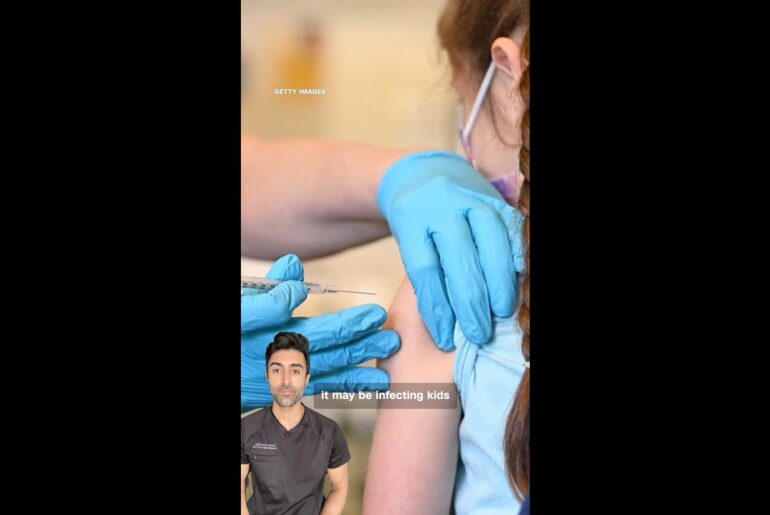
children’s hospitals filled up fast. During the pandemic, these measures were very important
to keep the number of infections under control. In some cases, it was
probably excessive. It probably meant that one or two
annual cohorts of kids bypassed their initial exposure
to respiratory illnesses – not just COVID, but also
RSV, the flu, and rhinoviruses. When the masks came off, three cohorts of kids had
their first exposure all at once, which drove up the
number of cases. Viruses, bacteria and parasites
lurk everywhere and can pose a threat to our health. Once they breach the
first protective barrier, such as the skin in the case of a cut, or
the mucous membranes when breathing, the body’s first line
of defense is activated: the innate immune system. Our immune systems consist of
two key pillars that work together. One is innate and one
is adaptive or acquired. The innate immune
system protects us from birth. It reacts to pathogens promptly,
using its arsenal of weapons. These include
macrophages, neutrophils, and natural killer cells
that fight off the intruders. The advantage of the innate immune
system is that it’s activated very early in an illness. It reacts within
minutes or hours. The innate immune system
recognizes threats with no prior training. It spots that something
is wrong in the body. It sounds the alarm, activating
innate immune cells to attack an enemy, like the COVID
virus for example. If the enemy is too strong, like in the case of flu, the innate
immune system is overwhelmed – and the body sounds the alarm. That’s when the acquired part
of our immune system kicks in. It has bigger, more potent weapons
that can fight an infection in a more targeted and effective way. The acquired immune system has
another advantage that’s handy when pathogens return a
second or third time. This system is able to
remember past threats. And it’s this system that
is activated by vaccination. The adaptive immune system
relies on T cells and B cells. Both are crucial for fighting diseases
and are produced in the bone marrow. T cells migrate to the thymus, where
they’re trained in fighting pathogens. Humans can’t
live without T cells. The risk of serious infections
increases massively without them. We’re born with a certain level of
protection through antibodies from our mothers. But these only last for the first 3 to
6 months, then gradually decrease. After that, very serious infections develop
in children who have no T cells. As a result, several
countries, including Germany, have added T cell screening
to their blood tests for newborns. The screenings test whether a baby
carries a sufficient number of T cells or has immune deficiencies. It’s rare that babies are
born with no T cells at all. Alongside T cells, another type of
immune cell plays a key role in the body’s adaptive defense system. They’re known as B cells. When a pathogen attacks,
these B cells spring into action. They transform
into plasma cells, which then release antibodies to target
enemy antigens like the coronavirus. These antibodies
mark the pathogens and destroy them with the
help of other immune cells. Since the COVID pandemic, people have become used
to hearing about “antibodies”. Unlike T cells that fight viruses
that are already inside the cell, these antibodies attach
themselves to the outside of the virus. In this respect, antibodies
are very important. They’re produced naturally
following exposure to antigens or through vaccination. Just how important B cells and
antibodies are becomes clear when people can’t produce
them, due to a genetic defect. This is known as
Bruton’s disease. Like kids with T-cell defects, these children develop
serious infections – although not quite as serious. It happens after the
mother’s antibodies decrease, at around 6 to 9 months. That was the case
with 8-year-old Eliel. For the first six months after
birth, everything was fine. But then his mother discovered
abscesses on his neck and groin, prompting surgery. A blood test showed
Eliel had no B cells. Because Eliel can’t
produce antibodies himself, he’ll need regular infusions
of them for the rest of his life. These days, that can
happen at home once a month. Eliel needs to go to the
hospital for occasional check-ups, but if he continues to take the
antibodies, he can lead a normal life – one filled with his hobbies:
playing football and doing judo. Most people have
both B and T cells. But even their immune
systems are often overwhelmed… …especially when an unknown, highly
aggressive pathogen comes along: COVID-19 was a
new type of virus. None of us had seen it before. For each patient, it was the first time their immune
system had to deal with this pathogen. The biggest risk factor
for COVID was age. Older people were more at risk. Pre-existing conditions
also increased risk, especially for those
who were immune- compromised or had
chronic inflammatory diseases. The World Health Organization has
logged over seven million deaths since the start of the pandemic. The real figure is thought to be
between two and four times higher. People were dying of COVID not
because the virus kept multiplying in their bodies. They were dying from a
severe inflammatory response. When autopsies were carried out, it was often impossible to
detect any trace of the virus. Patients were dying of excessive
inflammation that caused fatal damage to their organs. The city of New York was
especially hit hard by COVID-19 – experiencing a high death toll, overcrowded hospitals and emergency
measures lasting almost two years. Like elsewhere, many
children contracted the virus. But it was the older population or
those with pre-existing conditions who tended to be seriously ill. Why was that? One researcher looking for
the answer is Donna Farber, from New York’s
Columbia University. She has spent years studying
children’s immune systems. So, it’s generally agreed that infants
are more vulnerable to infections. They haven’t seen viruses, and they
don’t have their own memory response. However, that’s
not the whole story. In fact, infants see
many new pathogens. They’re introduced to
everything when they’re born. And so, they need to have an immune
response that’s going to be strong to fight off all of
these new pathogens. So, when you start looking deeper
into the immune system of children, you realize that their immune
cells are actually quite functional and in fact they’re even more
functional than the same kind of immune cell in adults. She suspected that it was this strong
immune response that protected children during the pandemic, which saw only relatively few
children becoming seriously ill. But Donna Farber wanted scientific
proof, focusing her research on T cells – first in mice and
later in children. She found that children have
many more so-called “naïve” T cells, which are very effective
at fighting new viruses. This gave them an advantage
when they encountered COVID-19. We found in mouse models and
also in some human studies that T-cells in infants are actually more easily
activated and respond to even lower doses of a virus compared
to these new T-cells in adults. What happens is when babies are
born, all the T cells they have are naive, pretty much all. Whereas adults, practically most
of the T cells we have are memory, because we have seen antigens. And every time we see a pathogen
or an antigen, we develop memory. How effective our immune systems
are doesn’t just depend on our age. What other factors govern
our immune response? Paris – home, among other
things, to the Pasteur Institute – named after Louis Pasteur, considered
the pioneer of modern immunology. Geneticist Lluis Quintana-Murci
is an immune system expert. He led a study – involving
1,000 people from France – that examined the factors that
influence the body’s defense systems. We recruited 1,000 healthy
individuals aged 20 to 70. Half of them men,
half of them women. All of them were asked to complete a
very detailed questionnaire on a range of factors that could potentially
influence the immune system, including information about
their vaccination history and very precise
details about their diet. A blood sample was
taken from each person and then stimulated
with various pathogens. This allowed us to assess their
immune response to certain bacteria or viruses. After several years of
research, the results were clear. The five factors that most affect
the immune cells in our blood are: genetics, age, sex, whether we
smoke and whether we’re infected with the cytomegalovirus. This common virus is
present in many of us. Although chronic, it rarely
causes problems in healthy people and you’re unlikely
to have any symptoms. The pathogen – a member
of the herpes family – sometimes causes
flu-like symptoms. In Europe, around half the
population is infected with the virus – which is transmitted through
direct contact with bodily fluids. Once you have cytomegalovirus, or
CMV, your immune system changes. Certain cells are only found in
individuals who are CMV positive. Immunologists are still
unsure what this means. All we know is that
we find these cells. They seem to have certain
effects on some people, but we still haven’t
been able to quantify that. But we do know CMV can be a
problem when doing transplants. The Pasteur Insitute
study has shown that men and women have slightly
different immune systems – a finding backed up
by other studies, too. From an epidemiological
perspective, we know that men are generally
more susceptible to infectious diseases. And women are generally more prone
to autoimmune or inflammatory diseases. But whether you’re
a man or a woman, or whether your immune
system is strong or weak, the cells fighting off invaders
aren’t found only in your blood. Most of our immune cells
are not circulating in blood, they’re in tissues, they’re in
lymphoid organs like lymph node, spleen and bone marrow,
but also throughout the body. So, we have a lot of immune
cells in the lung, in the intestines and in the skin. So, it’s all of these
what we call barrier sites. And so, all of these barrier sites
have huge immune populations. It’s almost like they have
a local immune militia. Like athletes and musicians, these immune cells need to
undergo training to learn how to combat pathogens effectively. And for that they need
a healthy microbiome. The microbiome refers to the
sum total of useful bacteria, viruses, and fungi that live in and on
our bodies, plus their genes. They live on the skin, in
the lungs and the intestine. Bacteria living in the intestine are
tolerated by our immune systems. They train the immune system to
distinguish between harmful and non- harmful bacteria. Gérard Eberl is an immunologist
at the Pasteur Institute. For over 20 years, he’s studied the
link between people’s immune system and the diversity
of their microbiome. There is a strong link between the
microbiome and the immune system. They are constantly in
dialogue with each other. When we’re still in our mother’s
womb, everything is sterile. But when we’re born, we
encounter our mother’s microbes. And this microbial contact is
very important for the development of the immune system. If we don’t start building
this microbiome at birth, the immune system
will develop differently, sometimes less effectively. Someone who was born in a bubble
where there are no bacteria will overreact as soon as they
encounter a few bacteria. The diversity of the microbiome plays
a key role in a healthy immune system. This includes having a
wide array of gut bacteria. The intestine houses three or
four hundred types of bacteria. That’s important because the
bacteria play different roles – digesting food, producing
vitamins, or fighting off pathogens. The gut is like a community, a
neighborhood or an ecosystem. Lots of people do
different but important jobs, and there are lots of
different bacteria, too. There’s a professor, a
bricklayer, a hospital worker, and we need all these
people – all these bacteria – to make sure
everything runs smoothly. It all goes well until one day an
element of the microbiome says “I’ve had enough, I want
twice as much as him. I’m going to get rid of him.” And he starts taking over. That’s when the immune
system kicks in and says, “hang on, that’s not
good, we’ve got a problem.” It identifies this element that’s
becoming invasive and neutralizes it to prevent infection. That’s the immune system’s job. Not just to check
that everything’s OK, but also to recognize overstimulation
and to say, “calm down”, or to eliminate the problem. What we see with people
with inflammatory disease or abdominal issues is a
decrease in microbial diversity. If the first years of life are so
important for our microbiome and immune system, can we still
take steps to influence them later? There are parallels between
the microbiome and our speech. In Germany, children learn to pronounce
the “ich” sound from a young age. For French people it’s much harder
to say because they didn’t learn it as a child. Although a microbiome that wasn’t
established in childhood can still be corrected, it’s
much more difficult. Back to Hamburg. Viola Andresen is a doctor for
internal medicine and nutrition at Hamburg’s Jewish Hospital. She sees many patients with a poor
microbiome and intestinal problems. They’re often caused by illnesses
linked to the immune system. The intestine is key because that’s
where most external substances enter the body. So, we need a particularly
strong immune system there. Our body’s entire immune system
is actually controlled from within the gut. Chemical messengers are released
and circulated via the blood to the brain to trigger specific
immune phenomena. What’s especially bad for gut health
and therefore our immune system and entire body is the
so-called visceral fat on the belly. It’s fat that sits
around our vital organs. It thrives off a carb-rich diet
that generates high insulin levels. Excessive insulin is what causes
this fat to be deposited in these areas. The fat triggers inflammation, which
means our immune system is active. And it has to act because the
intestinal barrier is compromised, allowing more bacteria
into the bloodstream. And these bacteria
have to be fended off. Many studies suggest that an
impoverished microbiome is linked to poor diet. So, what should you eat or not
eat for a healthy immune system? For one thing, avoid sugar. And avoid highly processed food because
it usually contains lots of additives. There’s a whole body of evidence
showing this can impair the microbiome long-term. What you should definitely eat is
vegetables, vegetables, vegetables, fiber. I think that’s the be-all and end-all
for doing a lot for your gut bacteria! Wild broccoli – wild vegetables are much more
nutritious than cultivated varieties. Broccoli is really healthy. It’s packed with vitamin C and fiber,
so it’s ideal for the immune system. Legumes are especially good, beans,
but also a lot of fruits, like berries. They contain healthy pigments,
especially the red berries, which have a positive
impact on our immune system. Omega-3 fatty acids have
anti-inflammatory properties. If you have an increased
tendency to inflammation, for example excess belly fat, it’s best to opt for
anti-inflammatory foods, or if you have a diagnosed inflammatory
condition or autoimmune disease, like rheumatoid arthritis. It’s been proven to help. In addition to a healthy diet and
avoiding antibiotics where possible, it’s well known that
exercise is good for you. But how exactly does exercise
affect our immune system? And how much
of it is good for us? Since childhood, Karsten Krüger
has always loved staying active. Now he’s a researcher in sports science
at Justus Liebig University in Giessen, Germany. The immune system is at the core of
my research because many processes that keep our bodies healthy or restore
them to health are linked to the immune system. And lots of lifestyle diseases
are linked to a dysfunction of the immune system. One of his studies investigates how
exercise influences the aging of the immune system. As we grow older, our natural
defenses become weaker. As we age, the immune
system changes. We call it immune aging. It’s completely normal. What’s interesting
is that we know that the speed of immune system
aging depends on how active we are. How much you exercise determines
whether your immune system ages faster or slower. At his institute, Karsten Krüger tested 100
individuals over the age of 55 with no pre-existing conditions. One of them was Uwe Dombach. I keep fit by cycling once
a week 40 to 50 kilometers. I run for an hour and
do karate once a week. Every day I do a ten-minute
work-out and stretching. The 64-year-old is now
completing various exercise tests and health checks at the institute
to see if his routine is making a difference. When I say go, you have five seconds
to exert as much force as you can. Ready? Go! Go, go, go! Push, push, push! OK. That was 174 Newton meters. Nice and steady. I’ll check your blood
pressure again. Now it’s getting tough! 160 over 80. Want to cool down? Uwe Dombach has done well. That’s important, because with age,
the balance of our immune cells changes, especially the T cells in
the adaptive immune system. These cells undergo significant changes
with age and are also very sensitive to lifestyle factors. So, people who keep themselves
fit and healthy, and eat a healthy diet, maintain their
T-cell repertoire – keeping their T cells a little
younger and more effective. Next, Karsten Krüger heads off to the
lab to analyze Uwe Dombach’s T cells. How many of his T cells
show signs of aging? Has his active lifestyle
made a difference? The results are ready
a few days later… Your profile looks like that of
someone twenty years younger. You still have a relatively high number
of lymphocytes which we call naïve T cells. You don’t have many aging T cells which
can be very damaging to blood vessels, and your inflammation
levels are still quite low. I’ve probably done a lot right. I do it to stay fit and healthy and hopefully continue
living like this for a few more years. And Uwe Dombach’s
is no isolated case. All test subjects who eat a healthy
diet and exercise regularly have been found to have a relatively young
immune system for their age. Exercising several times a week
and eating a healthy diet both benefit your immune system – as do
sufficient vitamin D and plenty of sleep. AND cutting down on stress. It turns out stress is a
much-underestimated factor impacting our immune system – a connection
now being researched extensively. We’re back in New York. If you’re looking
for deep relaxation, don’t go looking for
it in the Big Apple. But how does constant
stress affect your health? Cardiologist Wolfram Poller,
originally from Germany, did a groundbreaking
study on the immune system and stress at the Icahn School
of Medicine in Manhattan. As a cardiologist, I’m very
interested in how we live our daily lives, how stressed we are, what
mechanisms we have for reducing stress, and how that affects
cardiovascular disease. To find answers to these questions,
he and his team conducted a study. We first asked: How does acute
stress affect the immune system? To find out, we exposed
mice to various stress factors. We then analyzed the immune
cells in the blood of the stressed mice and in the control
group of relaxed mice. We compared the two groups to see
how many B cells, T cells, monocytes, and neutrophils they each had. The scientists were especially
interested in finding out what happens to the immune cells of mice that
are stressed AND infected with COVID or flu. The results: We saw that acute stress caused a
sharp rise in the number of neutrophils in the blood. Neutrophil granulocytes are
cells of the innate immune system, the first line of defense
against bacteria. On the other hand, we observed
a big drop in B and T lymphocytes, which are part of the
adaptive immune system. Wolfram Poller noticed that the
adaptive immune cells actually retreated into the bone marrow. That meant the mice couldn’t
mount a strong immune response to the invading virus. When the flu or COVID
infection coincided with the period of pronounced stress, the
course of the disease was worse. And in mice, at least, that led
to an increased mortality rate. So acute stress, especially when it occurs over
several days and in an intense form, is definitely bad for fighting
viral infections because it prevents a strong adaptive
immune response. Wolfram Poller continued
his research on people, by using virtual reality
to create different moods. He wanted to find out how both stress
and relaxation influence our immune systems and the
effectiveness of vaccines. For thirty minutes, we exposed
healthy individuals to a virtual reality that is either
relaxing or stressful. The study yielded
valuable insights. Acute stress in an emergency
prepares the body for a fight or flight response. Blood pressure, heart rate,
respiratory rate, sweat production – all systems are activated to
enable the fastest response. All the body’s strength and reserves
are made available to increase the chances of survival. In an emergency, it’s ideal. But if the stress
becomes chronic, it has a negative impact
on the immune system. High stress levels definitely
weaken the immune system, especially the adaptive
immune system, in fighting viral infection or
developing a strong immune response to vaccination. So, doctors need to consider and
treat stress as a factor in the cause and development of illness. But a balanced diet and stress
reduction can only go so far in warding off certain conditions. And even our immune systems can
get it wrong and begin attacking the body. If the immune system mistakes the
body’s own cells for something foreign, it begins to destroy them. The immune system may attack
the skin in the form of psoriasis, the joints in the form
of rheumatoid arthritis, or the cells of the pancreas
in the form of type 1 diabetes. These are all
autoimmune diseases. When it comes to
autoimmune diseases, there are two main causes
which must come together. One is a genetic predisposition
inherited from our parents. The other is what we
call environmental factors. These could be infections or
pollutants that I’m exposed to. It could be the microbiome. It could be chronic
infections I may have. Autoimmune diseases are
thought to be on the rise. Levels are currently around 10%. It won’t be genetic
changes driving this trend. It’s not our genes that are changing
in such a short amount of time. It’s the environmental factors. There are around 80
known autoimmune diseases. Statistically, they affect
women more often than men. When you quantify it, women have
stronger immune systems than men. But when it comes to
autoimmune diseases, a stronger immune
system is a disadvantage. There are certain autoimmune
conditions where women are many times more susceptible than men. Lupus is one, but also rheumatoid
arthritis and other conditions. It might be linked
to sex hormones. It might come down to genetics:
Women have two X chromosomes, and some genes that are central
to the immune system sit on these X chromosomes. Women have twice the dose, while
men only have one X chromosome. Much remains unknown, and there’s still no universal cure for
lupus or other autoimmune diseases. But medical science is
slowly making progress. Research into the immune
system is focused not only on autoimmune conditions but
on other serious illnesses too – especially cancer. When you administer
chemotherapy or radiotherapy, you try very hard
to target the tumor, but you never really manage to
isolate the diseased cells precisely. The dream of cancer immunologists like
me is to use precisely these attributes of the immune system to
develop targeted therapies, where the immune system recognizes
cancer cells, and can kill them, while at the same time
preserving the rest of the organ. The other extraordinary feature of
the immune system is its memory. It will be able to remember
and prevent relapses, because cancer
patients die from relapses, rarely from the primary tumor. You die from what’s
known as a relapse. We’re in Heidelberg, home to Germany’s
National Center for Tumor Diseases, one of the world’s leading
institutions for cancer treatment. For years, the center has used
and developed immunotherapies. Dirk Jäger, a Managing Director at
NCT, is spearheading new research. The immune system prevents many
tumors from developing in the first place. In fact, hundreds of tumor cells
are created in our bodies every day, but our immune systems are
very effective at recognizing these cells and destroying them. In the case of cancer, the immune system is no longer
able to recognize these cells. It needs a helping hand, a boost
and a cue to fight the enemy. Many immunotherapy procedures are
now focused on strengthening the immune system’s defense mechanisms, to make them more effective again
at controlling or eradicating tumors. All over the world, scientists
like Dirk Jäger are working on new immunotherapies for cancer. The T cells of the adaptive
immune system play a crucial role. We believe that T cells – those specialized subunits
of white blood cells – are especially good at recognizing
and destroying tumor cells. Immunotherapy aims to strengthen
or increase this T cell response. Or to make cellular immune responses
more effective using procedures that aim to modify or
reprogram the T cells. A study is currently underway that
aims to use a multi-stage process to get T cells to fight
malignant tumors. The first step in this
immunotherapy is a therapeutic, individualized
cancer vaccination. We want to use a vaccine to induce
an immune response that can fight the tumors. But with cancer, the process is much more complex
than it is with infectious diseases, like a virus. That’s because we’re dealing
with a very heterogeneous disease, a mishmash of tumor cells
that are not all identical. Elements of selected tumor cells
are analyzed and modified to create a personalized cancer vaccine –
which is then administered to the patient. This peptide vaccine prompts
the immune system to activate and respond appropriately when
it encounters these cancer cells. As a result, the malignant
cells are attacked. But to ensure these tumor cells really
are eliminated by the immune system, the researchers
go one step further. We then isolate the patient’s immune
response by taking a biopsy from the vaccination site. We then multiply those
cells in this machine. We attempt to massively multiply
the patient’s immune response inside this device. We then administer that back
to the patient via an infusion. Dirk Jäger has already used this
experimental therapy on four patients. All over the world, research on
immune therapies is continuing and some are already being
used to treat patients. I think immunotherapy will become
an integral part of cancer treatment for patients everywhere. But there’s still a lot to do. We’re only at the
very beginning. The human immune system is
receiving more attention from researchers than ever before – and not just
to develop cancer treatments. We can vaccinate people. We may even beat cancer
through immunity one day. But we can’t yet suppress excessive
immune responses in a targeted way. We still have lots to learn about
how to specifically switch off those responses. I see a lot of potential for maybe
curing autoimmune diseases, and allergies, too. Scientists agree that while our immune
system can protect us against disease, it is also vulnerable
and fragile. The goal must be to strengthen
our body’s defense mechanism … while keeping it in balance. If it’s too weak,
it can’t protect us. If it’s too strong, it can
do more harm than good.