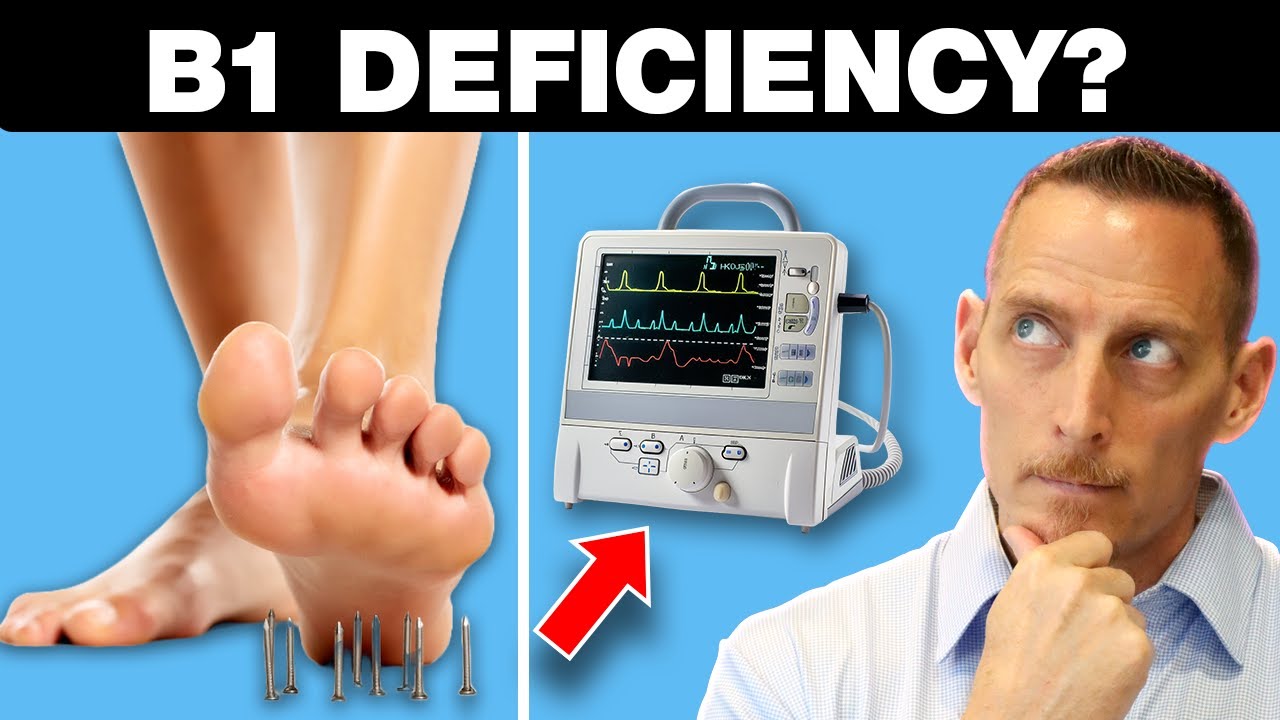
Today’s episode of Dr. Osborne’s Zone focuses on Vitamin B1 (thiamine) and its critical role in human health. A deficiency in thiamine can lead to severe health issues, including heart failure, nerve damage, and cognitive decline. Thiamine is essential for converting food into energy and supports various bodily functions, such as eye health, digestion, and muscle contraction.
Despite its importance, thiamine deficiency is prevalent, even in developed countries, often overlooked by healthcare providers. Risk factors include high carbohydrate diets, alcohol consumption, and certain medications, particularly among diabetics.
We will touch on the need for awareness and testing for thiamine deficiency, as it can mimic other medical conditions. We’ll also look at how a balanced diet rich in whole foods is helpful to maintain adequate thiamine levels. Finally, we’ll take a look at some recommendations for supplementation!
Make sure to join me at 6 PM Central on Tuesday for this crash course on Vitamin B1!
Supplements mentioned in this video:
Ultra B1 – http://glutenfreesociety.org/UltraB1
B Complete – http://glutenfreesociety.org/BComplete
Lipogest – http://glutenfreesociety.org/Lipogest
Ultra MG – https://www.glutenfreesociety.org/shop/health-focus/daily-wellness/ultra-mg-premium-magnesium/
INA Testing – https://www.glutenfreesociety.org/shop/general-health/micronutrient-test-kit/
Magnesium Crash Course – https://youtube.com/live/v8-AXmyf1Lk
Chapters:
00:00:00 – Vitamin B1: The Essential Nutrient
00:07:20 – The Role of Vitamin B1 in the Body
00:14:38 – The Impact of High Carbohydrate Diets on Thiamin Status
00:21:56 – Factors Contributing to Thiamine Deficiency
00:29:22 – Drug-Induced Nutritional Deficiencies
00:36:37 – Metformin and Vitamin Deficiencies
00:43:55 – The Consequences of Nerve Damage
00:51:01 – The Redistribution of Vitamin B1
00:58:02 – The Importance of Supplementing with Vitamin B1
01:04:49 – Outro
Gluten Sensitive? Take the quiz & Join Our Community ▶
Get my quick start guide on going gluten free: https://www.glutenfreesociety.org/how-to-go-gluten-free/
Nutritional Crash Courses Playlist: https://www.glutenfreesociety.org/nutrition
Get Gluten Free Supplements: https://www.glutenfreesociety.org/shop-home/
No Grain No Pain the Book: https://www.glutenfreesociety.org/NoGrainNoPain
Glutenology Masterclass (Ultimate Guide): https://glutenology.net/registration
To connect with Dr. Osborne visit:
On the web: https://drpeterosborne.com/
Facebook: https://www.facebook.com/DoctorPeterOsborne/
Pinterest: https://www.pinterest.com/docosborne/
Instagram: https://www.instagram.com/drosborne
Twitter: https://twitter.com/glutenology
Rumble: https://rumble.com/c/c-3908832
Podcast:
Apple Podcasts: https://podcasts.apple.com/us/podcast/dr-osbornes-zone/id1706389688?uo=4
Spotify: https://open.spotify.com/show/4Zdf07GgpRAVwlSsYvirXT
Amazon Music/Audible: https://music.amazon.com/podcasts/20d71b2e-3554-4569-9d5b-4259785cdc94
Google Podcasts: https://www.google.com/podcasts?feed=aHR0cHM6Ly93d3cuc3ByZWFrZXIuY29tL3Nob3cvNTkwNjcwNC9lcGlzb2Rlcy9mZWVk
iHeart Radio: https://iheart.com/podcast/119388846
*These statements have not been evaluated by the Food and Drug Administration. This video is not intended to diagnose, treat, cure or prevent any disease. It is strictly intended for educational purposes only. Additionally, this information is not intended to replace the advice of your physician. Dr. Peter Osborne is one of the most sought after alternative and nutritional experts in the world. A Diplomate with the American Clinical Board of Nutrition, a graduate of Texas Chiropractic College, and a doctor of pastoral science, Dr. Osborne is one of the world’s leading authorities on gluten, nutrition, and natural health. He is the founder GlutenFreeSociety.org, one of the world’s largest informational sites on gluten sensitivity. In addition, he is the author of the best selling book, No Grain No Pain, published by Touchstone (Simon & Schuster). His work has been featured by PBS, Netflix, Amazon, Fox, and many other nationally recognized outlets. For more information, visit us at https://www.glutenfreesociety.org/ or call 281-903-7527
You unlock this door with the key of compassion. Beyond it is another world. A world of science. A world of common sense. A world of sanity. You’re moving into a land of both empathy and ethics, of nutritional knowledge and empowerment. You’ve just crossed over into Dr. Osborne’s zone. Hey, welcome back to Dr. Osborne’s Zone. Today we’re doing a deep dive on vitamin B1, otherwise known as thamin. Now, this vitamin can mimic a deficiency in this vitamin can mimic an awful lot of medical conditions and diseases. So, I think it’s imperative that you understand more about it. First things first, what is thamin? It’s a B vitamin, vitamin B1. Now, it’s an essential nutrient, meaning that your body cannot function without it. you will die. In essence, death occurs if you’re deficient long enough. As a matter of fact, there’s a disease state oftenimes referred to as berry berry that ensues the longer you have inadequate thamin consumption in your diet. So, the functions that thamin helps your body perform are essential for your survival and for your life. If we sum them up, a big part of these functions are that they help the body turn food into energy. Now, that sounds like a pretty simple thing, but in reality, it gets pretty complex biochemically. And so, let’s break some of these elements down for you. Functions of vitamin B1, we’ve got supporting the heart, the nervous system, as well as the brain. It’s important in the production of something called ATP which equates to energy. We think of ATP in our body. Think of energy. Think of the way you think of money in the real world. You need money to pay rent. You need money to buy your food and your clothes and your shelter, etc. Well, your body needs ATP. Think of ATP as your body’s money. And you can’t make it without vitamin B1. Now, vitamin B1 also supports many functions to include muscle contractility or muscle contractions and the movement of signals from the brain. So, there’s especially there’s this neurochemical that thamin or vitamin B1 helps you to produce called acetylcholine. And this neurotransmitter or neurochemical plays a major role in controlling many of the aspects of what’s called our parasympathetic nervous system. And you know if we look at that here, let’s blow some of these images up for you um so you can have better understanding of what that means. Many of you have heard of the parasympathetic nervous system and may have a general understanding of it. Um parasympathetic nervous system is that part of your nervous system that regulates and controls your healing, your repairing, your sleeping, your digestion, your sexual functions. uh think of it think of it as any function that you do where you’re not in a state of chronic fear or fight or flight. So there’s two parts of your nervous system. What’s called the parasympathetic here and then the parasympathetic over here. And um again parasympathetic is what acetylcholine predominantly helps to function. So if you look at all the organs that your parasympathetic nervous system helps to control, you have the eye and numerous glands like your thyroid gland, your pancreas etc. Your heart, your lung tissue, your GI tract, it helps your GI tract to to mobilize to digest your food and to move your urers for urination uh rather for um filtration. Your colon um as well again part of your bowels and your bowel movement. your urinary tract, your bladder for urination, your genitals for sexual activity etc. So all these functions controlled by the parasympathetic nervous system are under the control of acetylcholine which you cannot produce without vitamin B1. And if you want to dive deeper into some of these functions, if you look over here at this at this secondary diagram you see here parasympathetic division, it helps the eye. What does it help the eye do? Well, one of the things it helps the eye do is it helps the pupils to constrict, to cut out or to shave off light. This is so we can get primed for sleep. If we if our pup pupils are dilated, we’re trying to go to sleep. We’re letting too much light in. It’s going to be harder to signify or to signal uh sleep messages to the deep brain. So, part of this control is it helps your eye muscles um shrink your pupil. We also know that it plays a role in the lacrial glands. Well, what are the lacrial glands? They’re your tear ducts. And so, it’s how we cleanse the eye. It’s how we wipe out debris. If you get dirt or other debris in your eye, the lacrial glands help to produce tears. And um very important job in that regard. Now, we also have functionality here in what are called the submandibular and the parotted glands. These are the glands in your mouth that produce saliva and digestive enzymes. So, you know, many of you have something called sugars, which is an autoimmune condition where it leads to dry eyes, dry mouth. Um, because there’s an autoimmune reaction against these glands. Again, acetylcholine produced by by vitamin B1 helps these organs do their job, helps these tissues do their job. And so sometimes what happens is somebody will go to the doctor for example they’ll get a diagnosis of shogans because they have dry eyes and dry mouth. The doctor doesn’t measure for vitamin B1 deficiency mistakenly diagnoses them with Shogun’s disease. U but in reality a little bit of vitamin B1 and you’re on your way. So if you struggle with dry eyes and dry mouth and don’t know why and your doctor’s not been super helpful you may consider something like vitamin B1 uh to see if it helps. Now we also have regulation of the heart. Um you can see here it slows the impulse and the conduction and it can decrease the heart rate. So what happens when your vitamin B1 levels are low? Um one one of the side effects is something called congestive heart failure CHF. It can cause your heart to enlarge and it can cause congestive heart failure and that can lead to swelling of your extremities. and um so swelling in your feet, swelling in your hands, etc. We know it can affect the lungs and so it helps with the mucous secretions of the lungs. So it helps keep your lungs lubricated. It also helps with the musculature, helps the musc muscles in the lungs contract so that you can breathe more readily um and get more oxygen through that breathing. You see here for the stomach and the intestine, it regulates the tone. It regulates the sphincters which are the the areas the the little gate gated areas uh along the uh intestinal tract and it helps with secretions of fluids. Again going back to digestion and mucus secretion to protect you from things like leaky gut. It also helps with the contraction of the gallbladder. Remember the gallbladder secretes bile. That bile is very important for your ability to digest and absorb fat. So if you again if you don’t have vitamin B1 these are all things that potentially could be affected as a result of that acetylcholine deficit occurring from deficiency. We also know it helps the liver in glycogenesis. It helps the pancreas both in the production of insulin but also in the production of enzymes to to digest with. So your digestive enzymes uh pancreas also produces uh something called bicarbonate which neutralizes stomach acid. So very important function in that regard. We know it helps with contraction of the urtors so that you can go to the bathroom appropriately. It helps with tone secretion and sphincter muscles in your colon. It helps the sphincter muscles and the muscles of the bladder. It helps with erection and vasoddilation in the genitals. So for your sex performance, you need vitamin B1. So lot of different potential outreach from this one chemical over here that requires vitamin B1 for its production. So all that being said, let’s pull up another diagram. And I want to just give um proper uh proper recognition to the authors of this diagram. This is a really great book. We’ll hold that up for you. But thyon deficiency disease, dysotonomia, and high calorie malnutrition. This is a great book by Derek Lndale and Chandler Mars, two doctors who are really experts in this arena. And so they’ve done a really great job of helping uh helping to kind of put into a picture where vitamin B1 plays a function biochemically. And so I want to point that out. You can see here vitamin B1 highlighted here helps to convert one this chemical right here which is a derivative of glucose. So when you eat food that food’s broken down part of that breakdown is into pyuvate. Vitamin B1 helps you convert that chemical into this substance here called acetyl COA which is a precursor to making acetylcholine which is what we just finished talking about. That acetylcholine is the primary neurotransmitter that regulates your parasympathetic nervous system. That’s the part of your nervous system that helps you heal, repair, digest, sleep, have sex um etc. So very very important function. Now we also come down here and we can see some of the other places where chemically speaking vitamin B1 works. It works in the conversion of a chemical called alpha ketoglutarate into another chemical called suininal coa. Why is this important? This goes back to what we were talking about a moment ago. ATP or energy production. Uh vitamin B1 is essential for helping your body convert food into energy. This is also known as the citric acid or KB cycle which is one of the main cycles that helps with that. This many of the steps in the cycle are dependent upon vitamin B1. We also know that vitamin B1 helps to take your branch chain amino acids like isolucine and veene and help to convert them into suanil coa which is another substrate help that helps your body generate ATP. So very important, maybe that’s heavily in biochemistry, maybe too much for some of you, but I want you to understand in general speaking, you can’t make acetylcholine without vitamin B1. And you can’t convert your food into a ATP or energy without adequate vitamin B1. And this is one of the reasons why a deficiency of this nutrient comes with so many different types of problems. And we’ll talk about those here in just a minute. First, I want to go into thamin deficiency. Who’s at risk? You we talk about if you ask your doctor, you know, do I have a thamin deficiency and can you test me for thamin? The the common answer you’re going to hear is thamin deficiency. That’s nonsense. That doesn’t happen anymore. That’s only in third world countries. That’s only in impoverished places of the world or that’s only in people who are wasting away or malnourished. And the reality is diamond deficiency is extremely common even in the United States. Let’s break down why. Let’s break down who’s at risk. You see this also the same research review paper taken from the same doctors who wrote the book I mentioned earlier, Chandler Mars and Derek Lndale. You can see here hiding in plain sight modern thamin deficiency. We’ve got with an average diet, even a poor one, it is not difficult to meet the daily requirement for thamin. And yet measurable thin deficiency has been observed across multiple patient populations with incidence rates ranging from 20 to over 90% depending on the study. This suggests that the RDA requirement may be insufficient to meet the demands of modern living. I think it’s important to for that connotation modern living because a lot of uh a lot of people are deficient not so much because they can’t access thamin from foods that they might eat. They’re deficient because of their lifestyles. Let’s take a couple of examples here. People who are obese. You see there’s a high degree of thin deficiency in obese individuals. Here the rate of deficiency ranges from 15 to 29% when tested prior to beriatric surgery. So in the studies that they’re citing here, patients that were morbidly obese going in to have beriatric surgery or stomach stapling or bypass when they measured them going in pre-surgically uh thamin deficiency was present in 15 to 29% depending on measurement. You can see here after surgery the rate of thamin deficiency climbs and with it an increasing risk of something called warnes and sephylopathy which is a neurological damage that’s caused as a result of thamin deficiency. So first first it’s important to understand that people going in for buriatric surgery are obese. It’s why they’re going in. Many of them up to a third are deficient in thamin. And the deficiency progressively worsens after the surgery because when you when you bypass the stomach, you’re affecting digestion and absorption. You’re affecting digestion absorption of thamin. And you can see here 42% of the US population was considered obese. And this is a statistic from 2018. That number is actually higher today. Um, and 39% of the adult population worldwide is considered overweight or obese. So, we’re talking about the mechanism of just the fact of somebody being overweight or obese and being more at risk for thamin deficiency. Um if you if you come down here and look at diabetes for individuals with type 1 or two. So whether you have type 1 or type two diabetes, plasma thamin was estimated to be approximately 76% lower than in non-diabetic controls. That’s a tremendous difference. Um and so we ask why why do diabetics have such lower levels of thamin than non-diabetics? Um you can see here in another study frank deficiency was found in 98% of the study population using plasma and urine samples. Um they go on to say the mechanisms involved uh in hypo hypoglycemia or two high blood sugar driven impaired uptake in the kidneys. So there’s an impaired uptake of thamin along with an increased clearance. Um but there’s a few other things that I think that are important to bring up here with diabetics and the diabetic population. And one of them has to do with medication use. And diabetics commonly get put on a drug called metformin. And recent research studies show that metformin blocks vitamin B1 uptake in the intestines. So if you’re diabetic, we see diabetic levels much lower than non-diabetic levels. It it’s very potentially possible beyond just the high blood sugar creating a problem with uptake. Metformin, the drug used to treat diabetes, blocks the uptake into your intestines or from your intestines uh into your bloodstream. So we also know in the same kind of realm of of ideas understand that um high carbohydrate diets play a major role here. As you can see perhaps the most commonly disregarded factor when considering thamin status is the consumption of the individual’s diet. High carbohydrate diets effectively decrease circulating thamin concentrations by a number of mechanisms. So not just one way but many ways. You see metabolizing carbohydrates regardless of their source or quality. So you know we make this claim that it could be even a good carbohydrate a piece of fruit or vegetables regardless of their source. Very important to make that distinction. Carbohydrate overconumption diminishes thamin stores in the body. One study found that when 55% of total caloric intake came from carbs, no matter their source, again doesn’t matter what kind of carbs, thamin status in otherwise healthy and and thin sufficient individuals declined. Now I’ve talked about this often where you know it’s the question comes up a lot well what should I eat and how should I eat I’ve talked about this rule of thirds nature generally presents itself with balance not with imbalance and so I think part of the problem in our society especially in the US is we try to solve imbalance with more imbalance so like an example of this would be we try to solve diabetic diet diets with ketogenic diets. So patients eating carbohydrates, 70% of their total calories coming from carbs, the antidote becomes a ketogenic diet where they’re not eating where they’re eating hardly any carbs, right? And so they they bounce from one imbalanced diet to another imbalanced diet. But this is why I like to start people with the presumption of balance. carbs, fats, and protein. A third, a third, a third, give or take. Um, again, in this, you can see in this in this review, research has shown that when your carbohydrate level goes over 55% of your total caloric intake, no matter the source of the carb, the thamin status will actually decline. As carbohydrate intake increased, thamin decreased further. In contrast, lower carbohydrate or higher fat diet slows thamin loss and thamin restricted experimental conditions. So while protein seems to preserve thamin, so what do we what do we see in the modern American diet? And this is one of the reasons why I think uh why I think it’s this is such a prevalent deficiency. I see this deficiency probably 20 30% of the patients that that I see in my practice because the average American diet is 70 plus% carbs and it’s typically low protein and high fat. And the fat that’s being consumed is predominantly seed oils. And so in from processed uh mechanisms and so you have this super high inflammatory seed oil diet providing massive amounts of omega6. You have an abundance of carbohydrates. Again, this is definitely going to deplete not not even just vitamin B1. It depletes all of your B vitamins because they’re required for your anytime you increase your carbohydrate load. You have to understand carbohydrates put demand on the status of B vitamins because you need B vitamins to metabolize the carbohydrates to break them down into their smaller parts so that your body can convert them into energy. So if you’re eating a highly pro, this is especially true of a highly processed carbohydrate diet where heavy carbs are going to deplete your B vitamin status. When you couple that with a higher fat load with excessive seed oils that create an omega-63 imbalance that leads to heightened levels of inflammation and low protein. Protein preserves as we said in the study protein preserves the degradation of thamin. So we want balance. We don’t you don’t need to be 90% protein either. Don’t think that just because protein because it preserves it that you need to go crazy in that direction. Don’t don’t solve imbalance with more imbalance. Try to come back to balance. Um but at any rate I want you to understand high carbohydrate diets definitely have an impact on thamin status. And so when we ask the question about diabetics right we just said that diabetics for individuals with type 1 or type two uh diabetes 76% lower vitamin B1 levels than in non-diabetics. And this is part of the reason why is that excessive carbohydrate intake because we know that excessive carbohydrate intake contributes to the development of diabetes and and uh and so these these things play together. Now there are other things in our world that will contribute to thyon deficiency as well. I think it’s equally important to uh to understand and one of those is food chemicals. In addition to the carbohydrate load, processed food tends to carry a much higher toxicant load than unprocessed and organic foods. Every aspect of commercial food production involves the usage of chemical products that are toxic to the mitochondria. This is where your energy is made inside your cells. Many of these chemicals used in commercial agriculture through the various channels of processing, preservation, and presentation degrade thamin and other nutrients when consumed. So, you know, this is why we talk about trying to eat whole real foods that aren’t processed, that are in season, that are grown without pesticides and other chemicals because thamin is relatively abundant in a in a healthy diet. It’s when you start going the direction of processing and excessive chemical exposure. We also know that alcohol, tobacco, coffee, and tea consumption will impact or affect thamin status. While chronic alcoholism is a recognized contributor to thamin deficiency in the form of Waricki Corsoff syndrome, the role of regular alcohol consumption below the threshold of alcoholism. So if you’re that person that drinks a glass of wine a night, this is what we’re talking about. the role of thamin depletion um below the threshold of alcoholism is underappreciated regardless of the amount the ethanol and alcohol I think it’s important to highlight this regardless of the amount the ethanol and alcohol blocks conversion of dietary thamin into active thamin. So when you eat thamin from your food, your body has to convert that thamin, has to activate it. And alcohol, ethanol blocks that conversion, reducing thamin availability by as much as half, 54%. So that glass of wine every night, you’re blocking it every night. Is it simply a matter of deg of degree relative to chronicity that determines the rate of thamin depletion? When consumed regularly, alcohol damages the intestinal mucosa. This is another aspect. So when you damage the intestinal mucosa, you result in impaired absorption and disbiosis. Now, part of what we’re learning um is about dispiosis is that when you have an imbalanced microbiome, one of the important components to the microbiome, so these are the bacteria that live in your GI tract, but the microbiome helps make B vitamins. And so as we learn more about that role of, you know, of these bacteria, it’s important to understand that anything you can do to preserve the integrity of your microbiome has to be a priority in your health. And so alcohol consumption impairs uh impairs not only the absorption through damage to the intestine, but also contributes to dispiosis in the microbiome. We also know nicotine in tobacco products inhibits thamin availability by antagonizing the thamin transporter in the pancreatic cells. We were talking earlier about the th the uh the role that that vitamin B1 stimulates the pancreas and helps it produce enzymes and insulin. But here you can see nicotine inhibits uptake of thamin by these cells by 40 greater than 40% and possibly in other tissues as well. This impairs insulin secretion. So when we think about it, you drinking and you’re smoking, you know, you throw a high carbohydrate diet into that mix. It’s like a it’s like a perfect storm for inhibiting thamin uptake and a perfect storm for pancreatic damage. We also know that caffic acid, chlorogenic acid, and tanic acid. These are substances found in coffee and tea as well as energy drinks. For those of you who don’t do coffee and tea and think those energy drinks are great, we know that these chemicals oxidize the thazole ring of the thamin molecule impairing its absorption. So drinking heavy amounts you know of coffee or tea or energy drinks will impair thamin uptake and then you add that you know most people don’t just drink coffee plain or tea plain energy drinks are loaded with sugars and other chemicals but you see while the added sugars flavors and other substances to enhance taste increase thamin demand they go on to say 62% of Americans consume an average of three cups of coffee per day. So, are you one of those? Is that what you’re doing? Are you eating a high carbohydrate diet, drinking excessive quantities of of coffee where you’re impairing your body’s ability not only to uh absorb thamin, but you’re depleting and overutilizing or burning through your thamin, and so you’re at risk. And again, this is a pretty common scenario. Let’s talk about one other area that is very common today and that area uh is called polyfarm pharmacy. So medications, it’s what we’re referring to. You see here after the diet, the next most common threat to thyon sufficiency is the use of pharmaceuticals. Pharmaceuticals deplete thamin and other nutrients directly and indirectly by a number of mechanisms. Some of this is by design as with certain antibiotics that target thamin and some of it represents offtarget effects such as the blockade of thamin transporters. As we mentioned earlier, thamin transporters are blocked by metformin and 146 other drugs that have tested for this action. And there was a recent paper published on mechanisms of many many different classes of drugs creating an inhibi an inhibition of thyon transporters and so basically blocking their ability for the intestinal cells to uptake thamin. We also see among the greatest threats to thyon status metformin psychiatric medications which are very common in today’s world metroniditool which is a common antibiotic and antiparasitic um used especially if you’ve been to like a um out of the country and and you suspect you’ve picked up a parasite. A lot of doctors prescribe that drug as an antiparasitic as well as other antibiotics and hypertensives or anti rather hypertensives. You see that also pain medications, non-steroidal anti-inflammatory drugs, acetaminophen and aspirin as well. We’ve got proton pump inhibitors. How many of you have ever taken an ant acid uh drugs that block stomach acid? We also know that diuretics and chemotherapeutic drugs, so cancer treatment drugs, um all can contribute to to thin deficiency. They go on to say it should be noted that chronic polypharm pharmacy has become normalized in recent decades. In other words, it’s normal for a person to have be on 5 6 7 8 9 10. I’ve seen people on more than 20 medications at a time. That’s the standard. As a matter of fact, um several patients I’ve seen over the years who come in and these be people in their 70s and they’ll say, “I went to my other doctor and you know when they asked me what medicines I was on, I said, “I’m not on any.” and their doctors just can’t believe they’re not on medicine. I’ve even seen people in their 50s where their doctors are like what do you mean you’re not on medicine? You should be on some medicines. It’s like why should we be on medicines? What’s the purpose? What’s the point if we if we do it right? So chronic polyarmy’s become normalized in recent decades even though it’s you know it really is an indicator of terrible health. And so the additive effects of these drugs um on micronutrient depletion is likely significant. So drug induced nutritional deficiencies which we’ve talked about numerous uh on numerous occasions as it relates to um multiple mechanisms. So going back to causes of B1 deficiency, we mentioned alcohol, tea, coffee, energy drinks, caffeine can do it as well. Seizure medications, diuretics used to lower blood pressure. So if you’re on lasex or fioamide or hydrochloroioide these are all drugs that you know that that deplete water to lower blood pressure have a tremendous impact on thamin status. As a matter of fact, hydrochloroioide, often times abbreviated as HCTZ, it reduces thamin uptake into cardiac cells into your heart cells. This is one of the mechanisms of congestive heart failure. um done been done been done been done been a number of studies where u doctors have looked at patients in hospitals on um on on in hospitals because of congestive heart failure who were taking multiple types of diuretics. uh and they found high proliferation or not proliferation a high prevalence of thamin deficiency in these patients and that when you supplement them with thamin many cases their congestive heart failure improves their what’s called their ejection fraction uh improves you see a thamin deficiency and congestive heart failure patients receiving long-term ferosomide this is a diuretic ferosomide therapy is type of diuretic for blood pressure and you can see here biochemical evidence of severe thin deficiency was found in 98%. This was a 24 out of 25 patients being studied when they were receiving 80 milligrams a day of fioamide. So look at your dose. If you’re on fioamide, look at your medicine. Look at your dose. If you’re on 80, taking thamin, vitamin B1, probably a pretty good idea for you. Even better yet, go ask your doctor to measure your thamin status. And we’ll talk more about how you can measure and what tests you can ask for to get thyon measured here shortly. Um so we know the drugs cause the depletion. Here’s another case in the elderly diuretic use. Uh a risk for subclinical thamin deficiency in elderly patients. vitamin B1 nurture worsened during the hospitalization and in a multivariant procedure the only significant predictor of the change in the vitamin B1 nutrit was the use of diuretics. So in the hospital when they were pumping people full of these diuretics, their vitamin B1 status deteriorated and they were able to prove that definitively with a p value of less than 0001, which is phenomenally um we’ll just say it’s it’s it’s it’s extremely accurate. When you have a p value of anything really less than 05, it it means that the likelihood that there’s causation is extremely high. So the changes in the ETK ariththraite trans keto transtoase activity in whole blood this is one of the tests ETK is one of the tests you can ask for sometimes referred to as ETK a so it’s arythracy transitase co uh um arythraite transilase activity coefficient is what is what that refers to and so it’s a test that measures for the functionality of a particular thamin dependent or vitamin B1 dependent enzyme. Um, and so this ETK activity or coefficient during the hospital stay was one of the things they were assessing thamin status with. So in this case, our data suggests that hospitalized elderly and an increased risk. Again, your hospitalized elderly increased risk for vitamin B1 deficiency, especially when on diuretic treatments. So, if you’ve been hospitalized and been pumped full of diuretics, you should be asking for thamin as well. Um, it’s very well documented. I’ve just shown you a couple of studies, but this has been documented for decades. This is something we’ve known about for a very long time. And, you know, you should demand better care. If you’re being loaded up with diuretics, you definitely want to consider vitamin B1 to offset that if a diuretic is something that you absolutely have to take. You see the conclusion here. Your thyon supplementation prevent the development of subclinical wet berry berry in older subjects on diuretics. What is wet berry berry? Wet berry berry is congestive heart failure in disguise. In other words, a lot of times these patients they have a history of cardiovascular risks. And so the doctors assume that uh when they develop congestive heart failure, the doctors just oh you just it’s heart disease, you have heart disease. They make no notion or notation about the fact that you might have developed this heart disease as a result of decades of diuretic use causing your vitamin B1 status to deplete to such a great degree that your heart is no longer to produce energy adequately and pump effectively and so it’s failing. Vitamin B1 deficiency can cause that. So be aware it’s a it’s a mimicker. Vitamin B1 deficiency can cause a lot of different kinds of diseases that doctors dismiss and don’t associate with the vitamin B1. And this last one, I’ve talked about this a few times. Metformin is a substrate inhibitor of the human thamin transporter. So it blocks it. Then if you look at this diagram over here, you’ve got the human thin transporter here inside of an intestinal cell. And what happens is you got thamin trying to come in and you got metformin blocking that from occurring. And so this is in your intestines folks. So this is the you think about it as these this this is the lumen or the tube of your intestine. This is one side over here. This is the side over here. So imagine, you know, if we if we draw this out, it forms the tube of the intestine. And so food’s coming through, right? You taking the drug, the drug blocks the uptake by these cells uh to get that thamin across. And so remember, your blood’s on the other side. How do you get that B1 into your blood if it’s being blocked by the drug you’re taking to control your blood sugar? And remember that B1 is necessary to help you take blood sugar glucose and convert it into energy. And so if you’re taking a drug because your glucose is too high, you’re taking a drug to improve your glucose utilization and you’re blocking vitamin B1 and you can’t get energy from the glucose that you’re consuming and you get stuck and that’s when you get tired. But we also know that one of the side effects in diabetics chronically suffer with or develop neuropathy and neuropathy often times is blamed on the diabetes. We say sugar neuropathy. The glucose elevations trigger the neuropathy. But is it the glucose causing the damage to the nerves or is it the vitamin B1 deficiency that’s occurring? Because you need vitamin B1 for the nerves to function. Vitamin B1 deficiency, one of the known side effects is neuropathy, polyuropathy. So metformin blocks uptake of this vitamin. Metformin also blocks, it’s important to say, it blocks vitamin B12, it blocks folate and it blocks CoQ10. And these three other nutrients can also when these are deficient can also contribute to neuropathy. So you got B1 deficiency, B12, folate, CoQ10 deficiency. All can be induced by metformin as a medication. It’s one of the reasons I’m not a big fan. There’s so many doctors out there, especially on YouTube, talking about metformin as a longevity drug. It’s like take metformin on purpose to supposedly improve your lifespan, but it’s depleting these very critical nutrients that can lead to a multitude of different types of problems and side effects. Okay. So, what are some of the common symptoms? How do you know how what when do you suspect you might have a vitamin B1 deficiency? Well, these are some of the more common symptoms. you see fatigue, muscle pain, anxiety. Uh we also see things like OCD and ADD um because of the effect on acetylcholine, that neurotransmitter we were talking about. It’s that the acetylcholine is the primary chemical in your brain that allows your brain cells to communicate properly. So all kinds of mental dysfunction can occur. We as as I’ve just mentioned, neuropathy is a common side effect of vitamin B1 deficiency. We know that vitamin B1 deficiency can also cause high blood pressure and we said earlier berry berry which is basically a form of heart disease that manifests as congestive heart failure. So high blood pressure, congestive heart failure, both affecting the impact of your heart. And if we come over here, increased heart rate or elevated rate. Um you know a lot of people they they go to the doctor, they’ve had high blood pressure, increased heart rate and the doctor says quit exercising which one of the best things you can do for high blood pressure and increased heart rate is to go and exercise. Exercise also improves uptake of thamin. It improves um it improves absorption as well but also cellular uptake from your from your heart and from your uh your muscle tissue. Um we got brain fog can occur brain fog memory decline there’s actually some research now looking at thamin as it is associated with Alzheimer’s disease uh and other forms of neurological disease like lugar garriigs or ALS and Parkinson’s disease so affects the mind we know that also can contribute to depression so these are pretty common symptoms that people have right if you look at across the board at statistics atically how many people every year go to the doctor for these various different reasons. It’s very common. This is this represents millions of individuals. Now you go to the doctor and you have these different types of symptoms. How many of you have ever had a doctor measure your vitamin B1 levels to make sure that you’re not B1 deficient and that that’s not the driving factor behind this? Especially those of you that are high coffee consumers, smokers, um are overweight, have pre-existing diabetes, those of you that have a high carbohydrate diet. I mean, this is this is should be the standard of care. In essence, doctors should be measuring for vitamin B1 deficiency as a standard of care for these types of situations and conditions. Here’s something that I think was brilliantly stated. This was a clinical report on thamin published in the annals of New York Academy of Sciences. Thamin is an essential waters soluble vitamin that plays an important role in energy metabolism. As we’ve mentioned before, thamin deficiency presents many challenges to clinicians. I think it’s important to note that why does it challenge clinicians? In part, it’s due to the broad clinical spectrum referred to as thyon deficiency disorders, TDDs. um affecting the metabolic, neurologic, cardiovascular, respiratory, gastrointestinal and muscularkeeletal systems. Concurrent illnesses and overlapping signs and symptoms with other disorders. So important overlapping signs and symptoms with other disorders can further complicate this because again you go to the doctor you may have these these conditions but doctors aren’t measuring for thyon deficiency disorders as such thyon deficiency disorders are frequently misdiagnosed and treatment opportunities missed with fatal let’s just think about that for a minute fatal does that mean deadly fatal fatal. So, no joke, right? Fatal consequences or if it doesn’t kill you, potentially creates permanent neurological consequences or squi nerve damage. Any of you have ever had a painful neuropathy, um you know what I’m talking about. So nerve damage is extremely extremely disruptive of quality of life, but fatal is the key word there. So you’ve got multiple overlays where thamin deficiency can cause dysfunction in many ways that are commonly diagnosed incorrectly because doctors aren’t measuring for thamin deficiency. And if we look at this diagram, do I need meds or do I have a B1 deficiency? And if we look at some of the basic functions, so thyon status, if we have normal thyon status, we’re okay. But if we have deficient, if our thyon status is low, one of the side effects is a reduction in acetylcholine, which I’ve mentioned, we talked about this uh in depth. And so when acetylcholine is low, some of the side effects that can occur, memory loss, depression, irritability, congestive heart failure, edema, nerve damage, right? And so what what commonly happens? You go in with memory loss, depression, or irritability. What does your doctor do? He says, “Let’s do anti-depressants.” Um, in many cases, that’s the treatment. And unfortunately, what what do many anti-depressants do? Anti-depressants contribute to thyon deficiency. Um this is one of the one of the classes of medications that we know can impact your thamin. We know that with acetylcholine reduction we get can get nerve damage and with nerve pain and nerve damage one of the hallmark drugs prescribed in today’s medical world it’s gabapentin. Well what does gabapentin do? Gabapentin reduces GI motility. This is also one of the symptoms of thyin deficiency. So now when we have we’ve altered gut motility and we’re creating constipation, we’re it’s leading to malnutrition, but it’s also leading to toxic buildup in the intestines. And if you have leaky gut, now your poop starts leaking into your bloodstream and create creates potentiates a systemic inflammation. The gabapentin doesn’t fix a thamin deficiency. It just artificially manipulates the way that you feel. So, it doesn’t solve the problem. Same thing here with edema and congestive heart failure. Generally speaking, what’s prescribed? Blood pressure medications. Well, if you get put on another diuretic, we already showed you earlier, diuretics directly deplete thamin. So you know you’re just now you’re chasing it more thin deficiency which leads back up to more acetylcholine deficiency which further exacerbates the problem. So in essence the treatment for the problem leads to the thing that actually caused the problem because the doctors aren’t looking for what causes the problem. We come over here to this side. We know that thamin depletion can increase um blood lactate peruvate levels become problematic. That can lead to muscle pain and fatigue. Uh it can also emulate the symptoms of chronic fatigue syndrome. So muscle pain, muscle fatigue, you go to the doctor or you go to the you go to the pharmacy, you pop some ibuprofen or Tylenol. Um what did we say earlier that two of the classes of medications that we know deplete thamin non-steroidal anti-inflammatories and acetaminophene. So we’re feeding into the deficiency chronic fatigue syndrome. Most people get kind of pigeonholed into you know this anti-depressant diagnosis and they get put on anti-depressants and again depleting their thamin status even further. The takeaway here is thamin mimics a lot of different clinical conditions. If doctors aren’t aware of that mimicry and they just completely ignore doing any kind of testing to eliminate the possibility that you could have a vitamin B1 deficiency, then your window of opportunity to figure out why you have the problem goes away and the medicine can actually contribute to worsening the very problem um that’s that’s there, which in this case is a vitamin B1 deficiency. Okay, let’s talk about food sources. How do we get vitamin B1 in our diet? We, as we mentioned earlier, protein spares it. Excessive carbohydrates depletes it. So, keep those two things in mind as you’re choosing your foods. But if we’re talking poundfor-pound, highest source is pork. Um, now many of you don’t eat pork, and that’s fine. You can get it from beef, you can get it from organ meats. If you’re trying to get it from plant-based foods, spinach, almonds, and peas are also options for you as well. These are high uh food sources of thamin. So all good options. Now there’s also the potential that you might want to supplement. And I would say if you’re on multi- medications, if you have got um if you’ve got a polyfarm pharmacy situation going on, in my opinion, the best thing that you can do really is to test for deficiency. So want to do testing. Um you can take you can also supplement. So we’ll talk about that too. So we’ll we’ll talk those are food sources but let’s talk about testing. There’s different labs that you can ask for to do testing. One is the arythraite trans ketoase activity coefficient or ETK is the abbreviation for that. This is probably from a perspective of medical testing that most doctors would have access to. This is one of the better tests. So, putting it as number one because if you have insurance and you’re talking to your your GP or your main doctor, they should be able to look this up in their battery of tests and they should be able to run this. It’s m it’s not a matter of whether they can, it’s a matter of whether they’re willing to, but it is a test that insurance would cover if you asked for it. Um, there’s also serum, which I’ll put last. There’s urine and serum tests. not as accurate. Um, don’t really recommend them. If you’re really trying to be super accurate, but if it’s the only thing you can get, it this is better than nothing, especially if it comes back low. The problem with serum testing is it’s reflective of uh potentially of something called liver redistribution. Your liver can store thamin in its tissue. And if your body is deficient, if your cells of your heart are deficient, you know, there’s a communication between your organs. And if your if you’re if if one organ is deficient, there’s a message um communication where the liver is communicated to. And so what we have is we have the liver will pump out its storage. It it it’s called redistribution. it will take what it has in storage, in this case vitamin B1, and it will pump it into the bloodstream so that it can get to the organs that have the need. And so if I’m going in and today is the day I’m going to visit my doctor and I’m getting a needle and um they’re drawing my blood today and I’m picking up on that B1 redistribution, then I might have in my serum thin value. They may come back and they may look normal, but in fact, I’m dipping into my liver storage to prevent my body from becoming uh sick or or majorly problematic. So, you don’t you don’t want to run serum if if it’s, you know, unless it’s the only option you have because of that redistribution component. You can get a false normal and then your doctor says your your levels look fine. Don’t worry about supplementation when in fact you could be severely deficient. Um so ETK if you can get that test that’s ideal. Um, my favorite test is, so I’m going to put a star here in this is something called INA, intra cellular analysis. And what makes this type of technology and testing different is it’s not measuring. It’s one of the other problems here is these tests are measuring a level or percentage um not so much DJK but the serum and the urum are measuring a level of B1 and then they’re comparing your level to others. So, um, if you know what a bell curve is, what what generally happens is you take 10,000 samples of people’s blood and you calculate the vitamin B1 and you you you average it and what we call the mean and um and that represents the center of the curve. And so then some calculations are performed where you take what are called standard deviations. Each line represents a standard deviation. So this would be plus two and this would be minus two standard deviations. So anything that falls within two standard deviations of the middle of the mean is considered normal. This is what this is how lab tests deol evolve or develop normal ranges. The problem with this is that you’re comparing yourself to others. You have your own uniqueness. You have your own biochemistry. But but who’s included in those samples that calculated the normal ranges? Those are men. Those are women. Those are people that weigh 300 lb. Those are people that weigh 100 lb. There are people from all walks and all dynamics of life. And none of them are you. And so you’re comparing yourself to people who aren’t you. people potentially different genders, heights, weights, sexes, people with different heart sizes, with different vascular links with uh with again all kinds of variable possibilities. And so the then normal really is just a mathematical equation that doesn’t really relate clinically to a health outcome very accurately. So, when you’re using lab tests that that rely on these standard deviation bell curves and normal ranges of what they’re calling normal people that they’re sampling in the population, how do you know those people that they took samples from were normal? I mean, that’s the other part of the equation here is that what does healthy mean? I think we we debate on what that means. So, how if we take 10,000 healthy people, but we’re debating on what healthy actually means, how do we know those ranges are actually accurately normal? So I don’t I don’t I don’t care for that type of investigation if I can avoid it. Now there there are times where we use it but if we have an option we want we we would ideally prefer with testing we would prefer something called a functional outcome. Functional outcome means you’re not measuring other people’s levels and then comparing yourself to them. You’re measuring an outcome of your own selves. And that’s what I love about this type of technology because they’re taking your cells. They’re stimulating your cells to grow and to function, to replicate, and they’re measuring that growth rate. So your your baseline is your own growth rate. It’s yours. It doesn’t belong to anyone else. You’re not comparing your growth rate to other people’s growth rate. You’re you’re looking at your own growth rate. So there’s this is part one to a test like this. Part one is you you assess your own growth rate. What is the growth rate of your cell as it’s growing and part two of the test is you provide the nutrient. In this case, you provide vitamin B1 to the cell. And what changes? If the growth rate doesn’t change, if it stays the same, you’re not deficient. you you’re not going to benefit more by giving your cell more more of the nutrient. But if your growth rate skyrockets or dramatically improves, then the outcome of how your cells function, this is functional outcomes. Um the outcome of how your cell function improves. Now you have justification for understanding that hey, when I give my cells more B1, they work better. And to me, that’s a far more accurate way to assess an individual’s uh need compared to comparing you to other people who aren’t you based on normal range calculations from people who were not really sure were quite normal. So, this why I like this technology the best when it comes to assessing really vitamin B1, but any nutrient. Um, and for those of you interested in learning more about that type of testing, I’ll put a link in the in the um in the show notes for you and you can check that out or read more about it. But ina definitely better way to go about it. So what once you’ve established whether you need diamond or not um what what do you take? So there’s different there’s different forms of diamond. So if we’re talking about supplementation, if you know aside from just trying to eat it because you know you should try to eat it. You should try to have reasonable carbohydrate diet but not overdoing it. You should try to limit any kind of alcohol or excessive caffeine or other things that we know contribute to the deficiency. Uh but if you’re going to choose the supplement route, it’s important um vitamin B1 is water soluble, has a short halflife. That means halfife for vitamin B1 is about 12 hours. That means doesn’t take very long for that supplement that you just took to get out of your system. really quickly. So, and this is true of all water-soluble vitamins. They need to be taken on a regular basis to be effective. So, um water soluble form of vitamin B1 typically you’ll see thamin hydrochloride. This is a really common one that you’ll see on a supplement label. And this is a good form. It’s it’s not the best form, but it’s a good form. It’s good quality. It works. and dosing, you know, research studies show dosing structures ranging from, you know, very easily 10 to 100 milligrams being very safe. Now, if you want to go higher than that, you know, more power to you, but I would recommend you work with an expert, you know, if you’re really going super high on these um and and for prolonged periods of time. And I’d recommend that you get your levels tested regularly and and just make sure you’re not overdoing it. But 10 to 100 milligrams per day, pretty safe. You a lot of research studies showing that that those doses are are safe. Again, it’s 12-hour halfife, so it comes right out of you. It doesn’t accumulate in your tissues. Um, so it’s pretty good. Now, one of the things you want to consider when you’re supplementing with thamin is that once it gets into your blood, it’s got to be activated. And to do that to do that activation this requires magnesium. So we know that a good chunk of folks in the general population are magnesium depleted. If you want to learn more about magnesium, go check out one of my crash courses on magnesium. But magnesium activates thamin. So it it it converts it into its active form. And so if you’re if you’re magnesium deficient, you could actually cause a thamin deficiency secondarily. In other words, you could have you might have plenty of B vitamin B1, but your issue might be magnesium and not vitamin B1. And if you add the magnesium and you activate the B1 you have, you might be back in business. Um, so it’s important to understand that relationship. You need magnesium to activate B1. So if if while you’re asking your doctor to measure your diamond, also ask them to measure your magnesium. One of the simplest tests you can ask a doctor to run is called an RBC magnesium level. It’s one that you know if you ask and they’ll do it, your insurance could cover it. Otherwise, one of the better ways to check it is INA, intracellular nutrition analysis. So, but you can ask your doctor. Serum magnesium levels are waste of money. Don’t don’t don’t waste your time. But RBC magnesium is a pretty decent assessment. INA is even better. But you need magnesium to activate thamin. So, if you’re using thamin in this in this form, um definitely want to consider potentially putting magnesium in the equation, especially if you’re getting into these higher doses. I’ I’ve seen some people trying to take higher doses of vitamin B1 and they start having symptoms like heightened anxiety, uh nervousness, jitteriness, and when they add in the magnesium, then things kind of calm back down, and it’s because that magnesium is necessary to activate it. So, just be aware of that association. Now there there’s another form of vitamin B1 called benfotimon. This one’s been studied there a number of research studies on bmpotimon. I’ve talked about these in the past for you. But this is a it’s better absorbed. It’s fat soluble, not water soluble. And for certain conditions, especially um neuropathy, there’s research that shows it actually works better. Um in doses range, you can get anywhere from 50 to 300 milligrams if you’re on your own. But if you’re going above that, I really recommend you work with somebody. Um something to consider though with this is that if you don’t have a gallbladder, if you’ve had your gallbladder removed, choleiccysteectctomy, right? If your gallbladder’s gone, this is fat soluble. And so your bile is influenced by missing gallbladder. So will you have reduced absorption of bfotimine if you’re missing your gallbladder? And the answer to that is potentially yes. So, you might consider if you’re wanting to use this one, some form of supplemental bile to take. Um, I recommend something called Lipoest um as a bile substitute. Again, if you have that as part of your history or part of your problem, just something to consider. So, whether whether it’s a fats soluble, there’s also alathamin, which is a type of uh of of thamin as well. It’s harder to come by. There are very few companies that produce it, but these are really very common and you can find these over the counter quite easily and uh both of them are good products. Both of them are are good quality supplements and both of them work really really well. But I would say in my experience, nerve damage, benotimine vastly superior. Again, I’m giving you my experience. I want you to understand um you may have had a different experience. Look, everyone’s unique in that regard, but thin hydrochloride or benfotamyine, both are good options. This one, in my opinion, is better when you have nerve damage. You need bile to absorb it properly. So, if your gallbladder is removed, you might want to consider bile acid supplement with this one as well. And actually, with both of them require magnesium for activation. So, you want to make sure that your magnesium stores are not low. So, um, so that you can activate that thamin, uh, once it hits into your bloodstream and and starts to try to help your cells do their job and do their work. So, look, if you learned something new, I’d love to hear from you in the comment section. Thanks so much for tuning in today on Dr. Osborne’s Zone. Don’t forget, we do shows every Tuesday evening, 600 p.m. Central Standard Time. And, uh, as well, don’t forget that we’re here every Thursday minus holidays for live Q&A. So, if you’ve got questions that you’re burning for an answer and you want to ask me your nutritional questions, uh, hit that subscribe button, hit that bell so that you get notified every Thursday when we go live to answer those questions. Hope you have a fantastic day. We’ll see you on the next show. Thanks for tuning in to the Dr. Osborne Zone. Don’t forget to share, like, and subscribe for more content like this. And make sure you come back next Tuesday at 6:00 p.m. Central Standard Time and Thursday at noon 30 for more episodes. [Music]