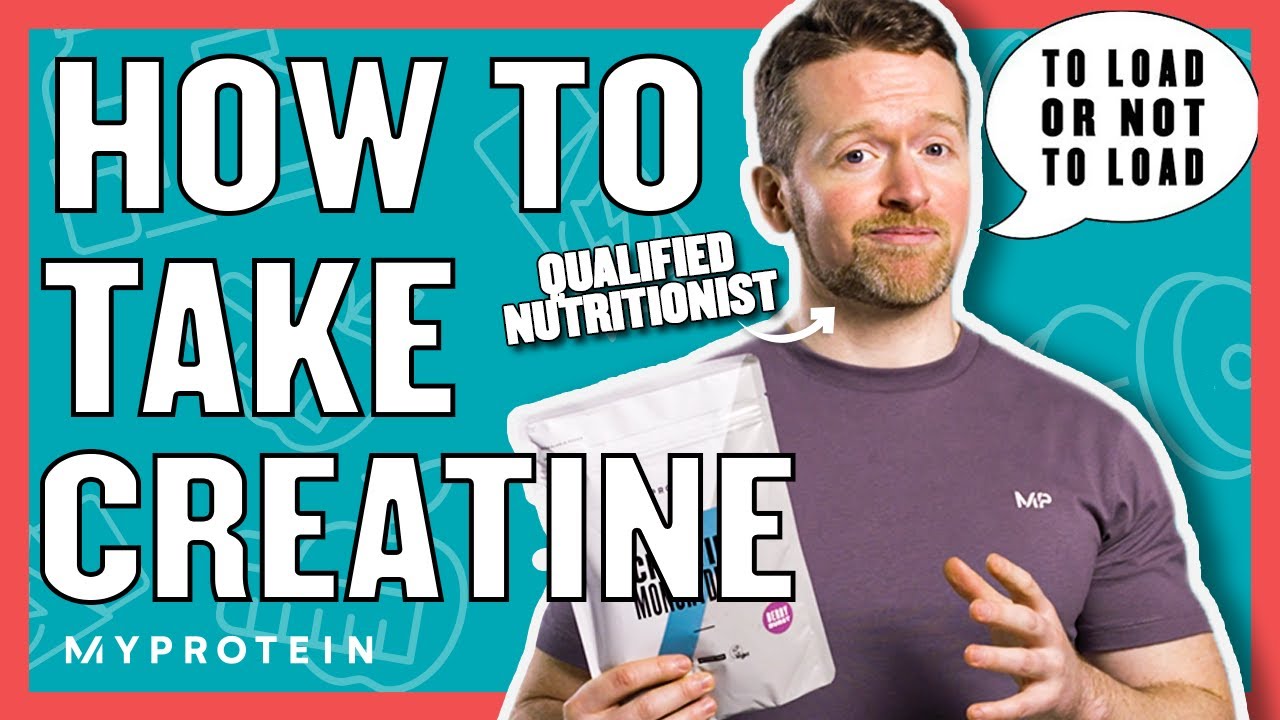
Wondering how to take creatine — and whether or not you really need a loading phase? Our expert nutritionist is here to explain all.
This easy-to-follow video will help you get to grips with one of the most studied sports supplements out there — creatine monohydrate.
If you know that you want to make this supplement part of your training routine, but don’t know how to take creatine, when to take creatine, or whether to have a creatine loading phase — well, you’ve come to the right place.
Nutritional consultant and PhD Researcher, Richie Kirwan, is here to cut through the noise and provide you with science-approved, evidence-based facts.
Watch this video now to find out exactly how you should be supplementing with creatine and why it can make all the difference to your performance.
Still got questions? Let us know in the comments below!
*********************************
Subscribe to our channel: https://www.youtube.com/user/MyproteinUK?sub_confirmation=1
Wondering what creatine does?: https://youtu.be/NclX6EW0pr0
All your creatine questions answered: https://youtu.be/DJVx4gfUTSc
Can Creatine help with weight loss? find out here: https://www.youtube.com/watch?v=8i3BXM0Y518
Find more nutrition help here: https://youtube.com/playlist?list=PLkb17OgnhB-E3HuYJuEacRqMjrokvPxpI
Download the Myprotein App: https://bit.ly/3dhVVUE
*********************************
#creatine #howto #myprotein
How To Take Creatine: Do You Need A Loading Phase? | Nutritionist Explains… | Myprotein
Official YouTube channel for Europe’s No. 1 Online Sports Nutrition Brand, Myprotein.
Stay tuned for brand new videos every single week that help to inspire and motivate you to keep pushing further on your fitness journey. From challenging workouts to evidence-based nutrition videos — we’ve got it all.
**
References:
1. Kreider RB, Kalman DS, Antonio J, Ziegenfuss TN, Wildman R, Collins R, et al. International Society of
Sports Nutrition position stand: safety and efficacy of creatine supplementation in exercise, sport, and medicine.
J Int Soc Sports Nutr. 2017;14:18.
2. Ostojic SM, Ahmetovic Z. Gastrointestinal distress after creatine supplementation in athletes: are side
effects dose dependent? Res Sports Med. 2008;16(1):15‐22.
3. Juhn MS, Tarnopolsky M. Potential side effects of oral creatine supplementation: a critical review. Clin
J Sport Med. 1998;8(4):298‐304.
4. Kreider RB, Ferreira M, Wilson M, Grindstaff P, Plisk S, Reinardy J, et al. Effects of creatine
supplementation on body composition, strength, and sprint performance. Med Sci Sports Exerc. 1998;30(1):73‐
82.
5. Vannas‐Sulonen K, Sipilä I, Vannas A, Simell O, Rapola J. Gyrate atrophy of the choroid and retina. A
five‐year follow‐up of creatine supplementation. Ophthalmology. 1985;92(12):1719‐27.
6. Bender A, Samtleben W, Elstner M, Klopstock T. Long‐term creatine supplementation is safe in aged
patients with Parkinson disease. Nutr Res. 2008;28(3):172‐8.
7. Kreider RB, Melton C, Rasmussen CJ, Greenwood M, Lancaster S, Cantler EC, et al. Long‐term creatine
supplementation does not significantly affect clinical markers of health in athletes. Mol Cell Biochem.
2003;244(1‐2):95‐104.
8. Yoshizumi WM, Tsourounis C. Effects of creatine supplementation on renal function. J Herb
Pharmacother. 2004;4(1):1‐7.
so you want to start taking creatine but don’t know how much what time of day should you load it how long can you take it for well fear not because in this video we’re going to tell you everything you need to know about taking creatine how’s it going guys my name is richie kerman and i’m a nutritionist and nutrition researcher at liverpool john moores university and you’re watching the my protein youtube channel this is the channel that brings you need to know info on how to fuel your body and train to be your strongest self in my last video i spoke about what creatine is and why you might want to take it here’s a quick recap it’s magic and if you want to get the most out of your training you probably should be taking it in this video we’re going to talk all about creatine how to take it how much when and for how long because there seems to be a lot of confusing information out there about creatine dosage so we’ll try and clear all of that up we’ll also talk about some of the side effects of creatine and why you probably don’t need to worry about them finally i’ll give you a little tip on the best type of creatine to take let’s start off with an easy one how much should you take i’m gonna make this as simple as possible three to five grams per day is all you need most packs of creatine powder come with a mini scoop which measures out about 5 grams of creatine one of those a day and you’re golden now like protein the bigger and more muscular you are the more creatine you may need so very big and muscular individuals who are also very active might want to take more maybe up to 10 grams a day it’s perfectly safe and you’ll pee out the excess so there’s no need to worry about taking too much you see the point of supplementing with creatine is to build up the amount of creatine in your muscles until you can’t increase it anymore and just maintain it from there this is the point at which you’ll get the most performance enhancing effects and if you’re taking three to five grams of creatine a day it can take up to four weeks to fully saturate your muscles i know some of you aren’t that patient so you can speed up the process by doing a loading phase this just means taking a higher dose of creatine usually 20 grams a day for a week to load your muscles with creatine and then you drop down to three to five grams a day to maintain that level you don’t need to load but it may help you get faster performance results that brings me to my next point it probably doesn’t matter what time of day you take creatine as long as you take it daily the most important thing is you take it consistently to keep your muscles saturated with creatine all the time that means it doesn’t matter if you take it before or after a workout it’s not going to give you some sort of pre-workout boost just take it now as amazing as creatine sounds nothing’s perfect and while creatine is an incredibly safe supplement which i’ll talk about a little later it does seem to have an anecdotal side effect in some people and that’s gastric distress that’s right some people might get an upset tummy when they take creatine even though there isn’t a lot of clinical evidence to support this while there isn’t much evidence on this there are two things you could try to reduce the effect if you notice it firstly don’t take creatine on an empty stomach so save it for your meals secondly try splitting your dose into smaller amounts so if you’re loading try to divide the dose into four doses of five grams and take them at different times of the day another thing that people talk about a lot with creatine is weight gain the thing is this really isn’t a problem for most people unless they have a poor relationship with the bathroom scales people who take creatine often notice a sudden increase in weight sometimes up to as much as two and a half kilos or even more but that stabilizes when somebody is using it constantly but here’s the thing it’s not fat say it again it’s not fat the weight gain is caused by the fact that creatine attracts water to it mostly in the muscles for most people this often means that their muscles look bigger and overall they may actually look leaner the only time that weight gain could be a real problem is if you’re an athlete in a very weight sensitive sport that requires weigh-ins like boxing or if you do a sport that requires you to be lighter to perform better like rock climbing in that case you may want to think about whether the performance benefits of creatine are worth the extra weight and here’s everyone’s favorite question how long can you stay on creatine i’ve heard people talking about needing to cycle on and off creatine the only reason people say this is because they mistakenly associate creatine with steroids here’s the real short answer you don’t need to stop taking creatine it’s safe for long term use there are studies of creatine doses as high as 30 grams per day for up to five years without any problems at all long term use doesn’t even lead to kidney problems which is what everybody likes to again mistakenly claim and one final note the vast majority of research for the benefits of using creatine is based on creatine monohydrate which is the most common and cheapest form available no need to worry about different forms or speed of absorption or bioavailabilities creatine monohydrate does exactly what it says on the tin and has the most research behind it so did that answer your questions as always if you have any more let me know in the comments and remember to like and subscribe to the my protein youtube channel for more great evidence-based nutrition [Music] information you