Watch the full interview with Dr. Rhonda Patrick here:
In this video, she discusses:
• Why vitamin D is “much more than a vitamin”
• Why is vitamin D deficiency so widespread?
• What are optimal blood levels of vitamin D?
• How much vitamin D should you supplement with?
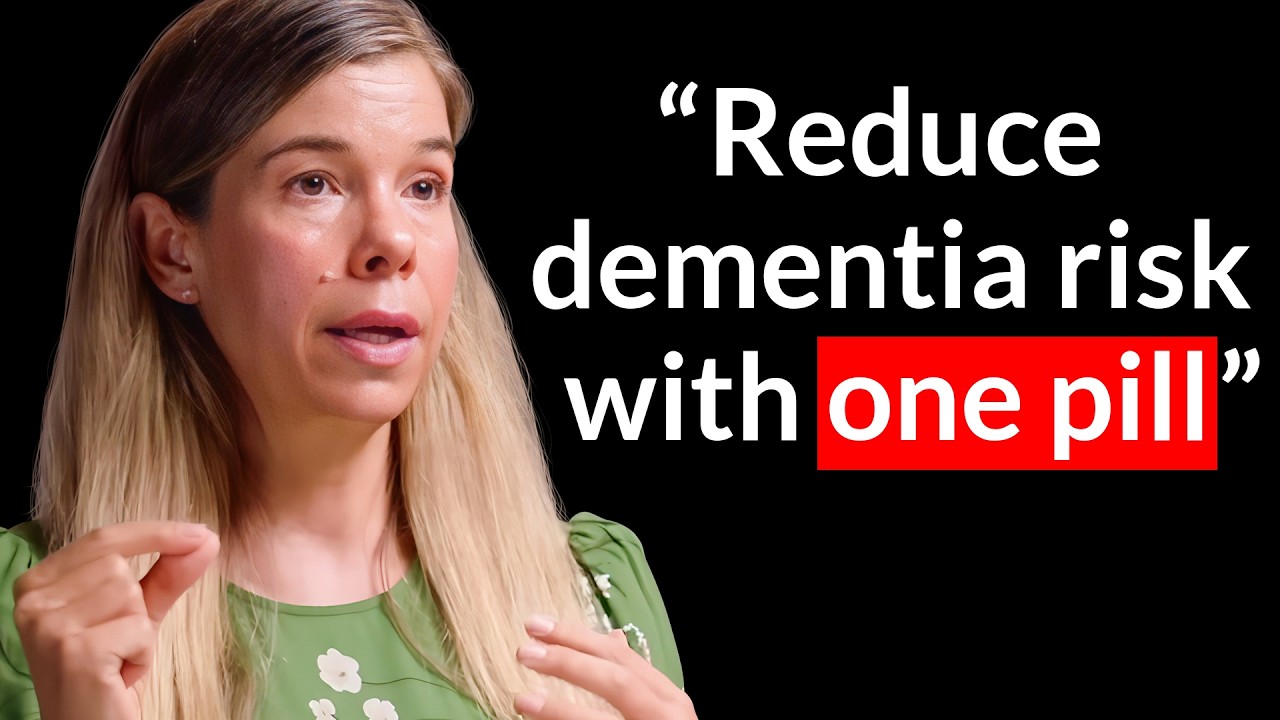
• Can vitamin D supplements lower dementia risk?
• Is vitamin D deficiency harming your brain?
Read the FoundMyFitness topic page on vitamin D for a deeper dive into the science: https://www.foundmyfitness.com/topics/vitamin-d
Get Rhonda’s free fish oil supplementation guide:
https://fmfomega3guide.com/
Vitamin D. You talked about dementia. What’s going to help prevent dementia? Vitamin D is it’s actually more than a vitamin. Vitamin D gets converted into a steroid hormone. So, a steroid hormone essentially what it does is it goes into the nucleus of a cell where all your DNA is and it it’s activating genes and deactivating them. affecting your genome and it’s actually over 5% of your your your genome is being affected by vitamin D. Why is that important? Because 70% of the US population has insufficient levels of vitamin D. The reason for that is because vitamin D3 is actually made in the skin from UVB radiation from the sun. And so if you’re not outside, then you’re not really making a lot of vitamin D3 in your skin. And vitamin D3 then gets converted into this steroid hormone that regulates everything, right? And so um you know, modern day society, you know, we’re inside all the time. We’re working. We’re not outside. And even if you were outside, there’s so many other factors that affect it. So anything that blocks out UVB radiation blocks out the avail ability of your body to make vitamin D3. So sunscreen, right? That’s a big one. Melanin, the the darker pigmentation that acts as a natural sunscreen. And then latitude, depending on where you live also. So, you know, a good number of months out of the year if you’re in a more northern latitude like England, like Wales, like Chicago or Sweden, you’re not UVB radiation is not even hitting the atmosphere, you know, for several months out of the year. Combine that with sunscreen or melanin and you got like this disaster, right? In fact, there was a study out of the University of Chicago that looked at African-Americans and Caucasians and their ability white people. Yeah, exactly. Their ability to make vitamin D3 from UVB radiation from the sun. Yeah. And as I mentioned, you know, melanin is a natural sunscreen. And you know, people that are, you know, either, you know, from African origin or South American or Southeast Asian, right? People that are closer to the equator usually have more melanin. It’s an it’s an adaptation to prevent you from burning from the UV rays of the sun. Well, um, this University of Chicago study found that, um, you know, people that are African-American had to stay in the sun six to 10 times longer than people with fair skin, the Caucasians, to make the same amount of vitamin D3. And so, as a consequence, if you take someone who like yourself, well, you’re you’re you got a little bit more melanin, like mixed a little bit. Yeah. You’ve got a little bit more melanin. But let’s say you take someone who, you know, has a like my mom, she’s Nigerian. Okay. Your mom from Yeah. Nigerian. And let’s say your mom moves to Chicago, right? Well, she’s moved to bloody England or she moved to England, right? Exactly. Then you’re talking about a recipe for disaster in terms of vitamin D because you’re not only not making it several months out of the year, I forgot how many months out of the year, maybe four or five or something like that where the UVB radiation is not even hitting the atmosphere, but you have this natural sunscreen. What’s the consequences of that in terms of symptoms? Well, it’s it’s kind it’s not like an acute thing where you kind of just look in the mirror and you’re like, “What is the causation then in terms of Right.” Right. Yeah. So, the reason I say this is because people always think of like, “Well, I’m not getting enough vitamin C and I have scurvy and you can look in the mirror and your gums are falling apart.” Right. It’s easy to identify this. Vitamin D deficiency or insufficiency is more insidious. It’s kind of this damage that accumulates over time. it’s something that isn’t, you know, quite noticeable or maybe maybe you’re feeling, you know, m maybe you’re feeling like lethargic or you don’t have enough energy, things like that, but you don’t really know quite why. So, vitamin D insufficiency and deficiency. There are acute effects where like if it’s severe, it can cause ricketetts and like bone mal forations and stuff, especially if it’s happening early in life. But um what we now know is that being deficient or insufficient in vitamin D can increase dementia risk by 80% and that’s been shown in multiple studies. The converse is also true. So people that supplement with vitamin D3 and this is where a simple solution comes in, right? So you’re not making it from your skin, but you can take a supplement. People that supplement with vitamin D3 have a 40% reduced risk of dementia. So in other words, they’re avoiding deficiency, which is very common, and avoiding that deficiency then is reducing their dementia risk. And there’s actually even been studies in people with dementia, in people with Alzheimer’s disease that were given a vitamin D supplement or a placebo control. And those individuals given the vitamin D supplement had improved cognition. They had um lower markers of amalloid plaques. So those were this will those were also measured as well. So vitamin D is doing a lot of things. It’s it’s regulating 5% of your protein coding human genome. If I want to increase my probability of getting dementia, then I’ve got to stay out of the sun. I’ve got to avoid um vitamin D. I’ve got to drink alcohol, smoke, be sedentary, and I’ve got to sleep really badly. Yes. And eat a lot of refined sugar. Yeah. Yes. Yes. Exactly. Okay. Exactly. Now, you might go, “Well, how much vitamin D?” Right? I’m talking about deficiency and insufficiency and you really want to get a blood test to know what your levels are. There have been I don’t know 30 plus studies that have looked at vitamin D levels and all cause mortality. So that would be again you know how you know dying from a variety of different diseases cardiovascular disease respiratory disease cancer and people that have blood levels of vitamin D between 40 60 maybe 80 nanogs per milliliter have the lowest all-c cause mortality so these people are not deficient not insufficient insufficiency happens at about 30 nanogs per milliliter below that deficiency is 20 nanogs per mill milliliter and below and so um there have been a variety of studies that have looked at for example the brain and the aging brain and vitamin D levels and it’s been shown that for every you know 10 nanomal per liter decrease in vitamin D blood levels there’s an increase in brain damage it’s called white matter hyperintensities it’s basically damage to the white matter in your brain and the white matter in your brain is myelin that’s how your brain’s communicating and and like how you know it’s electrical impulses are being you know moved so that you can think and talk and all that. Exactly. Yeah. I hadn’t had one today, so I feel like you you’ve persuaded me. Most people that are deficient can increase their blood levels to a normal sufficient level by about 4,000 IUs of vitamin D per day. So, not and that’s been done that’s been shown in multiple studies. Not it’s not it’s not that hard to take. In fact, vitamin D supplements are probably the cheapest supplement out there. It’s like 10 cents per pill.