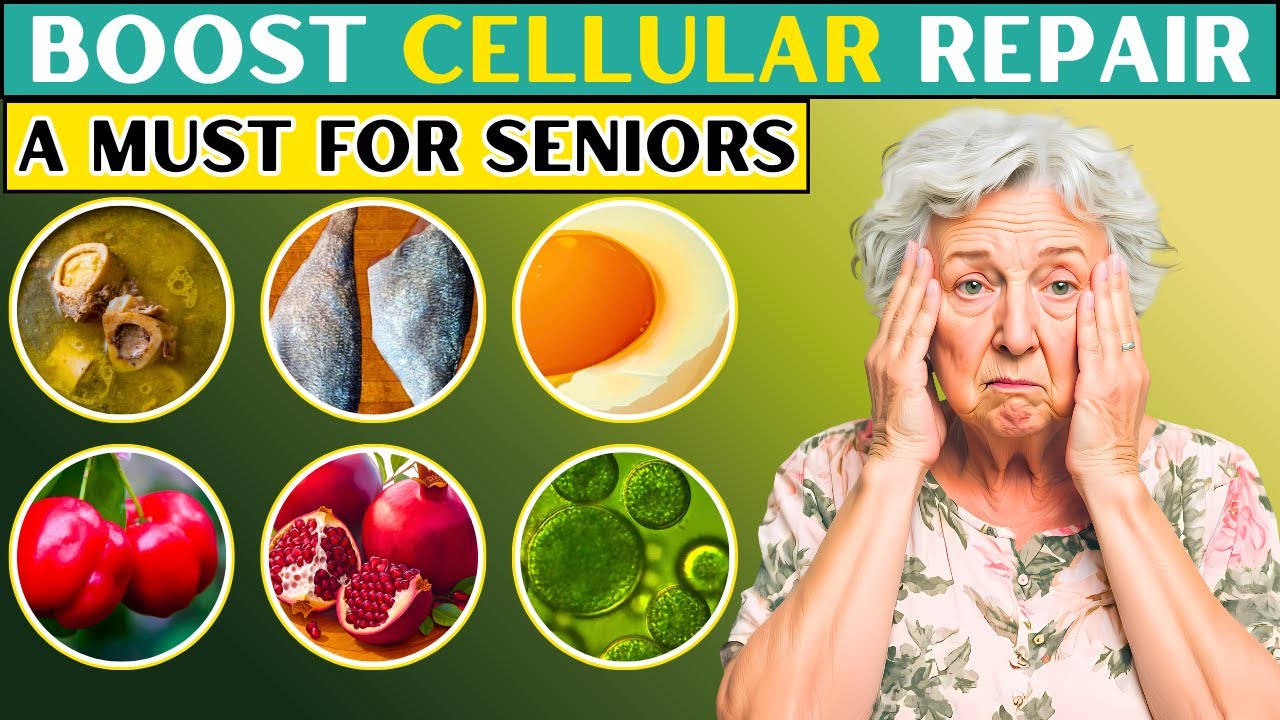
Discover the top 6 everyday foods that naturally protect your collagen, repair your skin, and support lasting vitality. From nutrient-packed berries and citrus fruits to protein-rich eggs, bone broth, and superfoods like spirulina and chlorella, each ingredient works uniquely to nourish your body from the inside out.
Learn how these simple additions to your diet can strengthen your skin’s structure, reduce oxidative stress, and boost cellular repair — helping you glow, feel energized, and age gracefully.
✨ What you’ll learn in this video:
The best foods to naturally support collagen production
How antioxidants protect your skin from free radical damage
Easy ways to incorporate these superfoods into your daily routine
Feed your body, fuel your glow, and embrace vitality — because beautiful skin starts from within.
✅ Timestamps:
00:00 – Intro: What Collagen Does for the Body
00:59 – Bone Broth – The Ancient Elixir
02:39 – Fish Skin & Marine Collagen – The Ocean’s Secret
04:51 – Egg Whites – The Building Blocks of Renewal
06:54 – Citrus & Acerola Cherry – The Collagen Catalysts
08:41 – Berries & Pomegranate – The Antioxidant Armor
10:33 – Spirulina & Chlorella – The Green Regenerators
12:38 – Conclusion: How to Eat for Radiance & Longevity
Collagen plays a crucial role in maintaining strong bones and overall wellness, particularly when incorporated into a healthy lifestyle. Ensuring adequate nutrition, including sufficient vitamin D and calcium, is crucial for maintaining optimal bone health in seniors.
#CollagenFoods #SkinHealth #AntiAging #Superfoods
They say youth isn’t an age, it’s chemistry. Deep beneath the surface of our skin, inside our joints, even within our blood vessels, a single protein quietly holds everything together. Collagen. It gives skin its firmness, bones their strength, and tissues their elasticity. But after the age of 25, our body begins to lose about 1% of their collagen each year. That’s when we start to see what time leaves behind. fine lines, stiffness, slower recovery. The good news, nature has already written the antidote. Today, we’ll uncover six foods rich in collagen and in the nutrients that help your body rebuild it. Some are ancient remedies. Others are modern marvels. Each one is a step toward radiant skin, flexible joints, and enduring energy. Because aging gracefully isn’t about fighting time. It’s about feeding the body what it truly needs to renew itself. Long before collagen powders filled store shelves, bone broth simmerred in clay pots. Across cultures and centuries, from Chinese herbalists to Mediterranean kitchens, this humble broth was revered as liquid gold. When bones, tendons, and cartilage are slowcooked for hours, they release gelatin, glycin, proline, and hydroxyproline, the very amino acids your body uses to weave collagen fibers. It’s as if the blueprint of the body’s own scaffolding is returning home. Modern studies confirm what ancient wisdom always knew. Bone broth supports joint flexibility, skin hydration, and even gut repair by strengthening the intestinal lining. That last part matters more than most realize because a healthy gut determines how well we absorb the very nutrients that rebuild skin and tissue. It’s also one of the most gentle, nourishing foods for digestion. Ideal for anyone whose metabolism has slowed or whose appetite has softened with age. Each sip delivers minerals like calcium, magnesium, and phosphorus in their most bioavailable form, the kind your body can actually use. You can think of bone broth as feeding your collagen factory directly from the source. Sip it warm, seasoned with turmeric or sea salt, or use it as the base for soups, grains, and stews. In a world of fast fixes, bone broth is slow medicine, a quiet ritual of restoration. Each bowl is an echo of ancestral wisdom, rebuilding the body from within, one molecule at a time. From the depths of cold, clean waters comes another source of renewal. Marine collagen found abundantly in fish skin and scales. For centuries, coastal communities from Japan to Scandinavia understood its quiet power. Fish soups, broths, and crisp skin weren’t just comfort food. They were preservation rituals designed to keep the body supple through harsh seasons. Unlike heavier animal collagens, marine collagen peptides are smaller in molecular weight, which means they absorb faster and integrate more efficiently into skin, cartilage, and connective tissue. Once digested, they act as messengers, signaling the body to boost its own collagen production. Modern research supports this ancient intuition. Regular intake of marine collagen has been shown to improve skin elasticity, reduce wrinkle depth, and enhance moisture retention. Results that can often be seen within 8 weeks. One study even found that women who consume marine collagen daily showed increased levels of procolagen, the precursor molecule that keeps skin firm and youthful. But nature never works in isolation. It always builds synergy. Fish skin, where this collagen is most concentrated, also provides omega, three fatty acids, those anti-inflammatory oils that guard collagen fibers from oxidative stress and dehydration. When eaten together, say grilled salmon with crispy skin, sardines with their soft bones, or slowcooked fish head soup, you’re not only giving your body the raw materials to rebuild, but also the protection to keep them intact. In Japan, marine collagen has long been called beauty food. But the truth is deeper. It’s not about surface beauty. It’s about structural nourishment, about feeding the architecture that holds you together. A nourishment that moves silently, molecule by molecule through your tissues, mending, softening, fortifying. From the ocean’s calm depths, marine collagen carries a reminder. Renewal doesn’t shout, it flows. Eggs have always symbolized new beginnings. The quiet promise of life sealed inside a shell. Across cultures, they’ve been used in rituals of spring, fertility, and rebirth. Reminders that vitality often begins in small, humble forms. What’s remarkable is how perfectly eggs mirror what our own body needs to renew itself. While they don’t contain collagen directly, their whites are rich in proline, one of the essential amino acids the body uses to assemble new collagen fibers. Alongside it is lysine, the structural binder that helps link those fibers into strong elastic networks. Together, proline and lysine form the scaffolding that keeps our tissues flexible, our skin firm, and our joints smooth. Think of them as the nails and beams of your internal architecture. Small, unseen, but essential. Eggs bring more than structure. They bring synergy. The yolk, often unfairly avoided, hold the co-actors that make those amino acids usable. Vitamin D for calcium metabolism, choline and phospholipids for cell membrane repair, and trace sulfur for keratin and elastin formation. Biotin joins the equation, supporting not only collagen cross-linking, but also the strength of hair and nails. In one simple food, you nourish three visible systems of renewal. Skin, hair, and connective tissue. But balance, not exclusion, is nature’s rule. An egg eaten whole with both white and yolk mirrors life itself. structure and softness, strength and nourishment in perfect proportion. Try softboiled eggs drizzled with olive oil, poached over greens, or folded into soups and rice dishes. Meals that blend protein with minerals and antioxidants. Because renewal doesn’t happen in isolation, it thrives in harmony. Collagen doesn’t form on its own. It needs a loyal partner to get the job done. That partner is vitamin C. Without it, your body can’t properly convert the amino acids proline and lysine into strong collagen fibers. Think of vitamin C as the spark that ignites the entire process. Without it, your body’s internal scaffolding can’t take shape. Citrus fruits, oranges, lemons, limes are the most well-known sources. But there’s a true powerhouse that often gets overlooked, the acerola cherry. Just one tiny acerola delivers more vitamin C than an entire orange, making it a concentrated boost for your body’s collagen production. But vitamin C isn’t the only benefit. These fruits are rich in flavonoids, natural plant pigments that do double duty. They strengthen delicate capillaries and shield collagen from the damaging effects of free radicals. In other words, they not only help build collagen, but also protect it, preserving the integrity of your skin and supporting healthy circulation. The result, skin that doesn’t just repair itself. It glows, looks resilient, and feels plump. Integrating these fruits into your routine is easier than you think. Start your day with warm lemon water to gently wake up your metabolism and support collagen synthesis. or blend acerola powder into your morning smoothie for a concentrated antioxidant-packed boost. By making vitamin C rich fruits, a daily habit, you’re feeding more than just your skin, you’re nourishing your circulation, fortifying your body’s connective tissues, and giving your skin the foundation it needs to remain radiant, supple, and resilient for years to come. If collagen is the body’s scaffolding, oxidation is the storm that slowly wears it down. Environmental stress, UV rays, and even daily metabolism release free radicals, rogue molecules that damage collagen and weaken your skin structure. Fortunately, certain foods act like shields against this assault, and few do it as effectively as berries and pomegranate. Blueberries, blackberries, and raspberries are tiny powerhouses packed with anthocyanins, the pigments that give them their vibrant color. These anthocyanins aren’t just for show. They neutralize free radicals, calm inflammation, and prevent the breakdown of collagen in your skin. Essentially, they act like a protective barrier, keeping your scaffolding intact and your skin resilient. Pomegranate takes protection a step further. Its star compounds elagic acid and punic don’t just defend collagen. They actively encourage new production by stimulating collagen synthesizing genes. Pomegranate helps your body rebuild the very framework of youthful skin. But the benefits don’t stop there. Once ingested, pomegranate antioxidants are transformed into uriththin, a molecule that revitalizes mitochondria, the energy factories within your cells. More energetic cells mean more efficient repair, regeneration, and radiance from the inside out. Incorporating these foods is simple and delicious. Sprinkle berries over yogurt or oatmeal. Toss them into salads or sip on pomegranate juice for a concentrated boost. Each splash of color isn’t just appealing to the eye. It’s a signal to your body that your cells are being nourished, protected, and renewed. Beauty, after all, begins at the cellular level. From the depths of oceans and freshwater alike come two of the most nutrient-dense foods on the planet, spirulina and chlorella. Though microscopic in size, their benefits are anything but small. These tiny algae pack a nutritional punch that rivals many conventional superfoods. Spirulina is particularly remarkable. It’s about 60% complete protein, an extraordinary feat for a plant-based source. within its proteinrich matrix like glycine and proline, two amino acids that are essential for collagen synthesis. In other words, spirulina doesn’t just feed your body, it provides the building blocks for strength, structure, and vitality from the inside out. Chlorella complnt spirulina in perfect harmony. Rich in chlorophyll, iron, and vitamin K, it supports oxygenation of tissues, enhances detoxification, and helps the body clear environmental toxins. Together, these algae work to cleanse, fortify, and rejuvenate the body at a cellular level. Their potent antioxidants protect collagen from heavy metal damage and oxidative stress, while their amino acids supply the raw material your body needs for renewal and repair. These remarkable organisms have been called the food of the future. Yet, they are as ancient as life itself. Single-sellled algae once filled Earth’s earliest oceans, producing the oxygen that made complex life possible. Today, they breathe new life into us, offering a direct connection to the vitality of the planet itself. Incorporating them is effortless. A teaspoon of spirulina or chlorella powder blended into a morning smoothie stirred into soups or mixed in a nut butter is a small gesture with a vast return. With each serving, you’re feeding your body essential nutrients, fortifying collagen and nourishing every cell with the energy it needs to thrive. Each of these foods, from the simmering richness of bone broth and the delicate collagen in fish skin to the amino acid-packed whites of eggs, the vitamin C bounty of citrus and acerola, the antioxidant brilliance of berries and pomegranate and the nutrient-dense power of spirulina and chlorella works in its own unique way. Yet together, they tell the same story. The story of repair, resilience, and renewal. It’s the story of nature lending her chemistry to our longevity. Of ancient processes refined over millennia, now quietly supporting the structure of our bodies. Collagen isn’t just a cosmetic concern. It’s the very integrity of our being, the framework of our skin, the strength of our tissues, the resilience of our bodies, even the steadiness of ourselves. By choosing foods that nourish and sustain it, you aren’t chasing fleeting youth or surface level beauty. You are investing in the scaffolding that allows you to move, feel, and thrive with vitality for decades to come. Every meal becomes a statement, a conscious act of care, a gesture toward long-term wellness. So eat deliberately. Choose wisely. Let every bite be a conversation with your body. One that honors its complexity and its capacity for renewal. Because the true secret to aging gracefully isn’t locked away in a laboratory, hidden behind formulas and vials. It has been growing, swimming, and glowing in nature all along, patiently offering us the tools to rebuild, restore, and radiate from the inside Out.