Sign up to my newsletter for a FREE workout program and regular health & fitness tips: https://benwinney.myshopify.com/pages/sign-up-to-my-newsletter
Team3DAlpha: https://www.youtube.com/channel/UCj0nUqdm-3dzRfivqv1n1kQ
Click here to work with me 1-on-1:
1-on-1 Fitness/Health Coaching (3 months)
**********
Timestamps:
0:00 Introduction
0:44 The 4 Upstream Regulators of mTOR
2:51 Increase mTOR: Resistance Training
6:44 Increase mTOR: Nutrition
8:48 Increase mTOR: Supplements
10:50 Increase mTOR: Avoid rapamycin and metformin
12:42 Increase mTOR: Recovery, sleep, stress
15:04 Decrease mTOR for longevity
18:28 Balance mTOR and autophagy
21:01 Outro
**********
Sources (PMID or URL):
Upstream regulators of mTOR: Insulin: 29077002
Upstream regulators of mTOR: Amino acids: 36929165, 32799865
Upstream regulators of mTOR: Mechanical tension: 21621634
Upstream regulators of mTOR: Cellular energy status: 22369257, 34575924
Resistance training activates mTOR: 21621634
Blood flow restriction training activates mTOR: 35185627, 40696603
Resistance training enhances mTOR’s sensitivity to amino acids: 36252815
Protein consumption and resistance training are synergistic: 26388782
Too much endurance training can inhibit mTOR: 30355976
Strength and endurance training produce different adaptations: 28490537
Separate strength and endurance work: 39969307
Amino acids, especially leucine, activate mTOR: 18403916
Protein after exercise enhances mTOR activation: 22253983
Fasted resistance training increases mTOR/muscle protein synthesis but not to the extend of fed training: 31691510, 16051622, 16424140
Fasting downregulates mTOR signalling: 40429883
Protein restriction downregulates mTOR signalling: 21282364, 26378060
BCAA supplements increase mTOR signalling: 28638350
Creatine may enhance mTOR and muscle protein synthesis: 35417269, 31596311, 34444918, 26937223, 18048590
HMB stimulates mTOR and muscle protein synthesis: 28493406, 12433852
Rapamycin inhibits mTOR: 27048303
Rapamycin blocks muscle protein synthesis from resistance training: 19188252
Rapamycin prolongs lifespan: 25015322
Metformin inhibits mTOR: 30290005
Metformin has anti-aging benefits: 33815878
Berberine inhibits mTOR: 25884210
Sleep deprivation impairs mTOR signalling and creates a catabolic environment: 27117251, 33400856
Psychological stress inhibits mTOR: 28295473
mTOR plays a role in aging: 31174250
mTOR inhibits autophagy: 25654547
Autophagy is induced by nutritional stresses: 30032222
Inhibiting mTOR prolongs lifespan: 29190625
mTOR associated with cancer: 30754640
mTOR in tumour angiogenesis: 27748764
Chronic overnutrition can lead to mTOR overactivation: 40933955, 25253086
Chronic mTOR activation can lead to insulin resistance: 27826244
mTOR involved in neurodegeneration: 34215308
mTOR involved in Alzheimer’s disease: 37721413
Caloric restriction downregulates mTOR: 32344591
Fasting downregulates mTOR: 32519900
**********
Some of the visuals in this video may have been made using Generative AI.
Nothing in this video is medical advice.
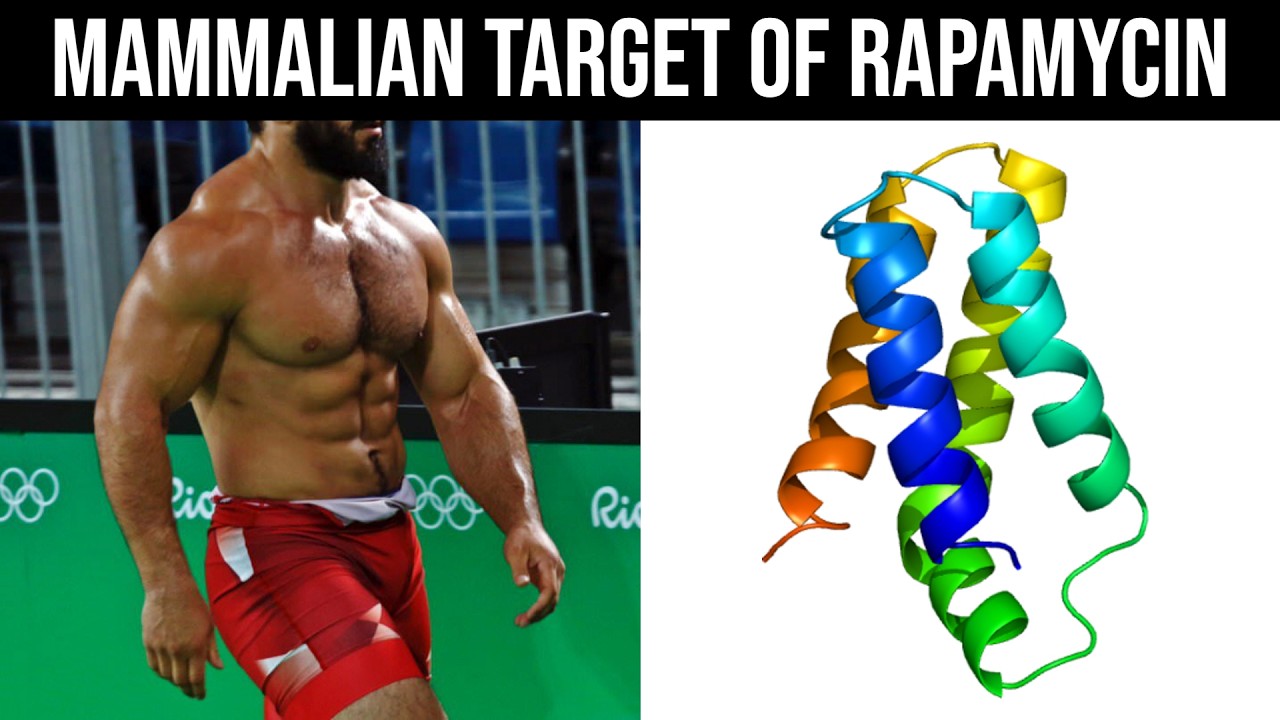
Today we are going to talk about one of the most important proteins involved in building muscle and that is mtor. I think the first time I heard about mtor was probably from a team 3D alpha video years ago back when I first started getting into lifting. He’s one of the pioneers of the science-based fitness space so I really recommend binging all of his videos if you haven’t already. Some people have said that my videos are a bit like his which is extremely flattering but he is way more knowledgeable than I am. Anyway, mTor is short for mamalian target of rapamy or mechanistic target of rapomycin. I thought about going really deep into the biochemistry of mtor, but I think I will just stick mostly to the information that will help us practically to build more muscle. I don’t want my videos to turn entirely into medical school physiology lectures. I want to keep them practical and interesting. So, the most important thing that we need to know is how to activate mtor. There are four main ways to activate mtor. Uh, and these are the four things that really I want you to remember from this video and take away from this. The first upstream influence on mTor is insulin, IGF-1 and other growth factors. Insulin and IGF-1 are both very anabolic, very growthromoting, which you probably know if you’ve seen my IGF-1 video. These and other growth factors activate mTor, which then promotes muscle protein synthesis. The second influence on mTor is amino acids, especially leucine. Amino acids basically tell the muscle cell that there is an abundance of raw material available to be used as the building blocks of new muscle proteins. And the result is that amino acids basically activate mTor. Leucine specifically is the most potent amino acid for activating mTor. And we’ll come back to the best sources of leucine later. The third thing that activates mtor is mechanical tension. So this is what we experience in a hard set of resistance exercise. The mechanical tension is converted into biochemical signals like phosphatilitic acid that activate mTor. So resistance exercise lifting weights is key for activating mTor. And if you sign up to my free email newsletter, you will get a free full body workout program that will give you all the mechanical tension you need to maximally activate mTor and build as much muscle as possible. And the fourth thing is cellular energy status. Sometimes your cells are in a low energy state where ATP is depleted like during energy stress, a really intense endurance exercise or a caloric deficit. And when this happens, it activates something called AMPK. And EMPK inhibits mTor. Essentially, when you have a lack of energy, you don’t want mTor to be going around making a load of new proteins and making things grow because you just don’t have the energy available to afford that. Sompk conserves energy, conserves resources and one of the ways it does that is by turning off mTor. So for our purposes, if we want mTor to be active, then we want to be in a state of energy abundance with lots of ATP available so that mTor can do its thing. Those are the four main things that influence mTor activation. Growth factors, amino acids, mechanical tension, and energy availability. Now let’s get straight into the practical ways to maximize mtor activation so that you can maximize muscle growth. I’ll start with resistance training. One of the most potent activators of mTor signaling in skeletal muscle is resistance training. A single bout of resistance training causes a really rapid increase in mTor activity in the muscle. And that means subsequently that muscle protein synthesis is elevated for about 24 to 48 hours after the workout. So I realize I haven’t explained already. Basically mTor upregulates the cell’s ability to produce new proteins including muscle proteins. So if mtor is more active, you’re going to have more muscle protein synthesis which means more hypertrophy. Back to resistance training, lifting heavy loads or training close to failure uh both strongly activates mTor and this obviously lines up with what we know already about hypertrophy, right? Sets taken close to failure are the best for hypertrophy. Blood flow restriction or high rep sets to failure have also been shown to stimulate mTor and muscle protein synthesis pretty much as effectively as very heavy weights. So you can use either. I prefer to use heavy weights about five to 10 reps or so in each set. Generally, after a resistance exercise session, mTor not only switches on protein synthesis, but resistance exercise also increases the muscle sensitivity to amino acids for a prolonged anabolic window, which lasts again about 24 to 48 hours after the workout. So that means that training and nutrition are synergistic for building muscle. you train and that upregulates mTor and protein synthesis and that training also increases your sensitivity to amino acids which can further upregulate uh mTor. So this means it’s much better to have your training and your nutrition both on point rather than just one of them. And another thing about training that you should know different types of exercise affect mtor signaling in different ways. Endurance training does not increase muscle mass but resistance training does which is obvious to most people. Resistance training generates lots of mechanical tension and that activates mTor so you get increased protein synthesis which leads to muscle fiber hypertrophy. On the other hand, endurance exercise like steady state running or cycling triggers empk and PGC1 alpha signaling. Like I mentioned earlier, AMmpk is triggered in an energy stressed or energy depleted state and its job is to conserve energy and promote energy production. EMPK and PGC1A signaling is geared towards mitochondrial biogenesis and energy efficiency rather than myofibular protein synthesis. So this is an entirely different set of processes within the cell. You’re not getting hypertrophy from endurance exercise. But endurance work does improve your oxidative capacity and your conditioning. It does not add muscle mass. And the important thing, in some cases, prolonged endurance training can even activate AMPK to such a degree that it antagonizes mTor. And this is also known as the dreaded interference effect, which can lead to getting less hypertrophy from your training sessions. But before you panic, concurrent training, which is combining both endurance and resistance exercise, can be programmed in a way that minimizes the interference effect. Generally, if you separate your endurance or your hard cardio sessions from your lifting sessions by at least 4 to 6 hours, you should be fine. And even better if you do them on entirely separate days. If you are going to do them in the same session and hypertrophy or strength is your priority, you should definitely do your lifting first and then your cardio after that. Like you do your priority first. So my point is that resistance exercise is really good for activating mtor and inducing hypertrophy. And endurance exercise alone, even at really high intensities, is just not effective at activating mtor or stimulating muscle growth. The benefits that you get from endurance training are things like mitochondrial and capillary adaptations. And then if you do excessive amounts or intensities, it can even suppress mTor. So people who are focused on muscle strength or size should prioritize resistance training as the main stimulus for mTor mediated muscle protein synthesis, not endurance training. Moving on from training, let’s talk about nutritional strategies to influence mTor. To maximize mTor’s anabolic effects in the muscle, there are two main nutritional factors we can manipulate and those are protein intake and nutrient timing. Like I said earlier, resistance exercise creates a receptive environment for nutrients and eating protein or amino acids after the workout boosts the mTor response and muscle protein synthesis above just exercise alone. So there is a synergy between lifting and eating protein. Training in a fasted state only results in a really small increase in mTor activity, which is not what we want. This is why it’s generally better to lift in a fed state rather than fasted. But even if you were fasted during your workout, if you ingest amino acids immediately after exercise, that causes pretty strong mtor activation and shifts the muscle into net protein gain rather than breakdown. So amino acids are very important and like I said, leucine is the best one for this effect. Proteins that are very high in leucine are very effective at activating mTor and stimulating muscle protein synthesis. So a good strategy is to eat 20 to 40 grams of high quality protein containing two or three grams of leucine as soon as possible after your resistance training to capitalize on mTor’s increased sensitivity. Some of the best sources of leucine are things like whey protein isolate, whole eggs, milk protein and casein blends, beef, chicken breast, fish like tuna or cod or salmon, pork, parmesan cheese, lamb and soybeans are a good plant source if you’re vegan. Spreading your protein across the day in multiple meals can also help keep mTor signaling periodically elevated, which is good for muscle growth. But excessively frequent signaling could have downsides for metabolic health as I will discuss later in the video. And then when you want to downregulate mTor for fat loss or longevity reasons, you can do things like intermittent fasting and protein restriction. And both of these will lower mTor activity and promote autophagy at the expense of muscle anabolism. So for muscle hypertrophy, you want to train and feed pretty frequently with lots of protein. There are some supplements that can definitely help to increase mtor activity as well like branch chain amino acids and leucine. Leucine is available itself as a supplement or you can get it as part of branch chain amino acid mixtures. Of course, leucine alone isn’t enough to sustain muscle protein synthesis because you need other amino acids to act as the building blocks for muscle proteins. You can’t make new muscle just out of leucine alone. So, a balanced protein supplement like whey is very effective. Creatine might indirectly influence mTor signaling. Creatine improves high-intensity exercise performance by regenerating ATP more quickly. So, it allows for a greater training stimulus. Some studies suggest that taking a creatine supplement can modestly increase resting mTor activity and IGF-1 signaling in muscle, but creatine doesn’t seem to further spike post exercise mtor signaling beyond the exercise itself. So its main benefit that we know for sure is to enable harder training, but it might also make a more anabolic intracellular environment like increased IGF-1 and so on that then supports mtor mediated growth over time. I think most people should be taking creatine anyway. This is kind of a no-brainer. We know very well that it works. It is like the most wellsupported sport supplement in the world. Most people should be taking creatine. Another supplement is HMBB or beta hydroxy beta. This is a metabolite of leucine that has been studied for its anabolic and anti catabolic effects. Supplementing with HMBB has been shown to stimulate mTor and protein synthesis in muscle cells and animals. And in young training adults, HMBB has been reported to enhance gains in lean mass, although the results do vary. So it might do this not only by activating mTor, but also reducing muscle protein breakdown, possibly by inhibiting ubiquitin proteone pathways, which are pathways that normally break down proteins. So HMBB could definitely be useful for people who are trying to prevent muscle loss like elderly people or those who are bedbound for example by keeping mTor activity slightly elevated and protecting against catabolism. There are two drugs I want to touch on that will have anti-mtor effects. So these ones that you want to avoid for this purpose. The first is rapamy which is a drug that directly inhibits mTor which means that rapamy is going to oppose muscle building and this is the drug that mTor is named after mamalian target of rapamy. Taking rapamy or rapalog drugs will blunt muscle protein synthesis and can cause muscle atrophy over time. And using this drug scientists have learned that mTor activation is actually required in order to get the muscle growth stimulus from a workout. If you block mTor with rapomycin that means you get no increase in muscle protein synthesis from your workouts. I’m mentioning rapamycin because this is a drug that is used by some people who are interested in longevity to slow aging and it has been shown in many studies to slow aging at least in animals and prolong lifespan. But the trade-off of this is inhibition of your muscle growth. So if muscle growth is your priority, rapamycin is not something you should be taking. And the other drug is metformin. This is a widely used oral drug for type 2 diabetes and it indirectly downregulates mTor activity. Metformin activates by mildly disrupting mitochondrial energy metabolism in the liver and the muscle. And as I said earlier, EMPK when that’s active that leads to inhibition of mTor. Metformin use tends to decrease mTor signaling and can mimic some of the longevity benefits of caloric restriction like enhanced insulin sensitivity and increased autophagy. Athletes generally don’t use metformin because it can limit your training adaptations by dampening mTor. But again, some people interested in longevity do use it. So if you want to build muscle, it’s probably not a good idea to be using metformin, especially around your workouts and other AMPK activating compounds like bourberine will have similar effects in reducing mTor activity. Moving on from diet and supplementation, let’s talk about recovery, sleep, and stress. First, your sleep and circadian rhythm. Sleep is really important for muscle recovery and anabolic signaling. Deep sleep especially supports the release of growth hormone and maintains insulin sensitivity and both of those will favor mTor activity in the muscle. And we know that sleep deprivation acutely reduces muscle protein synthesis rates. Even a single night of total sleep deprivation creates a catabolic or breaking down hormonal profile like increased cortisol, decreased testosterone and decreased IGF-1. And this all correlates with lower mTor signaling and lower muscle protein synthesis. Chronic poor sleep or disrupted circadian rhythms can really blunt the gains that you would get from training by preventing full activation of mTor during the post exercise recovery period. And athletes who have quality sleep tend to have better recovery partly because well-rested muscle remains more anabolic with higher testosterone and IGF-1 and lower cortisol. and so it can more effectively engage mTor for repair and growth after a hard workout. Psychological stress and overtraining can both negatively affect mTor signaling. Chronic stress elevates cortisol which can interfere with muscle repair and encourage muscle protein breakdown. So practices that reduce stress like meditation and proper rest days and managing your training load appropriately can help to keep the hormonal environment favorable for mTor. Overtraining syndrome is often characterized by blunted anabolic signaling. And this can manifest as plateaus in your training or even a loss of muscle or performance despite training hard. And a solution to this is to properly manage your fatigue and recovery. You might want to consider periodizing your training, including rest and de lo weeks, potentially lower your volume, or do other things that manage fatigue. and generally ensure that overall stress, including both training and lifestyle stress, is balanced with recovery, so you’re not completely overwhelming yourself with something that you just can’t recover from. Of course, you need good nutrition during recovery, especially carbohydrates. Carbs will lower cortisol and raise insulin, and that will shift the body back into an anabolic state, supporting mTor activation so that your muscles can be repaired in that recovery period. Essentially, low stress and good recovery enhances mTor’s muscle building effects. And then high stress and poor recovery will create an environment that inhibits mTor and impairs hypertrophy. So I spent a long time talking about how to maximize mtor. But you might not want to have mtor maximally active all the time. Chronic activation of mtor is thought to accelerate aspects of aging by inhibiting the cellular maintenance processes like autophagy. Autophagy is a cellular recycling process that clears out damaged organels and like proteins that have been misfolded or just accumulated and been damaged. You’ll hear a lot about autophagy in like the longevity space and anti-aging communities. Autophagy tends to be active under low nutrient conditions when mTor is switched off. So for example during caloric restriction or fasting. This reduced mTor signaling in animal models at least is associated with increased lifespan probably because it frees up autophagy and stress resistance pathways and inhibiting mtor with rapamycin that allows autophagy to occur and that is the most reliable and robust pharmacological strategy to extend lifespan in lab models. So rapomycin seems to be a pretty powerful longevity drug. So we are pretty sure that there is a tradeoff with mTor. mTor will drive growth and reproduction early in life, but then later on in life, it could contribute to aging. By the time you reach middle age, excessive mtor activity might actually promote cellular scinessence, which is basically cellular old age. So, by tuning down mTor later in life, it might be possible to reduce chronic inflammation, enhance autophagy, and preserve your tissue function as you’re getting older. But even then, there are trade-offs because mTor is important for immune function and tissue repair. So you can’t just have it like entirely switched off and expect to maintain normal function. Here are some disease states that tend to be linked with chronic mtor activation. Cancer is a big one. MTOR is obviously very important in growth and proliferation and that is exactly what is happening in cancer. Many tumors show hyperactivation of mTor signaling because of mutations in upstream regulators and mTor can also promote angioenesis which is a formation of new blood vessels to feed the tumor with nutrients to help it to grow more. The link between mTor and cancer is pretty well established. Type 2 diabetes and metabolic disorders are another one. Chronic over nutrition like excess calories or really constantly high amino acid intake and high insulin can lead to chronic mtor activation in tissues like the liver muscle and fat. And this kind of diet can cause insulin resistance. So it’s a double-edged sword. MTOR is needed for normal insulin action and nutrient use. But too much of it creates a kind of feedback that worsens insulin resistance and can cause beta cell failure in the pancreas. And a third one is neurodeenerative diseases. MTOR is obviously important for protein synthesis including in neurons in the brain. That’s an important process for things like synaptic plasticity and memory formation. But neurodeenerative diseases like Alzheimer’s and Parkinson’s are characterized by an accumulation of aggregated proteins. Basically, the brain has been unable to clear away the buildup of misfolded or damaged junk proteins. And so, these start accumulating, disrupting cellular function and causing in the long run really awful problems. And mTor suppresses this cleanup of these damaged proteins and it suppresses autophagy, right? So, it’s not really a surprise that we see upregulated mtor in Alzheimer’s disease models. So, again, it’s a balancing act. You need some mtor but not too much or your body’s cleanup crew just can’t do its job properly. So we want some mTor to help us build muscle but then we don’t want too much because it could cause things like cancer or neurodeenerative diseases later in life. So what can we do to minimize the health risks while maximizing the muscle growth benefits of entor? You could implement some caloric restriction and fasting into your diet occasionally. So the most natural way to dial down enor activity is through caloric restriction or fasting. These two pretty consistently extend lifespan in model organisms largely because they reduce mtor activity and enhance autophagy and stress resistance. So maybe cycling between high and low mtor states might be healthier than just keeping mtor chronically high all the time for your whole life. Of course, you can’t restrict calories or fast too much or you will start losing muscle. So you have to go about this strategically. Another option is to use drugs like rapamy or rapalogs. I’m not a fan of talking about drugs on my channel, but rapamycin certainly works for reducing mTor activity, and for this reason, it’s known as an anti-aging drug. It can potentially improve stem cell function, reduce visceral fat, and enhance autophagy, and even reduce cancer. But rapamycin does have some unpleasant side effects like mouth ulcers, even insulin resistance, and reduce testicular volume in males in animal studies. So, at the cellular level, rapamy can slow aging, but the systemic effects do need very careful management. I’m not going to like recommend this to you. I think caloric restriction fasting is preferred in my opinion. Another option is EMPK activators. We know that EMPK turns down mTor. Something like metformin is a safe and cheap drug for diabetes that does exactly that. It basically simulates a caloric deficit at the cellular level which leads tok activation and reducing mTor. Any other benefits of metformin are things like improved insulin sensitivity, lower cancer risk and cardio protection. And the side effects of metformin are not nearly as bad as rapamycin. The main ones are gut upset and a risk of B12 deficiency in the long term. But metformin is also not as potent at inhibiting mTor as rapamy. So rapamy is more powerful drug but has worse side effects. And lastly exercise. So exercise depending on the type as I’ve discussed can have mtor activating or mtor inhibiting effects. Resistance exercise upregulates mTor and endurance exercise activates AMPK which downregulates mTor. So a combination of the two is probably the best of both worlds. So you do resistance exercise to build muscle and endurance training to activate and autophagy to promote longevity. Again, you should probably separate these two types of training if you can. That is basically everything I have to tell you about mtor today. Uh you now know most of what you need to know to activate mtor, but not too much. So, you should train hard every 48 hours or so to keep mTor active. Keep muscle protein synthesis elevated. Eat protein and carbs shortly after training, especially leucine rich proteins. Increase IGF-1. You can watch my video for that. Be in a state of energy abundance, so calorie surplus rather than deficit or fasting. Keep stress low. Sleep well. Don’t do hard endurance training within a few hours of your lifting session if you can help it. Consider taking protein supplements, creatine, and HMBB. and occasionally take a break from mTor maxing to do some fasting, go into a deficit, and maybe some more endurance training to help autophagy, to help your body kind of clean up, enhance longevity so you’re not just maxing out mTor all the time, which we know isn’t really good. Hopefully, you were doing most of this stuff already, but if not, hope this gives you another reason to stay on top of all of this. Again, if you want a really effective workout program to maximize mechanical tension for that aspect of mTor activation, sign up to my email newsletter and you’ll get that for free. I also send some really good emails with stuff that you just don’t see on my channel. Thank you for watching and I will see you next time.