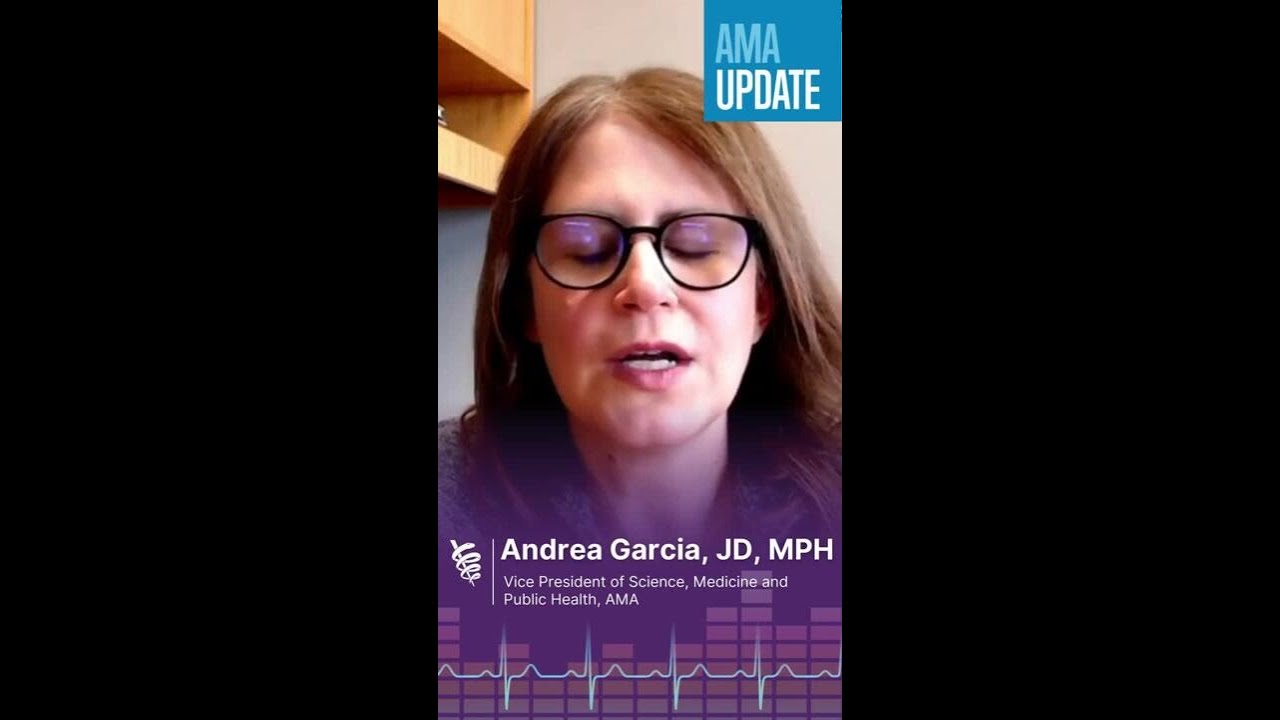
AMA’s Vice President of Science, Medicine and Public Health, Andrea Garcia, JD, MPH, discusses a new study that found differences in the blood of people with Long COVID.
Watch the full interview: https://youtu.be/q-GYxA2BMfQ
🩺 The AMA is your powerful ally in patient care. Join now: https://bit.ly/AMAJoinRenew
📺 Follow the AMA on YouTube: @americanmedicalassociation
🎥 Watch #AMAUpdate for the latest in health care news for physicians: https://bit.ly/AMAUpdate
📧 Subscribe to AMA Morning Rounds newsletter, with the news you need every morning delivered to your inbox: https://bit.ly/MorningRoundsAMA
🎧 Listen to our latest podcast episodes now: https://bit.ly/AMAPodcasts
📲 Download AMA Connect for news, podcasts, video updates and learning in one place: https://apple.co/3URzNES
#medicine #futureofhealthcare #healthcare #medical #science #publichealth #medicalresearch #covid #coronavirus #pandemic #covidnews #covidnewstoday #longCOVID #AmericanMedicalAssociation
That study was
published in nature, and it used blood
tests to identify biological markers that could
be associated with long COVID. The researchers took
advantage of machine learning to analyze those immune markers
and hormone levels in about 270 adult participants. They compared those with and
without long COVID symptoms at least one year
after having covid, and they found the activity
of T cells and cells was irregular in those
patients who had long COVID. Now, one of the strongest
predictors of long COVID was that these patients tended
to have lower cortisol levels. And that could help explain
why many people with long COVID experience that
profound fatigue.