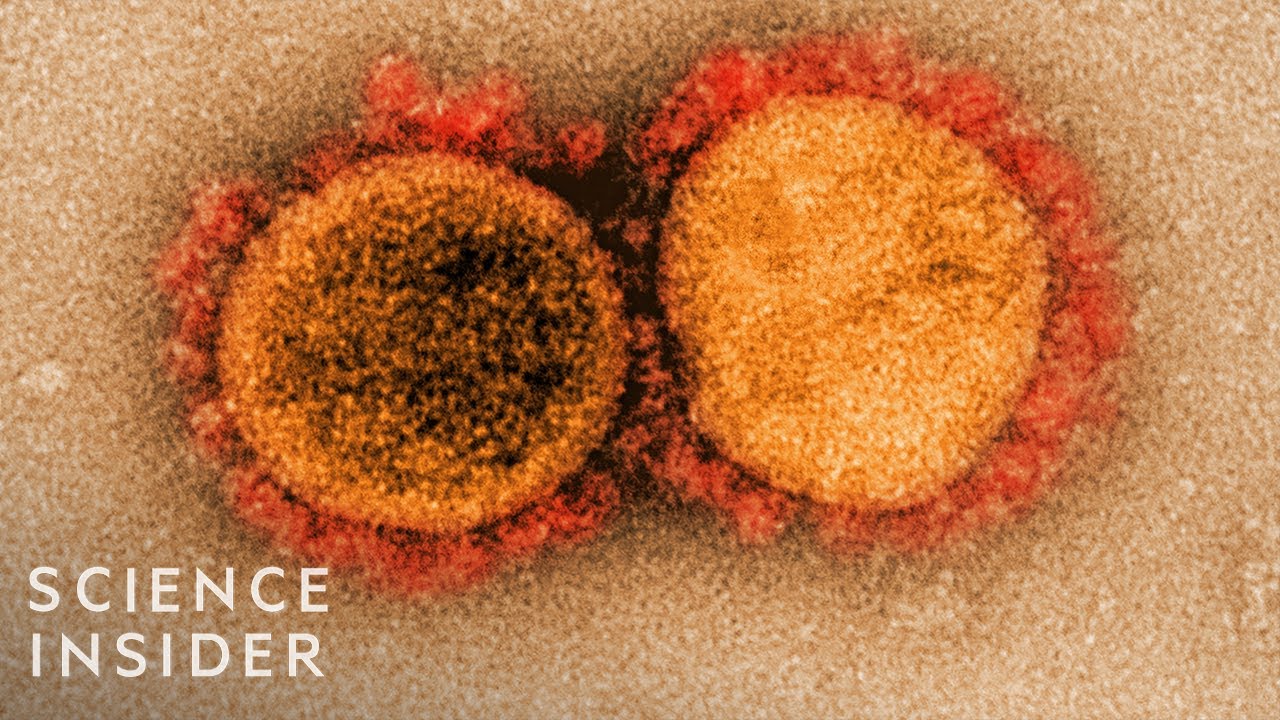
Genetic mutations aren’t as scary as they sound. With RNA viruses, like the coronavirus (SARS-CoV-2) that causes COVID-19, they’re happening constantly — basically every time it replicates. But not all mutations stick, and not all the ones that stick are bad. In fact, mutations are actually necessary for tracking and containing COVID-19. Here’s how viruses mutate and why you shouldn’t be worried when you hear about them.
MORE CORONAVIRUS COVERAGE:
What Could Be The Fastest Way To End The Coronavirus Crisis?
Will Warm Weather Stop COVID-19?
Why COVID-19 Death Predictions Will Always Be Wrong
——————————————————
#Coronavirus #Mutation #ScienceInsider
Science Insider tells you all you need to know about science: space, medicine, biotech, physiology, and more.
Visit us at: https://www.businessinsider.com
Science Insider on Facebook: https://www.facebook.com/BusinessInsiderScience/
Science Insider on Instagram: https://www.instagram.com/science_insider/
Business Insider on Twitter: https://twitter.com/businessinsider
Tech Insider on Twitter: https://twitter.com/techinsider
Business Insider/Tech Insider on Amazon Prime: http://read.bi/PrimeVideo
——————————————————
How Viruses Like The Coronavirus Mutate
Mutation has become a
sort of genetic boogeyman. It’s a common trope in horror. In people, mutations cause disfigurement, aggression, even cannibalism. So it’s not surprising that the
conversation around mutation and the virus that causes
COVID-19 feels scary. But genetic mutations in real life aren’t like the ones we see in movies. And on a viral level, they could actually help us track and manage COVID-19. So, let’s break down what
mutations actually are and what they could mean for the virus we’re facing right now. This is SARS-CoV-2, the
virus that causes COVID-19. It’s a type of RNA virus, some of which mutate practically
every time they replicate. SARS-CoV-2 is actually one
of the rare RNA viruses that has a proofreading mechanism that slows down its mutation rate some. Despite that, it has mutated, and it will continue to mutate. But that’s not as scary as it sounds. Mary Petrone: It’s basically a typo, or a mistake that occurs, like if you were writing an essay. Narrator: SARS-CoV-2’s RNA is basically a blueprint for making more SARS-CoV-2s, but viruses can’t replicate themselves. They have to hack into
another organism’s cells and use their machinery
to make new copies. Here’s how that process works. Petrone: The virus will,
like, let its genetic material free into the cytoplasm of the cell, and then when that genetic
material encounters what’s called a ribosome… Narrator: The ribosome
reads the virus’ blueprint and starts building a new virus. Petrone: Then it’ll read it
three nucleic acids at a time, so we’d call that a
codon, and they’re always three nucleic acids. And a combination of three nucleic acids corresponds to a single amino acid. Narrator: String those
amino acids together… Petrone: And that’s what
creates the protein. Narrator: But occasionally,
the wrong nucleic acid will get added to the chain. This can sometimes, but not always, lead to changes down the line, making that offspring virus slightly different from its parent. Each amino acid or
combination of amino acids is responsible for defining some characteristic of the virus. Things like its shape,
how infectious it is, what kind of organism it infects, and the types of cells it targets. So a mutation, or, more
likely, multiple mutations, has the potential to
change any of those things. Petrone: Theoretically,
everything is fair game because these, you know, mutations are totally random events. Narrator: But a mutation in a single virus only affects that one virus. For a mutation to stick, it has to be able to be passed on to new
generations and new hosts. So something that messes
with vital functions, like the virus’ ability to
replicate, means a dead end. In terms of the virus’ fitness, the probability of beneficial, neutral, and harmful mutations shifts based on the environment it’s in. Let’s say a virus is perfectly
suited to its environment. The virus doesn’t stop mutating, but it would be impossible for a mutation to make it even more perfect, so the likelihood of
mutations that are neutral or harmful for the virus are very high. It’s impossible to say SARS-CoV-2 is perfectly suited for infecting humans. But since it can move from person to person so efficiently, experts don’t think it’s facing
a lot of pressure to adapt. Plus, its two most
concerning characteristics, how contagious it is and
how harmful it can be, are controlled by multiple genes. So in order to become more
contagious or more harmful, the virus would need to undergo multiple beneficial mutations at
exactly the right time. That’s just not very likely. But Mary points out that
even talking about mutations in terms of “dangerous” or
“worse” can be subjective. Petrone: In my mind,
what makes this outbreak or this epidemic especially
concerning is that so many people who get
infected with the virus don’t really show symptoms, and that’s why it’s been
able to spread so far. But if there were to be
a change that, you know, made the virus, the infection,
much worse in people, in some ways, it’d be easier to control. So there are all of these
different trade-offs we need to think about. Narrator: Mutations
can actually be pivotal when it comes to fighting COVID-19. Since we know what
SARS-CoV-2’s genome looked like at the beginning of the outbreak, we can track when and where it changes. Petrone: We actually saw that
patients that we identified in Connecticut in the early
stages of the outbreak here, their virus was more closely related to viruses that were collected and sequenced in Washington state compared to in China or in Europe, for example. So, that actually tells us that we have domestic
transmission going on, and we are getting all this
information based off of mutations that have arisen in the virus. Narrator: There are a couple initiatives that are tracking this
data globally right now. One being Nextstrain, an open-source project
that tracks the spread and evolution of infectious
diseases in real time. Right now, it’s focused on COVID-19. Researchers can use that information to answer questions like: How fast is it mutating? Not very. Is it spreading by air travel? Definitely, especially early on. Will it mutate in a way that makes a potential vaccine
ineffective, like the flu? Petrone: People who design
the vaccines think about this. Like, this is something that’s
factored into vaccine design. So, typically, vaccines, they use these highly conserved targets. So, they’ll pick some
part of the virus that is not tolerant to a lot of change or to really any change. It can’t really mutate
away from the vaccine without, you know, compromising some other really crucial element of its life cycle. Narrator: Plus, the flu is unique in the way its genetic
material is structured. It’s an RNA virus too, but
its genome is segmented. The coronavirus genome is not. The segments translate to a
bunch of different proteins. So every time the body sees a new protein, it has to make an entirely different set of antibodies specifically
designed to fight it. We don’t know exactly
how often a new vaccine for COVID-19 will be necessary, but we do know the virus
doesn’t have the same flexibility when it comes to proteins. And experts have been looking
at another coronavirus, the one that causes
SARS, to get an idea of how we might handle this one. Immunity to that virus lasts
roughly two to three years. Since it and the new coronavirus share a significant amount
of genetic material, this could be a good estimate. If that’s the case, then a
vaccine should last just as long since the virus is mutating so slowly. And that’s really the point. The viral ancestor of SARS-CoV-2 did have to mutate in order to
jump from animals to people, but it most likely
happened very gradually, with a series of mutations over the course of many, many years. Petrone: The timescale is
really what matters here. At the end of the day, we
need to be thinking about how best we can control this outbreak in the US and also around the world, because if there’s no
ongoing transmission, there’s no mutations, and then we really won’t have to worry.