Did you know your skin’s ageing process starts as early as your 20s? 🌸
Discover how Vitamin CG, Bakuchiol, and Niacinamide — the powerhouse trio in @avene’s Anti-Ageing range — work together to keep your skin firm, radiant, and resilient, supporting long-term skin health and vitality.
@avene #AveneSG #AntiAgeing #Bakuchiol #VitaminCG #Niacinamide #HealthySkin #Suncare #SkinScience #Dermatologist #DermTalk #DermEducation #SkincareTips #SkincareRoutine #SP
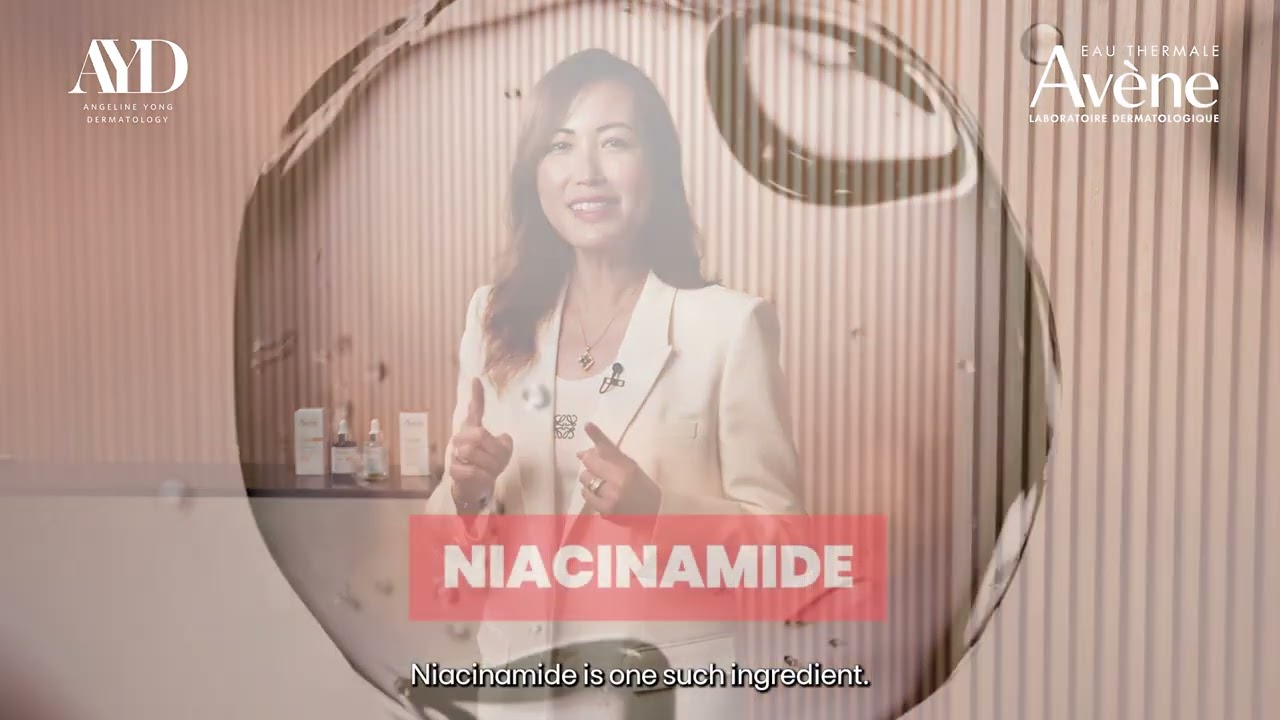
Hi, I’m Dr. Angeline Young. Let’s talk about skin aging, what’s really happening beneath the surface, and how dermatological science is evolving to address it. From around the age of 25, your skin gradually produces less collagen and hyaluronic acid. Cell turnover slows and damaged cells called scinsesscent cells start to accumulate. Scinsesscent cells are older skin cells that stop dividing. They don’t just sit quietly. They send signals that can harm nearby healthy cells and accelerate visible aging. Over time, they disrupt skin structure and function. Fortunately, science is finding ways to manage the effects of aging cells. This is where certain ingredients known as xenomorphic ingredients play a role. Rather than removing these damaged cells entirely, xenomorphic ingredients help modify or suppress the harmful activity of scinesscent cells by regulating how they behave. This helps reduce stress signals in the skin and supports healthier cell function. Nioinamide is one such ingredient. It helps to strengthen the skin barrier and reduce oxidative stress. This contributes to visible signs of aging like dullness and fine lines. Along with nioinamide, several well-studied ingredients play a role in supporting skin health as we age. These include hyaluronic acid, vitamin C, and bakuchio. Each has distinct benefits for hydration, radiance, and skin texture. Hyaluronic acid is one key molecule that holds moisture in the skin. Different molecular weights work at different depths. Some plump the surface while others hydrate more deeply to support firmness. Vitamin C is a more stable, well tolerated form of vitamin C. It helps to reduce dark spots and improves skin brightness without irritating sensitive skin. In fact, 1.8% vitamin C offers antioxidant effects equivalent to 20% pure vitamin C. Another ingredient is bakuch, a plant derived alternative to retinol. It offers similar skin smoothening and brightening benefits, but is gentler on sensitive skin and is shown to improve texture, radiance, and elasticity. We can’t stop aging, but we can work with our skin. By understanding these processes and choosing dermatologically sound ingredients, we can support long-term skin health and resilience.