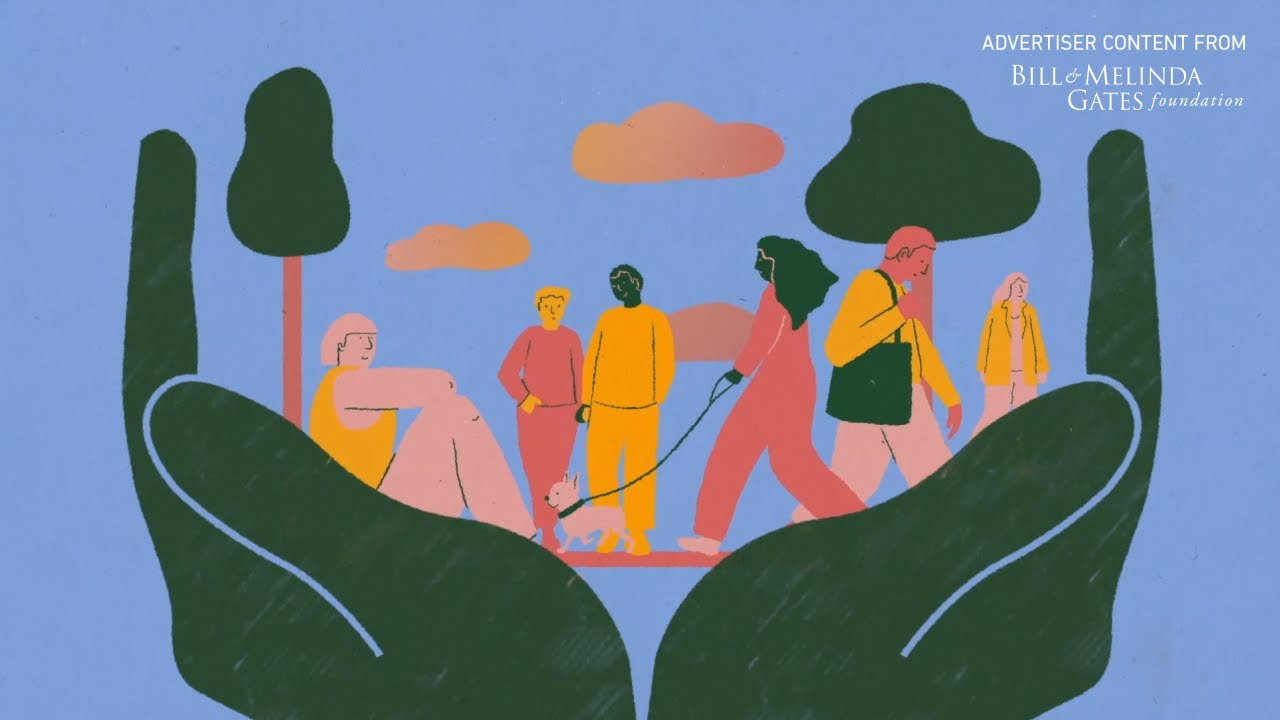
The pandemic has hit everyone, but it has hit us all in different ways. Many lives have been lost, a number that just entered seven digits. Millions have lost jobs. Others have lost trust in their fellow citizens. Entire sectors of private industry have been upended. Those who have been infected and recovered may yet deal with medical repercussions for the rest of their lives.
None of the above consequences occur in a vacuum. They are not independent repercussions, but the interdependent fallout of a global health crisis. In this vein, you can’t tackle the multiple ripples created by the pandemic as if they were isolated from one another.
Learn more here – https://www.vox.com/ad/21449555/gates-foundation-goalkeepers-pandemic-economic-loss
Link for Youtube: https://vimeo.com/461612053/29e0562bec
– [Narrator] Every month, the global economy is
losing $500 billion due to the ripple effects of COVID-19. By the end of 2021, projection show a cumulative loss of $12 trillion or more. It hasn’t been this bad since
the end of World War II, a conflict that in part grew out of another infamous
global economic crisis, The Great Depression. Almost a century later, the COVID-19 pandemic has
created a cascading crisis with impacts far beyond
the realm of public health. There’s a term for this. Mutually exacerbating catastrophes, and it’s happening right
now on a global scale. So how can the vicious cycle be stopped? Mutually exacerbating catastrophes. It’s the idea that
disasters end up creating and then cementing crisis after crisis. A pandemic feeds into a recession, feeds into income inequality, feeds into civil unrest, and on and on. A ripple in one sector in
one country is felt globally but it is not felt proportionally. Just as COVID-19 has been more lethal to patients with preexisting conditions, The disease has been
disproportionately devastating to lower income economies and people. And despite their best efforts to respond, limited resources means
a more limited effect. For example, 2020 wiped out the
sustained economic gains of several low income African nations, widening the vast wealth gap
between high income countries and low and middle income countries. And that in turn impacts the response. – [Vishal] G20 countries
spent over 20% of GDP in their emergency measures, whereas developing
countries spent about 3%. You’re already cutting back on what your government’s able to do, even at the time you’re
being asked to do more and that you’re needed even more to sort of mount a
response for your people. – [Narrator] The economic and
societal ripples from COVID won’t fully get addressed
without a multilateral response to a singular disease. The pandemic is every country’s fight. So global cooperation is paramount. Fighting the virus requires
treatment and solid diagnostics in the short term and
vaccination in the medium. – [Vishal] We could be living in a world where we’re able to get the
virus under better control through medical countermeasures. Governments are able
to protect their people and that the temporary
problems stay temporary rather than become forever problems. – [Narrator] Think of it as the inverse of mutually exacerbating catastrophes. Empowering public health networks empowers communities, particularly women, which can lead to better outcomes for environmental justice, disenfranchised minorities, and so much more. Yes, COVID-19 can create ripples
outside of public health, but the right response to
it can have societal ripples that go far beyond the virus. The fight against poverty and
disease is measured every year by the Bill and Melinda Gates Foundation in the Goalkeepers report. But progress has almost
entirely regressed. So the foundation’s
2020 Goalkeepers report analyzes the damage the
pandemic has done and is doing, and advocates for a
collaborative response. – [Vishal] I would like to
think that we can come back in a way that recognizes
the interconnectedness and gives us a blueprint on how we tackle some other global problems in a way that we might not have
been able to do before.