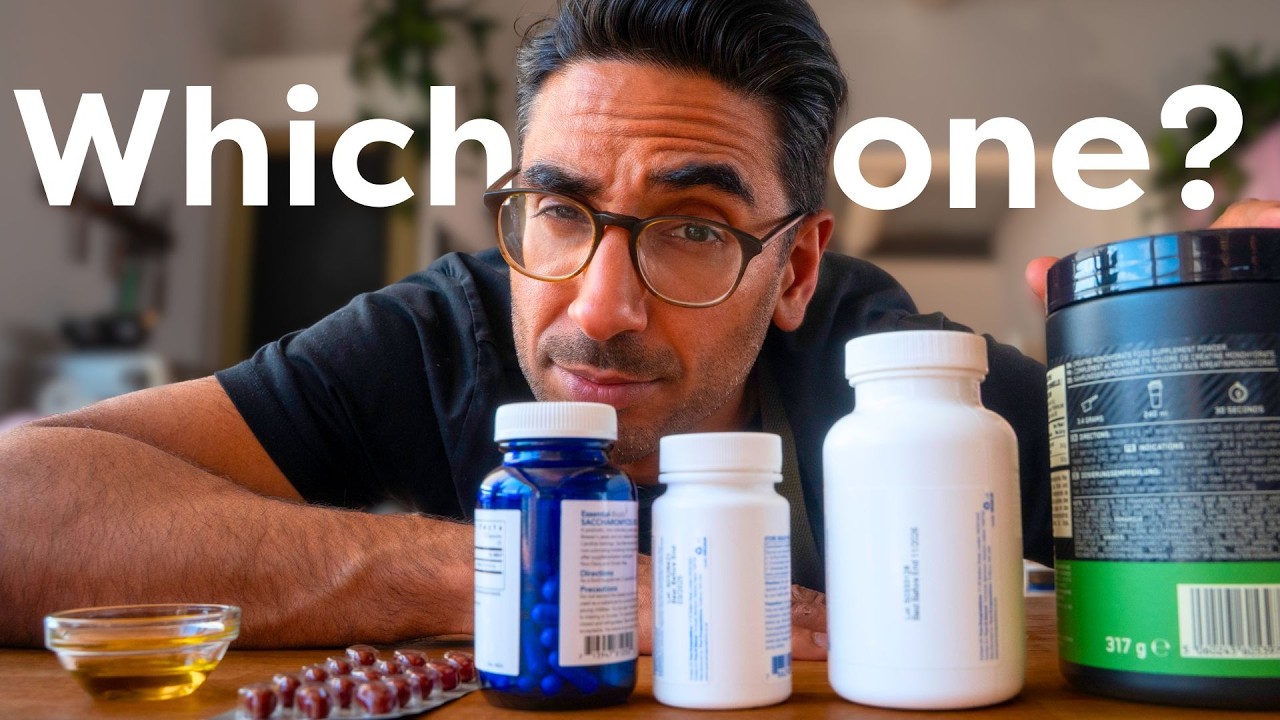
Supplements are everywhere right now, promising better sleep, more energy and a sharper brain. But which ones are actually worth your money in 2025, and which ones don’t really work? In this video, I’ll show you the supplements I would skip, try or buy, plus the easy food swaps that make a real difference.
I cover:
00:00 3 questions to ask before taking supplements
00:50 Multivitamins
2:01 Creatine
02:55 Nmn and nad+
03:30 Magnesium
05:00 Iron
06:26 Probiotics
07:53 Green powders
09:52 Vitamin D
11:26 Omega 3
12:54 Protein powders
14:40 Whole food supplements
16:01 Sleep habits over supplements
Thanks for watching! Let’s keep the chat going in the comments. I’d love to hear your thoughts.
📌 Smoothie recipe: https://tdk.link/green-smoothie
📌 More healthy recipes: https://tdk.link/healthy-recipes
And there’s a virtual Dr Rupy chat box under every recipe where you can ask about the health benefits of foods.
———————————————————————————————————-
LEARNING TO EAT WELL EVERY DAY
🥗 Download a FREE 7 day meal plan: https://tdk.link/mealplan_yt
🔥 Learn about Inflammation – FREE 4 part mini-series here: https://tdk.link/infl_series_yt
🥑 Heal yourself with food: https://tdk.link/heal_yt
🎤 Listen to experts on the podcast: https://tdk.link/pod_yt
👨🏽💻 Browse articles on the website: https://tdk.link/web_yt
📚 Check out my cookbooks: https://tdk.link/books_yt
LET’S BE FRIENDS
📷 Instagram: https://tdk.link/tdk_insta_yt
📹 Subscribe: https://tdk.link/ytsubscribe
🙋🏽♂️ Facebook: https://tdk.link/tdk_fb_yt
🐦 Twitter: https://tdk.link/tdk_tw_yt
👔 LinkedIn: https://tdk.link/tdk_li_yt
Supplements feel like an easy win for better sleep, more energy, or just living longer, but many don’t actually work, and some can even be risky for your health. So, let’s break down which supplements I think you should skip, try, or buy. Whenever I’m deciding whether to take a supplement at all, I’m always asking myself three simple questions that you can ask yourself, too. Number one, why do I need it? Am I trying to help with a symptom or am I trying to prevent something down the line? Number two, how will I even know whether it’s working? Can I track my symptom or is there a simple blood test that I can do to measure its impact? And number three, if I’m going to take it, what is the best quality supplement I can get? With this in mind, let’s move to our first supplement. Multivitamins. These are the classic just in case supplement like a nutritional insurance policy to cover your bases, but for most people, they don’t seem to do much. Big studies haven’t shown any benefit for living longer or protecting against major diseases like heart disease. And my big issue with multivitamins is the false sense of reassurance you get. I took my multivitamin today, so I don’t really need to worry about my diet. And this is not the way we should be thinking. And in some people like smokers or those with precancerous conditions, high doses of certain vitamins that you find in multivitz like vitamin B6 have actually been linked to a slightly higher risk of cancer. So these aren’t harmless across the board, especially in large amounts. There are a few cases where they might be beneficial, like if you’re recovering from surgery, you have a very limited diet or you’re older at risk of deficiencies, but even then, I would say you’re usually better off with targeted supplements and adding more nutrient-dense foods to your overall meals. My verdict, I would say skip unless you’ve been advised to take one and focus on real nutrients which are in whole foods first. Creatine monohydrate. Most people know creatine for sports performance because it helps your body produce quick energy when you’re doing short intense bursts of activity like lifting weights or sprinting. There are also some endurance benefits as well. And there’s also exciting research on brain health too, especially in older adults who tend to have lower levels. It’s really wellstudied. It’s got a good safety profile with minimal side effects. And the usual dose is anywhere between 3 to 5 grams of creatine monohydrate daily. Again, you don’t need it to be healthy. Your body naturally makes creatine. And you can also get some extra sources from meat and fish. My verdict is this is a try, particularly if you exercise regularly. There is emerging evidence that vegans and vegetarians could also benefit from having this because you don’t get it from your diet and older adults to protect their brains. NMN, NAD+, and other brain boosters. On the topic of brain health, I’ve seen a lot of supplements with big price tags and bold claims. NMN is one of those supplements that sounds exciting on paper, and it’s a type of vitamin B3 that helps your body make NAD+, which drops as we age. But all these claims you see on labels are based on theoretical mechanisms or studies in mice. There is no solid evidence behind them in human trials and we have no idea what it does long term. My verdict, it’s a big skip. Magnesium is another one I see everywhere, often cited as a sleep fix. And look, it is essential. It’s involved in everything from muscle and nerve function to blood pressure regulation. But the research on supplements, it’s kind of weak. There are some small benefits in older adults and in people who train super hard, but not enough to make a strong recommendation across the board. It’s safe in general, but high doses can cause diarrhea, gastric upset, cramps, and it can also interact with medications like antibiotics, osteoporosis drugs. So, please check with your physician if you are taking any medications long term. For most people, the best way to start is getting more magnesium richch foods in your diet. And adults need generally around 300 to 400 milligrams per day, which is really achievable from four to five portions of foods like a handful of nuts and seeds, particularly pumpkin and almonds. Cooked greens, particularly things like kale and spinach, wonderful sources. Edomame beans, even black beans have got magnesium in. and whole grains. I know grains get a bit of a hard time because they’re carbohydrate dense, but they also contain nutrients, particularly things like quinoa, which is a pseudo grain. My verdict is try if you’re training really hard, if you’re older, or if you struggle to get these kind of foods in your diet, but I would optimize your meals first. A lot of people think about iron when they’re feeling a bit tired, getting heavy periods, or eating mostly plant-based. And again, iron is essential. We need it to make healthy red blood cells that carry oxygen around the body. But if you don’t have an actual deficiency, taking iron supplements has no proven benefit. And it’s actually one that you want to be really careful with because too much iron in the body can irritate the gut and it can potentially increase oxidative stress over time, which leads to raised inflammation levels. If you’re concerned about iron deficiency, the best thing to do is get your iron levels checked. There are lots of reasons outside of iron deficiency that lead to tiredness. And before rushing to the supplement aisle, I would also encourage you to eat more iron rich foods. Things like seafood, particularly mackerel, sardines, a little bit of red meat if you eat it. Lentils and beans are also good sources of iron. Tofu, and here’s a little trick. If you are plant-based in particular, you want to pair these foods with something that is high in vitamin C, something like green leafy vegetables that also have iron, peppers or lemon juice, because that also increases the absorption of iron into the bloodstream. My verdict, skip unless you’ve been diagnosed with low iron or anemia after a blood test, and it’s not something to top up with for the sake of it. Probiotics are having a real moment. They are everywhere promising to fix your gut, improve your immunity, or just make you feel better. But most gut experts that we have talked to agree that popping a probiotic every day probably won’t do much. We actually don’t know what a healthy gut bacterial population looks like because it’s so personal and most supplements only offer a handful of these bacterial species. whilst your gut naturally has hundreds of different microbes. In some cases, however, if you’ve just taken antibiotics or you’ve been diagnosed with a gut issue like IBS, certain probiotic strains might help, but it’s best to use them with advice from a registered nutrition professional or a physician. If you want to look after your gut daily, it’s actually much more helpful to think about other things in your lifestyle. For example, stress. You can help digestion with belly breathing before eating meals. Feeding the microbes that you already have with specific types of fibers called prebiotics. These you get from foods like whole grains, beans, and nuts, plus fermented foods. Things like natural yogurts, keir, or sauerkrauts and kimchi. My verdict on probiotics, try if recommended for a specific issue, but I don’t think it’s worth it for most people as a daily supplement. focus on this stuff instead. Green powders. Look, getting your greens in without having to chop any vegetables sounds pretty ideal. It’s not a new idea either. Drying fruit and vegetables has been around forever. It can help actually preserve nutrients like vitamin C and folate. But when it comes to tangible benefits like improving immunity, digestion, or energy that a lot of these green powder brands are promising, the evidence is pretty weak or I would say non-existent. My real issue is actually quality. A lot of these powders don’t tell you what’s actually inside or how much. Some add sweeteners and flavorings that are not great for your gut at all. Particularly if you’re having one of these powders every single day. And when you turn plants into powder, you lose more than just water. you lose fiber, texture, and how everything works synergistically together, which is what makes whole plants so beneficial themselves in the first place. That said, a good green powder can actually come in handy if you’re traveling or you’re busy, you’re struggling to get fresh produce in every single day. Just make sure you do some research. Look for companies that use freeze drying or gentle processing and are really transparent about the ingredients that they put into their powder and don’t have any additives. It should also taste like it works. Pretty disgusting. My preference, however, is if you have a blender and 30 seconds, you’re honestly better off making a quick smoothie with some nutrient-dense frozen ingredients. Frozen spinach, frozen berries, probiotic Greek yogurt, bit of nut butter, some raw honey, splash of water. [Music] This is far cheaper. It gives you fiber and the whole orchestra of nutrients, not just a faded tune. It’s good. My verdict for green powders, try, but only a good one as a backup. A lot of people, even in sunny countries, are low on vitamin D. We spend most of our time indoors, missing out on sunlight, which is our main source of vitamin D. And it’s pretty hard to get enough from food alone. And vitamin D acts more like a hormone than a true vitamin. It helps regulate hundreds of processes in your body. So, if your levels are low, a supplement can definitely help. It’s been linked to stronger bones, fewer fractures, and possibly fewer infections as well. But it’s not magic. The benefits mainly show up when you correct a deficiency, which is why I think a blood test is the only real way to know whether you’ll benefit from supplementation. It’s also worth mentioning that if you have darker skin, melanin blocks UV, so you make less vitamin D. So, if you’re older and you don’t get outside much, or you have darker complexion like myself, it’s definitely something to get tested. If your levels are low, I recommend taking anywhere between 400 IU to 2,000 IU per day, and that’s vitamin D3 with vitamin K2. Be wary of higher doses without testing your level because more isn’t necessarily better and it can actually be harmful. It is still worth adding some food sources of vitamin D to your diet like sardines, eggs, mushrooms that have been exposed to sunlight and things like salmon as well. Every little adds up. My verdict for vitamin D, buy and test your vitamin D levels if you can. Omega3. Now, the best evidence we have is for heart health, but there may be some extra benefits for brain, mood, and even inflammatory conditions. Now, if you’re eating oily fish two to three times a week, like salmon, sardines, mackerel, anchovies, you’re probably okay. But if not, I would say a supplement is probably worth it. However, there’s debate around how much omega-3 is beneficial. Most people aim for around 250 to 500 mg of EPA and DHA every day. But if you’re after specific benefits, closer to 1 to two grams is probably better. If you can test your levels with an omega-3 index blood test, ideally you want it over 8% for heart and brain health benefits. And one other thing to watch out for is not all fish oils are good quality. Some can be oxidized, rancid, and not contain what they say. So, look for third-party testing on the brand’s website. If you’re vegan or vegetarian, I actually highly recommend you take an omega-3 supplement, and you can get them sourced from algae sources as well, but you do need to consume enough to get a high level of EPA and DHA. My verdict is, oh, it’s a buy as it’s hard to get over a gram of EPA and DHA from food alone. Protein powders. Now, the more I’ve looked into the research on protein, the more I’m convinced that many of us could do with a little bit more, especially as we get older. Protein powders can be a handy topup, especially if you’re busy, training a lot, or just not eating enough to meet your needs. There’s good evidence that they can help build muscle and maintain it, especially alongside strength training. That said, a lot of protein powders are ultrarocessed. They contain artificial sweeteners, gums, emulsifies, and the quality can be all over the place. Certainly not something that I would recommend you consume every single day. So, if you do use them, flip the pack or tub over and read the label. Always look for third-p partyy testing that’s on the brand’s website. That is your best bet for avoiding contaminants like heavy metals that plague lots of protein powders. But really, the healthiest way I believe is to get protein through whole foods. It could be protein snacks like Greek yogurt with berries, nuts and seeds, particularly peanuts, pistachios, and things like shelled hemp seeds, which are really high in protein. You could also try snacks like boiled eggs and hummus as a way to just bump up that protein number. And some of my favorite plant-based sources of protein are edomame, tempeh, and of course, tofu. Poultry, fish, and lean red meat are obviously good sources as well. So, my verdict is try protein powders when you can’t get enough from food. Use them as a top up, not as your main protein source. We’ve covered a lot of supplements. The list could go on, but what I’m really excited about are the potential for whole food supplements. Instead of isolated nutrients, you’re getting a full spectrum of things like fiber, healthy fats, proteins, and polyphenols all working together for your gut, your heart, and your brain. It’s sort of like using the full tool kit instead of just one screwdriver. So, for example, for energy and focus, you’ve got cacao. It’s my go-to. It’s full of flavonol that help with blood flow to the brain. It tastes delicious. It also has a prebiotic effect, which is great for your gut health, and it’s a source of protein as well. I use this in lots of different recipes. Specifically for gut health, I’m always looking for flax seed and psyllium husk. They give you tons of fiber and there’s evidence that it can improve digestion, feed your gut microbiome, and even reduce cholesterol as well. For inflammation and joint health, turmeric, as well as other spices, work gently but powerfully, especially when you pair it with black pepper. for immunity and antioxidant support. Frozen or freeze-dried berries like bilbury, black currants are packed with these plant chemicals called polyphenols and vitamin C. And these are fantastic at not just reducing inflammation but also supporting your gut microbes as well. For sleep, something that I get asked about a lot, instead of relying on supplements or even food, I think habits matter the most. Stick to a regular bedtime. Keep your room cool and dark. Cut off caffeine before 11:00 a.m. Eat an earlier dinner and remove digital devices at least a couple of hours before bed. If you do that consistently, it will be better than any sleep supplement and even some medications as well. If you think we’ve missed out on any supplements, let us know in the comments. And the best thing about whole foods, in my opinion, is that they slip into your day without you even noticing. Like these three high protein breakfast recipes that I swear by. They’re absolutely delicious and they’re so easy to make whilst packing in over 30 g of protein per serve.