COVID Mystery – Doctors are Unraveling the Mystery of COVID | Autoimmune Disease
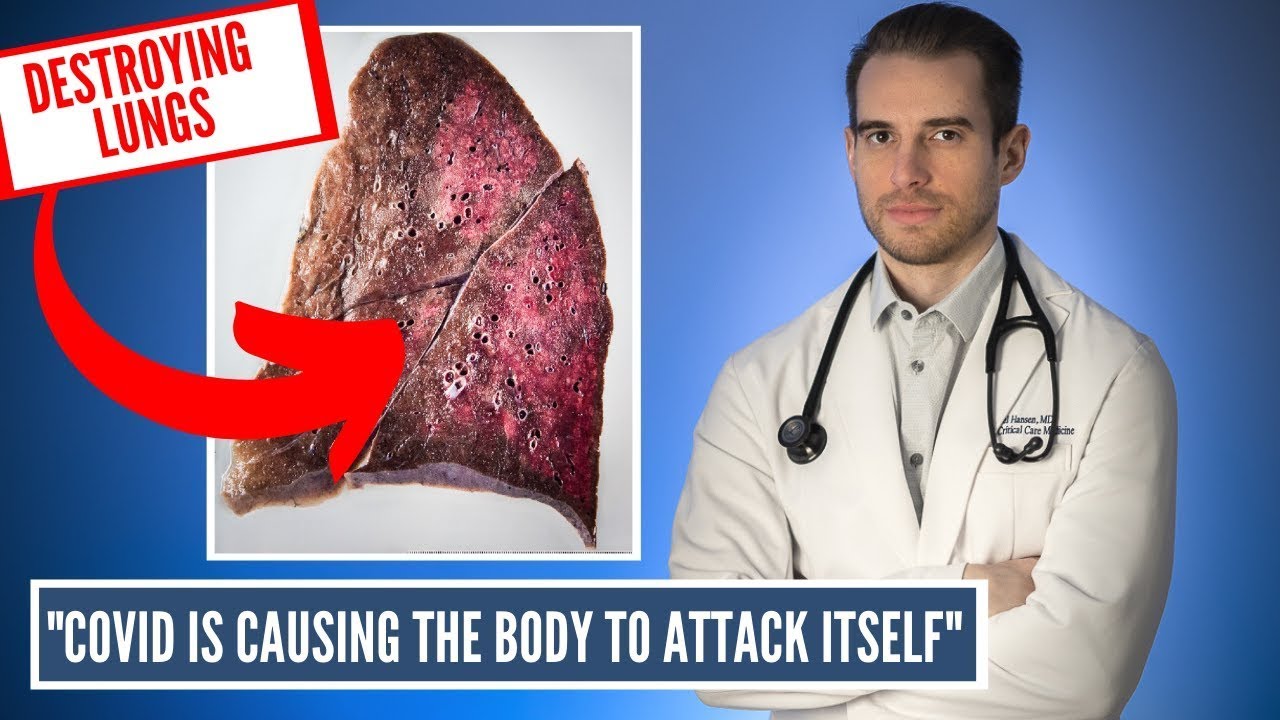
There is NEW evidence to suggest that COVID is causing the body to make antibodies that attack itself.
COVID is mysterious in a lot of ways, despite us already knowing a lot about it. Researchers & doctors are working hard to unravel the cause and effect of the interaction between the SARS-CoV-2 virus and the immune system. COVID causes several symptoms that may point to a phenomenon called autoimmunity as a potential cause of long COVID. This includes pulmonary fibrosis, meaning scarring of the lungs. Unfortunately, I’m seeing the same picture unfold in so many of my patients who have had COVID, with all this scarring in their lungs. And COVID can cause other issues, like brain changes, skin rashes, excessive blood clotting, inflamed blood vessels, and more.
Autoimmunity is when the immune system mounts an attack on its own healthy cells and tissues—mistaking them for foreign or virally infected cells. Under normal conditions, the immune system can discriminate between self and foreigners. Meaning it can differentiate between the body’s proteins and foreign antigens. But sometimes, in some people, the immune system can mistakenly identify its own proteins as foreign antigens, and it launches its attack on itself. When these autoantibodies react against self-antigens, the outcome can be inflammation and damage to tissues. This is what happens with autoimmune diseases like Type 1 diabetes, Graves’ disease, multiple sclerosis.
This is also what happens with idiopathic pulmonary fibrosis, where people develop scarring in their lungs, much like this happens with COVID. In fact, there are lots of auto-immune conditions that can cause scarring in the lungs, like lupus, rheumatoid arthritis, scleroderma, polymyositis, ankylosing spondylitis, and more—the evidence to support the role of autoantibodies as a cause of more severe COVID. The vast majority of people who get COVID will have a disease isolated to the upper respiratory tract. But in 20 percent of people, the infection will go deep into the lung parenchyma and can cause more severe disease, meaning COVID pneumonia, which sometimes blossoms into ARDS.
Autoimmunity as a potential cause of more severe COVID disease was brought up when autopsies. Cytokine storms are an overreaction by the immune system and are more systemic and short-term. In contrast, autoantibodies are more targeted and long-term. Dexamethasone, a corticosteroid, and the arthritis drugs tocilizumab and sarilumab have been used to modulate an overactive immune response. In a clinical trial, tocilizumab and sarilumab improved critically ill patients’ outcomes on ventilators in the intensive care unit.
A study at Rockefeller University in New York enrolled almost a thousand people with severe COVID. About 10% had antibodies that blocked the action of type 1 interferon molecules, a protein that helps the immune system fight pathogens. These autoantibodies were more common in men, who had 12.5% compared to 2.6% in women. This may explain why men are more likely to have severe diseases. Thes are now screening study’s researchers 40,000 people to see what proportion of uninfected people carry these antibodies and their distribution by age, ancestry, and gender. This data will be compared to the distribution and percentage of each factor in people with severe COVID.
Researchers in another study supported the finding of increased autoantibodies in COVID patients. The antibodies they found were directed towards B cells, a type of immune cell that produces antibodies and interferon. Although the researchers noted no “COVID specific” autoantibodies that distinguish COVID patients from uninfected controls, the levels of autoantibodies were correlated with known markers for inflammation. The correlations became more extreme as the disease worsened. These medications require careful timing to interrupt an overreactive immune system without interfering with a standard immune system fighting the COVID infection. COVID is often a biphasic illness with an initial phase, primarily respiratory symptoms caused by the virus and the immediate immune response, with innate immunity. Sometimes, it is followed by a secondary inflammatory phase.
There are two immune system arms, the non-specific innate immune system, and the specific adaptive immune system. When infected with a new pathogen to your immune system, you rely on the natural immune system to fight the pathogen. Interferons are essential to the innate response. Interferon-β is one of the first cytokines produced and drives the innate immune response in the lung. This connection illustrates the importance of the finding that SARS-CoV-2 may inhibit interferon activity in those who develop more severe COVID.
Doctor Mike Hansen, MD
Internal Medicine | Pulmonary Disease | Critical Care Medicine
Courses: https://doctormikehansen.com/courses/
#covid
hey guys welcome back to another video this one’s
going to be on covid 19 in autoimmunity so long covid and multi-system inflammatory disease these
are scientifically mysterious complications of covid 19 and covid 19 by itself is a mysterious
disease in a lot of ways despite us already knowing a lot about it scientists are working hard
to unravel the cause and effect of the interaction between the sars cov2 virus and the immune
system covid causes several symptoms that may point to a phenomenon called autoimmunity as a
potential cause of long covid now this includes pulmonary fibrosis meaning scarring of the lungs
unfortunately i’m seeing the same picture unfold in so many of my patients in the pulmonary clinic
where they’ve had covid 19 and now they have a lot of scarring in their lungs as a result of
that and covid can cause other issues like brain changes we’ve all heard about the brain fog it
can cause skin rashes excessive blood clotting inflamed blood vessels and more autoimmunity
is when the immune system mounts an attack on its own healthy cells and tissues mistaking
them for foreign or virally infected cells now under normal conditions the immune system can
discriminate between self and foreigners meaning it can differentiate between the body’s proteins
and foreign antigens but sometimes in some people the immune system can mistakenly identify its
own proteins as foreign antigens and it launches its attack on itself now when these autoantibodies
react against self antigens the outcome can be inflammation and damage to tissues this is what
happens with autoimmune diseases such as type 1 diabetes graves disease multiple sclerosis and
more this is also what happens with idiopathic pulmonary fibrosis where people get scarring in
their lungs much in the same way that happens with covid in fact there are a lot of autoimmune
conditions that can result in scarring in the lungs or pulmonary fibrosis this includes things
like lupus scleroderma polymyositis rheumatoid arthritis and ankylosing spondylitis the vast
majority of people who get covid will have disease that is isolated to the upper respiratory
tract but in 20% of people who get the infection it’ll go deep into the lung parenchyma and have
the potential to cause more severe disease meaning covid pneumonia which sometimes blossoms
into ards acute respiratory distress syndrome the question of autoimmunity as a potential cause
of more severe covert disease that was brought up when autopsies of people who died of covid 19
revealed an inconsistency between the viral load in the degree of lung damage this disconnect led
to researchers to surmise that the immune system is more responsible than the virus for causing
the extensive and often irreparable lung damage a study that hasn’t yet been peer reviewed
enrolled 147 hospitalized patients with covid 19 in three medical centers they measured
autoantibodies that were associated with connective tissue diseases for example lupus they
also measured other antibodies like anticytokine antibodies and antiviral antibodies now compared
to a healthy control group autoantibodies were more commonly found in people who had covid
19. researchers found auto antibodies in half of hospitalized covid patients compared
to less than 15 percent who were healthy and uninfected now in some the auto antibodies
didn’t change throughout the course of illness however in 20% the autoantibodies increased as
the disease progressed it takes several weeks for autoantibodies to build up which may explain the
delay in developing symptoms of severe covid 19 there is a study done at rockefeller university
in new york that enrolled almost a thousand patients with severe covid about 10 percent
had antibodies that blocked the action of type 1 interfering molecules which is a protein
that helps the immune system fight pathogens these auto antibodies were more common in men at
12.5 percent compared to women at 2.6 percent this may explain why men are more likely to have more
severe disease the researchers in the study are now screening 40 000 people to see what proportion
of uninfected people carry these antibodies and their distribution by age ancestry and gender
now this data will be compared to the distribution and percentage of each factor in people with
severe covid researchers in another study supported the finding of increased autoantibodies
in covid patients the antibodies they found were directed towards b cells a type of immune cell
that produces antibodies and interferon although the researchers noted that they found no covid
19 specific autoantibodies that distinguish covid 19 patients from uninfected controls the
levels of autoantibodies were correlated with known markers of inflammation and the correlations
became more extreme as the disease worsened other researchers and yet to be peer-reviewed study
found that anti-annexin antibodies were elevated among hospitalized covenanting patients with the
highest levels in those who died antibodies that inhibit anexin’s activity can cause widespread
blood clotting cellular death and swelling in lung tissue the authors concluded that these
anti-annexan antibody levels predicted mortality have other viruses been implicated in forming
auto antibodies well case reports from as early as 1984 show autoantibodies against interferon after a
viral infection with varicella zoster viruses that have been proposed as triggers for autoimmune
disorders include parvovirus b19 epstein-barr virus cytomegalovirus herpesvirus 6 hepatitis a
hepatitis c and rubella so the epstein-barr virus which causes mononucleosis or mono has been linked
to many autoimmune disorders including lupus streptococcus pyogenes the bacteria that
causes strep throat can prompt an autoimmune reaction called rheumatic fever in addition to
glomerulonephritis which is a kidney condition rheumatic fever can cause permanent heart
damage after attacking heart cells aka myocytes helicobacter pylori is a bacteria that
can cause infection of the stomach and this bacterial infection is thought to be a trigger for
developing immune thrombocytopenic purpura aka itp itp is an autoimmune attack on platelets which
are responsible for blood clotting at least partially responsible for blood clotting sars cov2 has been linked to several autoimmune disorders there’s been a case report of a 65 year old
female with covid 19 in addition to another case report of a pediatric patient and they
each developed itp recently i did a video on a doctor in florida who died as a result of bleeding
because of thrombocytopenia meaning low platelets his platelet level went all the way down to zero
this happened shortly after he got the first dose of the pfizer vaccine did this vaccine cause
this or instead did he get the sars cov2 infection and that caused the low platelets or was there
another undiagnosed condition that was flying under the radar such as leukemia that led to
low platelets and led to his outcome it’s easy to jump to conclusions but based on the timing
it seems like it was related to the vaccine but there’s no way to know for sure right now that’s
why an autopsy is necessary but even then doing an autopsy doesn’t necessarily guarantee that we’ll
get a definitive answer but getting back to sars cov2 there are case reports of people developing
other autoimmune diseases like guillain-barre syndrome a progressive ascending minute rises up
symmetric paralysis guillain-barre syndrome is a relatively rare immune mediated disease that may
be triggered by respiratory viruses or vaccination anti-phospholipid antibodies have been found in
many patients of the covid 19 anti-phospholipid antibody syndrome is the major cause of strokes
in people with systemic autoimmune disorders these antibodies are normally found
in about 0.5 percent of the population they’ve also been found in many but not all
patients who’ve had covid 19 and blood clots the findings of increased auto antibodies in patients
with severe covid are intriguing but critics point out that the control group in many of these
studies were healthy uninfected people not people infected with another virus and the findings
of autoantibodies were not always consistent with clinical findings further studies comparing
the effects of auto antibodies in covid 19 with autoantibody production and influenza may help
determine a pattern of auto antibody production that is more classic in covid 19 cytokine
storms are an overreaction by the immune system and are more systemic in short term in contrast
autoantibodies are more targeted in long term dexamethasone which is a corticosteroid along with
the arthritic drugs tocilizumab and sarilumab they’ve been used to modulate an overactive immune
response in a clinical trial tocilizumab and sarilumab improved outcomes for critically ill
patients on a ventilator in the intensive care unit these medications require careful timing
to interrupt an over-reactive immune system without interfering with a normal immune system
fighting the covid 19 infection covid is often a biphasic illness with an initial phase that is
primarily respiratory symptoms caused by the virus and then the immediate immune response with innate
immunity and sometimes that’s later followed up with a secondary inflammatory phase researchers
have found that medications that are helpful in one stage can actually be harmful if administered
at the wrong time for example remdesivir an antiviral medication has not been beneficial
in the later stages of covid 19. so there are two arms of the immune system on one hand
you have the non-specific innate immune system and then you have the specific adaptive immune
system whenever you’re infected with a pathogen that is new to your immune system you rely on
the innate immune system to fight the pathogen interferons are proteins that are part of that
initial innate response interferon beta is one of the first cytokines produced and drives innate
immune response in the lung this connection illustrates the importance of the finding that
sars cov2 may inhibit interferon activity and those who develop more severe covid there has been
a randomized double-blind placebo-controlled pilot study in nine uk hospitals in which they enrolled
98 patients 50 to the control group and then 48 to the treatment group in the treatment group they
gave nebulized inhaled interferon the two groups were then well matched demographically and the
results showed that the treatment group seemed to improve more quickly compared to the control
group although the results were not statistically significant and the larger trial is now in the
works could autoantibodies be formed to help halt an immune system that is out of control
well the two factors that determine the outcome of a covid 19 infection are the viral load and
the quality and quantity of the immune response a high viral load can do more damage before the
immune system can bring it under control an immune system with a poor antibody or cellular response
can’t mount a response fast enough or strong enough to limit the infection’s damage now on the
other hand an immune response that is not well regulated will lead to tissue damage secondary
to that inflammation a study showed that the autoantibodies were still present seven months after
infection leading researchers to stress the need to determine whether there’s a link between auto
antibodies and long covid these studies they raise many questions but they can also be avenues to
new treatment options so that’s going to be all for this video thanks for watching subscribe
if you haven’t done so already hit that bell notification that way you know when my next one’s
coming out and i’ll see you in the next one you