A vitamin profile test will help you find out the deficiencies in your body with respect to the vitamin spectrum. This will help a doctor recommend you to change your diet and medications to gain the deficient vitamin to ultimately avoid health conditions associated with the deficiency.
In this video, you will learn what vitamin profile test is and how it will help you avoid certain health conditions.
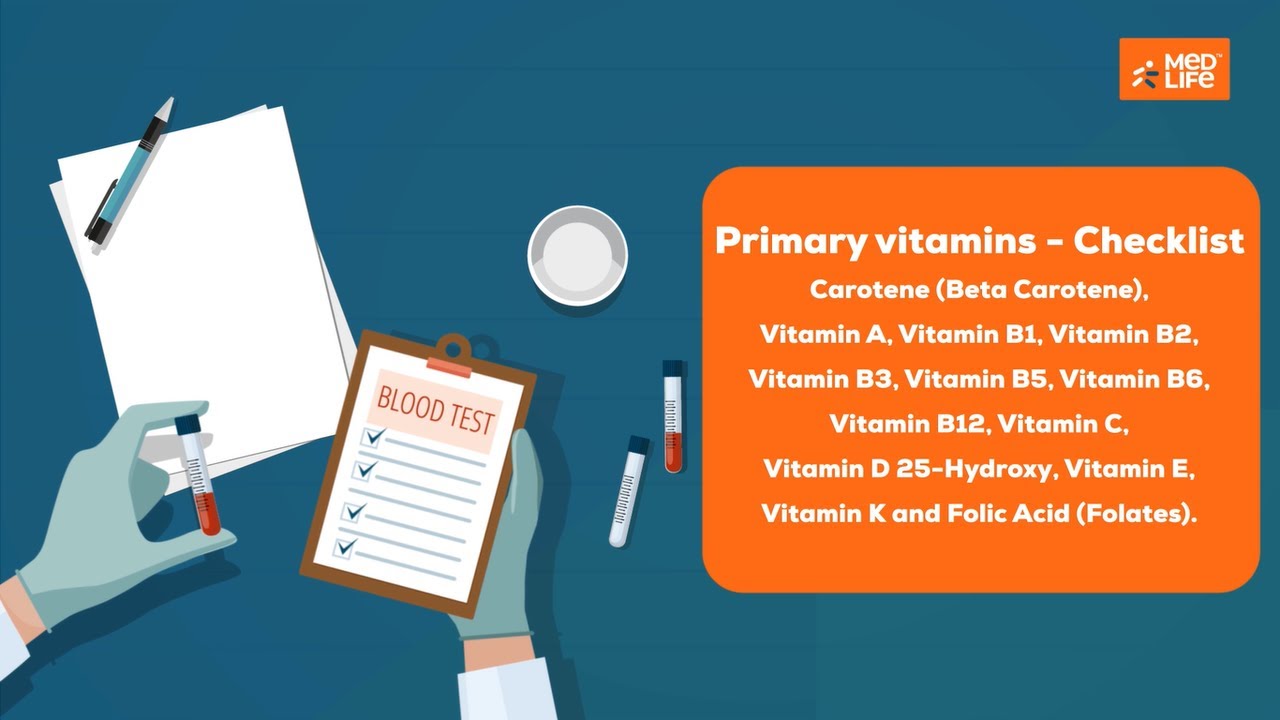
The primary vitamins tested are:
Carotene (Beta Carotene)
Vitamin A
Vitamin B1
Vitamin B2
Vitamin B3
Vitamin B5
Vitamin B6
Vitamin B12
Vitamin C
Vitamin D 25-Hydroxy
Vitamin E
Vitamin K
Folic Acid (Folates)
Book vitmain profile test at medlife:
Vitamin profile test involves:
The Beta carotene test measures the level of Carotene, a fat-soluble nutrient that is a precursor to vitamin A. Beta carotene deficiency may lead to a vitamin A deficiency.
Normal range – 50 to 300 mcg/dL (micrograms per decilitre)
Vitamin A test measures the level of Vitamin A, which is essential for healthy vision, skin growth, bone formation and immune function. Vitamin A is required to produce photoreceptors in the eyes. Vitamin A deficiency can cause night-blindness (lack of vision at night).
Normal range – 15 to 60 mcg/dL
Vitamin B1, or thiamine, plays a role in metabolic reactions and forming ATP (energy-carrying molecule). Severe deficiency can cause beriberi, a condition that features peripheral nerve issues as well as weight loss.
Normal range – 2.5-7.5 mcg/dL
Vitamin B2 test measures the level of vitamin B2, also called riboflavin. B2 is important for energy production, enzyme function and fatty and amino acid synthesis. B2 deficiency symptoms include sore throat, mouth tissue swelling, cracks on the lips, tongue inflammation, and moist, scaly skin inflammation.
Normal range- 4-24 mcg/dL (Serum/plasma)
Also called Niacin, Vitamin B3 converts carbohydrates into glucose, metabolising fats and proteins. It enhances the functioning of the nervous system and also hormone production. 0.5-8.91 mcg/mL (children under 10) Severe B3 deficiency causes pellagra. Symptoms include skin inflammation, diarrhoea, vomiting, fatigue and memory loss.
Normal range – 0.50 – 8.45 mcg/mL (age over 10 years)
Vitamin B5, also known as pantothenic acid, is necessary to synthesise cholesterol and produce red blood cells. It helps maintain a healthy digestive tract and breakdown of fats and carbohydrates.
Normal range – 1.6 to 2.7 mcmol/L (micromoles per litre)
Vitamin B6 helps process neurotransmitters called serotonin and norepinephrine. It also helps form myelin, a fatty protein layer around nerve cells. Symptoms of deficiency include nerve issues, fatigue, skin rashes, and a weakened immune system.
Normal levels – 5-50 mcg/L
Vitamin B12, also known as cobalamin, is responsible for RBC production. It also plays a key role in the normal functioning of the central nervous system. B12 deficiency can lead to anaemia due to low RBC count in the blood.
Normal range – 200 and 900 ng/mL (nanograms per millilitre)
Vitamin C plays an important role in the growth and repair of body tissues such as skin, bones and cartilage. Deficiency of Vitamin C causes scurvy, of which the main symptom is bleeding gums.
Normal range – 0.6-2 mg/dL
Vitamin D 25-Hydroxy is responsible for the maintenance of calcium levels in the body. The amount of 25-hydroxyvitamin D in your blood can be an important indicator of diseases like osteoporosis and rickets.
Normal range – 20 ng/mL- 50 ng/mL (nanograms per millilitre)
Vitamin E is a fat-soluble vitamin with a wide spectrum of health functions. It is considered an antioxidant, which protects cells from damage that leads to conditions like cancer. Vitamin E is also involved in immune system functioning.
Normal range – 5.5-17 mcg/mL (adults) 3-18.4 mcg/mL (children)
Folic Acid (folate) is a B vitamin responsible for DNA synthesis and producing red blood cells. It cannot be produced by the body and must be ingested. Also known as vitamin B9, it is especially crucial in the development of a foetus. Severe deficiency of folic acid can lead to anaemia.
Normal levels – 2.7 – 17.0 ng/mL