Get FREE 2-week access to smarter training with the BWS+ app: https://bws.plus/2a
Click below to subscribe for more videos:
https://www.youtube.com/jeremyethier/?sub_confirmation=1
What supplements to take to gain muscle? I asked a Doctor of Sports Nutrition to rank the top 8 workout supplements for building muscle. From the best supplements to gain muscle that actually help you pack on real size to the ones that are just burning your cash.The goal? To find out the best supplements for muscle growth that deliver the most gains, without ANY negative side effects. At the end, I’ll be testing the winner of our best workout supplements list on my friend Dennis, and trust me, when i say you’re not gonna believe how his body responds.
Creatine (S)
Amongst workout supplements, Creatine is the King of fast results. Creatine pulls water into your muscles (you look fuller) and boosts energy reserves so you can push harder and do more reps — effects that translate into real lean-mass and strength gains (about 3 lb in 8–12 weeks). A new study that tracked both DHT levels and actual hair-follicle health found no changes with creatine use, suggesting creatine does not cause hair loss. Choose creatine monohydrate powder (S-tier) over gummies (D-tier).
Turkesterone (D)
Ask influencers what the best workout supplements are, and you’ll hear about Turkesterone. It gets a lot of hype as a “natural steroid,” but it’s a plant/insect hormone and current human evidence for muscle growth is weak. A 2023 analysis found multiple retail products severely under-dosed (often less than 1% of the label), and even with correct dosing there’s no consistent hypertrophy benefit yet. It’s still a fairly new, under-researched supplement in humans. Which is why we’re placing it into D-tier.
HMB (C)
HMB is a naturally occurring metabolite your body uses to reduce muscle breakdown and aid recovery. Early trials claimed “steroid-like” gains (7–8 kg in 12 weeks in trained lifters), but those papers drew heavy scrutiny and the results haven’t replicated. It’s inexpensive and low risk to test as a newbie, but expectations should be modest, hence our C-tier placement.
Protein Powder (A)
Among the best supplements to gain muscle, protein powder is well-studied and safe, but its impact depends on your baseline protein intake. If you’re under target (~0.55 g per lb of bodyweight), adding 1–2 scoops (~30 g each) can net ~1–2 lb of lean mass over ~3 months. If you’re already around 1.8 g/kg, extra shakes add convenience more than additional gains. Cost-wise, it averages about $77 per pound of lean mass gained, similar to whole-food protein like chicken but far more convenient. Whey often wins in acute muscle-protein-synthesis tests, yet long-term growth is similar when total protein is matched. Well-planned plant blends can therefore be just as effective over time. Ultimately, protein powder lands in A-tier.
Mass Gainer (B)
Mass gainers are essentially protein shakes loaded with extra calories so they’re an easy way for hardgainers with low appetite to hit a surplus. They work (an extra ~500 kcal/day can add about a pound per week), but you’re often paying a premium for convenience, with costs ranging from roughly $50 to $300+ per pound of lean mass gained. They’re useful situationally, yet a standard protein shake plus regular food often achieves the same result more efficiently, which is why they sit in B-tier on our list of best supplements for muscle growth.
Fish Oil / Omega-3 (C)
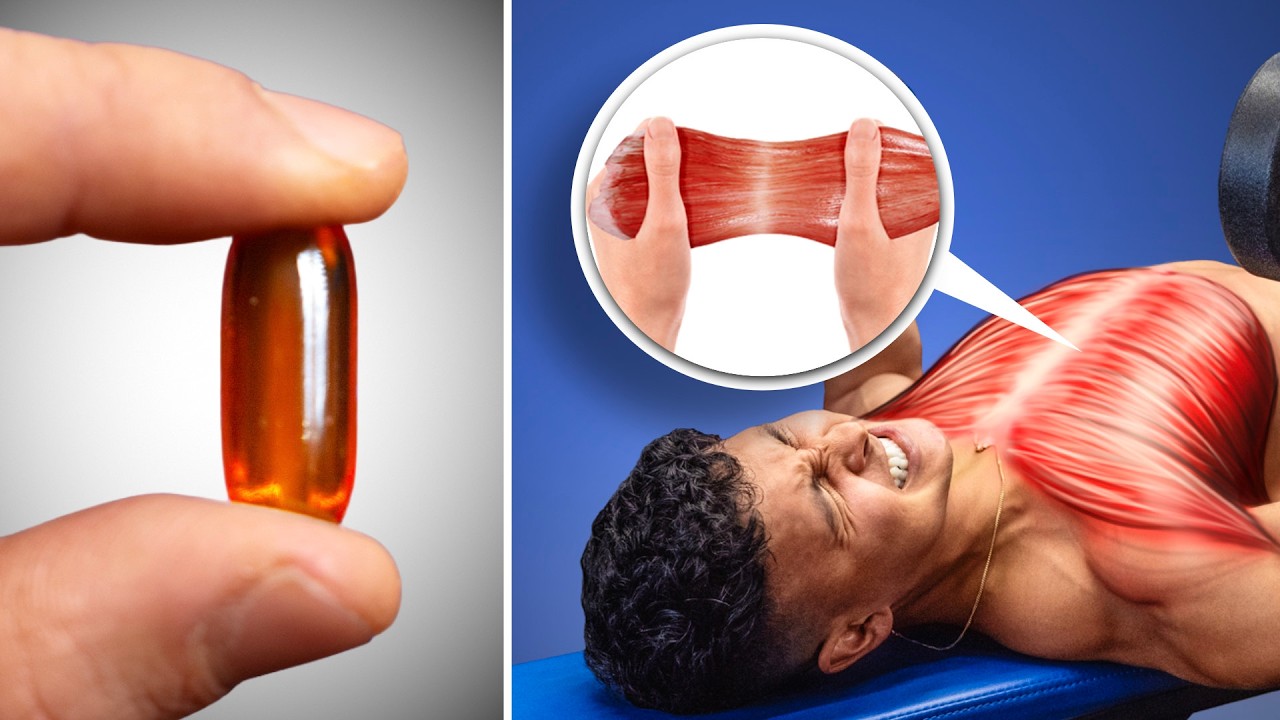
Fish oil (omega-3s) mainly supports overall health and recovery, with only modest effects on muscle growth. It may aid acute recovery from hard sessions, but the cost per pound of lean mass is relatively high, so it’s not a primary mass-builder.
Testosterone Boosters (F → B if deficient)
Most over-the-counter boosters only nudge testosterone within the normal range (roughly up to ~15%), which isn’t enough to meaningfully change muscle growth, hence F-tier. Many formulas test as ineffective. The exception is fixing true deficiencies (e.g., zinc, magnesium, boron), which can improve well-being and training output and bump this category toward B-tier.
“Mystery supplement” (Placebo, S+)
A classic 1972 study in well-trained college athletes showed dramatic strength gains over one month when participants believed they were taking steroids despite receiving a placebo (bench +13.3 kg, squat +18.9 kg). Expectation and confidence led them to train harder and lift more. Dennis’ experience recreates this effect: belief alone boosted performance. That’s why the placebo/mindset earns S+ as a force multiplier, even though it isn’t a biochemical supplement.
Timestamps:
0:00 – Why This Ranking Matters
0:39 – Creatine
3:28 – Creatine Gummies
5:10 – Turkesterone
6:45 – HMB
8:28 – Whey Protein
10:41 – Plant Protein
11:31 – Mass Gainer
12:55 – Omega 3
14:07 – Testosterone Boosters
15:55 – Mystery Supplement
16:50 – Testing Mystery Supplement
20:14 – How Much Supplements Help
I asked a doctor of sports nutrition cited in over 5,000 research papers with published studies on pretty much every supplement you can think of to rank the top eight supplements for building muscle. From the ones that actually help you pack on real size to the ones that are just burning your cash. The goal to find out which supplement delivers the most gains without any negative side effects. You could argue that this is the most effective supplement on the list. These results look exactly like if you just took straight up steroids. At the end, I’ll be testing our number one supplement on my friend Dennis. Oh, and trust me when I say you’re not going to believe how his body is working. What kind of drive you gave me? Let’s start with every gym bro’s second favorite white powder, creatine. Creatine is the king of fast results. And one of the ways it works is by pulling water into your muscles, filling them up like balloons. Now, this can make you look fuller and more jacked in a matter of weeks. But does this change in appearance actually mean you gain muscle? Definitely part of the gain in fat-free mass that we see in creatine studies is due to the fact that it’s coming into the muscle for extra storage and it’s bringing a little bit of water with it. We also see tangible effects on strength and power performance and the longer term data would suggest that that this does materialize into actual muscle proteins and muscle tissue. Together, these benefits have been shown to provide a 3 lb boost in lean mass in just 8 to 12 weeks when compared to a placebo. For reference, here’s what those gains actually look like. And because you only need 5 g of creatine per day to saturate your muscles, it’s incredibly cost effective. For an extra one lb of lean mass, it’s going to cost you a total of $7.70. But in order for creatine to make it into S tier on our list, it’s going to have to pass three criteria. Is there enough scientific research backing it up? How much will you have to spend before you’ll build one pound of new muscle? Now, creatine scores great on both of those. But the third criteria, are there any negative side effects? Is where creatine may have a dark side. Now, whenever I’ve covered creatine in the past, many people reach out in the comments concerned about hair loss from taking it with some simply refusing to take it at all because of these fears. I should have worn a hat so people would take my answer seriously. It all dates back to a single study that found a very tiny fluctuation in a hormone called DHT. DHT is a hormone associated with hair loss in men. And in one study back in 2009, participants who took creatine had higher levels of DHT. So, as soon as this paper was published, I’m sure you can imagine everyone assumed creatine causes hair loss. But when we look closer at the study, we found another explanation. While it’s true that at the end of the study, the group taking creatine had higher DHT levels than the placebo group, when you look at the difference between the groups before the study even started, the difference was basically the same. And this means the subjects selected just happened to already have higher levels of DHT. However, this was the only study ever done on creatine and hair loss. And so, even myself, I still had reservations until now. A study published just this year was the first ever to measure creatine’s impact not just on DHT, but on actual hair loss. And they found no changes in both DHT and hair follicle health from taking creatine. In other words, you’re probably going to lose more hair worrying about the effect of creatine than you ever will from taking it. But before we officially rank creatine, there’s still one way you could be taking creatine that would make its effect completely useless. You see, many supplement companies are now rushing to capitalize on creatine’s popularity, flooding the market with creatine gummies, candies, and other easy to take options. But when independent labs recently started testing these gummies, they often found only a fraction of the creatine that was on the label, sometimes nothing. Now, you might assume it’s greedy supplement companies who are just trying to cut corners or rip you off, but the real answer has to do more with chemistry than actual corruption. You see, when you dissolve creatine in water, it slowly starts breaking down into a new molecule called creatinine, which is basically useless for muscle growth. Now, if you’re just mixing creatine into a shake, that’s not a problem at all, as there isn’t enough time for this breakdown to occur. But when companies dissolve creatine in water in order to inject it into gummies, all that breakdown is slowly continuing as the gummies get shipped to the store, purchased by you, and then sit on your counter. So, by the time you finally get around to eating it, there’s barely any creatine left. Now, some creatine gummies, they are manufactured in a way that prevents it from this breakdown, but it’s hard to tell which ones do versus don’t. So, if you actually want the full benefits of creatine, your best bet is to stick with the cheapest, most stable form, creatine monohydrate. It can sit in your cupboard for years without losing potency, which is why creatine gummies are dropping all the way down to D tier, whereas creatine monohydrate is going right into S tier. But there is one supplement that might actually dethrone creatine and give my friend Dennis steroidlike strength gains. You’ll see why later on, but we still do have seven popular supplements coming up with the next one backed by a small army of influencers who swear by its benefits. It’s called turquo. Turquoise. A natural anabolic substance. You look leaner, thicker, fuller, better. Now, these influencers are right about one thing. Testerone is a natural steroid, but it’s a steroid for plants and bugs called ectostereroids. And they’re produced to protect them against certain insects. So, the theory behind it was that if you could package these plant steroids into a supplement and use it in humans, you might see steroid-like gains without the dangerous side effects. But when we looked into the research to see if these claims were true, we wound up finding the one thing I wasn’t expecting. There was actually a published study in 2023 where they went out and and then collected a bunch of turquestone products just off the shelves and they did uh extremely highquality laboratory testing to see how much turquestone products contained even 1% of the labeled turquestone. Now, after this blew up, most manufacturers did actually start putting testerone into their products. But the thing is, even if you are getting the quote unquote good stuff, there’s still no promising data to show it actually provides a strong benefit for building muscle. So, theoretically, you could spend thousands of dollars on testerone without gaining even one additional pound of muscle. Now, to be fair, it is still early. It’s a new supplement, and there haven’t been too many studies out, which is why for now, we’re going to place it in D tier. But if taking a natural steroid won’t even help, what about a supplement that researchers did find produced gains almost identical to steroids? Some of these studies were reporting, for example, 7 to 8 kg of lean mass gained over a 12-week study. And this was in people who knew what they were doing, trained people lifting weights. Obviously, any gains of that magnitude are going to catch people’s eyes. The supplement they were taking is called beta hydroxyb betamethylbutery acid or HMBB. Now, it’s actually a substance our bodies already produce naturally to reduce muscle breakdown and increase recovery. Knowing this, researchers were curious about what would happen if you filled your muscles with double or even triple your natural levels. Would your gains triple as well? Well, that’s actually what these early studies seem to find until people took a closer look. In the months and years that followed, these papers started to get a lot of scrutiny from from really, you know, respected reputable researchers in the area. I’m saying we have very very low faith in the results of these papers for a variety of reasons. And while the credibility of these studies was never fully resolved in every single study that followed it after, no one has ever come close to even getting these results with HMBB having no detectable benefit for trained lifters, but a potential small boost of half to one pound of lean mass in new lifters. And since HMBB is relatively cheap as a supplement, a new lifter could gain in the best case scenario one pound of lean mass with a $20 purchase. Now, I’ve personally never tried it, but it could be worth experimenting with. But because of the lack of strong consistent evidence, we’re placing it in C tier. Now, with HMBB and Testone both underperforming, I think it’s time to go with something that should rank pretty high. Protein powder. It’s very wellstied and safe to use, but it also might be the supplement I personally wasted the most money on. And to be clear, I do sell my own brand of protein powder at builtwithcience.com, so I do think it’s valuable. But when I was younger, I would drink multiple protein shakes a day, hoping I could supercharge my gains. But according to the latest data, I probably would have made just as much progress if I was just throwing one of those extra shakes right into the trash. Protein really gets its time to shine if your baseline protein intake is low, right? So, if you’re eating 0.8 1.0 zero gram of protein per kilogram of body mass um and you decide you’re going to use supplementation to to bump that up, we can realistically expect some pretty substantial increases in fat- free mass. On the other side, if you are already at 1.8 g per kilogram and you decide you’re going to start supplementing with protein, we may really not see anything meaningful in terms of additional gains. Now, I actually just published a whole video that’ll tell you exactly how much protein you actually need, but for now, follow this simple rule. Take the total grams of protein you eat in a day and divide it by your body weight in pounds. If that number is below 0.55, then adding just one to two scoops of protein per day, especially if each scoop contains 30 g like ours does, this can help you gain up to an extra 1 to2 lbs of lean mass over the next 3 months. Now, based on the average cost of most protein powders, that means you’re going to be spending about $77 to gain one new pound of lean mass. Now, you could just get that protein from chicken instead and would cost about the same, but you need to eat this much chicken breast to match the 29 g of protein in the scoop. And especially when you’re eating out, it’s hard to know the exact amount protein you’re actually getting, unless you’re using my Built with Science Plus app to scan your meal, which instantly gives you a full breakdown of all the nutrients. Plus, protein powder is just way more convenient. It’s tasty and has the highest quality amino acid profile out of any protein source. So, while yes, it’s pricier than creatine, based on our criteria list, it’s still enough to place protein powder firmly in A tier. However, not all protein powders are created equal. So, could the type of protein you choose move that A tier up or down? Well, for years I would have said that whey protein made from cow’s milk is the king of protein powder and easily a tier above any plant-based protein because study after study showed higher muscle protein synthesis right after taking whey compared to plant alternatives. But new research shows that doesn’t tell us the full story. You see, when scientists looked at longerterm studies that measured actual muscle growth, they found plant-based proteins can be just as effective. As long as you’re getting enough total protein from a variety of sources, you could go completely vegan or completely animal source with your proteins, and you’ll probably end up at the same place, which places protein also in a tier. But first, what if we paired protein powder with a ton of extra carbs? Say hello to mass gainer. Basically, you’re looking at a protein shake and you’re looking at a whole bunch of other calories, right? So, these usually have a little bit of fat, a whole lot of carbohydrate, either coming from sugar or maltodextrin. So, they say you’re going to take a serving of this and by the time you’re done, you’re going to have consumed like 1,000 calories. That that’s pretty much the promise. Now, for some guys who struggle to put on size, this promise might be appealing. Like my friend Brandon, when I tried to help Brandon bulk up last year, we quickly ran into a problem. Even at just 13% body fat, Brandon was barely ever hungry and it felt like I literally had to force feed him to help him bulk up. But if I got him to drink even just half a serving of masking a day, that’s an easy 500 calorie daily boost, which in his case could lead to an extra pound of size per week. And at the end of the day, you are paying quite a premium for what is essentially a protein shake with a whole bunch of sugar. Why not just a normal protein shake and a candy bar? Now, depending on how often you’re taking Mass Gainer, your total cost to gain just one pound of lean mass could be anywhere from $50 to over $300. I would have to put it I think I would go with a B. B tier. Okay. Yeah. At at the end of the day, will it work? Yes. Is it the best way to do it? Probably not. So, if mass gainer is losing points for cost, I want to test a supplement that only cost me $25 from a local drugstore. Fish oil. Rich in omega-3 fatty acids, we typically associate fish oil with heart and brain health. In my case, the terrible flavor where my mom would feed me a spoonful before school every morning. But new research makes me wonder if my mom was actually providing me with the secret sauce for adding muscle. There’s been some research indicating that very high doses can help acutely with recovery from very intense training sessions that might be able to increase uh hypertrophy or muscle growth. generally speaking what they tend to find is uh it may have a small positive effect particularly in older people. Now in younger adults the effect was much smaller but for older untrained adults taking 2 g per day of omega-3s over 12 to 24 weeks increased lean mass in some cases by up to 1 to 2 lb. So for the right individual this adds up to a cost of about $105 to gain one lb of lean mass. But for most people, even though it is a great supplement I recommend for overall health, for actual muscle growth benefits, it’s going to have to land in C tier. Now, we all know that one of the most powerful supplements for muscle growth is steroids, which work in part by increasing your testosterone levels. But what if instead of taking steroids, you just took a testosterone booster? So, there have been studies that have kind of done all the math of what kind of a testosterone increase you would need in order to uh to really move the needle in terms of total muscle mass and this kind of normal physiological range really don’t do a whole lot unless you’re going from like 300 to a,000. So, while some testosterone boosters do give you a boost, you’re looking at most of an increase of about 15%. Now, while this may be beneficial for your mood and libido if you’re currently on the low end for muscle growth, it’s not anywhere near enough of a boost to make an actual difference. Plus, considering that some testosterone boosters on the market have been shown to be completely ineffective, I’m throwing these into F tier. However, I should mention that there are some testosterone support products that contain a few key micronutrients like boron, magnesium, and zinc. And if you don’t get enough of these, then studies have shown supplementing with them can not only boost your testosterone and your overall well-being, but improve muscle growth as well. But these supplements only help if you’re not getting enough of them through your diet. Now, one way to tell if you are is with a blood test. But a much easier way is just to log all your meals into a fitness app like our Built with Science Plus app, which we recently upgraded to show you a complete breakdown of all your micronutrients. So you’ll know exactly which ones you’re getting too much of or in this case too little of. And so if it turns out you log your food and you are deficient, then supplementing with a testosterone support or anything that contains these key micronutrients is enough to move this all the way up to B tier. Which leads me to our final supplement on our list, and the one that I believe can produce steroidlike results, but without any of the side effects. What’s even crazier is we’ve actually known about the benefits of this supplement for decades. In 1972, researchers recruited well-trained college athletes, and for the first 8 weeks, the researchers just put them on a standard training program and tracked their progress. In these 8 weeks, their bench press improved by an average of 4.5 kg, while their squat improved by 2.7 kg. Not bad. But for the next 4 weeks, they were given the secret sauce. During the supplementation period of only 1 month, bench press increased by 13.3 kg and squat increased by 18.9 kg. So, we’re talking about 3 to seven times greater gains in half the time right after the initial gains were made. The results from the study were so shocking that I had to test it for myself using my friend Dennis. I was only able to get a sample like through Eric apparently. That was good. So, what is this magic supplement I’m giving Dennis? This is a special sample that makes it feel really unique, you know. Yeah. So, in this particular study, the supplement was a placebo. You see, every college athlete in the original study, they believe that they were taking an approved steroid and then proceeded to lift heavier and heavier with confidence. And right now, Dennis believes he’s testing the new supplement called Muscle Max 100. Oh, a product that I’ve told him will increase oxygen to his muscles to help him bang out PRs on every exercise as long as he gives it 10 minutes to kick in. Oh, tastes good. This is like apple or something, right? Sour apple. And for reference, these are Dennis’s current PRs in pull-ups, dumbbell press, and squats. Freaking pull out yesterday. I couldn’t even do one. Your record on here is two. And at the end of the day, what was really causing the effects was they expected effects. Keep your core tight. Let’s go. Ah. Oh my. Oh god. Five. Your record is two. Two. Weird. What kind of strugg? They believed in themselves. They got in the gym every day. They trained their ass off. And they really believed I’m going to be stronger today than I was yesterday. And they believed that day after day after day. Again though, just like what I said earlier is I don’t feel the fatigue and I don’t feel the burn as much. Especially when I finish a set. It just it’s feel like nothing. I feel like I didn’t do anything. Dennis is in full belief, but the real challenge will be squats. And if you want to give yourself the same belief and confidence in your own workouts, that is exactly why we’ve designed Built with Science Plus. Every single week, it’s going to tell you exactly what to eat and what workouts to do based on the latest science and how your body is responding. It not only guides you with proper form on every single exercise, but it pushes you just the right amount to help you set PRs every single week. Let’s go. It’s a personal coach in your pocket, which is how our members of all different body types and experience levels have seen incredible results following the simple plan the app creates for them. To try it for 2 weeks free, just scan this QR code or head to builtwithscience.com and you’re going to start setting PRs just like Dennis is right now. He actually jumped up his normal weight from 60 lb to 70 lb just because he believes he’s gotten stronger. So, I’m curious how he’s going to react when I tell him the truth. The only thing The only thing what? Unlock the power of a plug is fake. It is fake. You have to read the fine print, Dennis. I think you said it the best earlier. It’s the power of the mind. It’s the power of the mind. So, she’s a prank. Got pranked. And while Dennis may never forgive me for this, he did hit three major PRs just on belief alone, placing our placebo into S plus tier. So you’re saying that real story is in your mind? Yes, exactly. The truth is even the best supplements only account for a very small amount of growth. You’ll easily get five, maybe even 10 times the gains by dialing in the other aspects of your training, your nutrition, and your recovery. And for a complete muscle building blueprint that’ll show you exactly how to do just that without costing you a penny, check out this video next.