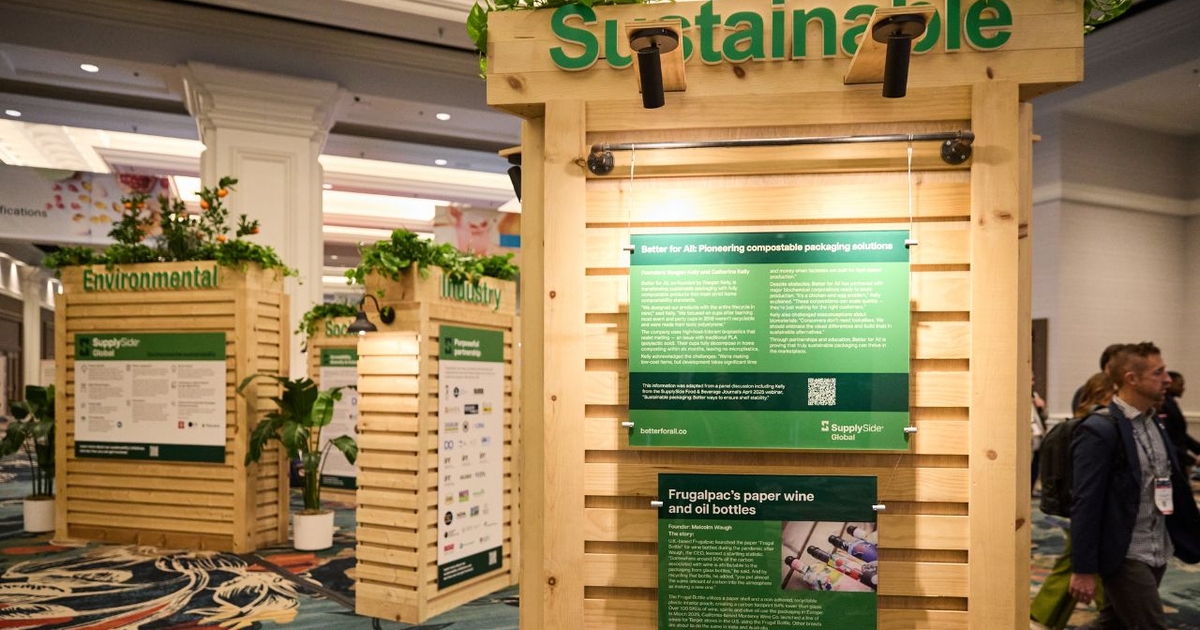
At SupplySide Global 2024, the packaging conversation was loud and clear. As I reported at the time, research commissioned by climate-conscious vitamin brand Terraseed revealed that the supplement industry produces 2.3 billion plastic bottles each year, with less than 30% being recycled and 3% ending up in the ocean. Amid rising consumer expectations and feedback, the message was clear: sustainable packaging isn’t just a pipe dream. It needs to be on everyone’s goal list.
The big question, of course, is whether consumers would actually pay more for sustainability. The answer? Yes. Terraseed’s surveys found that supplement shoppers were willing to pay up to 13% more for eco-conscious packaging, which is enough to offset costs for brands willing to take the leap.
One year later, the conversation around packaging was quieter, but the momentum hadn’t stopped. A major brand made a high-profile switch, and experts say the next breakthroughs may come from upcycled materials and a new generation of packaging innovators.
Here’s what’s popping in packaging.
A big brand takes a big step
Meaningful progress often starts when a leader who’s been successful doing things the old way goes out on a limb. In the past year, one such move came from CTI Packaging and Vital Proteins.
CTI – a veteran vitamin co‑packer with 25 years of experience and a familiar face at SupplySide – introduced a new offering this year: Boardio Packaging, an ~80% paperboard, recyclable bottle system for food, beverage and supplement brands.
“This is our first year with this machine, so now we can say, ‘We have this option for you as well, if you’re willing to go the sustainable route,’” CEO Jerry Thompson said.
Boardio features an internal moisture barrier and is recyclable in standard paper/board waste streams. But its biggest selling point? Weight and shipping‑efficiency gains.
“For traditional bottles, around 1,000 will fit on a pallet. In contrast, 40,000 of these will fit,” Thompson said. “For the top and bottom lid stock, 180,000 fit on a pallet. So your trucking and transportation costs go way down, and it’s a 91% carbon‑footprint reduction.”
Thompson reported that big and small supplement brands were asking tough questions this year about every aspect of the new packaging, from the internal barrier to how it gets recycled. But their credibility got a major boost when Nestle-owned Vital Proteins switched its unflavored collagen peptides to Boardio just after SupplySide 2024. Thompson said the packaging system works across categories, including children’s multivitamins and gummies.
“We haven’t found anything that it’s not good for,” he said.
Will the next major packaging innovation be upcycled?
Packaging change in the supplement world doesn’t just come from materials. It comes from mindset combined with training. And according to R&D chef and self-described packaging nerd Jill Houk, a new generation of R&D professionals is bringing that shift.
“I’ve been in food for 20 years, and only in the last 10 have I met people who came out of college looking to tackle this,” she said. “This is why they went to school, this is what they studied.They’re now coming into those management roles in R&D where, especially in packaging, they can start to actually create change and sustainable change.”
One of the big targets? Upcycled and compostable packaging. Houk noted that emerging materials such as plant fibers, and even more novel inputs like lobster shells, have shown big promise. But the cost remains a major barrier, particularly with supplements.
“The price point is so high right now,” she said. “So if we’re looking to come up with a sustainable packaging solution, it’s likely going to be based on an upcycled ingredient.”
For Houk, that means going back to the parts of food systems we typically discard.
“Can something be made out of the inedible parts of cauliflower? Sprout leaves? Stock from vegetables?” she asked. “Things we don’t typically consume that would also be compostable?”
With packaging demands in supplements often tied to extreme shipping and shelf conditions, the stakes for breakthrough materials are high. But Houk is optimistic that the will and the talent to think outside the bottle are already here.