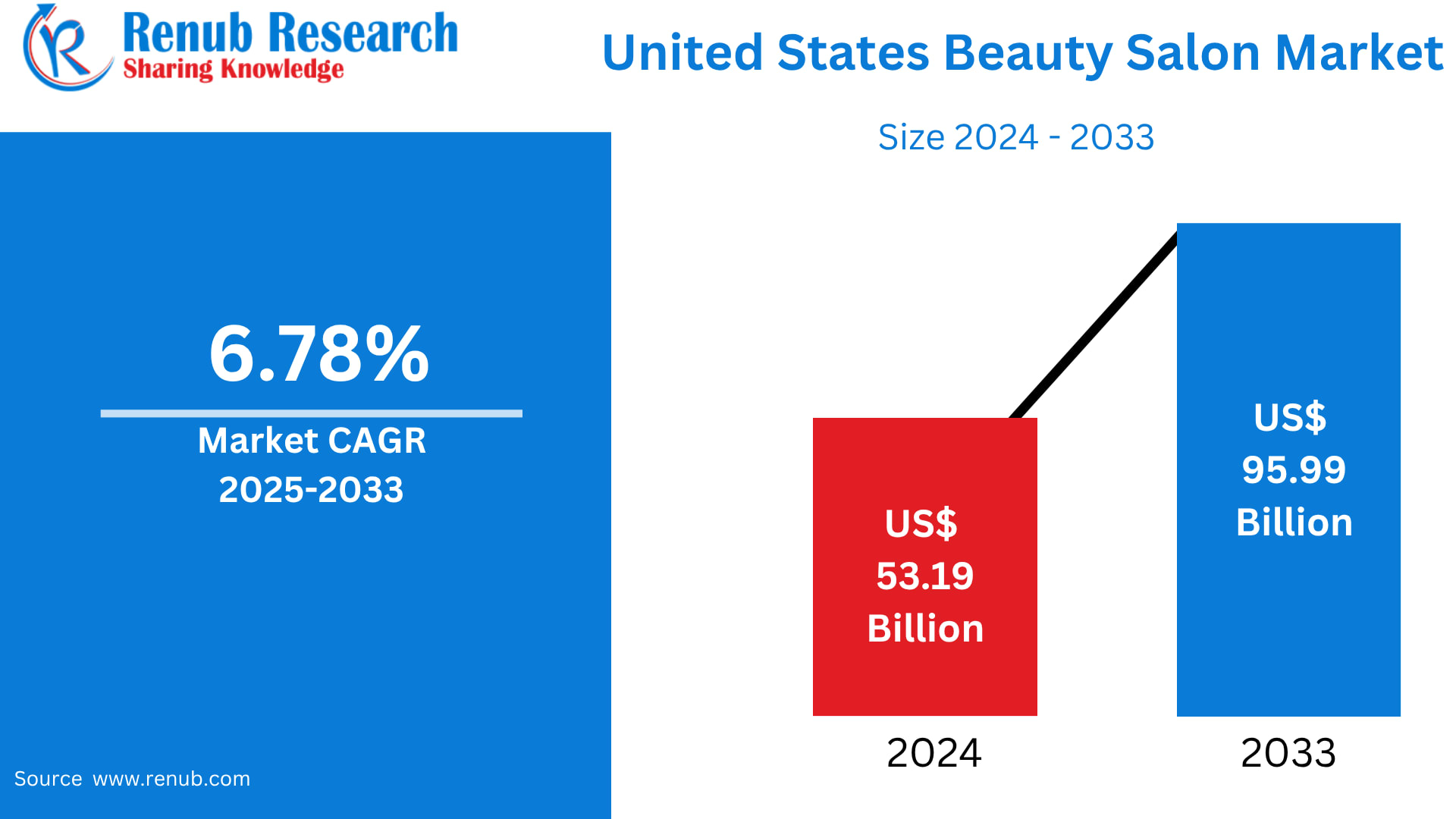
The United States Beauty Salon Market is undergoing a major transformation, blending luxury experiences with innovative technology and evolving consumer expectations. According to Renub Research, the market is projected to reach US$ 95.99 billion by 2033, rising significantly from US$ 53.19 billion in 2024, with a CAGR of 6.78% between 2025 and 2033. This impressive growth reflects rising disposable incomes, the influence of social media, technological advancements, and shifting perceptions of beauty and self-care across the U.S.
Today’s salons are no longer limited to haircuts or simple beauty treatments. They have evolved into wellness-oriented hubs offering chemical peels, microdermabrasion, high-tech facials, hair restoration therapies, and even non-invasive aesthetic procedures. From organic skin rituals to high-performance anti-aging services, the beauty salon has become a go-to destination for confidence, relaxation, and holistic self-enhancement.
United States Beauty Salon Industry Overview
In the U.S., a beauty salon is far more than a grooming venue—it’s an integral part of the lifestyle economy. These establishments offer a wide spectrum of beauty and personal care services, such as:
Haircutting, coloring, and styling
Skincare services including facials, exfoliation, acne treatments, and anti-aging solutions
Nail care such as manicures, pedicures, and nail extensions
Makeup and cosmetic application
Spa services including massages, aromatherapy, and body treatments
Advanced aesthetic services such as laser skin treatments and chemical peels
Modern salons blend luxury experiences with affordability, creating options for all demographics—women, men, and increasingly, teenagers. As clients seek spaces for rejuvenation, pampering, and self-expression, salons play a vital role in personal well-being, social identity, and modern self-care culture.
Several market drivers are fueling the rapid expansion of the U.S. beauty salon industry, including:
Higher spending on personal grooming
Increased awareness of appearance and self-presentation
Social media and influencer-driven beauty trends
Eco-conscious consumer preferences
Growth of men’s grooming
Demand for anti-aging and advanced skincare services
Together, these forces are shaping one of the fastest-growing segments in the U.S. personal care industry.
Growth Drivers for the United States Beauty Salon Market
1. Rising Disposable Income
One of the strongest contributors to the U.S. beauty salon market’s growth is the steady rise in disposable income. When consumers have more financial flexibility, they tend to invest in wellness and discretionary personal-care routines.
Higher income levels drive demand for premium services such as:
Custom hair coloring
Hair extensions
Aromatherapy spa sessions
Anti-aging facials
Advanced skincare treatments
Professional grooming products
This increased spending supports not only more frequent salon visits but also upgrades to higher-tier services. Wealthier consumers are particularly inclined toward personalized treatments, luxury products, and long-lasting aesthetic enhancements. This trend encourages salons to offer tiered service models, allowing them to serve diverse income groups—from budget-friendly walk-ins to exclusive VIP clientele.
As disposable incomes continue to rise nationwide, salons benefit from growing customer loyalty, increased transaction values, and improved lifetime customer engagement.
2. Increased Focus on Personal Grooming
The shift in grooming habits among American consumers is another major factor boosting the beauty salon market. Grooming today is seen not just as routine maintenance but as a vital component of:
Self-esteem
Professional image
Personal branding
Wellness and emotional health
Millennials and Gen Z, in particular, are leading the evolution of beauty culture. This audience embraces experimentation—new hairstyles, nail art, skincare rituals, and trending looks inspired by influencers. They visit salons not just for services but for transformations, self-expression, and confidence.
Rising awareness around hygiene, skin protection, and wellness is also driving the demand for professional grooming environments. Specialized treatments such as chemical peels, scalp health programs, and wellness facials fulfill the growing desire for holistic beauty experiences.
With self-care taking center stage in modern lifestyles, salons enjoy a steady increase in footfall and subscription-based loyalty programs.
3. Social Media & Celebrity Influence
The influence of social media—and the celebrities who shape beauty trends—is more powerful than ever. Instagram, TikTok, and YouTube serve as real-time hubs for beauty experimentation. Whether it’s a trending haircut, a viral makeup tutorial, or a skincare routine, consumers are increasingly turning to salons to replicate the styles they see online.
Celebrity endorsements and influencer campaigns amplify demand for professional beauty services. A single viral trend can generate nationwide interest, boosting appointments for particular hairstyles, nail art designs, or facial treatments. Salons leverage these platforms to display transformations, customer testimonials, and behind-the-scenes content, which helps boost brand visibility and attract new clients.
With digital influence continuing to shape beauty culture, social media remains one of the most dynamic growth engines for the beauty salon market.
Challenges in the United States Beauty Salon Market
1. High Competition
The U.S. beauty salon market is extremely fragmented, with thousands of small independent salons competing alongside national chains and niche specialty studios. In this saturated environment, standing out is difficult.
Large franchises attract customers with:
Standardized services
Aggressive marketing
Loyalty programs
Multiple convenient locations
Meanwhile, small salons rely heavily on local reputation, personal referrals, and community relationships. Newer competitors such as mobile beauty services, home-based professionals, and app-based salon platforms also intensify competition.
The key to staying relevant in such a crowded marketplace is innovation—unique service menus, exceptional customer experience, and strong brand identity.
2. Rising Operational Costs
Salon owners across the U.S. face rising expenses, especially in high-rent urban markets. Key cost pressures include:
Rent and utilities
Licensing and insurance
High-quality beauty products
Labor, salaries, and commissions
Technology investments
Hygiene and post-COVID safety protocols
Consumers expect modern, safe, and comfortable environments, which requires continuous investment in new equipment, interiors, training, and technology. These rising operational costs often reduce profit margins, making it challenging for small and mid-sized salons to maintain financial stability.
To overcome this, many salons are adopting subscription packages, bundled services, retail partnerships, and dynamic pricing strategies.
State-Level Market Breakdown
California Beauty Salon Market
California leads the U.S. beauty salon industry thanks to its diverse population, high income levels, and strong entertainment and fashion cultures. Cities like Los Angeles, San Diego, and San Francisco serve as trendsetters, driving national beauty and wellness standards.
Demand is particularly high for:
Premium skincare
High-tech anti-aging services
Organic and sustainable beauty solutions
Specialty ethnic hair care
The state’s strong emphasis on eco-friendly and cruelty-free products accelerates adoption of green salon practices. California’s multicultural population encourages salons to offer a wide range of specialized services tailored to different hair types and skin tones.
Texas Beauty Salon Market
Texas is one of the fastest-growing beauty salon markets due to its expanding urban hubs—Houston, Austin, Dallas, and San Antonio. Higher disposable incomes, rising urbanization, and a large, youthful population create strong demand for grooming and aesthetic services.
Men’s grooming is booming in Texas, with increasing popularity of:
Beard maintenance
Male facials
Scalp treatments
Luxury grooming lounges
Digital booking systems, personalized loyalty programs, and multicultural service offerings also strengthen the state’s salon industry.
New York Beauty Salon Market
New York—especially New York City—is synonymous with high fashion, premium beauty, and luxury aesthetics. The state is a hub for:
Upscale salons
Trendsetting stylists
Innovative skincare clinics
Emerging beauty technologies
Urban professionals prioritize grooming as part of their fast-paced lifestyles, leading to consistent demand. Competition in the state is intense, pushing salons to stand out with personalized services, VIP treatments, organic product lines, and boutique experiences.
Florida Beauty Salon Market
Florida’s beauty salon market benefits from its unique mix of tourists, retirees, and lifestyle-focused residents. Major cities like Miami, Tampa, and Orlando experience high demand for:
Haircare and hairstyling
Nail extensions
Spa therapies
Anti-aging facial treatments
The state’s warm climate fuels continual demand for skincare, sun protection treatments, and hydration therapies. Florida’s vibrant tourism sector also boosts short-term luxury service consumption, particularly in resort cities.
Recent Developments in the U.S. Beauty Salon Market
July 2022: U.S. nail experts Carrie and Lauren Dunne relaunched their Vanish Lane Waterless Nail Salon in Washington, D.C., highlighting toxin-free, eco-friendly beauty services. Their emphasis on waterless treatments and safe formulations reflects the growing shift toward sustainability in the beauty salon market.
Market Segmentation
By Service Type
Hair Care
Skin Care
Nail Care
Others
By End User
Men
Women
Market Breakup by States (29 Viewpoints)
California, Texas, New York, Florida, Illinois, Pennsylvania, Ohio, Georgia, New Jersey, Washington, North Carolina, Massachusetts, Virginia, Michigan, Maryland, Colorado, Tennessee, Indiana, Arizona, Minnesota, Wisconsin, Missouri, Connecticut, South Carolina, Oregon, Louisiana, Alabama, Kentucky, Rest of United States
Key Player Analysis
Major companies shaping the U.S. beauty salon industry include:
Great Clips Inc.
Regis Corporation
Dessange International
Ulta Beauty Inc.
The Lounge Hair Salon
Drybar LLC
Skin Rich
Seva Beauty
These brands leverage strategic expansions, product innovations, customer experience enhancements, and advanced service offerings to maintain dominance in the expanding market.
⭐ Final Thoughts
The United States Beauty Salon Market is at the forefront of the global beauty revolution. With evolving beauty standards, rising focus on self-care, and increasing consumer spending, the industry is primed for long-term growth. Technology, sustainability, men’s grooming, and wellness-driven services will define the next decade of salon innovation.
As personalization becomes the heart of beauty culture, U.S. salons—big and small—have unparalleled opportunities to thrive, transform, and redefine self-care for millions.