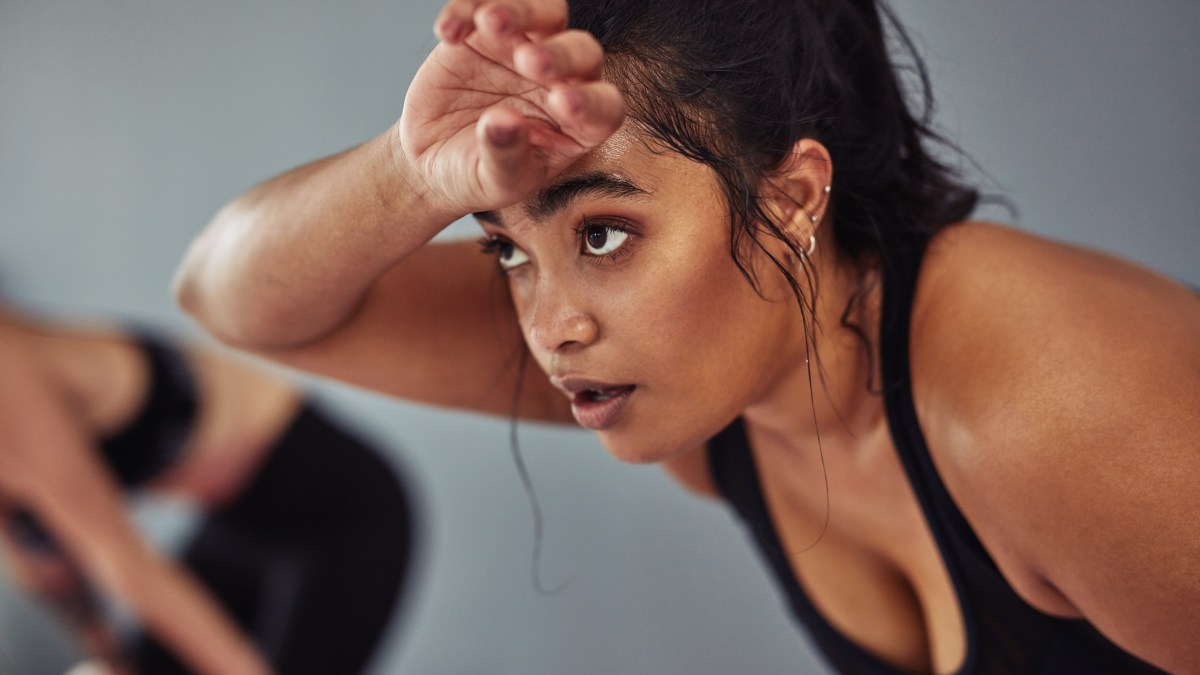
It’s certainly not ideal — but if you want to try sticking to your exercise routine in December, chances are at some point you’re going to be hitting the gym with a bit of a sore head. If that sore head is in the lavatory, cancel that HIIT class and rehydrate. Otherwise, there are ways to navigate the gym after you’ve overindulged.
1. Take it easy
Be realistic: the best way to get the beneficial effects of exercise — like improved mood and circulation — is to opt for something low-intensity.
“Your body is fatigued and driving all your energy stores to recover from the night before,” says Anya Lahiri, a trainer at Barry’s Bootcamp. “Your co-ordination will be impaired, so it’s probably best to avoid a crazy-heavy weight session or an intense run. A light walk or jog in the fresh air is a great way to clear your head and get yourself moving. Or you could try a gentle stretch session to calm your cortisol levels and aid good sleep and recovery.”
• The three best treadmill workouts to try in under 40 minutes
2. Don’t sweat it out
There’s a common misconception that you can “sweat out” last night’s grog. But, says the personal trainer Luke Worthington, that can just make things worse. “Alcohol is metabolised by the liver at a fixed rate of roughly one unit per hour, and sweating does not accelerate that process,” he explains. “It simply worsens dehydration and increases the vulnerability of spinal and connective tissues.” So while it might improve your mood to get out and do something “good”, scientifically speaking, it’s not going to get rid of your headache faster if you’re sweating buckets.
3. Focus on rehydration
Downing some water is the first thing you should focus on. It’s also a good idea to take an electrolyte to help replace lost sodium, potassium and magnesium. Worthington suggests eating healthy fats before working out. “Fats support liver function and help regulate hormones involved in recovery,” he says. “A light meal such as eggs on toast with avocado or nut butter provides a good balance of carbs, fats and protein.” Continue rehydrating afterwards and focus on foods such as bread, rice and pasta, which replenish glycogen and support liver recovery.
• Five rules for a quick recovery after exercise
4. Avoid heavy weights
Dehydration can also heighten the risk of injury, so avoid increasing any load you can comfortably lift or attempting anything new on a bleary-eyed Saturday morning. “About 70 to 90 per cent of each intervertebral disc is water,” Worthington says. “These discs act as hydraulic shock absorbers, distributing load evenly through the spine. When the body is dehydrated, the discs lose volume and elasticity, which makes them more vulnerable to stress and at greater risk of injury.”
5. Keep protein shakes simple
Protein powders might be a bit tough on your gut on a hangover: if you want one, make it with water or plant milk to make it easier to digest. “Smoothies can also work well when appetite is low, as they provide hydration and nutrients in a more tolerable form,” Worthington says. “Combining fruit, protein powder, and a source of fat such as flax or almond butter is a good option.”
6. Know when to give up
If you feel truly dreadful or slept for less than five hours, focus on recovering instead. If you really overdid it, working out can make you feel even more drunk. “Increased circulation while blood alcohol levels remain elevated can recirculate alcohol that has not yet been metabolised, making you feel light-headed or mildly intoxicated again,” Worthington says. In other words, hit the sofa — not the gym.
• Why your workouts aren’t working: six fitness mistakes to avoid