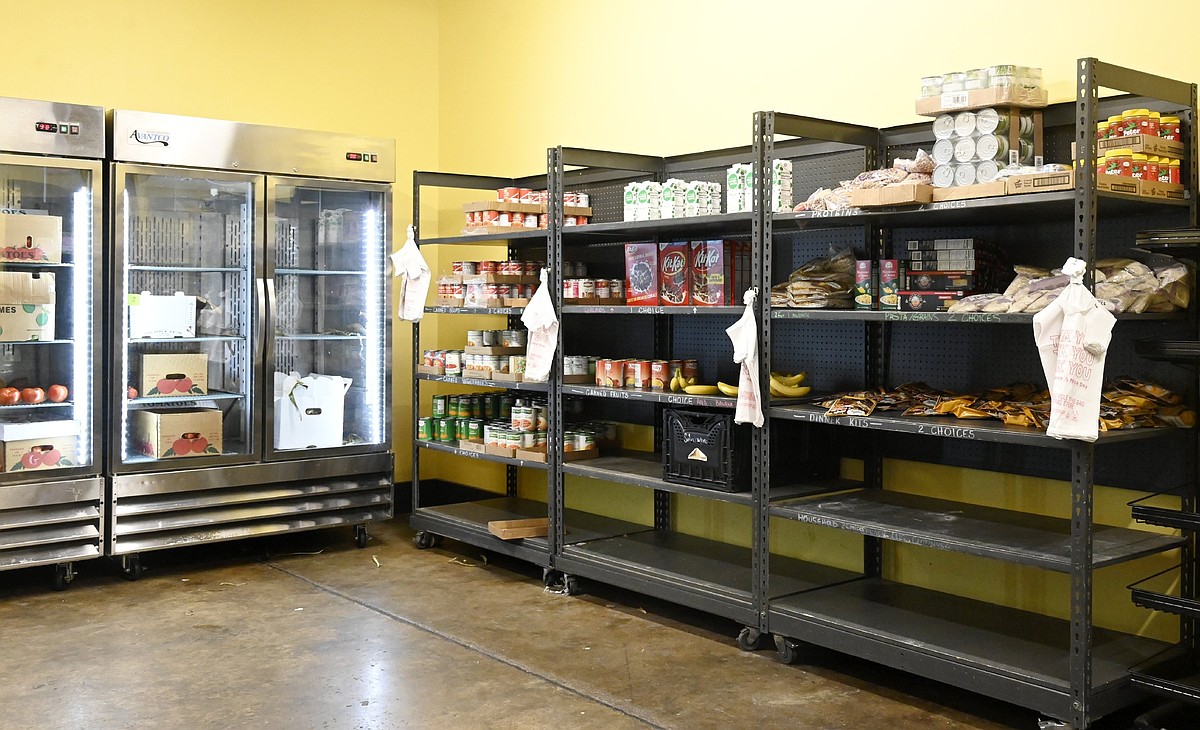
During the longest government shutdown in American history, which saw hundreds of thousands of Tennesseans miss nutrition assistance payments, Chattanooga area organizations and churches coordinated food drives, stocked food pantries and directed volunteers and donations in response to a major spike in food aid need.
“It does feel like our social sector kind of knows what to do now,” said Abby Garrison vice president of community investment at United Way of Greater Chattanooga. The non-profit similarly marshaled resources during the COVID-19 pandemic. “We’ve had enough of these situations where people are in need or there’s a lapse in benefits or a question about how things are going to function.”
On Nov. 1, after a month of the government shutdown, Supplemental Nutrition Assistance Program benefits stopped flowing. The administration of President Donald Trump said the program did not have enough cash on hand to pay for the program that 42 million Americans rely on to put food on the table.
In Tennessee, 690,000 rely on the program, which distributes an average of $190 to qualifying participants each month. Some 34,000 Hamilton County residents receive the monthly benefit.
LOOMING DEADLINE
About a week before the benefits lapsed, Tennessee Gov. Bill Lee’s office said he would not authorize the state to use reserve funding to cover the federal program’s shortfall.
“It was kind of wild. It was basically like the week of Halloween when that deadline started looming,” Garrison said by phone. “I think the governor said something officially that week if I remember correctly around the lines of like, ‘The state’s not going to step in. This is a federal problem,’ that people seem to start paying attention and thinking, ‘Oh gosh, this really might happen’.”
As news of these developments broke in the days ahead of the lapse, 211 calls spiked from Chattanooga area residents seeking help to find food. That week, some 670 calls reached the help line. A similar number called the following week, according to data from United Way, which administers the service.
The last week of the shutdown, Nov. 10-14, people made 719 calls to 211 to ask about food, the data show.
Northside Neighborhood House, which worked with United Way through the lapse, received triple the number of calls from community members inquiring about food during that time, Jamison Shimmel, that organization’s chief stability office, said by phone.
ORGANIZED RESPONSE
The call volume in the lead-up to the lapse was confirmation for Garrison and United Way that the spike in need was coming.
On Oct. 28, United Way hosted a video call for community organizations, churches and food pantries to discuss the impending lapse. More than 100 people logged on, crashing the conference because the number exceeded the organization’s account limit, Garrison said at the time.
While need increased, so did the number of offers from donors and volunteers. Garrison said they directed most donations directly to the Chattanooga Area Food Bank and paired volunteers with church groups stocking pantries, community fridges and food boxes.
United Way’s volunteer coordinator, Garrison said, did some “behind-the-scenes matchmaking” to bring a girls’ charter school and a church group to restock and distribute boxes from the school’s depleted pantry.
One donor, who Garrison said wanted to remain anonymous, came to United Way offering a $50,000 gift. Combined with $100,000 from its own rainy day fund, the organization distributed those funds to 14 organizations that were providing food aid in the community.
“We had sent an email out basically just giving an update on the SNAP situation and that individual called our CEO and was like, ‘What can I do to help? Let me help you get some money out,’” Garrison said.
(READ MORE: Chattanooga residents turn to food pantries as nutrition assistance lapses)
The Northside Neighborhood House, which received some of that money, combined it with other funding and provided 100 households with food ahead of the Thanksgiving holiday, Shimmel said.
In addition to typical food support items, the organization included a gallon of milk, a pound of butter, a dozen eggs, bread and fresh produce, Shimmel said.
“It was a very emotional food distribution,” he said. “There were people that, I mean, just moved to tears. People are just feeling so defeated right now and when something as basic and necessary as food is stripped away, it really throws people into kind of a head spin, a tailspin or whatever. … There was a lot of fear, a lot of just heightened anxiety. So, when the food was able to be distributed, you just saw they could breathe. It was like, ‘OK, we’re going to make it.’”
RIPPLE OF NEED
United Way also distributes one-time direct cash assistance to help Chattanoogans who have fallen on hard times to afford basic expenses like rent, utilities or food. That effort is supported by the Ochs Community Fund, previously known as the Neediest Cases, for which the Chattanooga Times Free Press raises money.
Garrison said that by the time the shutdown caused the lapse in federal food aid, the community fund had already been depleted. In order to assist residents during that time, United Way drew on resources from its EPB/TVA fund, Chattanooga Gas and general donors to support 63 families with $38,830.
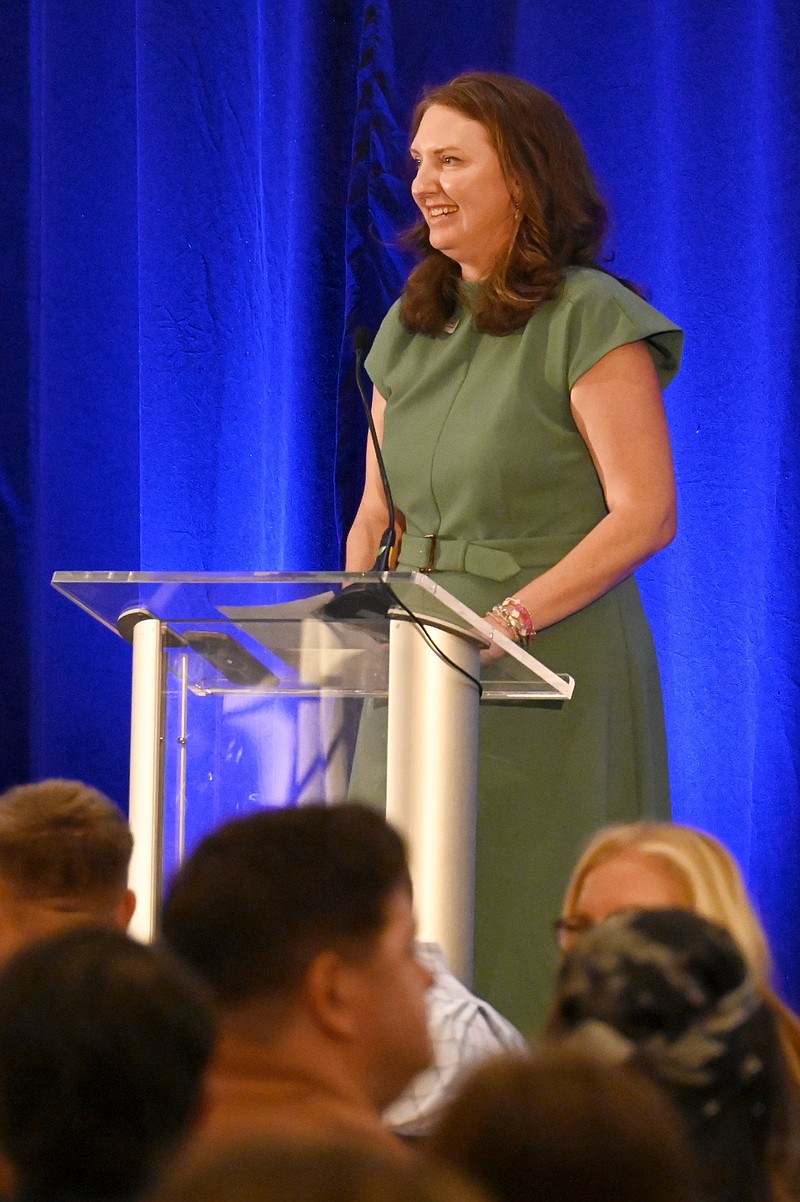 Staff file photo / United Way of Chattanooga Vice President of Community Investments Abby Garrison speaks during a summit. The organization helped coordinate the region’s response to a lapse in food aid funding during the federal government shutdown.
(READ MORE: After a single mother fell on hard times, Ochs Community Fund put family in housing)
That money was distributed between the last week of October and the first three weeks of November, Garrison said.
Garrison said it’s hard to draw a direct link between the lapse in food aid and those specific families. But financial need isn’t static, both Garrison and Shimmel said. Loss of resources or aid for one essential can throw a family’s budget off balance.
“You get this snowball effect where it’s not just the food that’s impacted,” Shimmel said. “It’s then their rent, their utilities, if they have to make a choice about a prescription medication, if they’re going to get that or not.”
The Ochs Community Fund, launched by Adolph Ochs in 1914 when he was publisher of The Chattanooga Times, receives donations from Chattanooga Times Free Press readers. That money is then distributed by the United Way as one-time grants to people and families in need. Readers donated more than $50,000 during the 2024 holiday season during the annual giving campaign.
Contact Report for America corps member Jules Feeney at jfeeney@timesfreepress.com or 423-757-6431.

![[National Cancer Center]](https://www.vitaminrush.com/wp-content/uploads/2026/04/1775630735_news-p.v1.20260408.3a934993e5d245aaa6944c90f88b1a24_P1.png "The National Cancer Center announced on the 8th that it will expand its nutrition support program “C..")