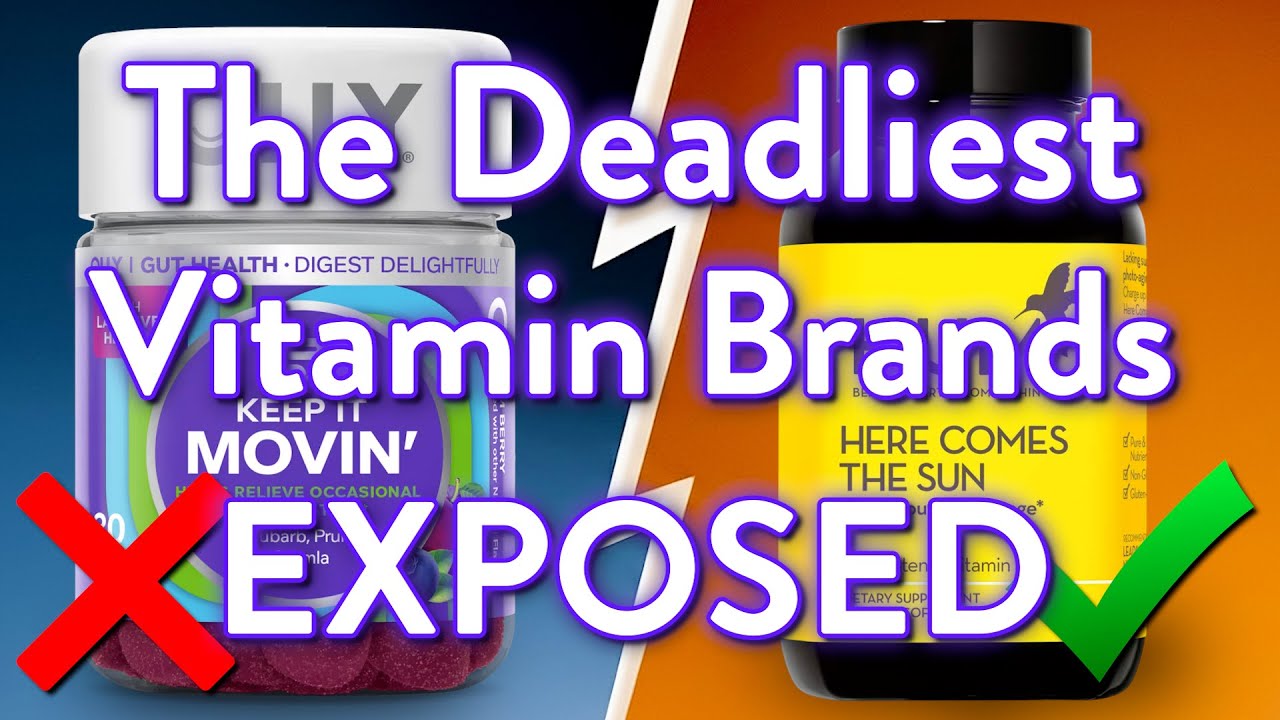
9 Vitamin Brands To AVOID (And The 2 That Are Worth It)
Vitamins seem like the safest bet for your health, little pills promising energy, immunity, and longevity. But the bottle you trust could be packed with contaminants, false promises, and ingredients that clash with your medications. From lead laced tablets to capsules filled with sawdust instead of nutrients, some brands are quietly betraying your health. Today we’re exposing nine vitamin brands you should avoid at all costs, and the two that won’t betray your trust.
📺 Watch the entire video for more details!
About Consumed
🎥 Videos about all kinds of food issues, from fake ingredients to shocking fast food secrets
🎨 Written, voiced and produced by Consumed
🔔 Subscribe now for more all kinds of food issues, from hidden additives to fast food breakdowns
Watch More from Consumed
🟢 https://www.youtube.com/@ConsumedFood
💼 Business Inquiries and Contact
• For business inquiries, copyright matters or other inquiries please contact us at: consumed.yt@gmail.com
❓ Copyright Questions
• If you have any copyright questions or issues you can contact us at: consumed.yt@gmail.com
⚠️ Copyright Disclaimers
• We use images and content in accordance with the YouTube Fair Use copyright guidelines
• Section 107 of the U.S. Copyright Act states:
“Notwithstanding the provisions of sections 106 and 106A, the fair use of a copyrighted work, including such use by reproduction in copies or phonorecords or by any other means specified by that section, for purposes such as criticism, comment, news reporting, teaching (including multiple copies for classroom use), scholarship, or research, is not an infringement of copyright.”
• This video could contain certain copyrighted video clips, pictures, or photographs that were not specifically authorized to be used by the copyright holder(s), but which we believe in good faith are protected by federal law and the fair use doctrine for one or more of the reasons noted above.
Vitamins seem like the safest bet for your health. Little pills promising energy, immunity, and longevity. But the bottle you trust could be packed with contaminants, false promises, and ingredients that clash with your medications. From lead laced tablets to capsules filled with sawdust instead of nutrients, some brands are quietly betraying your health. Today, we’re exposing nine vitamin brands you should avoid at all costs, and the two that won’t betray your trust. Coming in at number nine, we’ve got Nature Made. For decades, this brand sat on pharmacy shelves with a reputation for reliability and doctor recommendations. Seniors trusted the label that screamed pharmacist preferred and quality guaranteed. The bright orange bottles lined every aisle at CVS, Walgreens, and Walmart. Practically glowing with promises of purity and sciencebacked formulas. Each bottle felt solid in your hands, professional medical grade. The tablets inside looked clean, perfectly round with that smooth pharmaceutical coating. But independent lab testing by Consumer Lab revealed something disturbing. Several Nature-made products contained lead levels exceeding California’s Proposition 65 safety standards. We’re talking about lead, the same heavy metal that poisoned children in Flint, Michigan, now hiding in vitamins marketed to seniors. Lead accumulation in seniors can worsen memory loss, elevate blood pressure to dangerous levels, and interfere with bone health medications like bisphosphinates that many seniors depend on. The pills looked clean, smooth, and professional. They dissolved on your tongue with that familiar, slightly chalky vitamin taste, but what you swallowed could be silently poisoning your system, accumulating in your bones where lead loves to hide. Seniors taking daily multivitamins believed they were protecting themselves, investing in their health with every morning ritual, only to learn they were ingesting a heavy metal linked to cognitive decline and accelerated dementia. One 72-year-old woman in Arizona reported worsening confusion and chronic fatigue after months of taking NatureMade daily. She couldn’t remember her grandchildren’s names anymore. Her doctor eventually tested her blood and found elevated lead levels three times higher than safe thresholds. She had trusted that orange bottle sitting beside her morning coffee for three straight years. The betrayal runs deep. This is a brand that positioned itself as the safe, responsible choice, the one pharmacists recommended to their own families. Yet, it failed to protect the very people who needed it most. Nature Made built a multi-million dollar empire on trust, doctor endorsements, and pharmacy shelf dominance. But heavy metal contamination shattered that foundation like glass. You reached for wellness and vitality, but got poison and cognitive decline instead. At number eight, we have Sententrum. Centrum markets itself as the number one doctor recommended multivitamin plastered across television commercials with images of active healthy seniors hiking mountains, biking through parks, and playing energetically with grandchildren. The packaging boasts oz complete nutrition and clinically proven benefits. The shiny silver box feels premium in your hands, almost medical in its presentation with embossed lettering and that satisfying metallic finish. It looks expensive, scientific, trustworthy. But here’s what they don’t tell you in those bright commercials. Multiple batches of Centrum Silver were found to contain synthetic additives and binders that can trigger severe digestive distress in older adults whose stomachs are already sensitive. Seniors with conditions like gastritis or irritable bowel syndrome reported intense nausea, painful cramping, and explosive diarrhea after taking these vitamins daily. One retired nurse from Tampa, Florida, described the experience as feeling poisoned, her stomach churning violently within an hour of swallowing the tablet. waves of nausea so intense she couldn’t leave the bathroom. She had trusted Sententrum because her own doctor recommended it during her annual checkup. Even more alarming, independent testing found that some tablets didn’t dissolve properly in the digestive system at all. They passed through the body completely intact, expelled hole in the stool like a small pebble. Seniors reported finding the silver tablet sitting at the bottom of the toilet, completely unchanged. You paid $20 for health and longevity, but all you got was an expensive placebo coated in artificial dyes and titanium dioxide. According to a study published in the Journal of Pharmacy and Pharmarmacology, nearly 18% of multivitamin tablets fail standard disintegration tests, meaning they never break down enough to release their nutrient contents into the bloodstream. For seniors managing critical heart medications like warfin or blood thinners like eloquis, the undisclosed fillers and sententrum tablets can interfere with drug absorption rates. The synthetic binders like croc carmelo sodium and micro crystalline cellulose used to hold the pill together can slow down or completely block the absorption of prescriptions you need to stay alive. Turning your daily health ritual into a dangerous gamble with your cardiovascular system. The shiny silver packaging hides a formula that prioritizes shelf life, cost efficiency, and profit margins over your actual life and health. Now, at number seven, One a Day. The name itself is a promise of simplicity. Just one pill once a day, and you’re covered for all your nutritional needs. One a Day built its empire on convenience and trust, targeting busy seniors who want simplicity in their supplement routine without juggling five different bottles. The packaging is clean, straightforward, no nonsense. red, white, and blue colors that feel patriotic and American. It feels reliable, like a brand that understands your needs. But FDA warning letters revealed that the company failed to meet good manufacturing practices at certain facilities with serious lapses in quality control and contamination protocols that would make your skin crawl. Translation: batches were being produced in environments where crosscontamination with allergens, heavy metals, and microbial agents like bacteria and mold was not just possible, but likely. Seniors with compromised immune systems from chemotherapy, diabetes, or autoimmune diseases are especially vulnerable to these invisible threats. A contaminated vitamin meant to boost your immune health could instead trigger life-threatening infections or severe allergic reactions requiring hospitalization. Consumer complaints poured in by the hundreds, describing capsules that smelled rancid and chemical, like spoiled cooking oil left too long in a cabinet or nail polish remover. tablets that crumbled into chalky dust before you could even get them to your mouth, disintegrating between your fingers. Bottles that arrived already expired despite being newly purchased from major retailers. One man in Cleveland, Ohio, opened a fresh bottle from Walmart and immediately noticed the capsules stuck together in clumps, covered in a sticky yellowish residue that smelled foul and medicinal. When he contacted customer service, he was told it was just normal moisture and to keep taking them anyway. It wasn’t normal. Independent lab analysis later found active microbial growth in samples from the same production batch, including mold spores that can cause respiratory infections in seniors. The convenience you paid for came with hidden risks no senior should ever have to swallow. One a day promised simplicity and wellness, but delivered contamination and potential hospitalization instead. Isn’t it strange how billion-dollar vitamin companies keep having contamination issues and manufacturing violations, yet their products are still the first thing doctors recommend to seniors? If this helps you stay safer at the store, hit subscribe. It’s free and it means you’ll never miss these exposees. Coming in at number six, Vitafusion gummy vitamins. Gummy vitamins seem fun, easy to chew, and gentle on the stomach. Perfect for seniors who struggle with large pills or have swallowing difficulties from stroke or throat conditions. Vitafusion capitalized on this vulnerability, branding their gummies as delicious, effective, and convenient for people of all ages. The bright, colorful packaging looks cheerful, almost childlike, covered in images of smiling raspberries and oranges. The gummies themselves taste like candy, sweet and fruity with a pleasant chewy texture that sticks slightly to your teeth. They smell like artificial fruit punch. But the sugary coating and candy-like experience hide a disturbing truth that could be sabotaging your health. Independent lab analysis conducted by Consumer Lab found that many Vitafusion gummy products contained far less of the advertised nutrients than claimed on the front label. In some shocking cases, vitamin D levels were as low as 30% of what was boldly promised on the bottle. 30%. A senior taking two gummies daily, carefully following the directions, believing they were getting 1,000 international units of vitamin D for bone health, was actually only receiving 300 units. That’s a 70% shortfall for seniors relying on vitamin D supplementation to prevent devastating bone fractures and dangerous falls. This isn’t just disappointing or frustrating. It’s legitimately dangerous and potentially lifealtering. Brittle bones, severely weakened immunity, and dramatically increased fall risk are the real consequences of trusting a brand that prioritized candy-like taste and mass market appeal over actual nutritional integrity. One 78-year-old woman from Portland, Oregon, fractured her hip after a minor stumble in her kitchen, just catching her foot on the corner of a rug. Her doctor was completely baffled because she had been taking vitamin D gummy supplements religiously for two solid years, never missing a day. Blood tests revealed she was severely vitamin D deficient despite her daily supplementation routine. Her bones had been starving and deteriorating the entire time while she thought she was protecting them. She spent 6 weeks in rehabilitation learning to walk again. Worse still, the sugar content in these gummies can dangerously spike blood glucose levels, creating a nightmare scenario for diabetic seniors managing insulin resistance. Each individual gummy contains 2 to three grams of added sugar. Taking multiple gummies daily as directed can add up to significant blood sugar disruption and insulin spikes. Each chewy bite feels harmless and tastes delicious, but you’re essentially eating expensive candy while your body desperately starves for the actual nutrients you thought you were getting. At number five, we have GNC Megamen 50 Plus. GNC has long positioned itself as the ultimate destination for serious supplementation. And Mega Men 50+ was specifically marketed for aging men concerned about declining energy, prostate health, and cardiovascular function. The label promised targeted nutrition with clinically studied ingredients, and a proprietary blend scientifically designed for senior men. The black and yellow packaging looks aggressive and masculine, like a product designed for athletes or bodybuilders, not your average grandfather. It feels powerful just holding the bottle. The capsules inside are huge, dark, and smells strongly of herbs and vitamins. But here’s what GNC didn’t advertise in their glossy magazine ads. Lawsuits and government investigations revealed that some GNC supplements contained unlisted herbal fillers and dangerous stimulants that could interact catastrophically with blood pressure medications and heart drugs. Seniors taking beta blockers like metoprolol or ACE inhibitors like lysinopril reported frightening chest pain, severe dizziness, and irregular heartbeat episodes after starting Megamen 50 plus. The fine print on the back revealed caffeine-like compounds and stimulants buried deep in the proprietary blend, completely undisclosed and unregulated by any oversight body. One 65year-old man in Grand Rapids, Michigan, experienced heart palpitations so severe and sudden he thought he was having a massive heart attack. His wife called 911. Paramedics found his heart rate had spiked dangerously to 130 beats per minute. He had been taking Mega Men 50 Plus for only 3 weeks, just trying to boost his energy levels. Doctors in the emergency room discovered the proprietary blend contained garana extract and green tea extract, both potent sources of caffeine that were never clearly labeled or disclosed. For seniors managing hypertension, recovering from cardiac events like heart attacks or strokes, or taking medications for arhythmia, these hidden stimulants are literal ticking time bombs in your medicine cabinet. According to a damning report by the New York Attorney General’s office in 2015, several GNC products were found to contain ingredients not listed anywhere on the label. And shockingly, some didn’t contain the herbs they prominently claimed at all. DNA testing revealed cheap fillers like powdered rice, soybeans, and even house plants instead of the promised ginko, baloba, and jinseng. The bold, masculine branding promised strength, vitality, and renewed youth. But the reality was a dangerous formula that could send you straight to the cardiac care unit. GNC sold you a gamble wrapped in pseudocience disguised as cuttingedge supplementation. Stick around, the fix is coming at the very end. Coming in at number four, Garden of Life Vitamin Code. Garden of Life built an almost cult-like following by branding itself as raw, organic, and whole foodbased. Everything a healthconscious senior could possibly want in a supplement. The vitamin C code line specifically claims to use raw nutrients extracted straight from real fruits and vegetables, completely free from synthetic additives or laboratory chemicals. The packaging is beautifully earthy, covered in images of fresh organic produce, gardens, and farm imagery. It looks pure, natural, and trustworthy, like something you’d buy at a farmers market. The bottles smell faintly like dried vegetables when you open them. It sounds absolutely perfect, doesn’t it? Except independent testing conducted by Clean Label Project, found that some Garden of Life products were significantly contaminated with heavy metals, including arsenic and cadmium, both definitively linked to kidney damage, bladder cancer, and lung cancer risk. For seniors already managing chronic kidney disease or on dialysis treatment, these toxic metals accumulate dangerously in the body and dramatically worsen organ function over time. Cadmium exposure is especially insidious and dangerous because it chemically mimics calcium in the body, depositing itself in bones and kidneys where it causes irreversible long-term damage. According to the Agency for Toxic Substances and Disease Registry, cadmium has a biological half-life of 10 to 30 years in the human body. Once it’s in, it’s staying. The earthy packaging with beautiful images of fresh produce created a powerful illusion of purity and natural health. But inside those capsules were contaminants that could slowly poison the very organs you were desperately trying to protect. Consumer reports also described bottles arriving with broken seals with safety tabs already popped open and tamper evident packaging clearly compromised during shipping. Pills that smelled absolutely foul like rotting vegetation, wet cardboard, or mildew growing in a basement. Customer service representatives went completely silent when contamination concerns were raised by worried customers, offering quick refunds, but absolutely no explanations or accountability. One woman in Eugene, Oregon, reported that her bottle of Vitamin Code Raw B complex smelled overwhelmingly like dirt and decay, almost like compost. She could smell it from across the room. She sent detailed photos to the company showing visible white and green mold growing inside the sealed bottle. She never received any response beyond an automated refund email. The organic promise, the whole food marketing, the raw nutrition claims were nothing more than clever marketing spin covering up a genuinely dangerous product. Garden of Life sold you contaminated pills wrapped in pretty pictures of vegetables and farms. You trusted the earth and the organic movement, but got poison leeched from contaminated soil instead. Most people never learn how to spot contaminated vitamins, but we’ll break it down at the very end of the video. Now at number three, Now Foods. Now Foods has been a reliable staple in health food stores for over 50 years. Marketed as affordable, highquality supplements accessible for everyone. Seniors living on fixed incomes and tight retirement budgets gravitated toward now because the price point seemed very reasonable without appearing to sacrifice quality or effectiveness. The bright, cheerful yellow labels and friendly branding gave an immediate impression of trustworthiness and transparency. The bottles were big, offering good value, and the prices were fair and competitive. It felt like a smart choice, like you were getting quality without overpaying for fancy marketing. But that affordability came at a terrible cost. FDA inspections at multiple now foods manufacturing facilities uncovered serious and repeated violations, inadequate testing procedures, failure to verify ingredient purity before production, and significant lapses in contamination prevention protocols. In one particularly disturbing case, an entire batch of now calcium supplements was found to contain lead at levels unsafe for daily consumption. Calcium is absolutely critical for seniors to prevent osteoporosis and maintain bone density as you age. But when that calcium supplement is laced with toxic lead, you’re actively trading bone health for neurological damage, cognitive decline, and dramatically increased stroke risk. Lead interferes with calcium metabolism at the cellular level, meaning it actively undermines the very health benefit you were desperately trying to achieve. The bright, cheerful yellow labels screamed value and quality. But behind the scenes at manufacturing plants, quality control was completely crumbling. Seniors taking these calcium supplements daily thought they were building stronger bones and protecting themselves from fractures. Instead, they were quietly and slowly poisoning their bodies with neurotoxic heavy metals, one innocent pill at a time. According to detailed FDA inspection reports from 2019, now foods failed to establish adequate specifications for ingredient identity, purity, strength, and composition. This means the company literally couldn’t guarantee or verify what was actually inside the bottles it was mass- prodducing and selling to trusting consumers. One retired teacher in Austin, Texas, took now calcium faithfully for 6 months before developing severe unexplained fatigue and mental confusion. Routine blood work revealed toxic lead levels far exceeding safe limits. She had trusted the yellow bottle because it seemed affordable and honest with no flashy claims or gimmicks. Now, Foods built its entire reputation on accessibility and value pricing, but sacrificed safety and quality control to keep production costs low and profits high. Coming in at number two, Nature’s Bounty. Nature’s Bounty is absolutely everywhere you shop. Grocery stores,armacies, big box retailers like Target and Costco. It’s priced just right to seem like a smart, practical choice for seniors carefully watching their budgets. The branding boldly emphasizes trusted quality since 1971 and backed by science and research. The labels are clean, green, and white, looking professional and trustworthy. It looks like a brand you can confidently trust with your health. But in 2019, a major industry investigation revealed that Nature’s Bounty was among several major brands found to contain pills laced with unlisted ingredients, including rice flour, powdered legumes, and even traces of peanut protein not disclosed anywhere on allergen warning labels. For seniors with nut allergies or legume sensitivities, these hidden undisclosed ingredients could trigger severe anaphilaxis or life-threatening allergic reactions. One woman with a documented peanut allergy ended up hospitalized in intensive care after taking Nature’s Bounty B complex vitamins. She had checked the label extremely carefully for allergen warnings before purchasing. There were none listed. Lab testing later confirmed the presence of peanut protein contamination in the capsules she had been taking. Even more troubling and disturbing, independent testing showed wildly inconsistent potency between bottles. One bottle might deliver close to the promised dose, while another bottle from the exact same production batch contained barely half the advertised amount. Seniors relying on consistent vitamin B12 supplementation for nerve health or folic acid for cardiovascular function were essentially playing Russian roulette with every single pill. Some days you got the dose you needed. Other days you got almost nothing useful. According to a detailed study published by the American Botanical Council, Nature’s Bounty GKO Ballaloba supplements contained virtually no actual GKO at all, just cheap fillers like rice powder and maltodextrin. The betrayal is absolutely profound. Nature’s Bounty presented itself as a safe, affordable option with decades of history, but delivered contamination, wildly inconsistent potency, and hidden allergens that could hospitalize vulnerable seniors. You trusted the Clean Green label because it looked natural and honest. But inside was a formula as unreliable and unpredictable as flipping a coin. Why do you think the FDA lets vitamin brands get away with heavy metal contamination yet still allows them on every shelf in America? Coming in at number one, Kirkland Signature Vitamins. Kirkland is Costco’s house brand, and for millions of seniors, it represents bulk savings and trusted value. The Kirkland Signature Vitamin line sits in warehouse-sized bottles, promising months of supply at a fraction of name brand prices. multivitamins, vitamin D, omega-3s. The red and white Kirkland label feels dependable, solid, and trustworthy. Like Costco itself, the bottles are huge, sometimes containing 300 capsules or more. It feels like an absolute no-brainer for budget conscious seniors. But independent lab testing by several organizations revealed a complete nightmare hiding behind that friendly label. Multiple Kirkland vitamin products dramatically failed to meet label claims for potency, with some containing as little as 60% of the advertised nutrients, 60%. A senior taking Kirkland vitamin D believing they were getting 2,000 international units per capsule was actually only receiving 1,200 units. That’s a 40% shortfall. Over months and years, this cumulative deficiency compounds and worsens, sabotaging bone health and immunity. Worse still, several batches tested positive for microbial contamination, including mold spores and bacterial colonies that form when products sit too long in massive warehouses or are improperly sealed during manufacturing. The giant bottles looked like incredible value, but they were also far more likely to sit opened for many months, constantly exposed to air, moisture, and temperature fluctuations. Seniors with weakened immune systems from age, cancer treatment, or chronic illness are at extreme risk from ingesting mold irrior bacteria. Those on chemotherapy, long-term steroids, or imunosuppressants face even greater danger of severe infection. What seemed like smart bulk shopping turned into a serious health hazard hiding in your pantry. One senior couple in Fort Myers, Florida, both developed severe gastrointestinal infections, requiring hospitalization after taking Kirkland multivitamins for three months straight. Stool cultures revealed bacterial contamination matching strains later found in unopened bottles from the same warehouse lot. The oversized bulk bottles create a false sense of security and value, but inside those capsules could be expired, degraded, or contaminated ingredients. For seniors taking these vitamins daily to manage deficiencies or support chronic conditions, every single dose is a dangerous gamble. The Kirkland name promised Costco quality, but delivered warehouse negligence that could cost you your health. You bought in bulk to save money, but you might be paying with your kidneys, your heart, your brain. What’s the worst vitamin brand you’ve ever tried? Drop it in the comments below. Statistics reveal the true scope of this problem. According to a 2021 study published in Gemma Network Open, nearly 23% of dietary supplements tested contained at least one undisclosed ingredient and over 15% showed contamination with heavy metals like lead, arsenic, and cadmium. For seniors over 65, who represent nearly 70% of daily supplement users in the United States, these risks are dramatically magnified. Aging bodies process toxins more slowly. Kidneys filter less efficiently and medication interactions become more likely. The vitamin industry operates with shockingly little oversight. Unlike prescription drugs, supplements don’t require FDA approval before hitting shelves. Companies self-regulate, and when contamination or mislabeling is discovered, recalls are slow and often incomplete. Seniors are left trusting labels that lie, swallowing pills that harm, and wondering why their health isn’t improving despite doing everything right. A 2023 report from the Office of Inspector General found that the FDA inspects only a fraction of supplement manufacturing facilities each year, leaving the vast majority unmonitored. This regulatory gap allows contaminated and mislabeled products to circulate freely. According to the National Institutes of Health, adverse events related to dietary supplements send an estimated 23,000 Americans to the emergency room each year. Seniors account for a disproportionate share of these cases due to polyarm pharmacy and age related vulnerabilities. Don’t go yet. The solution comes at the very end and it could change how you choose vitamins forever. Ever noticed how these brands keep recalling but never changing? The first actual safe option is Thorn Research. This brand operates under pharmaceutical-grade manufacturing standards with third-party testing for every single batch. Thorn vitamins are free from heavy metals, contaminants, and undisclosed fillers. Every bottle comes with a certificate of analysis available online, proving the exact potency and purity of that specific production run. Thorne works directly with research institutions and publishes transparent clinical studies on their formulations. For seniors managing heart conditions, kidney health or complex medication regimens, Thorne offers condition specific formulas designed by physicians. Their vitamin D is precisely dosed and tested for purity. Their B complex is methylated for better absorption in aging bodies. Their magnesium formulations avoid the cheap oxide forms that cause digestive upset. Seniors can trust consistent potency, safe ingredients, and formulations designed specifically for those managing chronic health conditions. No betrayal, just real nutrients that actually work. The bottles are simple, clinical, honest. Thorne doesn’t need flashy marketing because the quality speaks for itself. Independent testing by Consumer Lab and Labd Door consistently ranks Thornne at the top for accuracy and purity. If you’re serious about protecting your health, this is where you start. The second recommendation is Pure Encapsulations. Hypoallergenic, rigorously tested, and transparent about every ingredient. Pure Encapsulations is trusted by functional medicine doctors and seniors who need vitamins that won’t interfere with prescriptions or trigger allergic reactions. Every capsule is free from gluten, dairy, soy, artificial colors, and common allergens. The company uses only premium sourced raw materials and tests every batch multiple times before release. Pure Encapsulations products are designed for sensitive individuals, including seniors with autoimmune conditions, food intolerances, or complex medication lists. Their fish oil is molecularly distilled to remove mercury and toxins. Their multivitamins use bioavailable forms of nutrients that aging bodies can actually absorb. Every capsule delivers what the label promises. No more, no less. The white bottles are clean and minimalist, reflecting a nononsense commitment to purity. Pure Encapsulations doesn’t play games with proprietary blends or hidden ingredients. Everything is listed clearly. Independent verification confirms that what’s on the label is exactly what’s in the bottle. For seniors who have been betrayed by mainstream brands, Pure Encapsulations restores trust. Your health deserves this level of care. The vitamin A is shouldn’t be a minefield. But for too many seniors, it has become exactly that. Brands you trusted for decades have quietly betrayed that trust with contamination, false claims, and dangerous shortcuts. From lead in nature made to mold and Kirkland, from hidden allergens in Nature’s Bounty to worthless gummies from Vitafusion, the industry has failed the people who need it most. But now you know. you know which brands to avoid and which two actually deliver on their promises. Thorn research and pure encapsulations represent what the vitamin industry should be. Transparent, rigorous, and committed to your health above profit. Don’t let another contaminated pill into your body. Choose wisely, choose safely, and protect the health you’ve worked so hard to maintain. Subscribe now. And if you’re watching on TV, tap your remote so you never get blindsided