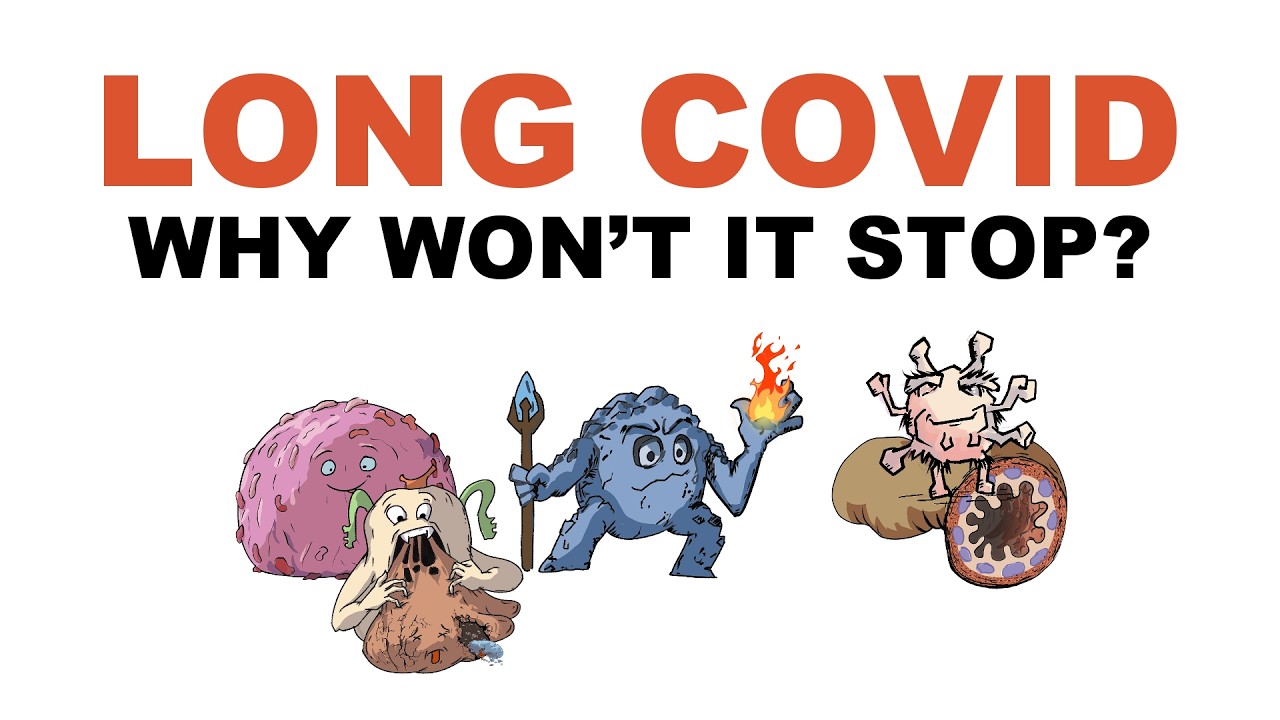
Why does Long COVID persist months—or even years—after the initial infection?
In this lecture, we explore two central mechanisms that are increasingly supported by imaging, immunology, and clinical data:
1) Persistently activated T cells
2) Ongoing viral persistence (or viral remnants)
Using data from a recent PET imaging study, we walk through how long-COVID patients show evidence of sustained immune activation, even long after acute infection has resolved. Rather than a “recovery gone wrong,” long COVID appears to represent a chronic, dysregulated immune state.
If you’re trying to understand long COVID beyond symptom lists and headlines, this lecture focuses on the underlying biology driving persistent disease.
💙 Want to support this work?
☕ Buy me a coffee: https://www.buymeacoffee.com/DrMobeenSyed
🎥 Become a patron: https://www.patreon.com/mobeensyed?fan_landing=true
💵 PayPal: https://paypal.me/mobeensyed?locale.x=en_US
📬 My Substack: https://mobeensyedmd.substack.com/
🛑 Medical Disclaimer:
This video is not intended to provide assessment, diagnosis, treatment, or medical advice; it also does not constitute provision of healthcare services. The content provided in this video is for informational and educational purposes only.
Please consult with a physician or healthcare professional regarding any medical or mental health-related diagnosis or treatment. No information in this video should ever be considered as a substitute for advice from a healthcare professional.
Courses | DrBeen
https://members.drbeen.com/courses
Tissue-based T cell activation and viral RNA persist for up to 2 years after SARS-CoV-2 infection | Science Translational Medicine
https://www.science.org/doi/10.1126/scitranslmed.adk3295#core-collateral-R40
SARS-CoV-2 reservoir in post-acute sequelae of COVID-19 (PASC) | Nature Immunology
https://www.nature.com/articles/s41590-023-01601-2
Postacute COVID-19 is Characterized by Gut Viral Antigen Persistence in Inflammatory Bowel Diseases – PMC
https://pmc.ncbi.nlm.nih.gov/articles/PMC9057012/
Long COVID and SARS-CoV-2 persistence: new answers, more questions – The Lancet Infectious Diseases
https://www.thelancet.com/journals/laninf/article/PIIS1473-3099(24)00216-0/fulltext
What Is the AIP (Autoimmune Protocol) Diet?
https://health.clevelandclinic.org/aip-diet-autoimmune-protocol-diet
So there is a study from UCSF U University of California San Francisco which showed two things that are really important for long COVID. I would suspect similar thing for viral uh for the vaccine as well. However, this study is specifically for long co. So what they found the two things were number one they found T-C cell activation in various tissues in the people who were experiencing long co and second they found was that the viral persistence was possible. They found the evidence of viral replication in some tissues of the body that they called reservoirs. And you know that since the long co uh has been happening I have been looking for studies that would actually show conclusively that there can be viral persistence and I did not see some good evidence. So this is the first time although it is a small study but still it shows for sure at least to me that there is viral persistence. So there are two important things. Why are the tea cells activated that they saw and secondly why is the virus persisting and the additional thing that I want to do today in the talk is to actually discuss how can we then help for these conditions what can we do then so this is the study uh this is the first of its kind of study they did PET scanning of the whole body and they had a pretty benign uh tracer that they injected in the body. That tracer called F Arab ARG. We’ll see that that tracer is specifically picked up by the TE-C cells. Inside the T- cell, there are enzymes that pick up that dye and they modify it. So they capture that dye within the cell. Because of that when you do a scanning of the body and you see that scan showing up wherever it shows up that is the tissue where te- cells are active and even after 200 300 days even in some cases 600 days they found that the tracer for T- cell activation and identifier for T- cell activation was active in various patients and not only that they found DSR DSRNA doublestranded RNA for SARS KV2 hundreds of days after and DSRNA’s presence is an indicator that virus is actively replicating. So you know that I’ve discussed a lot of Dr. to Bruce Peterson’s uh studies as well where we talked about spike protein remnants or spike protein itself present in monocytes and other cells and we had always uh you know when he would join me on YouTube discussion we would kind of speculate that maybe it is the monocy handing over the spike protein to the other monocy or monocy becoming immortal because it has gotten the spike protein in it. This study from the UCSF is showing that the virus is actually replicating. So this is an interesting study and they they say that we wanted to understand if there is T- cell activation. That is why we used the die which shows T- cell which is only picked up by the T- cell which is captured by the T- cell. So we could see the T- cells are active or not. So uh patients that were included were uh longcoid patients from age 26 onwards. Actually they found more younger patients having long co compared to more older patients. They compared them to six controls who had given their tissues or who they had their samples from before the pandemic. So there was no concept of did they get infected or not get infected did they get vaccinated not get vaccinated. They just had these people from before the pandemic and they compared to them and the other important thing is I think other than one person everybody in this study is vaccinated as well and hundreds of days after the vaccination we are seeing the long co and long covid related viral persist um not many related but associated viral persistence and te- cell activation that means the vaccine itself was not a 100% fix for longcoid like situations. It may have reduced the the incidence of it percentages of the disease. So let’s look at it together and I’m using a different system today. So if I become a little confused here and there then uh forgive me. This is a study. So let’s start this with my drawings. So as you’re aware these are gifts for humanity. This is the season for gifts as well. Okay. So this is a study tissue based T- cell activation and viral RNA. Look T- cell activation and viral RNA persist for up to two years after SARS cove 2 infection. This is really important. And they actually showed that they I think they did biopsy of six patients and out of those five patients after hundreds of years were showing these signs of active viral replication. Okay. So quickly what did they find? They found in the tissues of these patients CD3 positive cells. Remember they had used a tracer that was to detect T- cell activation. So they found CD3 positive cells which means T cells that can be T- helpper cell, T- regulatory cell, T cytotoxic cells. So T- helpper cell for example over here, T cytotoxic cell over here. Plus they also found CD68 positive cells which are macrofasages. So they saw innate arm which was activated and they saw acquired arm which was activated after hundreds of days. And the other thing that they observed was that especially in the gut in the git in the intestine of the people in the lower part of the intestine in the in a tissue called laminina propria. Lamina propria is a tissue which is fine connective tissue layer just below the surface inner surface cells of the git. So so they saw viral persistence signs on the lamina propria of the git. They actually saw that throughout the body because they were doing PET scans. So they were scanning the whole body. So they saw the viral persistence signs in the lungs or in git or in other tissues including brain and spinal cord as well. But it is important to just note maybe one place here. The important point is they saw viral persistence. So just a quick note if you’re going to read this study or or you are listening to this study with me a few things to just an orientation for the immune system. So immune system has two arms right innate arm and acquired arm. Innate arm is a non-specific arm. It would just look at something offending and attack it without considering what it is and without being specific to it. So here for example genetic cells and macrofages they will be present as I said they found CD68 positive cell these are the macrofasages these were present in the area in the vicinity of the tissues inside the tissues which had viral DNA as well or DSRNA sorry I said DNA that means that the immune cells were there trying to fight with the virus and as they were fighting with the virus the inate arm innate arm in turn activates the acquire acquired arm. So the authors think that the presence of the virus causes the inate arm to be present there these cells and then these cells causes cause the downstream you know activation of the acquired arm and they saw CD3 positive cells that means T- helpper cells T- helpper 2 cells T- helpper one cells cytotoxic T cells probably T- regulatory cells as well they did not talk about the B cells so are there antibodies or not that is a is not a discussion But are they T- cell activated? That they saw. So possibly both antibbody generating B cell or plasma cells plus cytotoxic T- cell were active. That means inflammation was happening in these patients even hundreds of days after the original infection. That means these patients had the long CO symptoms. Most common symptom was fatigue. So the question is why long CO and their postulation for viral persistence and I would show a little more for how did they find that the virus was persisting. Their postulation for the viral persistence was that either our immune system was not able to clear the virus. So there was a lack of clearance of the virus in some tissues not in all tissues. So imagine if I got infected today and my immune system went to work to start clearing the virus from the body. Maybe could it could not clear it in certain tissues. The second thing maybe it is the virus that is continuing to replicate. So maybe the virus is not cleared and it is just sitting in there or the virus RNAs are sitting in the cells or maybe the virus is actively replicating. So then what happens is when the virus is present, it will cause the innate arm to become activated. We just saw the innate arm above and CD68 positive cells which are macrofasages. The macrofasages and denotic cells would then activate the acquired arm CD3 positive cells and this was the die that they use F error G that would cause then inflammation that inflammation would then cause long COVID symptoms and what they saw was they said patients with the spinal cord uptake of the dye meaning the patients whose spinal cord showed active tea cells present in the spinal cord of course causing inflammation and damage in there and the patients whose gut showed active activated T- cell they showed a lot of longcoid symptoms once again predominantly fatigue they say they say that those patients that had more pulmonary symptoms of course they showed more activated T- cell in their lung tissue but it was not necessary for longcoid patients to have activated T- cell in the lung tissue to have long CO so they say the T- cell activation in these sorry given the high FRG uptake detected in the gut we obtained colorectile tissue for inc2 he hbridization of SARS COV2 RNA and aminoistochemical studies in subset of five participants of with long COVID symptoms. So they took biopsies and they are going to study those um git samples. We identified intracellular every word is important. We identified intracellular inside the cell SARS KV2 singlestandard spike protein RNA in rectoigmoid lamina propria tissue in all five participants and and doublestranded spike protein encoding RNA DSRNA that means act active replication dsrna is I’m going to show that in the next slide is only present when the active replication is happening. It is not present otherwise. I mean you could still argue that even DSRNA for hundreds of years is being carried in the cells which will be quite an odd thing but that is the only other explanation. So encoding RNA in three participants up to 676 days after initial COVID 19 suggesting that tissue viral persistence could be associated with longterm imunological partations. This is very important and for me this is really important because for the first time I’m seeing some researchers presenting a study which shows that the viral persistence is possible. I was actually a bigger denier of the virus persistence. Not that it cannot happen. We have viral persistence in many other diseases. I was just saying I have not seen any studies yet. And here is a study it was published July 2024. So beautiful um observation. So here why did they see why did they see DSRNA and why does it mean that virus may be replicating? So look when the SARS COV2 virus enters our cells it is a single stranded RNA it is carrying a single stranded positive sense RNA. So that is the incoming RNA. the when the virus replicates that is increases in number it is not that just that RNA becomes copied into more SSRNAs positive sense in fact those RNA the virus’s RNA goes through multiple stages of replication to become singlestranded RNA again for the children viruses children viruses so incoming let’s say this is the parent it was carrying these singlestranded RNA positive sense Then within this cell it becomes first converted into negative sense singlestranded RNA which is a replication intermediate. So if they had found this you could say that means the virus is replicating. Then this negative sense becomes bound to the positive sense and we end end up with the doublestranded RNA which is a replication intermediate as well. And they found this one. Not only they found this one, this DSRNA is pretty immunogenic. It really bothers our immune system, especially the tall like receptor 3 which are internal sensors of the immune cells and normal cells. They really get bothered by the presence of these intermediates and they cause inflammation. So if I go back here, if you’re seeing here DSRNA, if you go back here, we identified intracellular SAS V2 singlestranded spike protein encoding RNA in rectomoid laminina appropriate tissue in all five participants and doublestranded spike protein encoding RNA DSRNA in three participants up to 676 days. So then what do they say? They write in their manuscript doublestranded SARS Kovv2 RNA was also identified in gut lamina propria in three of the four participants with detectable singlestranded RNA in all three gut regions surveyed. Doublestranded RNA or DSRNA is only produced during active viral transcription and translation activity or during replication. This this is very important. We observed intracellular DSRNA in relatively discrete clusters and not distributed widely across all regions which may represent either local replication with limited viral spread or lack of ability to achieve immune clearance of actively infected cells. So um let’s see before I go to what to do just a very quick look I do not want to spend too much time on the study the I will put the link in the description you can go over the study by yourself as well but just for some things uh this is their abstract and then if I continue on these are the patients so if you see here days from vaccination for every patient they have 135 days, 113, 151, etc. So I think the the number of patients was 20 what was it 20 something 28 or something like that and six of them were control so small study but really really important and so if you see here 24 participant from UC’s SF anyways so 24 which were positive for long co six were prepandemic controls and then if you look at their age ranging from 26 to 65 median age 39.5 years if you see here that is interesting the this chart shows that long co was actually seen more in this small study in younger population than older population and we had this discussion as well that younger population’s immune system is a bit more active than comp than older ones So older individuals uh slightly less active immune system actually helps but that doesn’t mean they don’t get long COVID or vaccine injury they do too. It’s just that in this study you can see that more were uh younger and then if you see here male to female ratio pre-omicron and omicron. So this was a study at the omeicron and before time and these are the participant with the long covid. Then here were the symptom sets. So they looked at their uh whole body scanning and they saw the symptoms were in neur neuro area, neurological area, g upper respiratory tract, cardiac, pulmonary and fatigue. Fatigue was the most common symptom. Then neurological symptoms were the most common and then you can see other git and then pulmonary then uh cardiac and then upper respiratory. Can you imagine upper respiratory less which actually makes sense. So then if I can just very quickly give you a look at. So this was the name I was trying to pronounce. It is an analog of arab arabinosil goanin that is a US FDA approved molecule that can get captured in the tea cells and it is benign that is a trace they use. So look at this tracings. So here the dark areas is where they found the te- cells. So 27 days after the covid-19 infection, 64 days after, 205 days after 654 days after and these two over here are prepandemic individuals with their uh you know appearance. So if you see here you would see that pretty clear is the image in the prepandemic one and in the pandemic one I hope it is coming across you would see a lots of dots everywhere these are activated T- cell throughout the body and look at the big clusters of black in their git areas including liver and pancreas and this is the colonic areas meaning it’s just activated tea cells and they say it that we saw activated T- cells everywhere but major areas were the git spinal cord etc where the patients also had the symptoms so similarly over here if you see these reddish fiery looking are the activated T- cell and if you look at the non-infected individuals then you see lesser so uh this is the basic study Now the question is I would let you read this as your weekend reading. Now the question is what can we do about it and this is not part of the study. This is now mubin and of course that means this is not a medical advice but some ideas that you can discuss with your doctor. In my opinion somebody with a long co should take the study to their doctor and say hey look viral persistence is possible. We can see that here. And number two T- cell activation that means acquired arm is activated. So how do we modulate that? So here are some ideas. If you go for alopathic medicines then there are medicines for example uh a beta or TNF inhibitors. These are disease modifying uh drugs or DMRDs that can kind the these are used in autoimmune diseases. Not everybody gives steroids and so there are more targeted drugs that can be used. So what you can talk with the doctor to say hey how about immune modulators that can help reduce my tea cells activity. Uh then lifestyle in the lifestyle look infrared light has been very very uh useful. There are so many studies that show infrared light reduces inflammation. Red light reduces inflammation too. Near infrared light reduces inflammation by activating the mitochondria. The red light reduces inflammation by activating the heat shock proteins that would then cause the cell autophagy to be to occur and cell cleaning to happen. Forest bathing reduces the stress hormones which would reduce stress which would then reduce epinephrine and cortisol which would then reduce inflammation. Uh so if you can’t go to a park or someplace near the plants then the essential oils if you have them at home in a candle or something can be useful sleep good sleep and if you can’t sleep natural sleep and you take medicines that sleep is not as powerful for the immune system but still it is very important so do that then uh light exercises not rigorous exercise because that rigorous exercise itself can cause tissue damage and cause inflammation. So light exercises and then they can be uh you know upped slowly. On the diet side, histamine control one can there are diets that are called autoimmune uh diets or autoimmune control diets something like that where they put various diet types. They start with the antihistamine diets, anti-inflammatory diets, anti-ugary diets and everything. they clean up everything in the diet and then they slowly reintroduce once you have achieved some sort of inflammatory control. So histamine control first you kind of try to cut out all the histamine then once you understand that histamine is you know less histamine is helping then you reintroduce the the foods like you uh the tomatoes are have histamine, eggplant has histamine uh the leftovers have histamine. So never eat leftovers if you have vaccine injury or long co. Mediterranean diet is supposed to be less inflammatory. Low sugary diets is very important because when you take sugars they go and activate tea cells and other immune cells. So sugars are direct feed to these cells to say all right do your job. So low sugar diets are better. Omega-3 is anti-inflammatory. Antioxidants both vitamin C and vitamin E. I have done this discussion before in my videos here on this channel. Vitamin C is a great antioxidant for waterbased reactive oxygen species in the cell and vitamin E is important for the antioxidant for lipid peroxidation problems that are happening in the lipid compartments where vitamin C does not go. So they both have to be taken. Not just the vitamin E for lipids and not just the vitamin C for water. both of them NASA is very good immune balance vitamin D is very good modulator fruits vegetables green tea etc I have done many many other talks about this you can just look for on my channel uh anti-inflammatory diets etc and you can see them um green tea is very interesting flavonoids are very important that are in the various fruits and vegetables um corsetin zinc are very good as well. So red colored fruits and vegetables have corsetin and with that if you can take zinc that is very interesting. Once again not a medic I keep saying if you can my apologies not a medical advice but a solution and this is a super super important uh study. After the video is finished I’ll go and update the pres description to add the link to the study. So this is the discussion. Thank you very much for joining me over a weekend. Have a happy weekend. Watch this, share it with others and the link will be in the description and maybe read that study as well. So there is a very good question. Um Michael says, do you think they can develop a targeted therapy that can remove these viral persistences or persistent viruses? The problem should be removed at the root. Thank you. So yeah, so hopefully they would figure out I think they’ll have to do some kind of a T- cell manipulation to target them to uh these viruses or the virus infected cells. So either antibodies or carti type cells to go and uh take care of them. I would suspect that those patients who whose quality of life has become so bad that they are bedridden, their life is destroyed. I think for them carti and antibbody type products should be there so that as you are saying Michael we can handle it at the root instead of just you know putting out the fires because of the inflammations everywhere. Louis says how about ivormectin? So ivormectin is a is a great drug. I think it works in some and it doesn’t work in some. So one should try it with your doctor’s advice and if it works it is amazing and if it doesn’t work then something else has to be tried. So this is the discussion if you know something that can be used please write that down over here. This is a nent early medicine of longco and vaccine injury. uh longcoid is a little bit more you know farther along than vaccine injury because there is just so less um research on vaccine injury allowed and done and so there is less support there but at least for long co there is a lot of work that is happening so with this thank you very much thank you for joining me on a weekend and I would see you next week and happy holidays bye for now and please like subscribe and share share share share