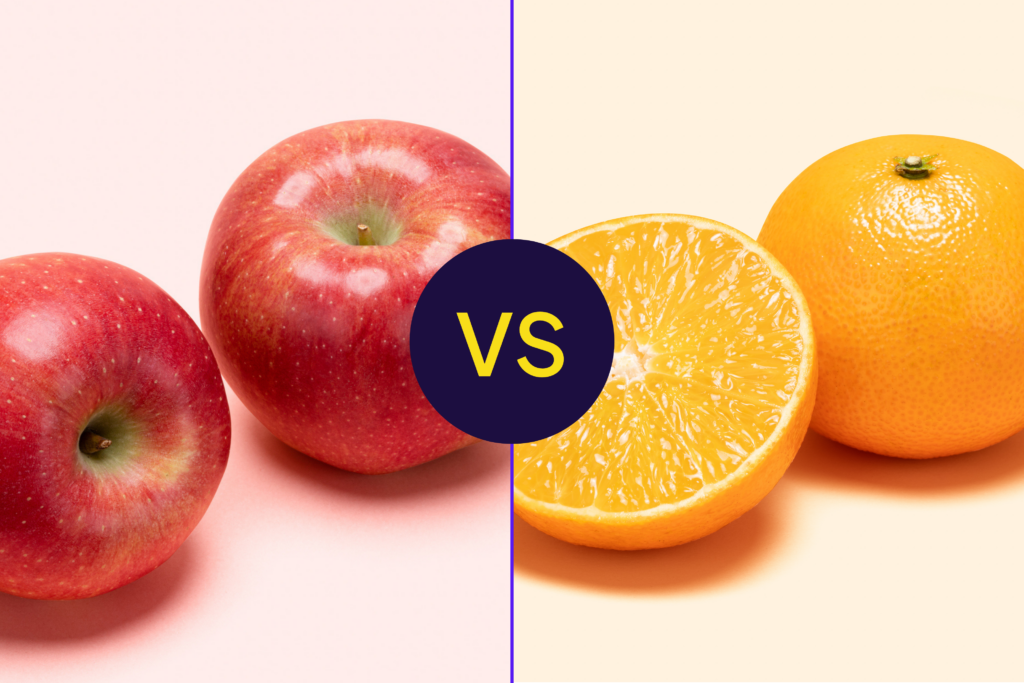
Both apples and oranges provide valuable nutrients, such as fiber and vitamin C, but they contain different amounts and have distinct effects on health. Here’s how these popular fruits compare when it comes to vitamin C, fiber, and overall nutrition.
When it comes to vitamin C, oranges outshine apples. A medium 140-gram orange contains 82.7 milligrams of vitamin C, or 92% of the DV, while a medium 180-gram apple contains just 8.37 milligrams, or 9% of the DV.
Vitamin C functions as a powerful antioxidant in your body, protecting cells against damage. In addition to its role as an antioxidant, vitamin C is also needed for immune function, collagen formation, and iron absorption.
Eating more vitamin C-rich foods could support and protect overall health. For example, research shows that people with higher vitamin C intake from food are significantly less likely to be diagnosed with breast cancer than those with low dietary intake.
“Both fruits are good sources, but apples usually have a bit more total fiber,” Sylvia Klinger, a registered dietitian and contributor to The Mesothelioma Center at Asbestos.com, told Health.
A medium apple contains 4.37 grams of fiber, while a medium orange contains 2.8 grams. This makes apples a better choice if you’re looking to bump up your fiber intake. Leaving the skin on apples nearly doubles their fiber content.
Eating enough fiber is essential for both digestive and cardiovascular health. It supports regular, comfortable bowel movements and nourishes the beneficial bacteria that live in your gut. Soluble fiber also helps regulate blood cholesterol levels, reducing heart disease risk.
Here’s how a 140-gram orange and a 180-gram apple compare nutritionally:
Apple
Orange
Calories
94.6
72.8
Carbs
25.1 grams (g)
16.5 g
Fiber
4.3 g
2.8 g
Protein
0.47 g
1.27 g
Fat
0.3 g
0.2 g
Vitamin C
8.37 milligrams (mg), or 9% of the DV
82.7 mg, or 92% of the DV
Due to their higher water content and lower sugar concentration, oranges are significantly lower in carbs and calories than apples.
In addition to vitamin C and fiber, both fruits contain small amounts of potassium and folate, though oranges are a better source, with a medium orange covering 5% and 8.75% of the DVs, respectively. Folate is a B vitamin that’s needed for red blood cell formation, DNA and RNA synthesis, and fetal growth and development, while potassium plays important roles in blood pressure regulation and nerve function.
These fruits are also high in antioxidant plant compounds, like naringin, a flavonoid found in oranges, and phloridzin, a phenolic compound found in apples. Eating more antioxidant-rich fruits can support overall health by guarding against cellular damage and lowering inflammation.
Thanks for your feedback!
Health.com uses only high-quality sources, including peer-reviewed studies, to support the facts within our articles. Read our editorial process to learn more about how we fact-check and keep our content accurate, reliable, and trustworthy.
U.S. Department of Agriculture: FoodData Central. Apples raw without skin.
U.S. Department of Agriculture: FoodData Central. Oranges, navel.
National Institutes of Health. Office of Dietary Supplements. Vitamin C.
Zhang D, Xu P, Li Y, et al. Association of vitamin C intake with breast cancer risk and mortality: a meta-analysis of observational studies. Aging (Albany NY). 2020;12(18):18415-18435. doi:10.18632/aging.103769
Ichwan M, Walker TL, Nicola Z, et al. Apple Peel and Flesh Contain Pro-neurogenic Compounds. Stem Cell Reports. 2021;16(3):548-565. doi:10.1016/j.stemcr.2021.01.005
Akbar A, Shreenath AP. High fiber diet. In: StatPearls. StatPearls Publishing; 2024.
National Institutes of Health: Office of Dietary Supplements. Folate.
Zielinska D, Laparra-Llopis JM, Zielinski H, Szawara-Nowak D, Giménez-Bastida JA. Role of Apple Phytochemicals, Phloretin and Phloridzin, in Modulating Processes Related to Intestinal Inflammation. Nutrients. 2019;11(5):1173. doi:10.3390/nu11051173
Adams JA, Uryash A, Mijares A, Eltit JM, Lopez JR. Endothelial and Cardiovascular Effects of Naringin: A Systematic Review. Nutrients. 2025;17(16):2658. doi:10.3390/nu17162658