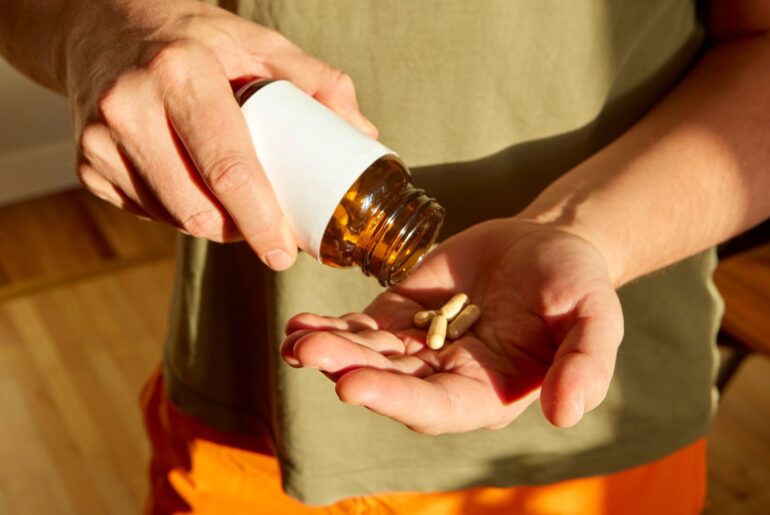
3. May Support Immune Function“The B team shows up big for your immune system,” says Bess Berger, RD, a nutritionist in Teaneck, New Jersey. Vitamin B6 helps your body make antibodies and keeps infection-fighting white blood cells in tip-top shape.
[9]
Meanwhile, vitamin B2, also known as riboflavin, produces powerful antioxidant activity to help the immune system function properly.
[10]
Antioxidants have the potential to destroy free radicals, unstable molecules that create inflammation.
[11]
“B2 may also improve the body’s ability to produce antibodies, which are proteins that help fight infections and protect against future infections,” says Dr. Wick. She notes, however, that more research is needed to fully understand the impact of vitamin B2 on immune function.
4. May Relieve Migraine
People who experience this type of headache may find some relief in vitamin B2 (riboflavin).
“Clinical studies have indicated that taking high doses of riboflavin (typically around 400 milligrams per day) can reduce the number and duration of migraine attacks,” says Connor.
[12]
The research is strong enough that riboflavin is considered a possible natural treatment for migraine.
[13]
One potential reason this works, Connor says, has to do with how cells produce energy. “Some researchers believe migraines may be partly caused by problems in the mitochondria, and when mitochondria don’t function properly, it may lead to changes in brain activity that trigger migraines,” she explains. Riboflavin improves mitochondrial function, potentially preventing migraines before they begin.
[14]
5. May Stave Off Dementia“Studies link low levels of B vitamins, especially B12, B6, and folate (B9), with higher risks of cognitive decline and dementia,” says Berger. One meta-analysis of 95 studies, for example, concluded that taking vitamin B supplements reduced cognitive decline, and lower levels of folate were associated with higher risk of dementia.
[15]
6. May Prevent BeriberiToo little vitamin B1 in your diet causes a condition called beriberi, a disease that affects the heart, digestive system, and the nervous system. Vitamin B1, found in foods like whole-grain cereals, yeast, beans, nuts, and meats, plays a major role in metabolizing food into energy.
[16]
Beriberi is rare in the United States, but it can be diagnosed in people who are malnourished, as well as in those who are heavy alcohol drinkers. (Connor says heavy alcohol consumption can interfere with the body’s ability to absorb vitamin B1.) Symptoms of beriberi include difficulty walking, loss of sensation in the hands and feet, and paralysis of the lower legs — and it may even lead to congestive heart failure.
[17]
7. May Regulate Hormone Levels
Vitamin B5 (pantothenic acid) is a key nutrient for sex and stress-related hormones produced in the adrenal glands, which are the small glands that sit atop the kidneys.
“B5 helps your adrenal glands crank out stress hormones like cortisol and makes sure you’ve got enough building blocks to produce sex hormones [like estrogen and testosterone],” Berger says. However, more human studies are needed to confirm whether supplementing with B5 might improve adrenal function.
Additionally, vitamin B12 and folate also pitch in by supporting the process of methylation. “This is a fancy word for turning genes on and off, including ones that influence hormone production,” Berger says. Some studies have shown that the methylation process may be involved in the development or prevention of conditions like type 2 diabetes.
[19]
8. May Support Healthy Babies in UteroThere’s good reason why vitamin B9, also called folic acid or folate, is a top ingredient in prenatal vitamins, and taking one comes highly recommended by the American College of Obstetrics and Gynecology.
[20]
For babies in utero, folic acid can help prevent major birth defects of the brain (anencephaly) and spine (spina bifida).
[21]
Plus, women’s personal B9 needs increase during pregnancy, Connor says, making supplementation a good idea during this stage of life. Folic acid also passes through breast milk.
[22]
For these reasons, the National Institutes of Health recommend that teens and adults get 400 micrograms daily, breastfeeding mothers should get 500 micrograms a day, and pregnant teens and women should get 600 micrograms a day.
[23]
Talk with your healthcare providers about any dietary supplements you may need to take while pregnant.9. May Boost Skin Health“Topical vitamin B3 (niacin) has been shown to improve skin barrier function and reduce inflammation, which may help improve conditions such as acne, eczema, and rosacea,” says Wick.
[24]
Niacinamide is a topical form of vitamin B3. Experts say it helps build keratin, a protein that maintains skin health. It’s also been shown to ease inflammation and make skin stronger, smoother, and brighter.
[25]
10. May Help Heal Mouth SoresPeople who are deficient in B vitamins can produce abnormally large red blood cells that don’t function correctly, which can lead to a host of symptoms, including mouth lesions. One meta-analysis of more than 1,500 patients found that supplementing with vitamin B accelerated the healing of mouth ulcers and helped prevent them from coming back. Researchers found that both ulcer healing time and ulcer treatment time were reduced by roughly two days in those taking B-complex supplements compared with control groups.
[26]
Connor says that people who don’t get adequate amounts of vitamin B through diet alone (such as strict vegans) or older adults, may need a B-complex supplement to prevent symptoms like mouth sores.