Jenna Macciochi is a leading immunologist – these are the habits she has adopted in order to live better for longer
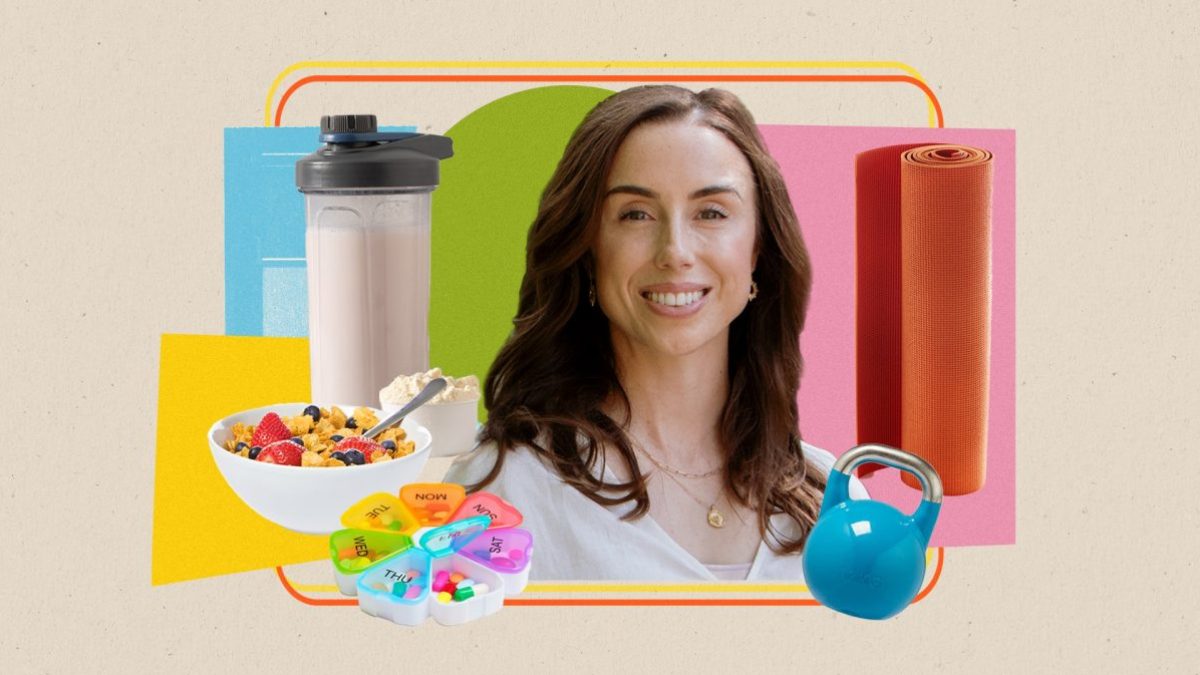
Dr Jenna Macciochi is a leading immunologist and bestselling author on a mission to improve our immune systems. She sees this misunderstood system as the key to living a healthier, longer, and happier life. She is the author of three books, including the recent Immune to Age: The Game-Changing Science of Immune Health, as well as a teacher of breathwork and meditation.
For our weekly series Life Lessons, she shares her own daily habits that are informed by her research and experience in the field.
Now I’ve turned 40, I protect my sleep
I am a parent and have a busy job so I need to be able to perform at my best. When my twins, now 11, were born they spent five weeks in hospital. When they came home I didn’t sleep at all – there was a lot of psychological hyper vigilance and I had insomnia for about six years. It was very intense. So sleep is something I now hold very dear.
Protecting my sleep means easing myself into my mornings – I try and have a little bit of time to myself and get some natural light if I can. The sun gives a signal to your brain that it’s daytime, which means your immune system needs to be switched on, because we might be around people with germs; your metabolism to be working a certain way, because you’re more likely to eat during daylight hours; and your muscles need to be engaged because you’ll be moving. Then the inverse happens at night.
Sleep and wake are two different states for our immune system, and it’s really important that we give the body the opportunity for both.
New FeatureIn ShortQuick Stories. Same trusted journalism.
An evening wind down is something that I really protect and I focus on keeping my nervous system as calm as possible. It was a no-brainer to get off my phone and not watch things that are going to stress me out. I often do some gentle stretching in the evening. I also use a red light that emulates infrared light we would get from the sun during the glow of a sunset or sitting around the fire. I feel it’s a really nice, calming light to have in my house before sleep, rather than having all the main lights on.
I prefer exercise snacking over an hour at the gym
We did not evolve through millions of years to be working at our best when we sit for long periods. Unfortunately, there’s a huge evolutionary mismatch between that and what daily life usually involves now. So I will try to get up as often as possible on workdays. I have a little hanging bar, kettle bells and stretchy bands in my office, and if I don’t have time to go to the gym or do a workout, I will just do little 10-minute bursts throughout the day.
It can be easy to dismiss this exercise concept and feel like you’ve not really done anything because you haven’t spent an hour at the gym. But we didn’t evolve to have exercise time boxed into specific periods – we evolved to be moving all the time. I think that we need to give our bodies that impact that it’s seeking to work optimally, especially because now we have the data showing that an hour in the evening in the gym won’t undo the negative effects of sitting for long periods.
This, again, is key for the immune system. The lymphatic system is this system of vessels that carries your white blood cells around the body and allows them to perform their surveillance function. But unlike the circulatory system for the blood, which uses the heart as a pump, the lymphatic system uses the movement of our muscles. So when we move around, we’re squeezing that lymphatic fluid around and keeping it flowing. It’s really, really important to keep that process happening, as it helps remove cellular waste and clear out things that can make us feel sluggish, puffy, uncomfortable.
Regular movement also helps regulate appetite. The large bones of our legs sense what our energy needs are in terms of food. When you’re sitting, you don’t have that impact on the bones: your legs feed back based on your body weight, not your needs. It’s called the gravitostat. That’s why when you sit all day you can often feel hungrier and eat beyond your needs: the mechanism isn’t able to work properly.
I never snack – and I feed my microbiome
I want to be able to tolerate all foods, and have a gut that is healthy and resilient. So I have a good baseline of a diet that’s very minimally processed, very diverse, and I’m an omnivore. I try to make all my meals from scratch.
What I’ve found works for me is three or sometimes two, really square meals and I don’t snack – that’s one of the first things I found made a difference. It was before I had kids and I was working on the gut microbiome and saw these studies that found that some people were spending 18 hours in what we call the fed state (a state of your digestion after you’ve eaten a meal). That is very different to when there’s no food in the system. If we’re always in the fed state, it’s just not the most healthy and sustainable way to exist. So we need to cycle between them both.
So if I have a really, really good breakfast, lunch and dinner that makes me feel satisfied, that’s got lots of fruits and veg and fibre and protein, then I don’t feel like I need to snack in between meals, and so I can regulate my blood sugar a lot better and am better in touch with my hunger and satiety cues. I feel less bloated, and have more comfortable digestion.
And I know that I can go to a restaurant with friends, I can eat a burger and fries and not worry that my gut is going to be wrecked for days because I can’t tolerate these foods. If our digestion is struggling, we’re getting a lot of discomfort, it’s most likely that the gut microbe communities are not in a resilient, healthy state.
I don’t blame myself when things go ‘wrong’ in my diet – it’s the world’s fault
We have this huge mismatch between what benefits humans and the way we live now, particularly with diet. We default to blaming ourselves, but the world we live in makes it really hard to be healthy. There’s aggressive marketing everywhere telling us that we need a snack, we need to eat xyz: there’s so many things that are hijacking what intuitively, our bodies know what is best for us. We have to bring some awareness to what our particular needs are, and when that need is actually just a craving.
We live in this age of information, but do we have the agency to wake up in the morning and put that into action? I think that’s what’s lacking, and that comes from awareness practices.
Meditation changed my life
I was the person who didn’t know how to meditate until I couldn’t not meditate. For me, meditation isn’t something you suddenly turn to when you’re in a stressful situation. It trains me for when something stressful does come up so that I can separate myself from the stress, observe it, and then control my reaction. Therefore I can control how my nervous system responds: whether I’m in fight or flight or in rest or digest. And that has a physiological effect: we know stress chemistry affects our physical body, and our immune system in particular is very sensitive to stress.
Everyone should get thorough blood work done – especially after 40
We often see perfection and we want to strive for the perfect routines, the perfect diet. Actually, having a really good baseline means that when life throws you a curveball, you’ve got such a strong foundation that it doesn’t derail you.
One way to know if something’s working is to look under the hood. I’ve taken to getting regular blood work done – once you’re over 40 you then have a baseline of your health just in case something does go wrong. Throughout our evolution, humans did not live as long as we do now and evolution just cared about passing on your genes. Everything was optimised until you would pass on your genes and then get that child to an age where it would survive. After that, nature doesn’t really care. I know that sounds really brutal, but if we’re just purely looking at the collective population through the evolutionary lens, after 40 ish, your genes are no longer optimised.
So I get as much information as I can, which, balanced against the cost, I think is a really good investment. If everything looks great, you know that what you’re doing must be working. Whereas a lot of the time people are stabbing in the dark, trying new things and not sure what is actually helping.
I take a magnesium supplement
I definitely have a less is more approach. I don’t want to be taking 20 different pills a day. So I try to tailor it to what, based on evidence, is probably going to help me at this stage of my life, and I’m pretty consistent with that.
I take omega three and omega seven. So omega three is an essential fat and there’s pretty good evidence for taking that as a supplement, especially if you’re not eating huge amounts of oily fish. Omega seven is less understood, but I’ve anecdotally found it very helpful. There’s rare sources in our diet, and we can make some but our body’s ability to do that gets lower with age.
I take creatine which I’ve found helpful for energy and performance. I take magnesium: we know the soil is not as rich in magnesium [as it was], which means the produce, even if we’re eating really great healthy organic foods, has potentially not got the same levels of magnesium as 50 years ago.
I take collagen, which I find really helpful for things like injury prevention. And I play around with a few different longevity supplements based on the evidence. There’s one called ergothionine, which you get in mushrooms, but it’s quite a long-term antioxidant. There’s quite good data linking it with longevity. And co Q 10 is a really good one for heart health, particularly as we get older.
Those are the staples, and then sometimes I might want to play around or try something new.