If you’ve ever used a traditional centrifuge, you know how it goes: airliner take-off noise, hot juice, foam on the surface and a vague feeling that you’ve just strained an apple. Cold extractors work the opposite way. They turn slowly, they squeeze instead of blending, they do not heat the juice and do not oxidise it immediately. The result is thicker, more stable, with less air in it and vitamins that are not ‘cooked’ by the process. This is not health marketing: it is physics applied to breakfast.
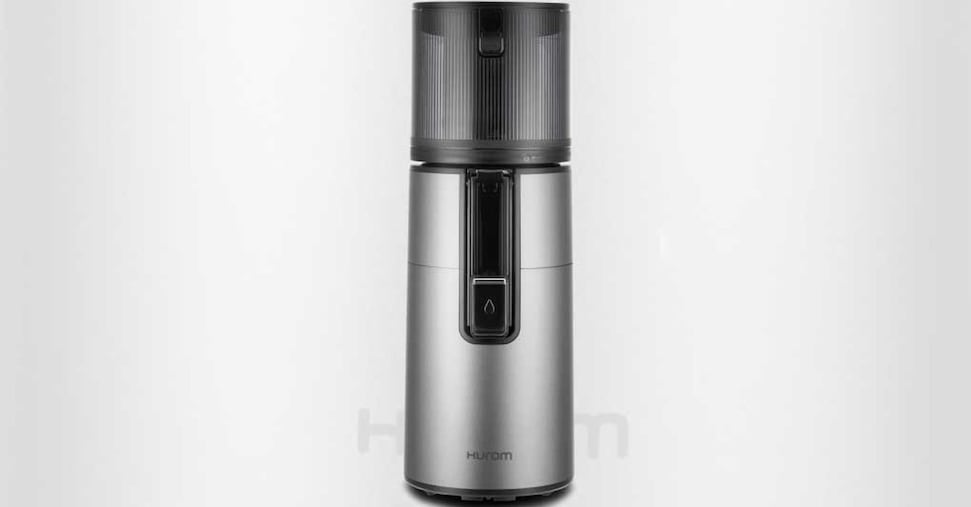
Into this scenario enters the Hurom H400, which takes the idea of the cold press and makes it surprisingly effortless. The big news is that Hurom has done away with the classic metal sieve, the one that makes cleaning extractors a test of willpower. Here the auger (long squeezing screw) and chamber also act as a filter. Fewer parts, fewer brushes, less time wasted at the sink. It is a design choice that counts more than any specification.
The H400 runs faster than many ‘slow’ competitors (around 90 rpm), but remains slow enough to avoid heat and oxidation and powerful enough not to stall on carrots and ginger. The advantage is practical: the machine never stalls, it handles fruit and even hard vegetables like carrots or beets well and produces a high extraction yield, higher than many previous models. The downside, also known from Italian trials, is that higher speed can encourage a little more oxidation than slower machines and leave a perceptible amount of pulp in the juice – a detail of taste, not quality. The juice is slightly pulpier – something some people love and others don’t – but it is also full, consistent, and remains stable for longer than in a centrifuge.
The point, as is often the case with successful products, is not just what it does but how it fits into everyday life. It is quiet, solid, and does not punish you after use with half an hour of cleaning. It is not cheap (the list price is 699 euro but you can find it for much less online), heavy and bulky but it is one of those rare appliances that seem to be designed by people who actually use them.
It won’t automatically make you healthier. But if the goal is to drink real juices without stressing ingredients – and especially yourself – this is exactly the kind of technology that makes sense to have on the kitchen counter. Health sometimes also comes from good design.