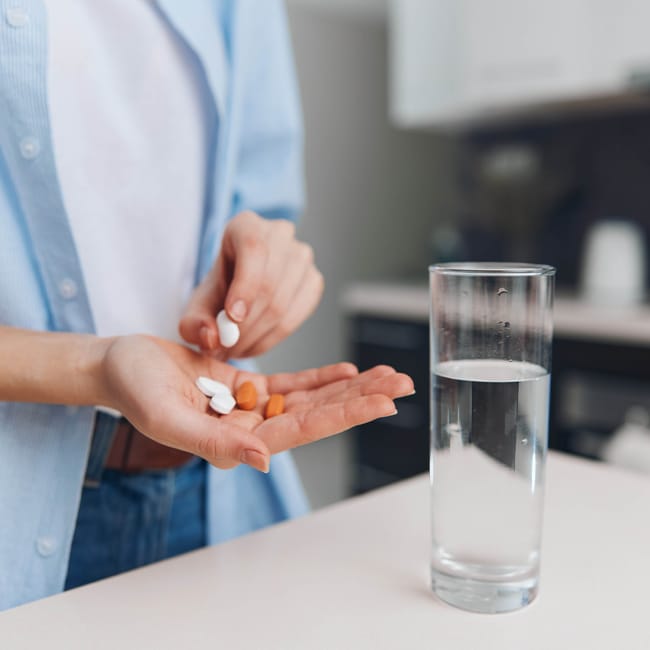
It’s no secret that menopause can be an extremely difficult time, and one of the main reasons is that certain hormone levels fluctuate.
There is a lot of advice floating around out there on how to manage menopause symptoms, get your hormones back to a more balanced state, and overall feel better as women of a certain age enter the new chapter. Many believe that supplements can ease this transition, but it’s important to consider which ones you should and shouldn’t be taking. We spoke with a doctor about which supplements can make balancing hormones a harder experience during menopause, and you can read more about them below.

Struggling With Sleep? This Rechargeable Sound Machine Is A Total Game-Changer
Shutterstock
1. Vitamin D
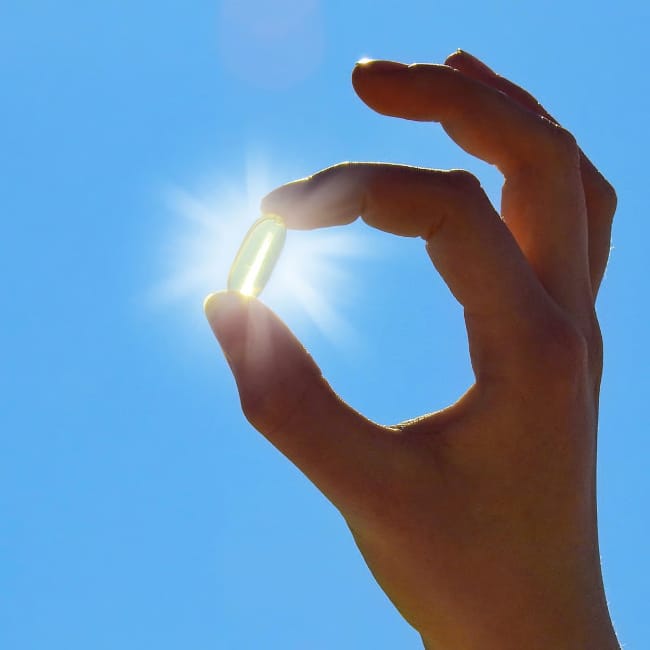
Vitamin D is one of the most common and popular supplements out there, especially because it’s something you can’t get from food, and many people find that they need to supplement it as they get older to prevent and ease symptoms or conditions like osteoporosis. However, menopausal women are urged to take caution before taking it.
“Vitamin D should be carefully dosed during the menopausal years because moderate amounts support strong bones, but high doses can increase the amount of calcium in the blood and create an imbalance that will disrupt hormone signaling and can manifest as fatigue, irritation, or disrupted sleep patterns instead of relief from menopause symptoms,” says general practitioner Dr. Maria Knobel.
Shutterstock
2. Black Cohosh
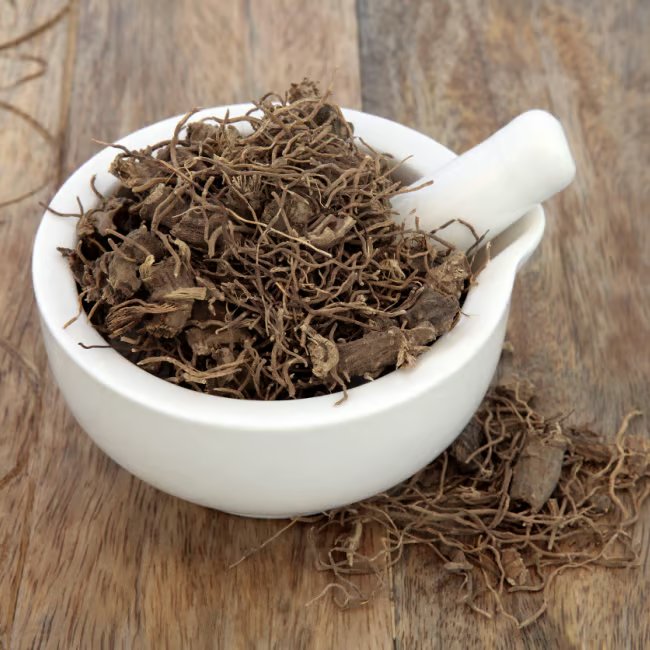
There are some people who might not’ve heard of Black Cohosh, which is derived from a flowering plant and has been known to potentially increase the effects of estrogen, something that could greatly benefit menopausal women. Still, some health experts believe the inconsistent research and results of the supplement should serve as a warning.
“Black Cohosh is used in many of the menopause blends that are available,” explains Dr. Knobel. “But black cohosh does not have consistent results for most women. Black cohosh can influence how a woman’s body responds to estrogen receptors, which can cause menopause symptoms to be unpredictable and difficult to read, especially during hot flashes at night or mood changes.”
Shutterstock
3. Ginseng
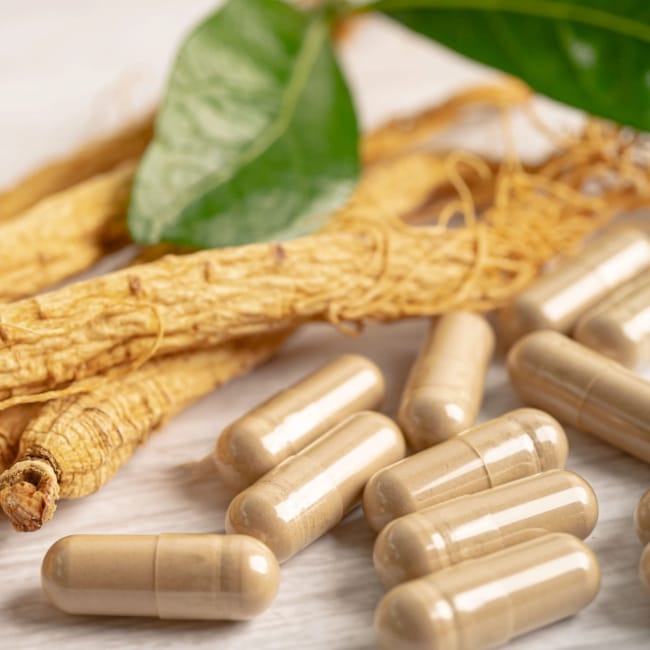
Ginseng is a supplement that is trending more these days, especially in the holistic medicine world. It is said to help boost energy levels, increase brain function and immune support, and even help people manage their stress levels. However, Dr. Knobel says it can create instability hormone-wise.
“Another supplement that can create an unstable environment is Ginseng,” she notes. “Ginseng affects the stress hormone cortisol; high levels of cortisol can also block progesterone function.”